The block in Philippi and the working brief
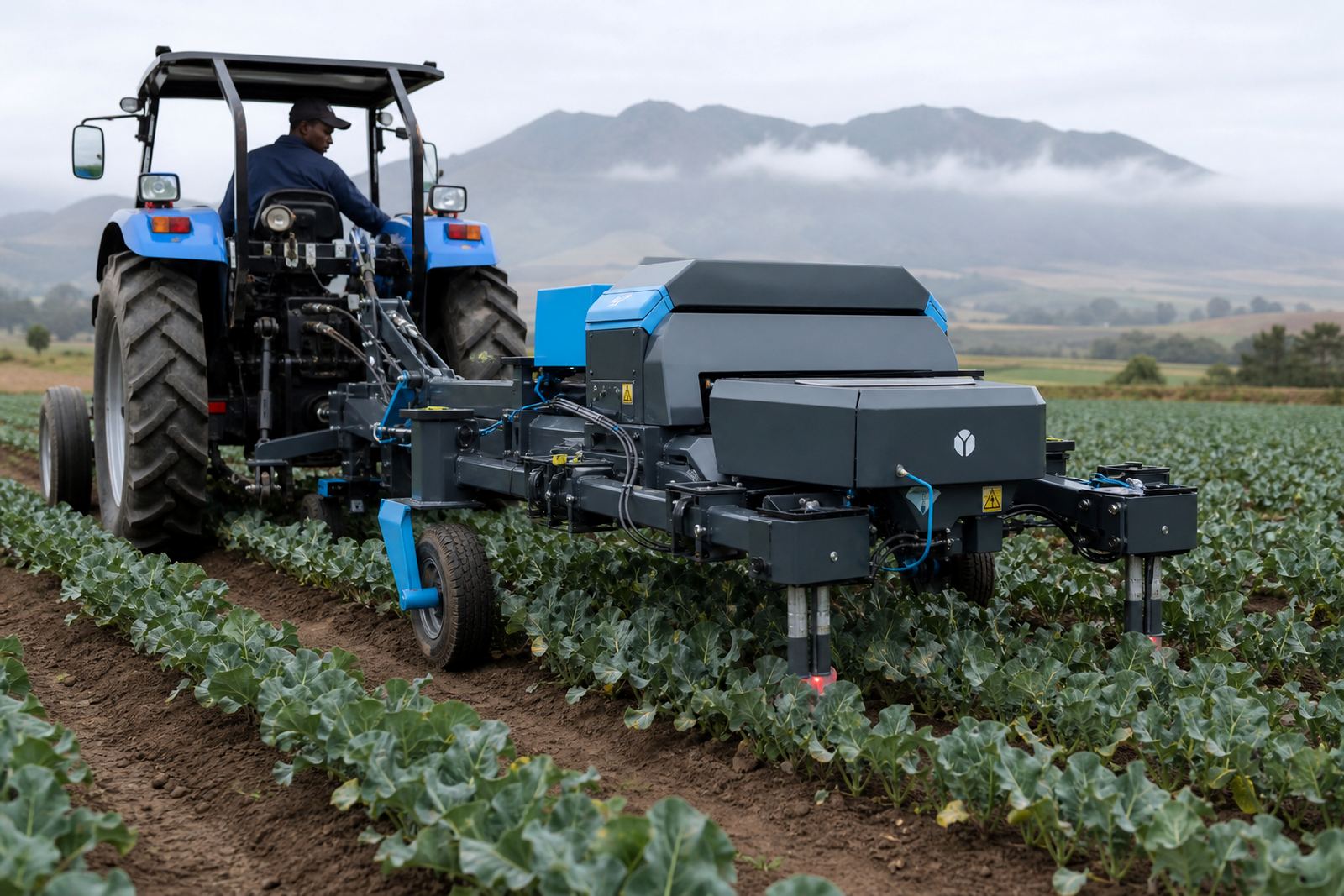
The site sat on the edge of Cape Town’s market garden belt, where vegetable beds are expected to stay tidy and turning space is never generous. The grower wanted a non-spray option for weeds between and around crop plants, with the first pass treated as a trial run before any wider season plan was settled.
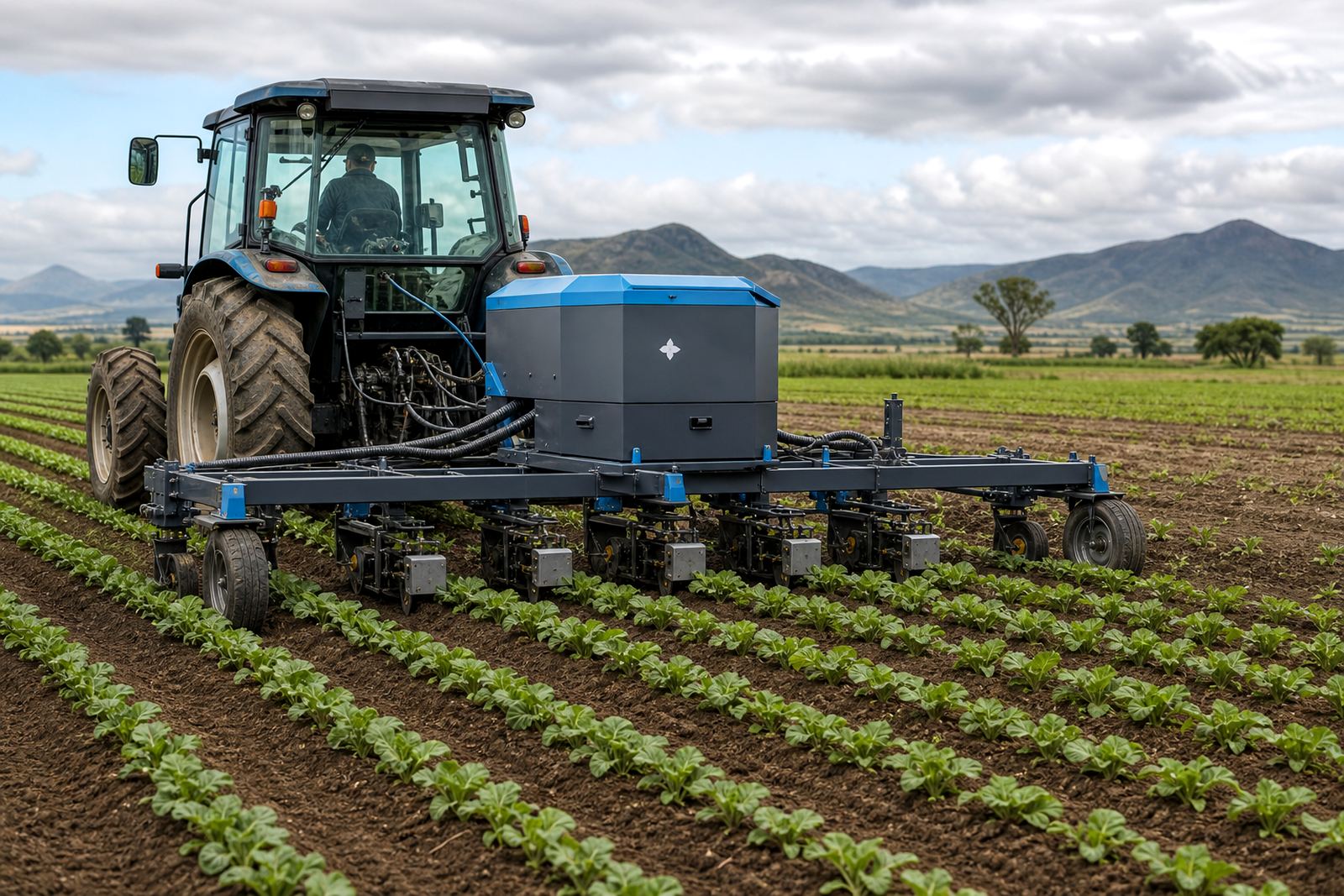
The block carried mixed planting widths, straight beds and a few tighter corners near access points. That meant the pass had to stay controlled, with the tractor line kept steady and the operator watching for crop stage, weed stage and bed shape at the same time.
- Peri-urban vegetable block in Philippi
- Straight beds with mixed planting widths
- Trial pass before season programming
- Weed control without herbicide sprays
What made the ground awkward to work
The field had enough order to support laser weeding, but not enough uniformity to treat it as a standard block. Some rows were closer together than others and the crop canopy was not yet closed, so the operator had to balance coverage with caution around the youngest plants.
There was also a practical matter of timing. Laser weeding works best when weeds are at the right stage, not too advanced and not hidden under a dense crop line. On this job, the aim was to intercept weeds early enough for the laser to target the growing points cleanly, while avoiding any unnecessary soil movement.
- Mixed row spacing across the same block
- Young crop stages in parts of the field
- No soil disturbance from the pass
- Camera-guided detection used on the run
The pass plan from arrival to shut-down
We scheduled the job as a single trial pass with arrival checks before the tractor entered the rows. That included confirming access, turning room and the parts of the block that would need slower travel because of tighter geometry or heavier weed pressure.
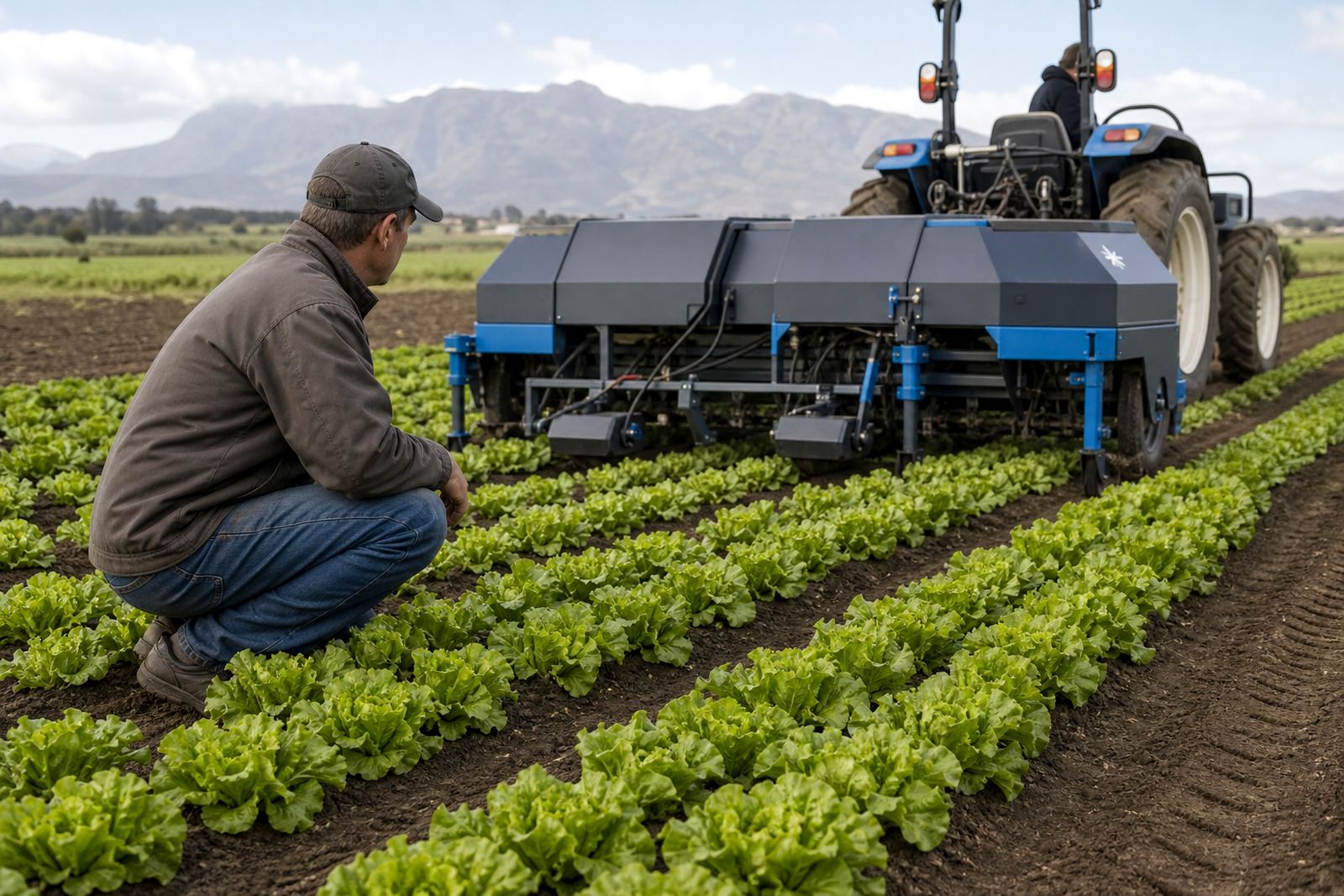
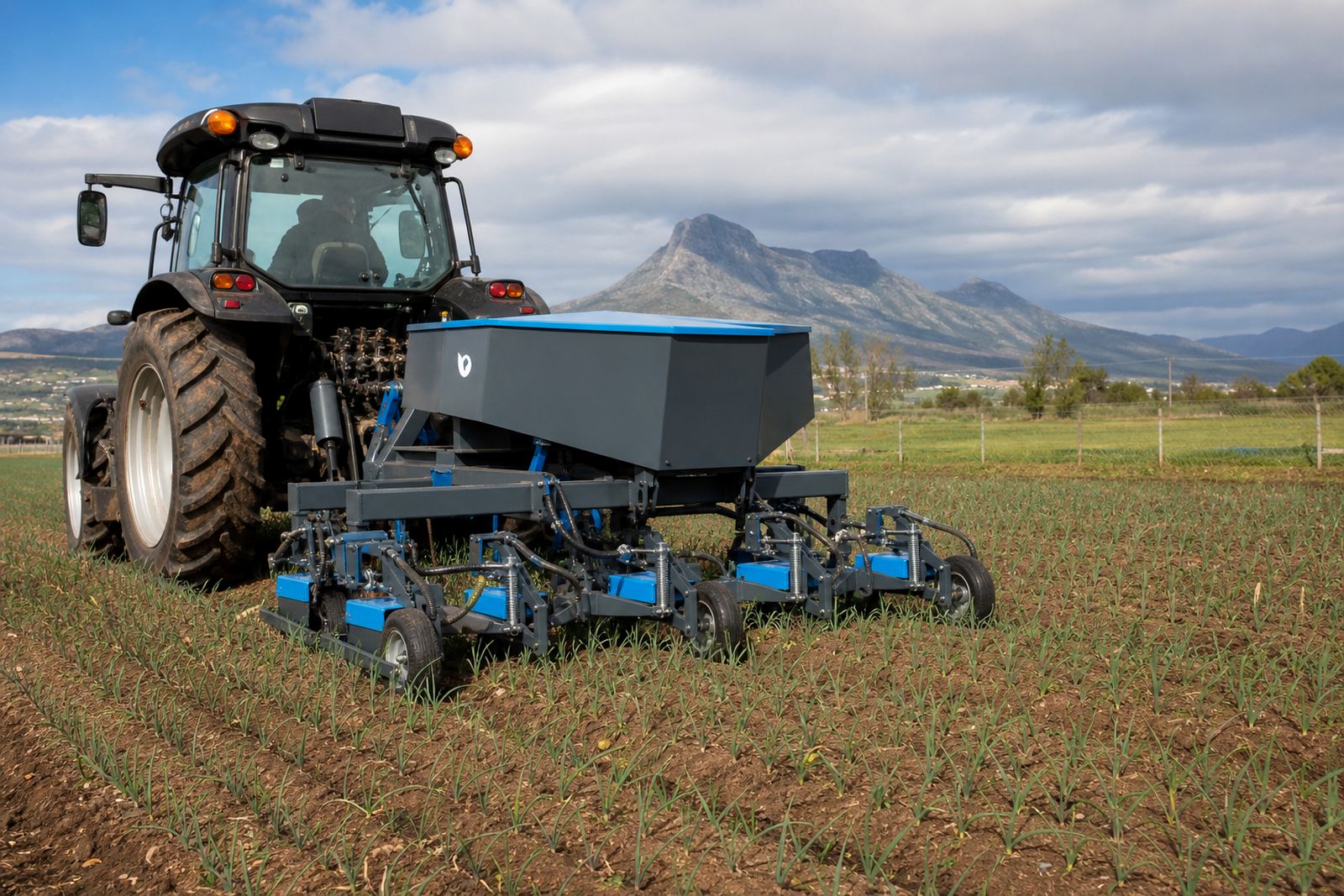
The unit was tractor-drawn and handled by a trained operator, with the field schedule set around the crop rather than around a fixed speed target. In sections with lighter pressure the work moved more smoothly, while thicker patches called for a slower pace so the camera system could detect weeds accurately and place the laser on the weed growing point.
The pass stayed herbicide-free and did not disturb the soil surface. That matters in market garden ground where crusting, watering patterns and fine bed structure all have a hand in the next crop stage.
What we supplied on the day
The job included the equipment, the operator and the on-site coordination needed for a short contract run. We also prepared the sequence for the block so the pass could be done without unnecessary backtracking or guesswork on the day.
- Tractor-drawn laser weeding unit
- Trained operator on the machine
- Arrival site checks before the pass
- Trial strip run for movement and spacing
- Field scheduling based on weed pressure
- Post pass reporting for the grower
Because the site was peri-urban and busy around access points, travel coordination formed part of the work too. The block had to remain practical for movement in and out, and the pass needed to fit the farm’s working rhythm rather than interrupt it.
How the timing worked over the two weeks
The project ran as a two week trial window, with the first visit used to settle the pass pattern and the second used to observe how the block held after the initial treatment. That gave the grower a clearer sense of where the weaker weed pressure sat and which bed lines would need repeat attention later in the season.
On the follow up review, the main discussion was not about machinery alone but about crop stage, weed flush patterns and how the same field might be split for future scheduling. In some parts, a repeat pass would suit the planting rhythm better than trying to cover the whole block at one speed.
- Week 1: site check and trial strip run
- Week 1: first laser pass across the selected beds
- Week 2: follow up observation and reporting
- Future work: repeat pass planning for stronger flushes
What the grower needed from the first trial
The main request was to see whether laser weeding could sit inside the farm’s normal vegetable routine without forcing changes to the crop layout. The answer on this block was practical rather than theatrical. Straight beds helped, but the mixed widths meant the scheduling had to stay flexible and the operator had to read the field as it moved.
The grower also wanted the work to stay suitable for row crops commonly grown in the area, including onions, carrots, lettuce and brassicas. That made the trial useful beyond one crop, because the same approach can be planned around planting stage, weed size and the timing of the next cultivation cycle.
What we would repeat on a similar field
On a similar Philippi market garden block, we would again start with a site check and a short trial strip before committing to the full pass. That gives a cleaner read on turning space, row width and any awkward corners that need slower travel.
We would also keep the work tied to weed stage rather than calendar habits. Laser weeding is more useful when the weed is still at the right size for targeted detection, and when the crop line is clear enough for the system to work without pushing soil around.
- Start with an arrival site check
- Run a short trial strip first
- Match speed to weed pressure
- Plan follow up passes by block, not by guesswork