A lettuce block with tight weed pressure
The grower’s lettuce block needed a practical way to deal with weeds between rows and close to the plants, without disturbing the soil. The farm team wanted a contract service that could work within a crop timing plan, because lettuce leaves little room for late corrections once the stand has filled in. The field also carried mixed weed pressure, so the work had to focus on weed stage and spacing rather than treating the block as one uniform patch.
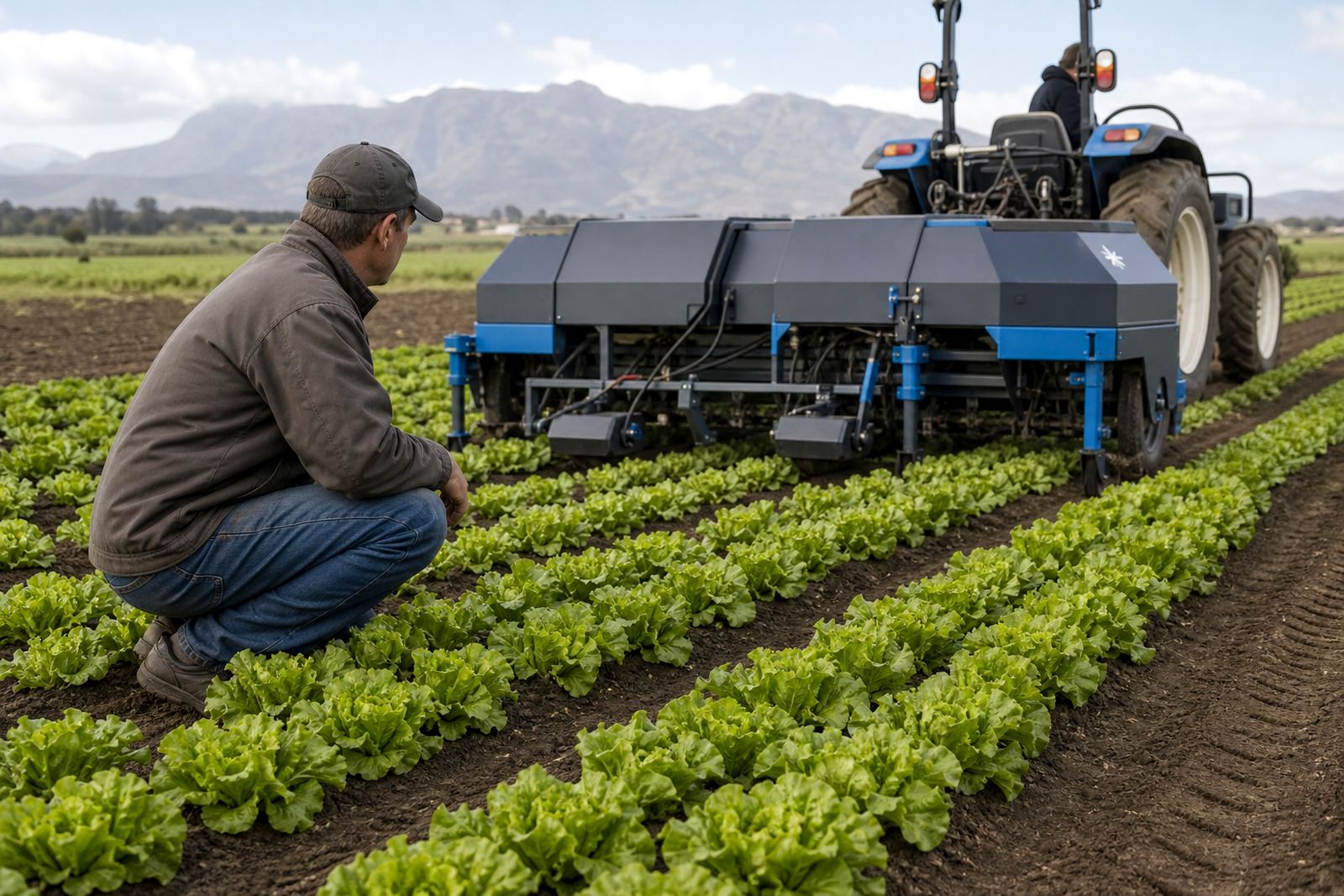
We began by walking the rows and looking at plant spacing, leaf spread, soil moisture and the condition of the weeds already up. In lettuce, timing matters because small weeds are easier to target and the crop canopy can hide later flushes. The aim was not a blanket pass over the farm. It was a controlled run on the right block, at the right stage, with a plan for follow-up where weed pressure stayed uneven.
- Crop type: lettuce in row formation
- Work type: contract laser weeding trial
- Main concern: weeds close to crop plants
- Method: non-contact weed targeting with no soil disturbance
How the trial block was set out
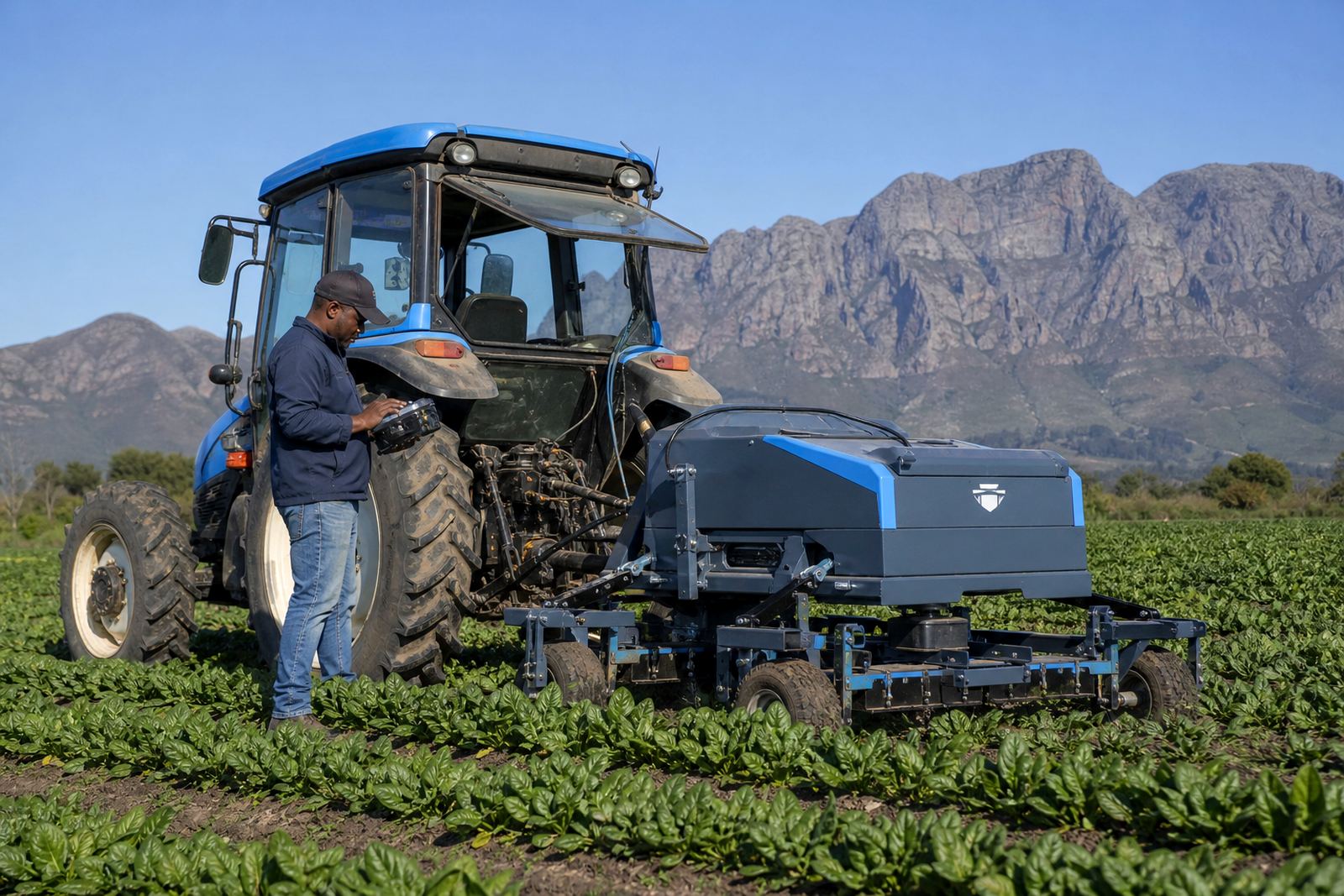
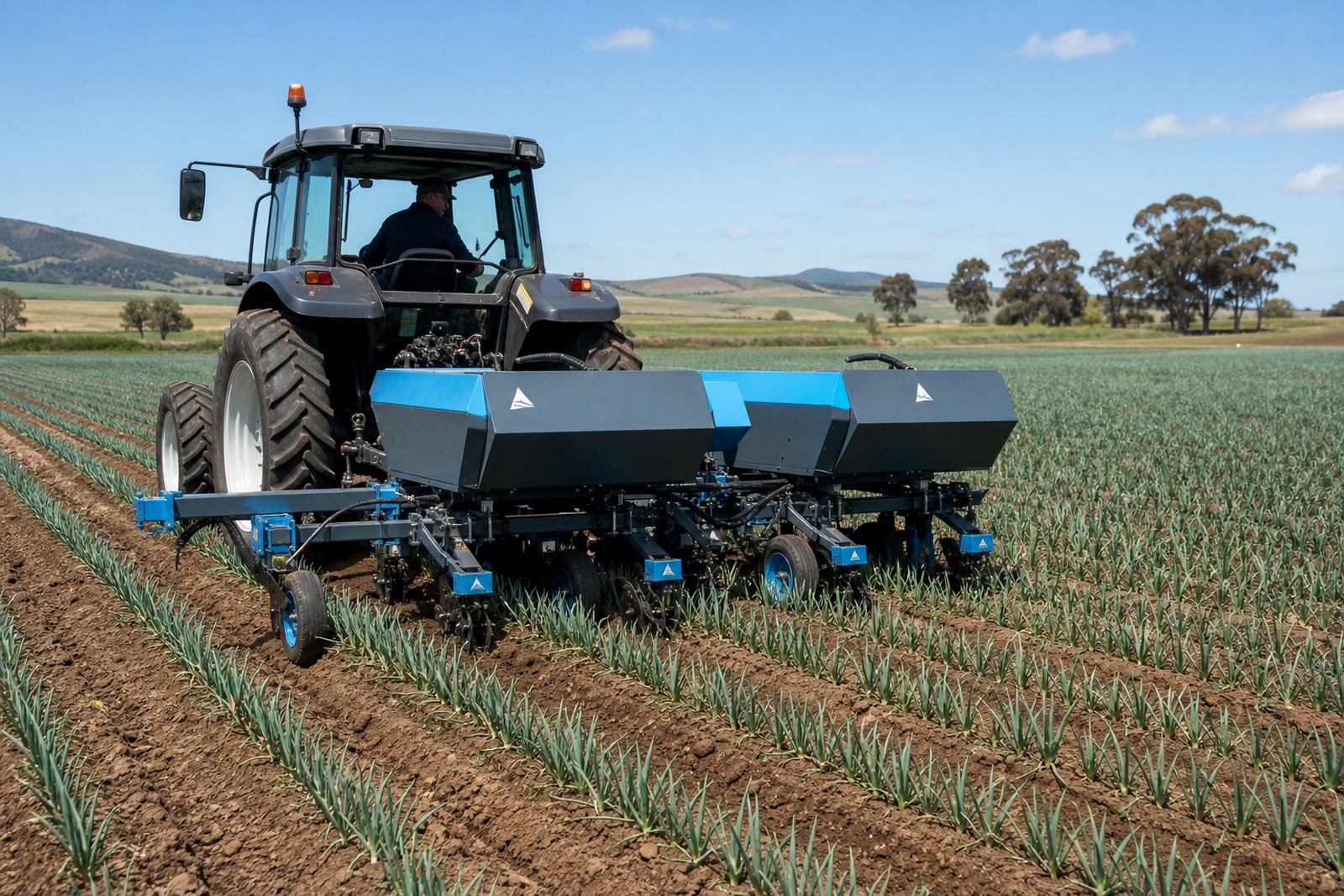
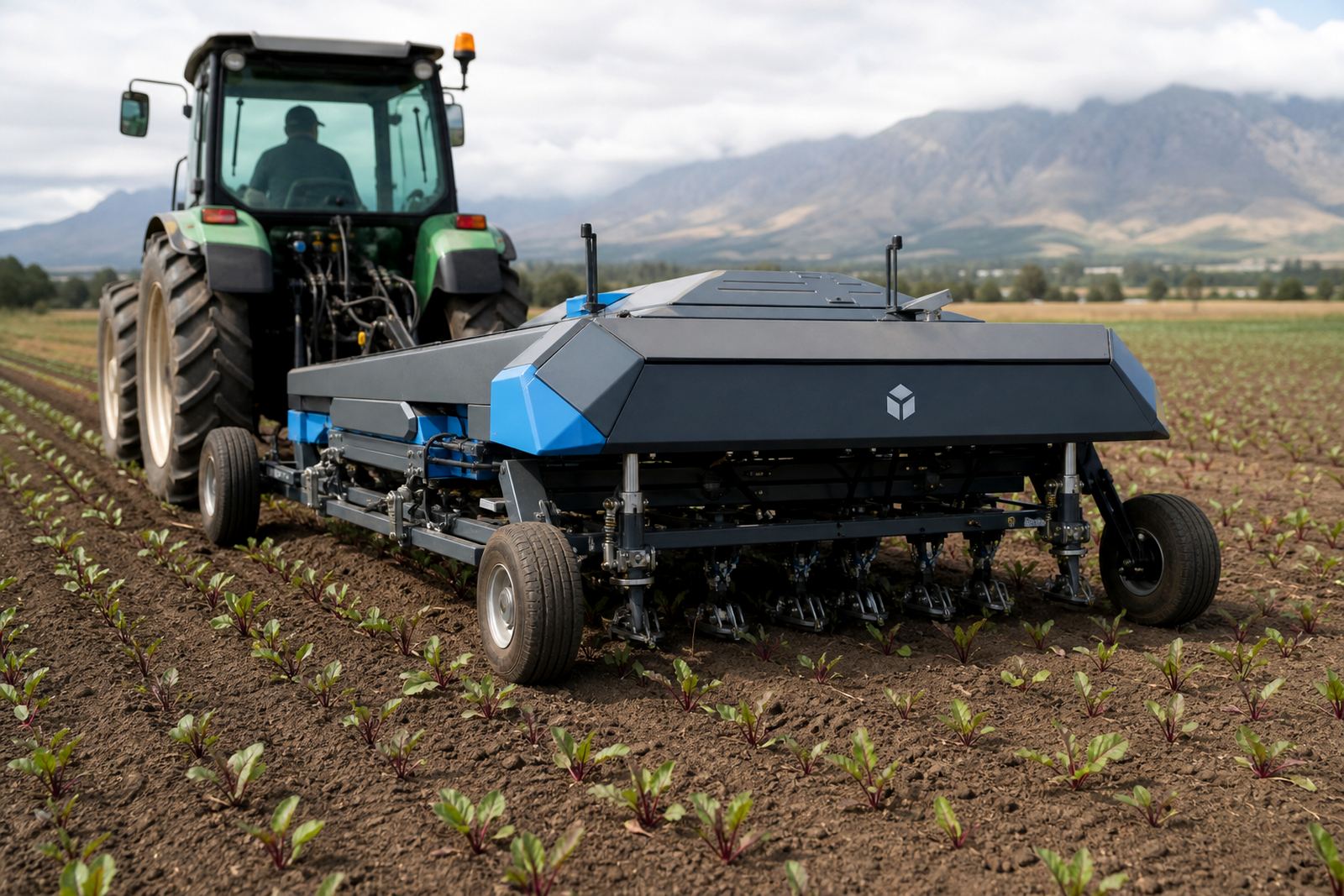
The trial was arranged as a field run with a clear start zone, check points and a measured pass through the block. The operator worked from a tractor-drawn laser weeding unit fitted with camera-guided weed detection, so the system could identify weeds and direct the laser onto the growing points. That matters in row crops like lettuce, where the weed target sits very close to the crop and the margin for drift is small.
We kept the focus on weeds around the plants, not on bare ground. The unit does not dig, scrape or throw soil aside, which helps keep the seedbed intact. Field speed was set against the weed pressure in front of the machine, and in thicker patches the pace had to stay measured so the detection system had time to work. That balance is part of the job, because fast ground coverage is not the point if the weed load changes across the block.
- Unit type: tractor-drawn laser weeding system
- Detection method: camera-guided weed spotting
- Action: laser aimed at weed growing points
- Soil impact: no disturbance to the seedbed
Timing, repeat passes and the working week
The first pass was set up as a trial strip run, then the block was marked for a repeat pass plan. Lettuce often brings uneven germination of weeds, so one run can expose where a second visit is needed and where the pressure has already dropped. Our field scheduling lead built the sequence around weed stage rather than guessing the full block would behave the same. That approach also helped the grower see which sections needed attention first.
The trial stretched over three weeks from the first site check to the last review note. Week one covered assessment and crop timing planning. Week two carried the strip run and the main pass over the agreed area. Week three was used for post pass reporting and a fresh look at any active patches that still had weeds below or beside the crop. It was a practical cycle, with each stage feeding the next one instead of treating the work as a once-off visit.
- Week 1: site check and crop timing plan
- Week 2: trial strip run and first pass
- Week 3: follow-up review and repeat pass planning
- Planning point: weed stage, not calendar alone
What the farm team asked us to handle
The farm wanted more than a machine on the day. They needed operator supplied cover, travel coordination and clear arrival site checks so the work could slot into the harvest and irrigation rhythm. Our team also handled grower consultation before the run, then kept a record of what the block looked like after the pass. In a lettuce crop, that record helps the next decision because the weed pattern can shift quickly with temperature and moisture.
We also noted that this sort of work suits row crops where access is still open enough for the unit to travel without knocking plants back. On this block, the lettuce rows gave us the structure needed for camera-guided detection, but the narrow gaps still called for careful steering and clean field discipline. No soil was moved, no spray was used, and the work stayed focused on what was actually visible in the rows.
- Operator supplied as part of the service
- Arrival site checks before the run
- Travel coordination for the farm schedule
- Post pass reporting for the grower file
What changed in the block after the run
The most useful result was the way the weed pressure became easier to read after the first pass. Areas with young, exposed weeds were handled differently from pockets where the crop had already shaded the row. The grower could see where repeat pass planning made sense and where the next run could wait. That kind of split is common in lettuce because weed flushes do not always arrive evenly across one block.
The trial also showed that laser weeding can sit well inside a herbicide-free programme when the timing is right. It does not replace good scouting or crop husbandry, and it is not a cure for a block that is already too far gone. What it can do is give a grower another way to handle weeds close to the plants without changing the soil surface or pushing a spray decision into the crop.
- Better visibility of patch-by-patch weed pressure
- Repeat pass decisions based on field condition
- No soil disturbance during the work
- Herbicide-free weed management option
What we would set up in the next lettuce block
On a similar lettuce job, we would keep the same structure: a short field assessment, a timing plan built around weed stage, then a trial strip before the wider pass. We would also hold the repeat pass plan open until the block had been read after the first run, because lettuce can change quickly with weather and irrigation. The strongest result comes from matching machine time to weed pressure, not from forcing a fixed route through every field.
For growers in Paarl and other vegetable areas, the practical value lies in keeping the system tied to crop timing and field conditions. Our base in Philippi, Cape Town supports work across the Western Cape and beyond, including Limpopo, Mpumalanga, KwaZulu-Natal and the Free State. The team that handled this project included field scheduling, grower liaison, operator support and workshop oversight, so the job moved as one coordinated programme rather than a loose set of visits.
For a lettuce block, that sort of structure matters. Tight rows, mixed weed stages and narrow working windows all ask for a calm plan and a clean pass, not guesswork.
Key facts
| Project | Paarl lettuce grower trial |
|---|---|
| Crop | Lettuce |
| Service | Contract laser weeding |
| Method | Camera-guided weed detection with laser targeting |
| Programme length | 3 weeks |
| Coverage | Paarl, Western Cape |