The smallholding layout and the working brief
The grower was working a compact plot in Pringle Bay with vegetable rows close together and turning space that had to be used carefully. The brief was to cut weed pressure between and around crop plants without sprays, while keeping the crop rows clean enough for hand follow-up where needed.
The block carried a single-bed work plan, so the pass pattern had to stay tidy from the first row to the last. We also needed to respect the slope changes, gate widths and soft edge ground that can slow a tractor-drawn unit if the route is not mapped properly.
- Smallholding vegetable production on tight row spacing
- Single-bed access with limited headland room
- Herbicide-free weed control was the main requirement
- Field access had to suit a tractor-drawn laser unit
What made the site awkward
Pringle Bay brings coastal wind and salty air, which does not stop a laser weeding job but it does make planning steadier when the crop canopy is low and the soil surface is uneven. The block had mixed weed pressure, with younger weeds in some sections and more settled growth in the heavier parts of the field.
We also found that the timing window mattered more than a simple map of the farm. Laser weeding works best when weeds are at the right stage for detection and targeting, so the run had to be set around crop height, weed stage and the amount of daylight left for the block.
- Compact access points and narrow turns
- Uneven weed stage across the same block
- Coastal conditions that called for steady field planning
- Timing tied to crop stage, not only the calendar
The equipment and operating method on the day
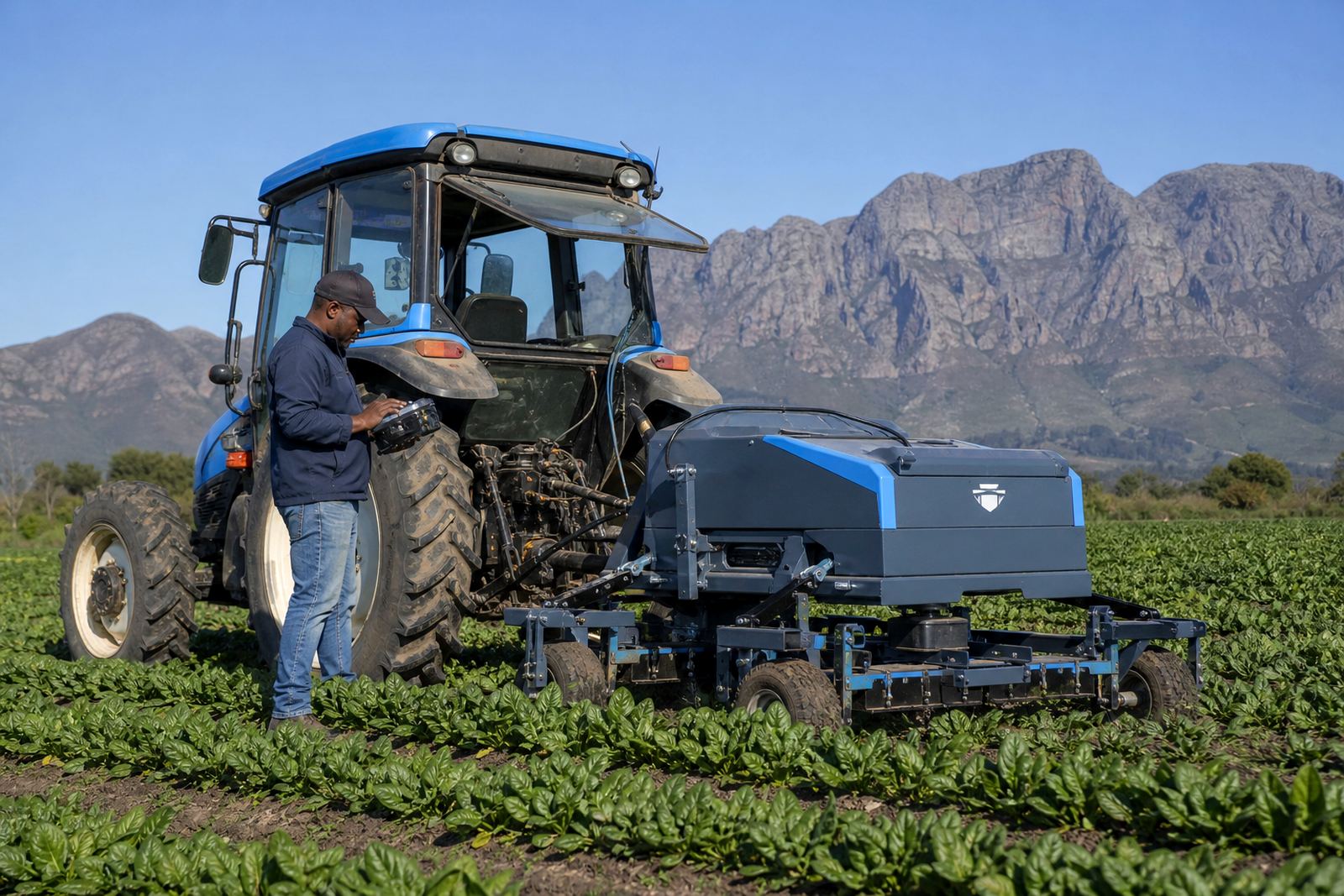
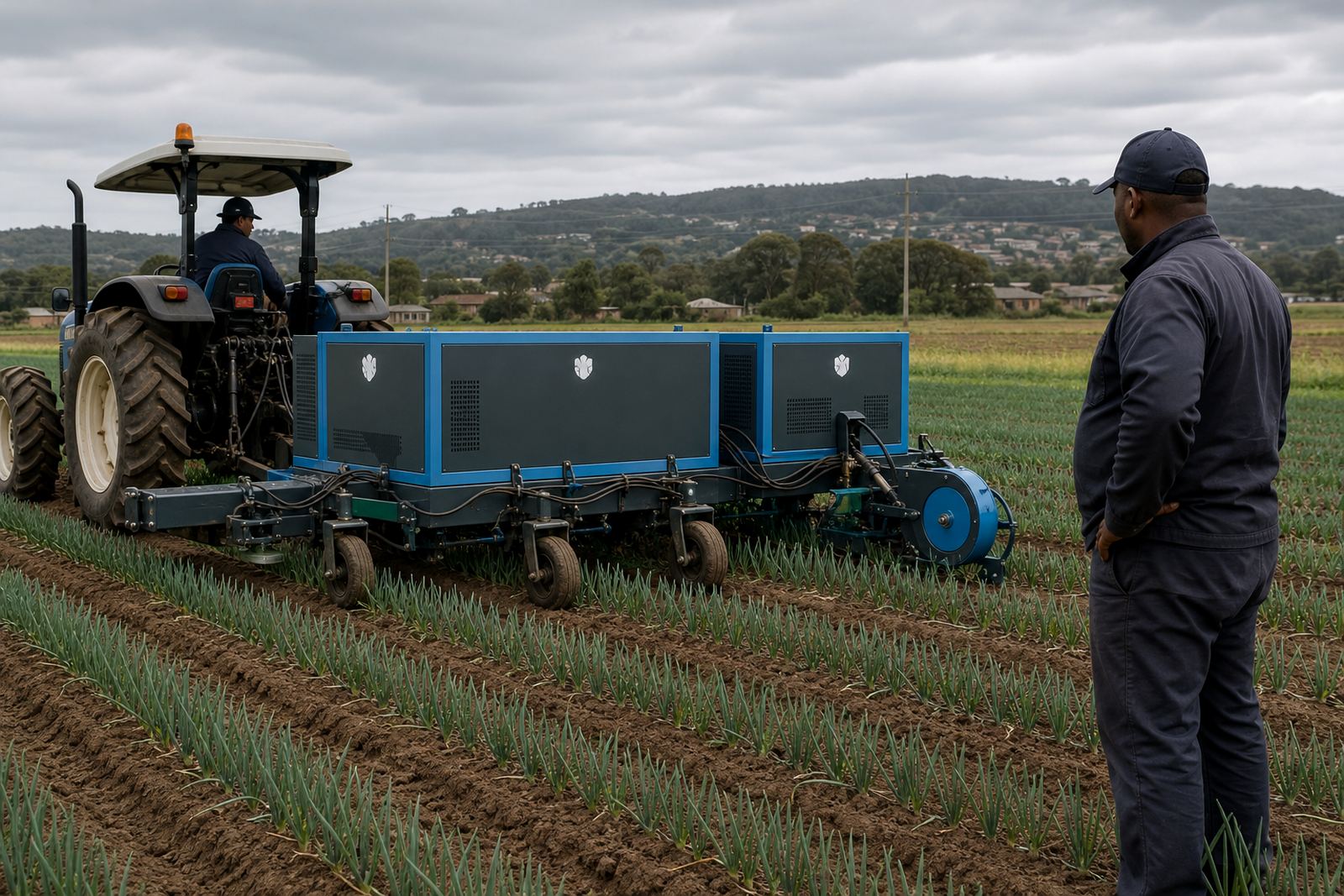
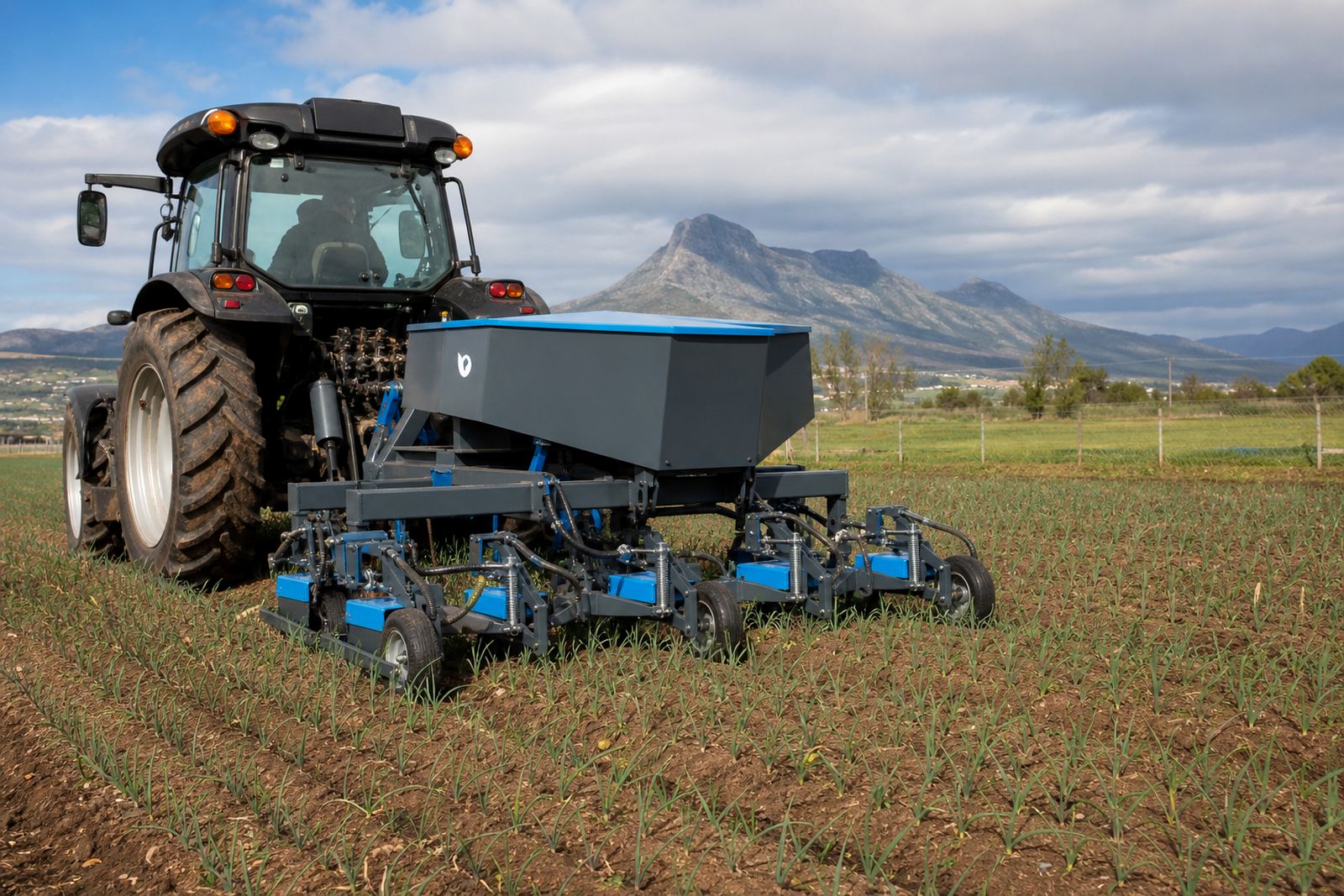
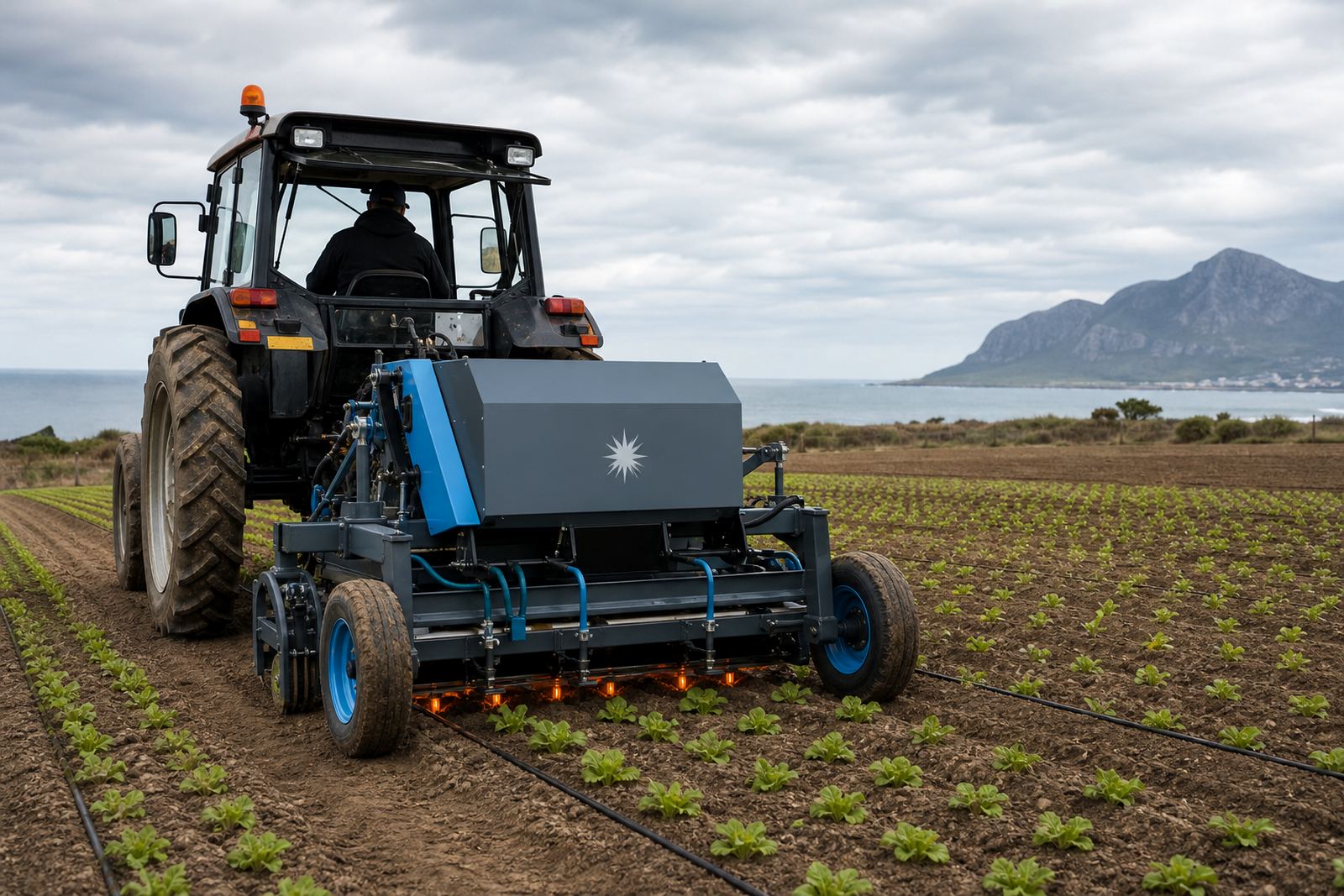
We supplied a tractor-drawn laser weeding unit with a trained operator and site coordination support. The unit used camera-guided weed detection to identify weed growth near the crop line, then directed the laser at the weed growing point so the unwanted plant was treated without soil disturbance.
The work sat well with row crops, especially vegetables planted in even lines. In this case the bed plan suited the block and the work could move through the rows without the churn that comes with mechanical cultivation. That matters on a smallholding, because repeated soil movement can lift fresh weed seed into the surface and make the next round harder.
- Camera-guided detection for row-based crop work
- Laser targeting focused on the weed growing point
- No herbicide sprays were used on the block
- No soil was turned during the pass
Two weeks from site check to the first pass
The project was run over two weeks. The first part covered arrival site checks, row reading and access marking, then we set the work sequence for the tractor and operator. The second part was the actual field pass, with the route trimmed to fit the bed layout and the compact turning areas.
Because the block was small, the scheduling work mattered almost as much as the pass itself. A short farm can still hold a lot of variation, so the plan had to cover gate access, where the tractor would stand between runs, and where the operator would pause to watch the weed pressure shift from one section to the next.
- Week 1: site checks and field mapping
- Week 1 to 2: access and sequence planning
- Week 2: tractor-drawn laser pass through the block
- Follow-up notes: post pass reporting and next-step timing
What the field pass showed
The main result was a cleaner working block with less pressure in the row gaps and around the crop stems. The crop stayed in place while the weeds were targeted, which is the value of using light-based control instead of cutting into the soil. There was also less disturbance on the compact turns, so the smallholding did not need extra repair work after the tractor left the rows.
The grower could see where weed stage had lined up well with the pass and where the thicker patches would need repeat attention later in the season. That kind of reading is useful on vegetable ground because the next decision depends on what is still emerging, what has already hardened off, and which rows will need a second pass before the canopy closes.
- Cleaner row gaps after the pass
- Crop rows left intact during treatment
- Less soil disturbance than mechanical cultivation
- Repeat pass planning based on weed stage and crop cover
What we would line up for a similar smallholding
For a compact coastal block like this, we would set the timing early against weed stage and row readiness, then confirm the route for the tractor before the unit enters the field. A smallholding can change quickly after wind or moisture, so the access check needs to sit close to the work day and not be treated as an afterthought.
We would also keep the report simple and practical, with notes on where weed pressure was light, where the denser sections sat, and where a second visit would make sense later in the season. That gives the grower a working record for the next crop cycle, especially where lettuce, brassicas, carrots or onions follow one another in the same beds.
- Set the pass around weed stage, not guesswork
- Check access and headlands before the unit enters
- Keep notes by bed so follow-up is easier
- Use repeat pass planning where pressure rises again
Key facts
| Project | Pringle Bay Smallholding |
|---|---|
| Work type | Contract laser weeding for a vegetable smallholding |
| Access pattern | Compact field access with a single-bed work plan |
| Method | Tractor-drawn, camera-guided laser weeding |
| Control approach | Herbicide-free, no soil disturbance |
| Service support | Field Assessments, Trial Strip Runs, Field Scheduling, Post Pass Reporting |