A co-op trial built around small blocks
The brief came from a vegetable grower group working through a shared crop programme near Malmesbury. The blocks were not all the same size or crop stage, so the first job was to walk each piece of ground and separate the fields that could be scheduled into a practical pass sequence from the ones that needed to sit out a little longer.
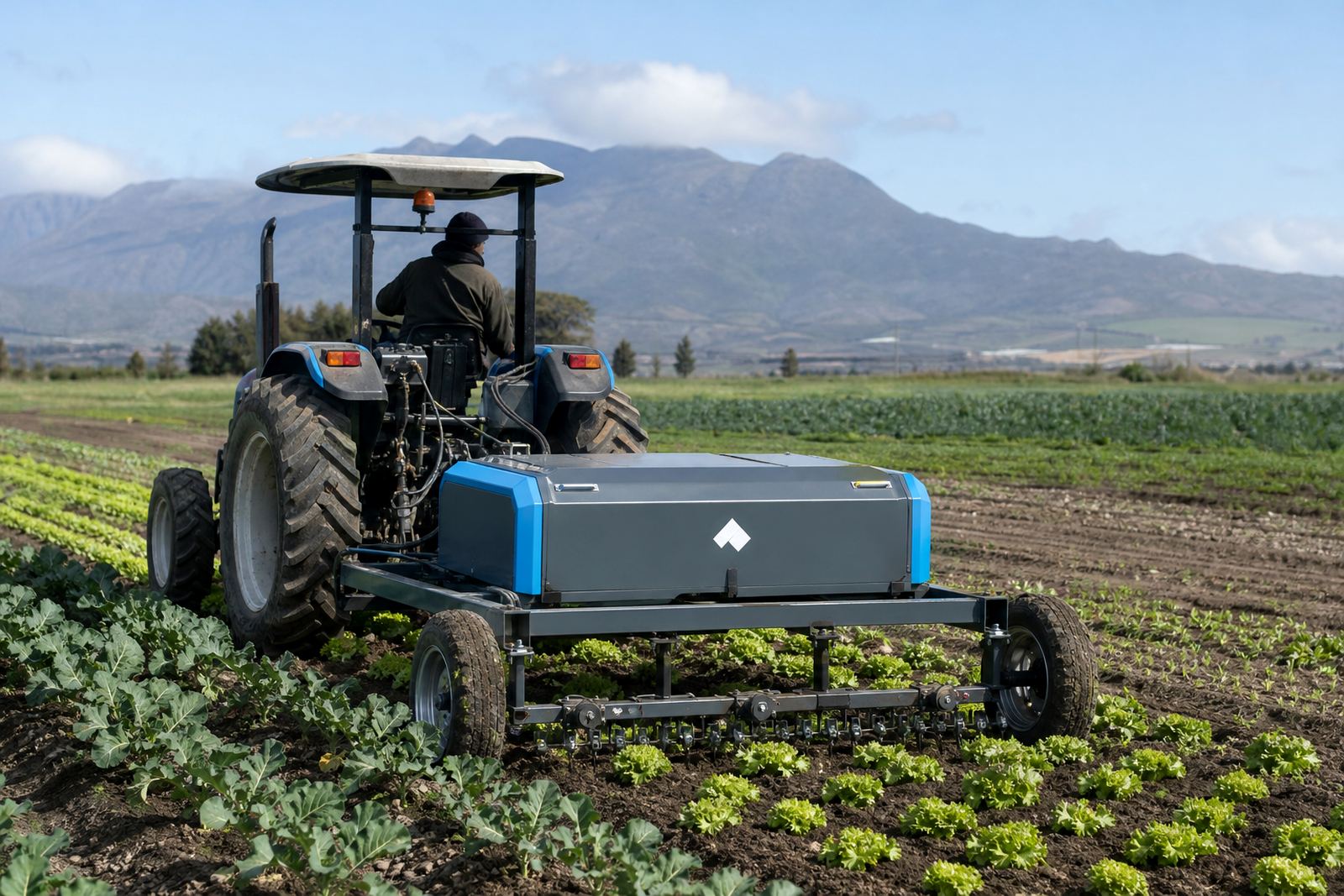
The farms were growing row crops and mixed vegetable plantings, with onions and brassicas forming most of the test area. There was also a smaller section of carrots and lettuce, which meant the operator had to treat row width, weed stage and crop canopy differently from block to block. On a shared programme, that kind of detail matters more than the headline crop name.
- Client type: shared vegetable grower group
- Area: Malmesbury, Western Cape
- Crop mix: onions, carrots, lettuce and brassicas
- Brief: booking suitability checks across multiple small blocks
What the booking brief had to answer
The co-op wanted to know which blocks could fit a tractor-drawn laser weeding unit, how the pass order should run, and where timing was already too late for the best weed stage. That meant looking at crop spacing, weed pressure, row definition, headlands, and whether the soil surface would carry the machine cleanly without ruts or unnecessary disturbance.
We also had to consider how the work would fit around normal farm movement. Some blocks were tucked close to shade-net edges, while others sat on flatter ground with better turning space for the tractor and operator. Field scheduling was shaped around those practical limits, not around a neat paper plan.
The booking notes were made in plain terms so the growers could separate the strong candidates from the borderline blocks. That helped avoid a long list of hopeful fields that would have cost time in the wrong window.
- Access checks for tractor movement and turning room
- Weed stage checks for pass timing
- Row crop fit assessment for each block
- Notes for shared use across multiple growers
How the field work was carried out
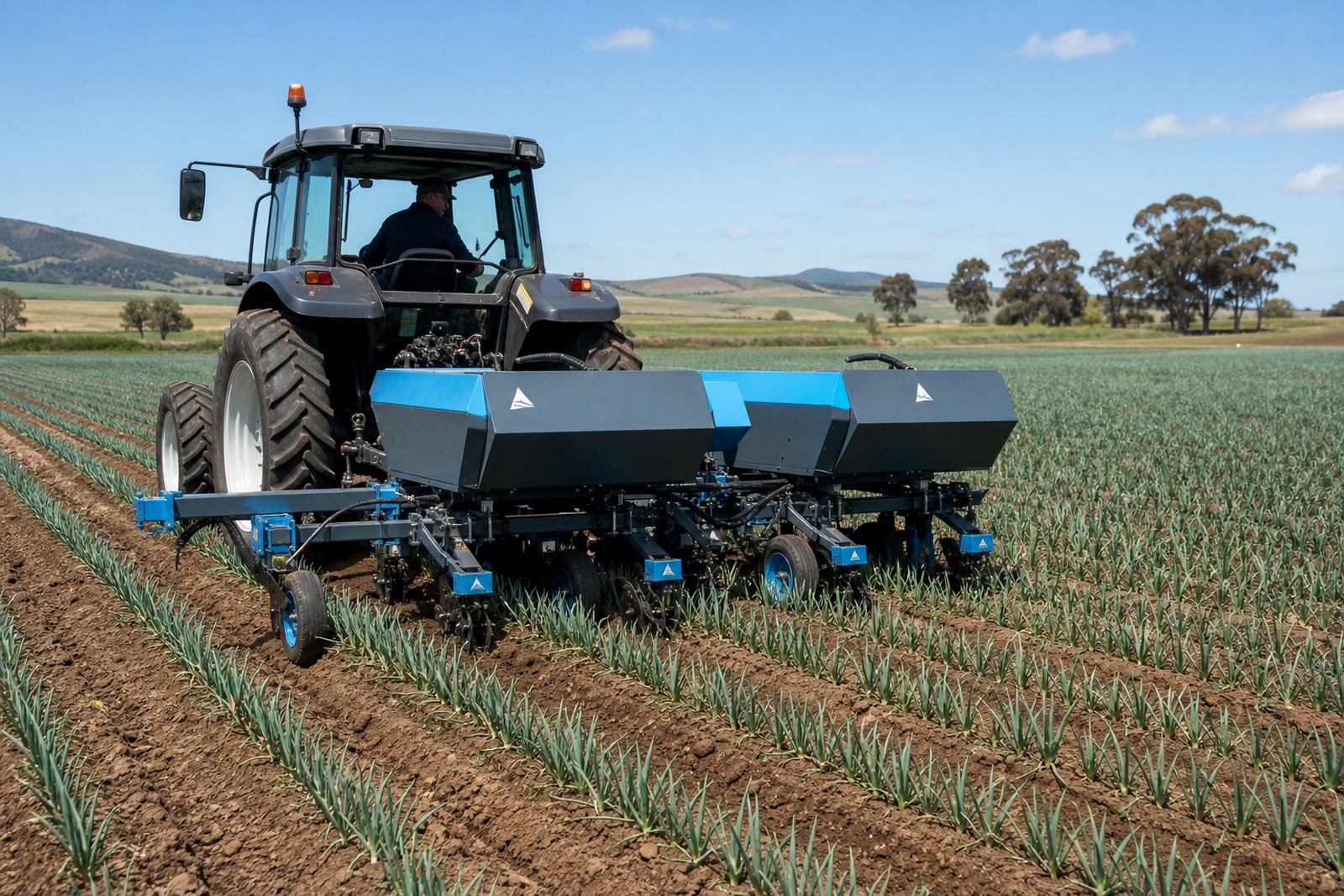
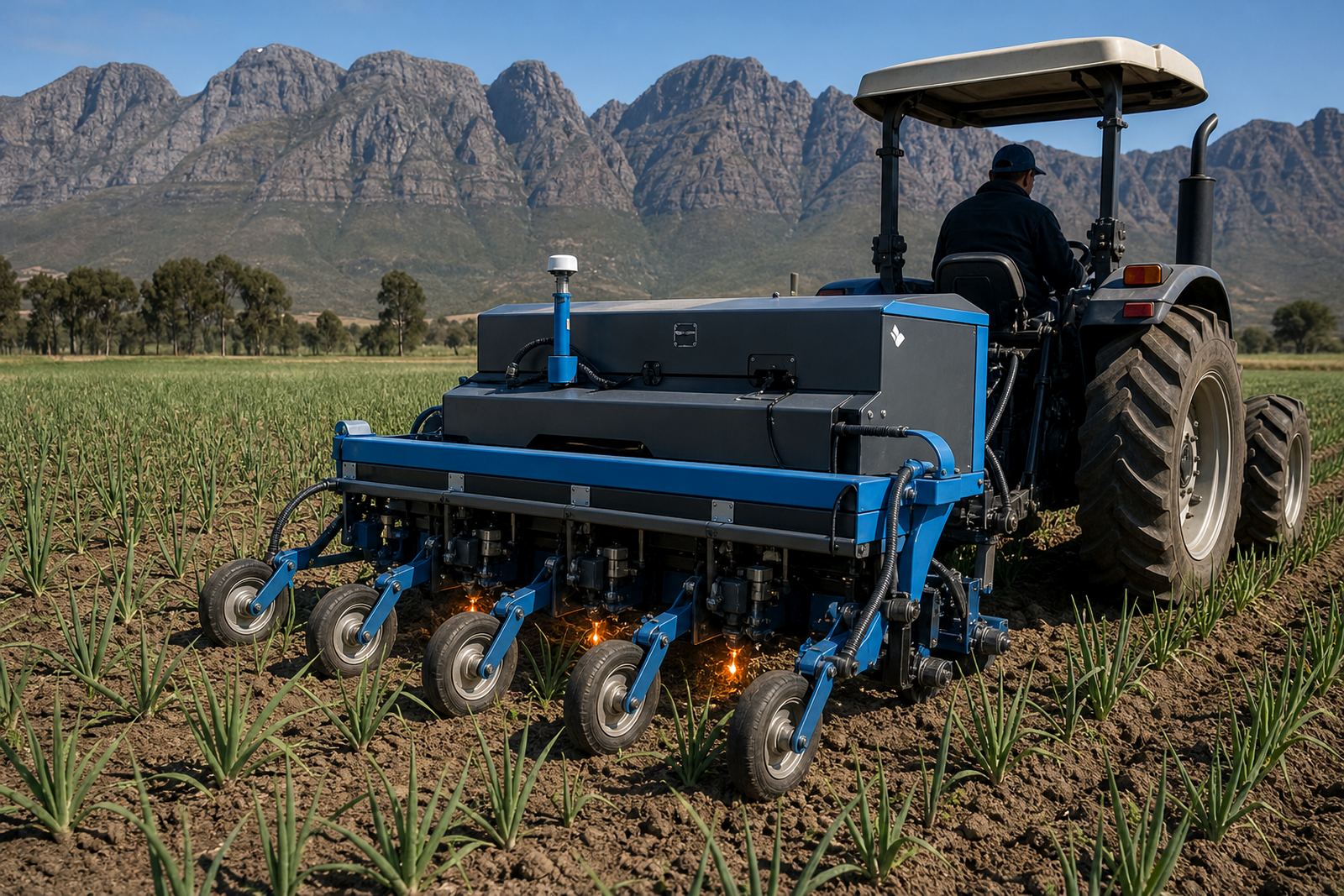
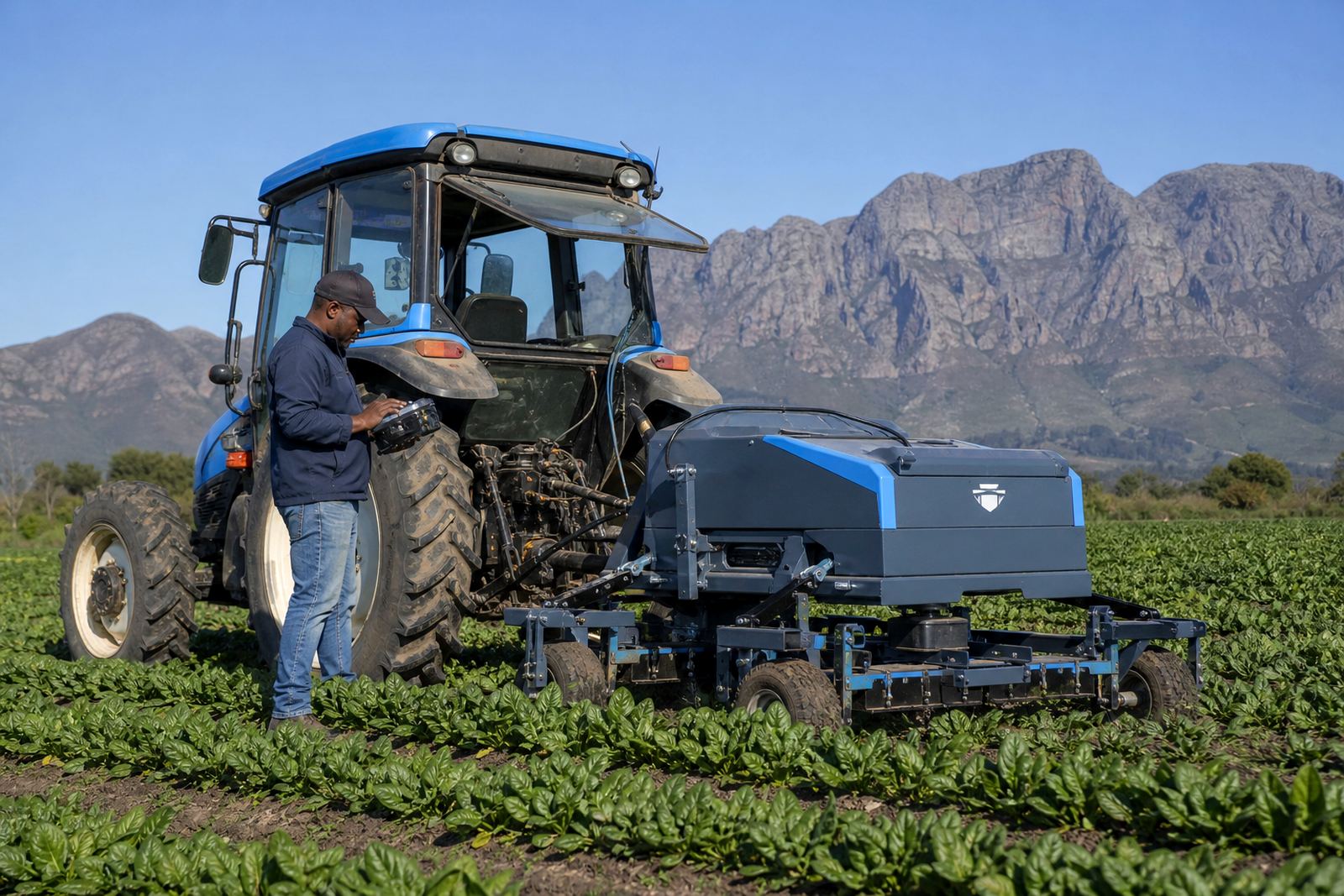
We supplied the operator, the laser weeding unit and the field scheduling support needed to line up the trial. The unit used camera-guided weed detection, with lasers aimed at the weed growing points between and around the crop plants. That made it suitable for row crops where the crop line is clear and the weeds are still at a useful growth stage.
The key was not speed on paper, but a measured pass that matched each block's weed pressure. In lighter areas the work moved more freely, while denser patches needed a steadier pace and tighter observation from the operator. No soil was turned over, and the crop surface was left undisturbed.
We also ran trial strip checks on selected edges before the wider booking list was finalised. That gave the growers a cleaner read on how the unit would sit in their ground rather than guessing from one walk-through.
- Operator supplied for the full field visit
- Trial strip runs on selected blocks
- Arrival site checks before the main pass
- Post pass reporting for the co-op record
Timing across a three week window
The work ran over three weeks, with the first week spent on inspections and crop timing notes, the second on trial strip runs and field order, and the third on the full scheduling sheet for the blocks that were ready. That sequence let the co-op avoid squeezing every farm into the same day or pushing a crop beyond its useful weed stage.
Because the blocks were small, the timing question was less about volume and more about fit. Some fields were ready to book, some needed another round of weed growth before a pass would be worthwhile, and a few were better held for later season planning. The shared programme made that sorting important, since one weak block can slow a whole group if it is not separated early.
We did not need any soil prep or chemical changeover for the trial. The field notes stayed focused on crop timing, weed pressure and access, which kept the work practical for the growers involved.
What the growers asked to keep in the plan
The growers wanted a programme that could hold up across several farms without forcing each one into the same pattern. So we grouped the fields by readiness, not by farm name, and set repeat pass planning only where the weed stage looked likely to support it. That made the season notes more useful for the people actually working the land.
The co-op also asked for travel coordination because the blocks were spread across different roads and farm entrances. Our team built the schedule with those routes in mind, so the unit and operator could move from one site to the next without wasting hours between checks.
After the field visits, the reporting covered weed stage, crop condition, headland access and which blocks should be held for later. That sort of note often matters more than a general yes or no, especially when several growers are sharing one programme.
- Travel coordination across nearby blocks
- Repeat pass planning for suitable fields
- Season bookings mapped by readiness
- Grower consultation for shared decisions
What the Malmesbury trial showed
The clearest result was that small blocks can still be organised into a workable laser weeding programme when the timing is checked properly. The trial helped the co-op separate the fields that were ready from the ones that needed more weed development or better crop definition before booking.
It also showed how useful a shared schedule can be when different growers are involved. With the right field notes, the group could see where the tractor-drawn unit would fit cleanly, where access would be awkward, and which crops would need closer timing if they were to sit in the same pass cycle. That kind of practical sorting saves confusion later.
For us, the strongest part of the project was the way the grower liaison, field scheduling and operator checks worked together. The trial did not depend on a single pass doing everything. It depended on the right block being booked at the right point in the season, and the co-op had enough detail to make that call.
If we repeat the same kind of job
On another shared grower trial, we would start with the field walk and booking screen first, then hold the trial strip runs for the blocks that sit near the edge of readiness. That order keeps the schedule honest and stops the team from overcommitting to land that is not yet a proper fit.
We would also keep the reporting grouped by block rather than by farm alone. In a co-op setting, that makes it easier to compare rows, weed stage and access notes across different growers without losing the practical detail. When several small fields are involved, clarity in the paperwork matters nearly as much as the pass itself.
Malmesbury suited this way of working because the growers wanted a measured programme, not a flashy one. The trial stayed focused on crop timing, field conditions and usable scheduling, which is the part that usually matters most when the blocks are small and the season is already moving.
Key facts
| Project type | Shared grower trial for multiple small vegetable blocks |
|---|---|
| Town | Malmesbury, Western Cape |
| Service scope | Field assessments, trial strip runs, field scheduling, post pass reporting |
| Machine setup | Tractor-drawn laser weeding unit with trained operator |
| Crop types | Onions, carrots, lettuce and brassicas |
| Timeline | Three weeks from inspection to scheduling notes |