The field brief in Grabouw
The onion block sat in a part of Grabouw where cool mornings can hold moisture in the canopy, then the sun dries the beds fast. That makes timing a real issue, because young weeds do not stay at one stage for long and the crop rows can lose clarity if the pass is pushed too late.
The brief was straight to the point. Keep the crop visible, work between and around the plants without disturbing the soil, and use laser weeding as part of a planned programme rather than a once-off rescue. The grower wanted a trial strip first, with enough of the block covered to judge weed pressure, row definition and the way the onions carried through the pass.
On onion crops, spacing and line of sight matter. A tractor-drawn laser unit can only do its best work when the crop is already established and the weeds are still in an early stage. That was the starting point for every decision on this job.
What the block needed from us
The site brought a few limits with it. There were uneven patches in the field, some lighter weed flushes and some heavier pockets where timing had already slipped. The tractor route also had to stay tidy so the operator could keep the unit centred and maintain a steady working line through the rows.
- early weed stage planning so the lasers could target small growing points
- tractor-drawn operation with a trained operator in the cab and at the unit
- no herbicide sprays, no soil throw and no mechanical root disturbance
- row crop handling with enough clearance for onion plants already standing in line
- field notes for repeat passes if a second timing window opened later
The grower also wanted honest limits set before the work started. Laser weeding is not a blanket answer for every weed size or every weather window. It works best where the timing is right, the crop rows are readable and the field can be worked at a consistent pace.
The trial strip and operator set-up
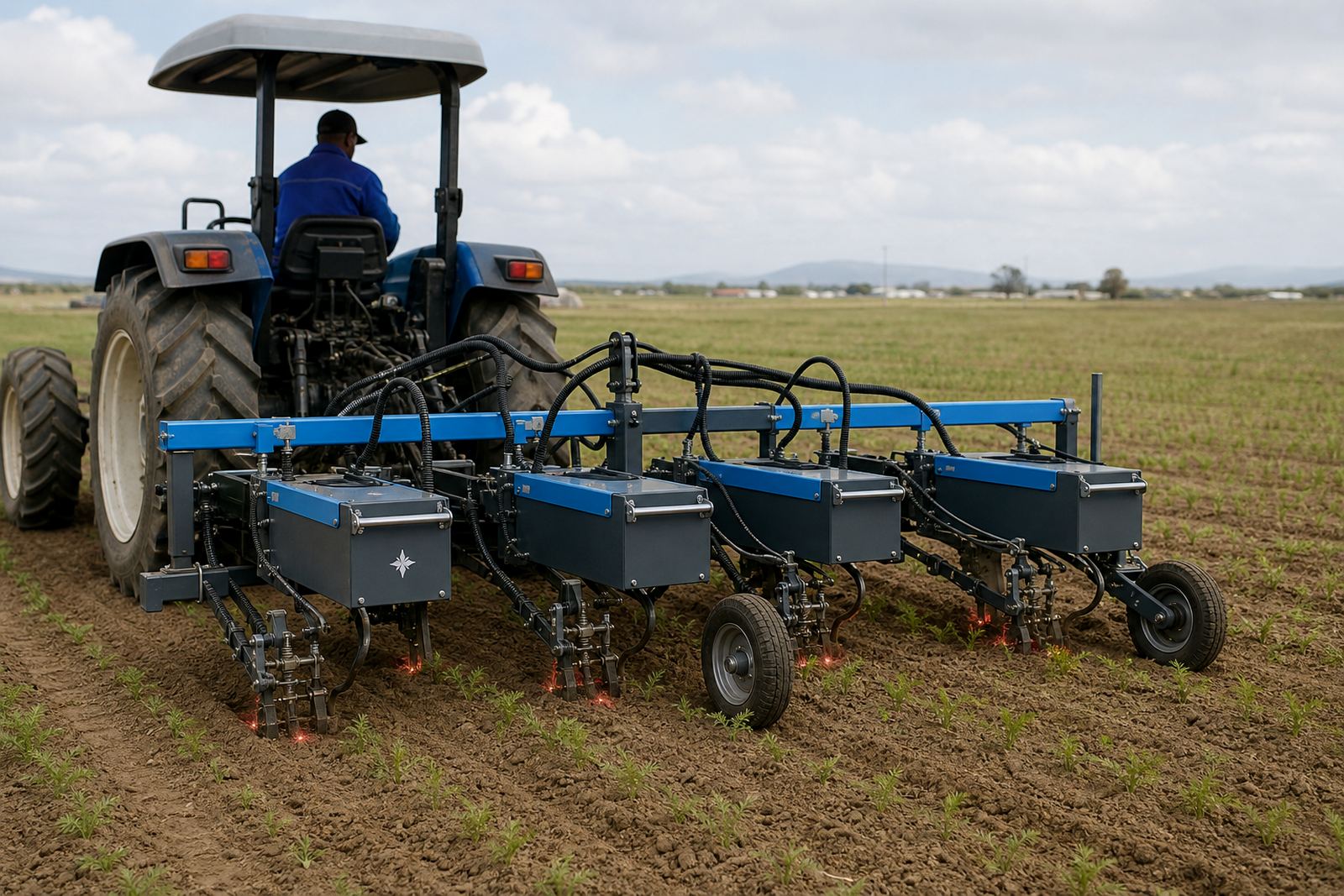
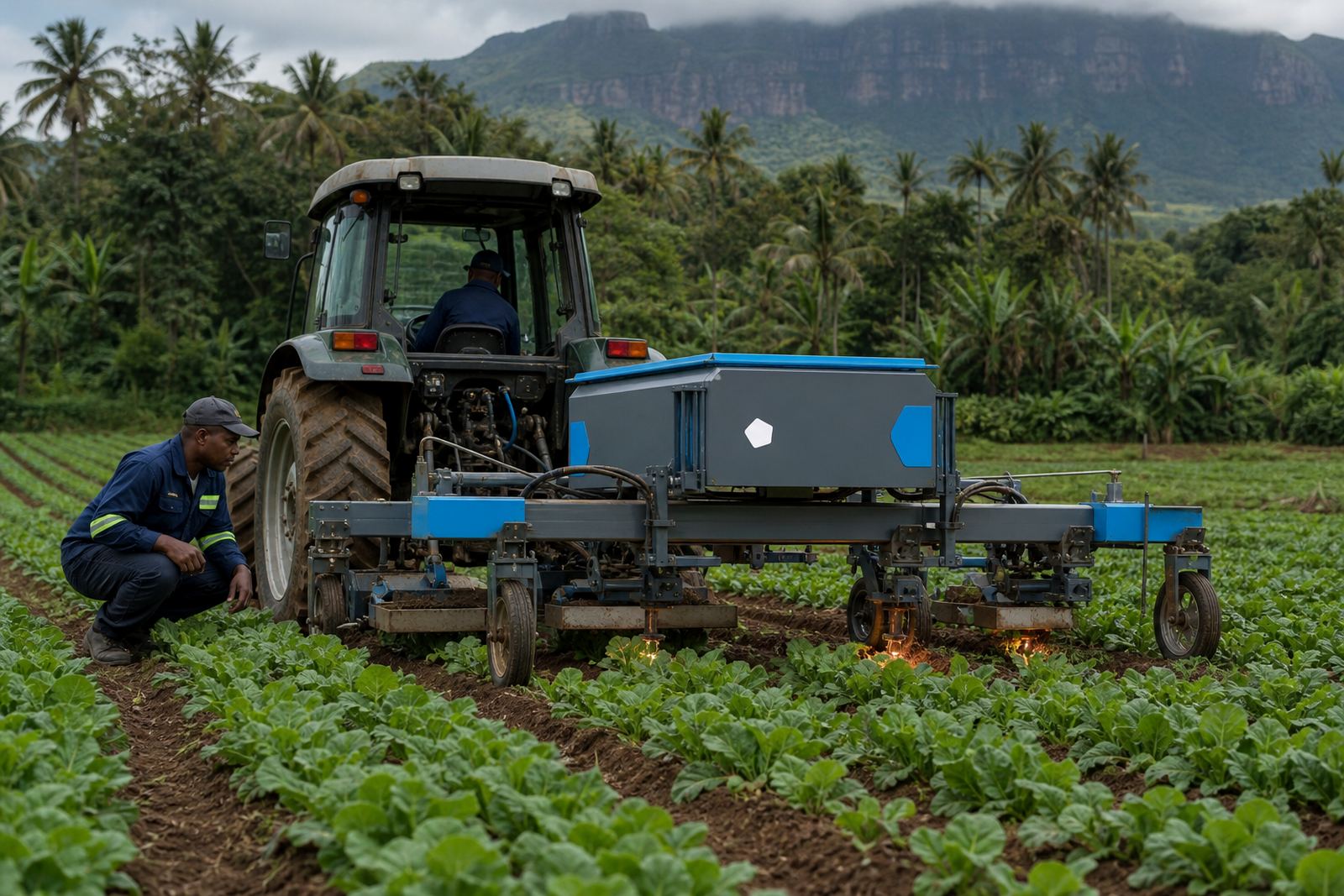
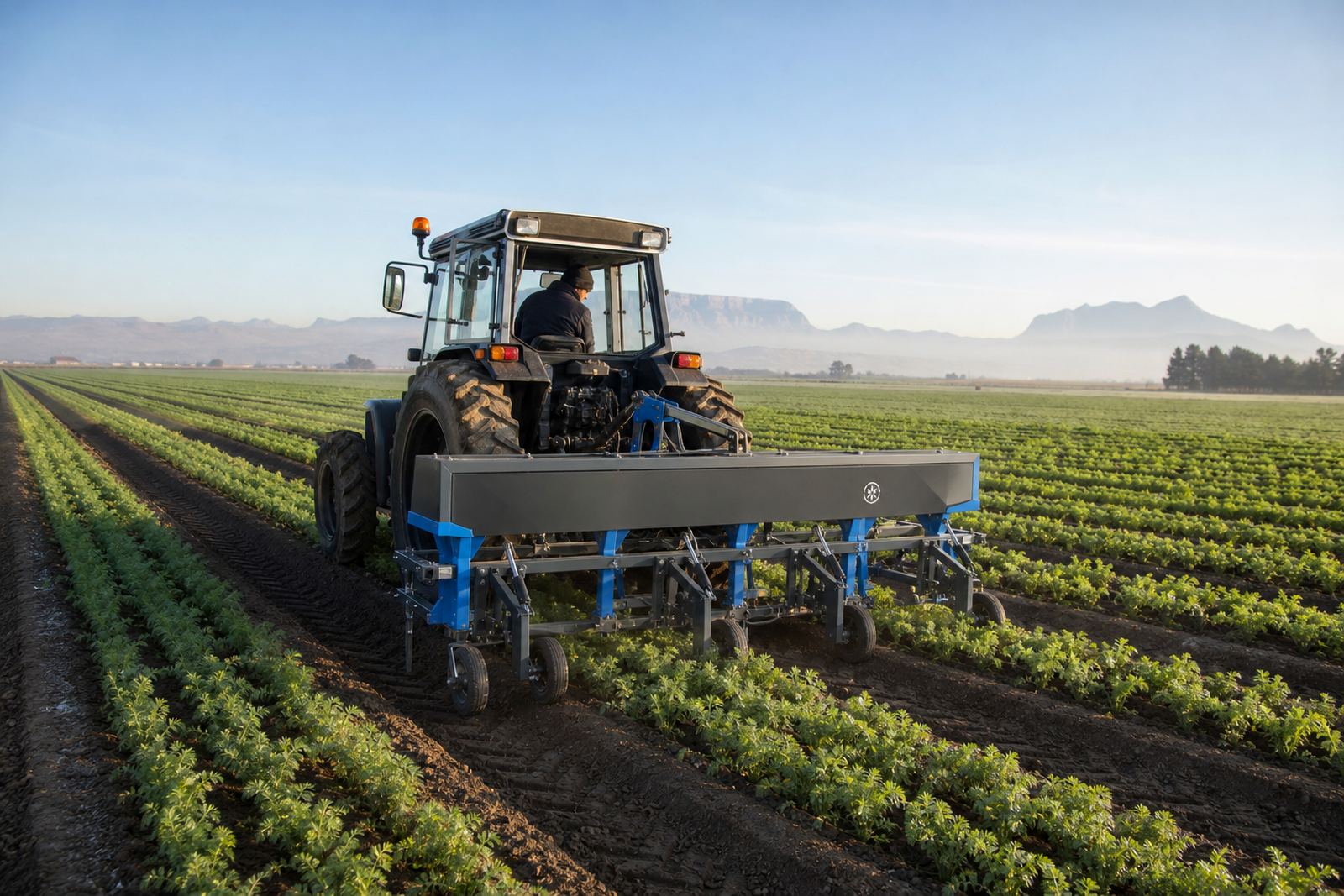
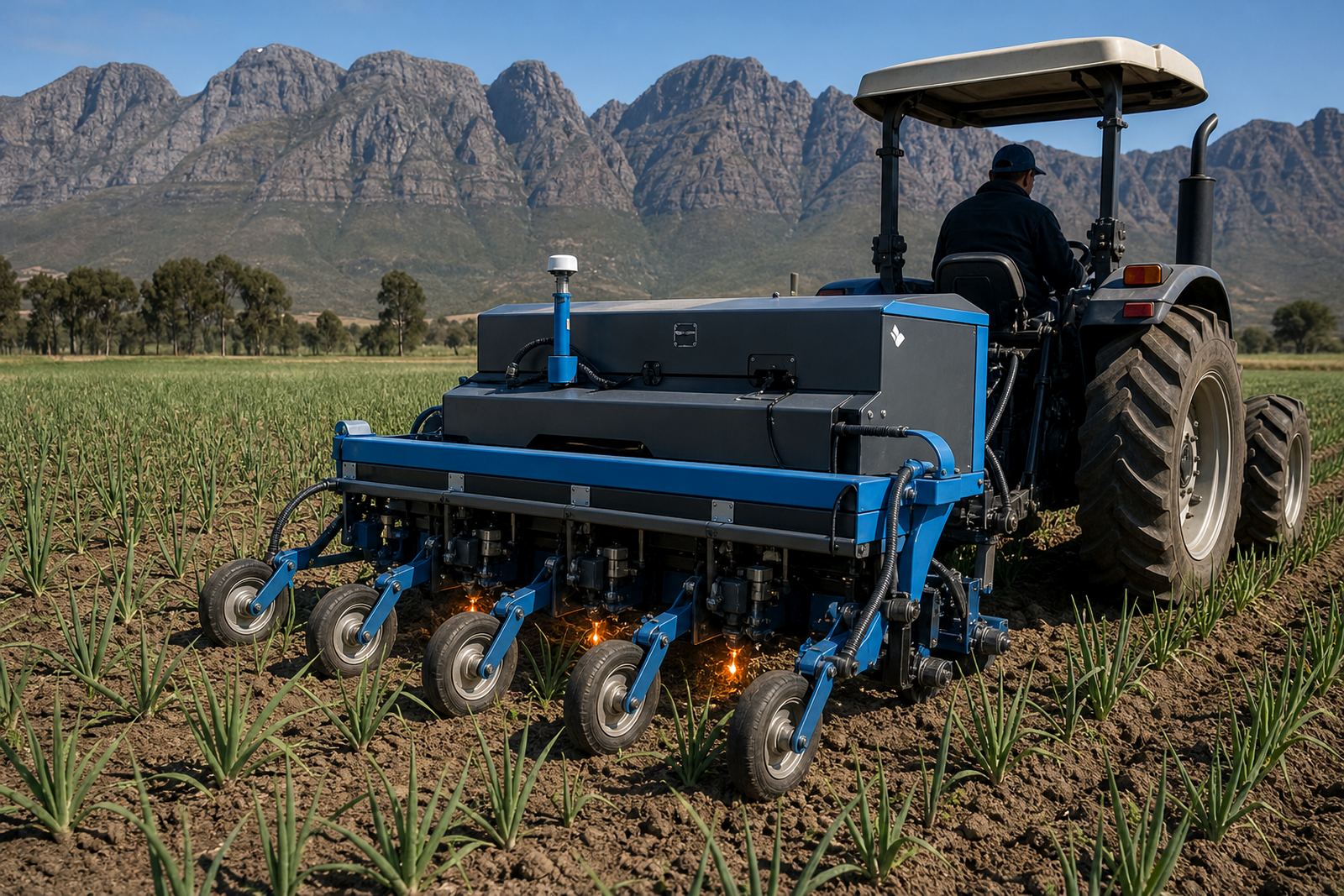
We brought in a tractor-drawn laser weeding unit with our operator team and set up a trial strip before extending the work. That gave the grower a clear look at how the machine handled the onion row geometry and how the system read the weed pattern in the block.
The process used camera-guided weed detection, with lasers aimed at the weed growing points rather than the soil surface. In practical terms, that means the unit looks for the target and strikes the plant tissue that matters, while leaving the crop rows standing. In onions, that separation is only useful when visibility is good and the weeds have not grown into a tangled mat.
- arrival site checks before the first pass
- trial strip runs to check row reading and weed pressure
- field scheduling around crop condition and ground travel
- post pass reporting for the grower team
The pace in the field changed with weed pressure. Lighter sections moved cleanly and heavier sections needed more care, so speed was not treated as a fixed number. On a job like this, the right pace is the one that protects row visibility and keeps the treatment accurate.
Two weeks of timing and follow-through
The project ran over two weeks of planning, field checks and active passes. The first week was used to assess the block, confirm the row spacing and judge how far the weeds had progressed. The second week covered the trial strip and the main run, with repeat planning kept in reserve for any patch that showed a fresh flush later.
That short programme worked because the crop was watched at the right stage. Onion weeds can move from manageable to awkward very quickly, especially after a run of warm weather and moisture. Once the crop rows are too masked, the operator loses part of the visual read and the job becomes more limited.
The grower team also wanted the pass sequence matched to the farm’s other work. We coordinated arrival, walking the field lines before the tractor moved in, and kept the work tied to the sections that offered the best weed stage for laser control. That kept the focus on the crop, not on forcing the machine through poor timing.
What the grower team noticed
The main value of the trial was consistency. The rows stayed easier to see after the pass, and the grower could judge where the weed pressure had been taken down and where a later follow-up might still be useful. Because the method is herbicide-free and does not disturb the soil, the block kept its structure intact for the next crop management steps.
There was also value in the reporting. The grower had a clearer sense of which parts of the block had the heaviest weed burden, which sections were suitable for repeat pass planning and how future bookings should be timed. That sort of note matters on vegetable farms where timing can shift quickly across a season.
- better row visibility for follow-up field work
- cleaner read on weed stage by field section
- no spray residue to work around
- no cultivation marks left in the beds
This kind of result depends on timing and weed stage. It is strongest where the crop is already in line and the weeds are still small enough for the lasers to target the right point.
What we would carry into the next onion block
For another onion block in Grabouw or a similar growing area, we would keep the same structure: early field assessment, trial strip, operator supplied work and a clear pass plan before the weeds get away from the crop. That order gives the grower a better read on what the unit can do in that block and what the timing window looks like for the rest of the season.
We would also keep the grower consultation practical. If a block has uneven emergence, edge weeds or heavier pressure in specific sections, those notes should guide the schedule before the tractor moves in. Laser weeding works best when the crop layout, weed stage and field access are all checked together.
For onion farms, that usually means planning around visibility first and speed second. A field that reads well on the day is the field that gives the laser unit the best chance to do its job.
- field assessment before the next booking window
- repeat pass planning for any second flush
- multi farm scheduling if more than one block needs treatment
Key facts
| Project | Grabouw onion grower trial |
|---|---|
| Town | Grabouw, Western Cape |
| Crop | Onions |
| Service | Contract laser weeding with operator supplied unit |
| Timeline | Two weeks |
| Key note | Early weed timing and consistent row visibility |