What the Ceres block needed from the start
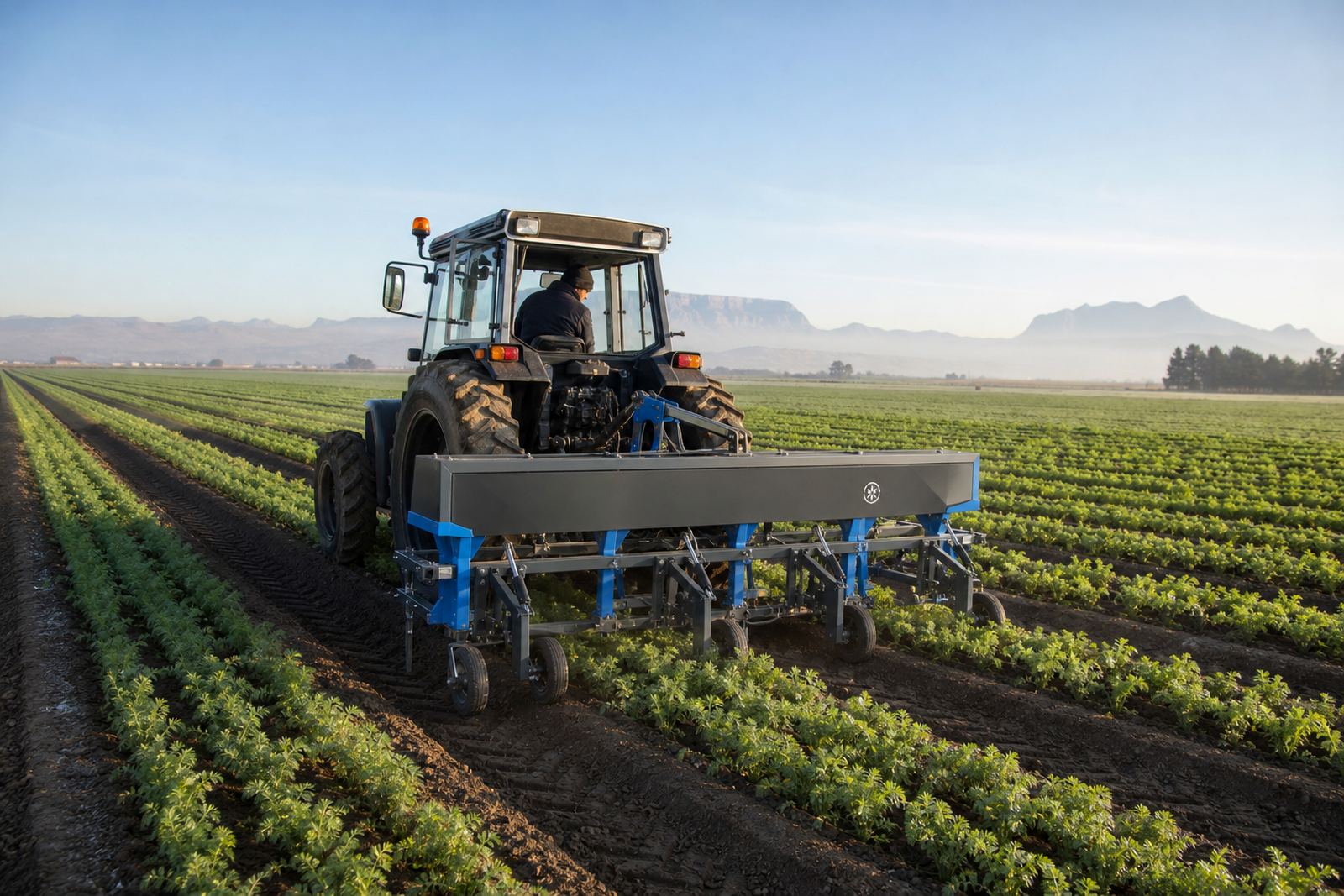
The brief came from a carrot farm outside Ceres with beds already formed and a crop that needed weed control between the rows, not through the crop. The grower wanted a contract laser weeding plan that kept the soil untouched, avoided herbicide sprays and fitted the timing of a working vegetable block rather than a clean test patch.
Bed alignment mattered because the tractor-drawn unit had to move steadily through the rows and keep the camera system reading the crop line clearly. We also looked at weed size, because laser weeding works best when weeds are still small and the growing point can be targeted before the weeds get away from the crop canopy.
- Crop type: carrots in a row crop layout
- Location: Ceres, Western Cape
- Method: tractor-drawn laser weeding with a trained operator
- Main checks: bed line, weed stage, access lanes and turning space
- Ground condition: firm enough for controlled field travel after recent moisture variation
Field notes from the assessment run
The first task was a slow pass through the block to read the field as it stood. We checked how straight the beds ran over the length of the land, where the rows tightened or drifted, and where headlands would allow safe turning without dragging the machine through soft edges. That kind of layout work matters on carrots, because the crop sits close to the treated area and there is very little room for poor tracking.
We also assessed weed pressure by section, since not every part of a field ages at the same pace. In one area the weeds were still in a suitable early stage, while another patch had more variation and would need tighter timing. The travel conditions were workable, though the surface had a few uneven stretches that asked for careful speed control and a clean approach into the row ends.
- Bed spacing and row direction were checked against tractor travel
- Weed pressure was mapped by section, not treated as one flat block
- Turning points were noted where row ends narrowed
- Travel speed would need adjustment where weed density lifted
How the laser weeding plan was built
Laser weeding uses camera-guided detection to separate crop from weed, then directs laser energy at the weed growing point. That makes timing important. A young weed with exposed growth is easier to target than a larger, tougher plant that has already spread leaves across the row edge. For carrots, the aim is to stay close to the crop without disturbing the soil, because there is no cultivation action folding soil back over the row.
After the block walk, we set up the work in practical stages. The first stage was an initial pass over the sections with the best alignment and the most even weed stage. The second stage was a return visit plan for the parts where the weed flush was less even. That let the grower match field timing to crop condition rather than trying to cover the full block in one fixed rhythm.
- Camera-guided detection keeps the laser focused on weeds, not the crop line
- Field speed changes with weed pressure and row clarity
- No herbicide spray is used during the pass
- No soil disturbance from hoeing or cultivation is needed
What our team supplied on site
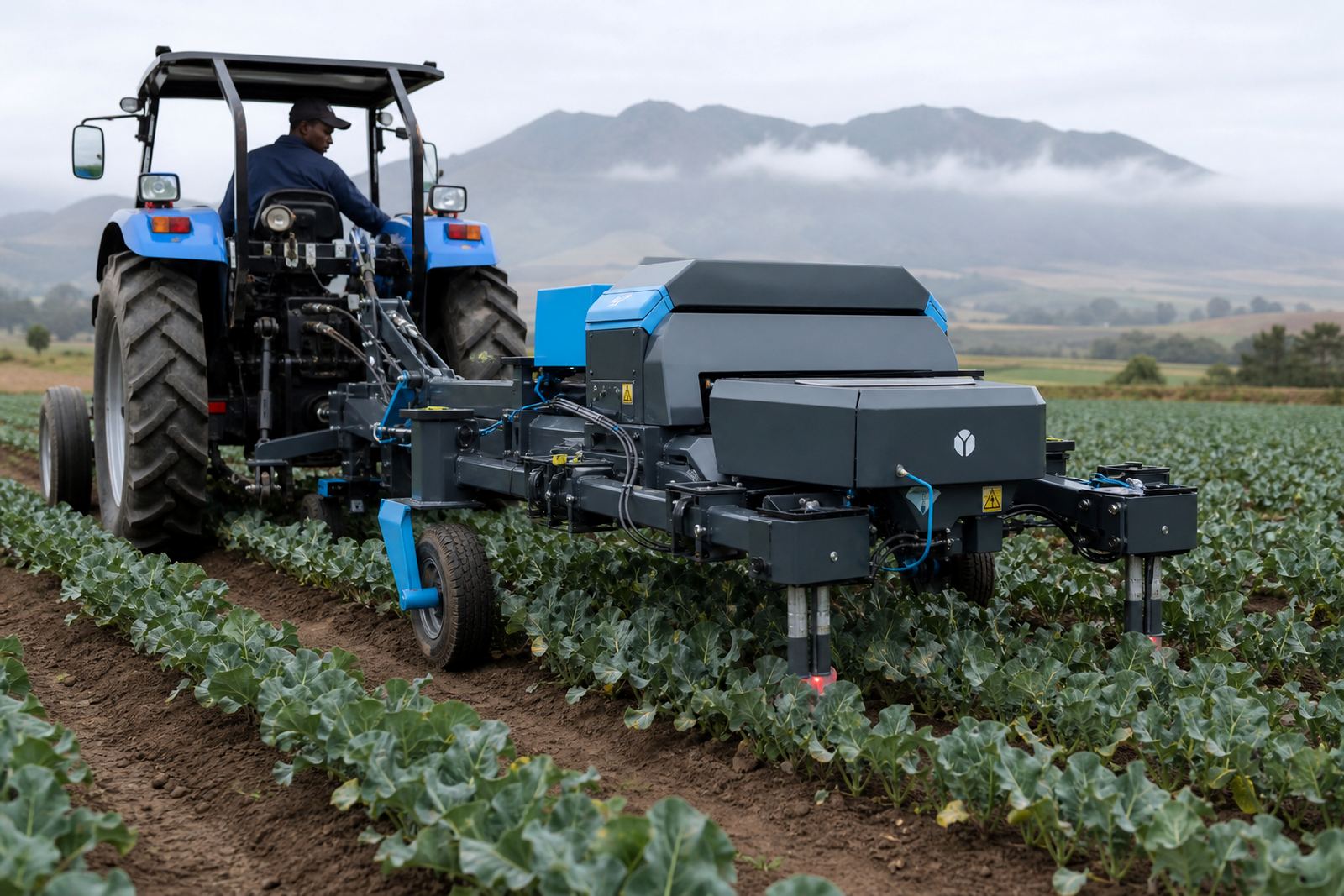
We supplied the tractor-drawn laser weeding unit with a trained operator and field support from our Philippi base. The operator handled the machine settings in the row, while the scheduling side lined up the movement plan, arrival order and the field sequence. For a carrot block, that coordination matters because the crop row, the headlands and the weed stage all need to line up before the machine goes in.
The visit also included crop timing guidance and a trial strip run on the most representative section of the block. That strip gave the grower a clear view of how the unit read the bed alignment and how the pass would move across the crop when the weeds were at the right stage. We then prepared the follow-up plan for the rest of the block, including repeat pass planning where the weed flush suggested it.
- Operator supplied with the laser unit
- Trial strip run completed on the selected section
- Crop timing plan set around weed stage and row condition
- Field scheduling aligned to the grower’s block order
Timing across the block in weeks
The project ran over three weeks from first inspection to the scheduled field plan. Week one covered the site walk, bed check and weed stage review. Week two covered the trial strip run and the section-by-section scheduling. Week three was used to lock in the pass order, the travel route and the repeat pass note for the areas that would need closer follow-up.
That timetable worked because the crop was already in the field and the main question was not whether to weed, but when each section was ready for the laser. Some growers need a single clean visit, others need a more measured sequence across the block. Here, the Ceres carrot block sat closer to the second pattern, with part of the land ready earlier and part needing a little more watching.
- Week 1: block assessment and bed alignment check
- Week 2: trial strip run and section planning
- Week 3: field sequence and repeat pass note
- Pass order based on row condition and weed stage
What the grower had to work with after the visit
The result was a working plan that matched the block rather than forcing the block to fit a fixed route. The grower had a clear read on where the tractor-drawn unit could move cleanly, where the weeds were at a suitable stage, and where the crop line needed a steadier approach. That left the farm with more usable detail for the next field movement and less guesswork about the remaining weed pressure.
We also left post pass reporting notes that covered bed alignment, travel conditions and the parts of the block that would need another look. On carrot land, small differences in row shape or weed size can shift the result from one corner to the next, so the reporting has to be practical and section based. For this Ceres job, that made the follow-up work easier to plan and easier to fit around the rest of the farm programme.
- Section notes on row clarity and weed stage
- Travel condition notes for future field access
- Repeat pass planning for uneven weed flush areas
- Clearer scheduling for the next crop interval
What we would carry into another carrot block
For a similar carrot block, we would keep the same order of work: assess the bed line first, check weed stage second, then place the tractor and operator where the row geometry gives the cleanest pass. That sequence keeps the work grounded in the field rather than in a fixed assumption about the block. It also gives room for local factors such as wind on the day, soil carry on the tyres and the way the rows settle after irrigation or rain.
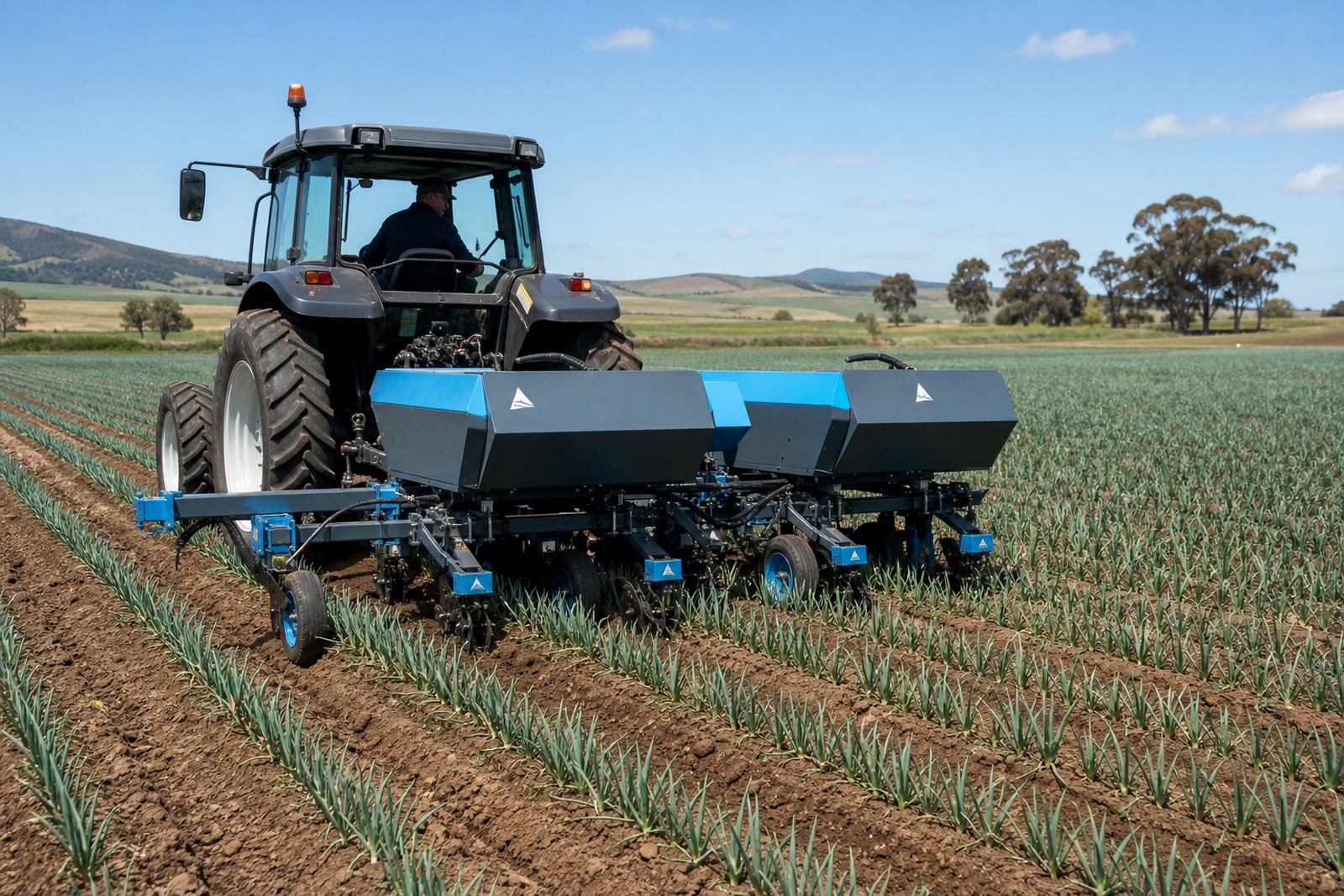
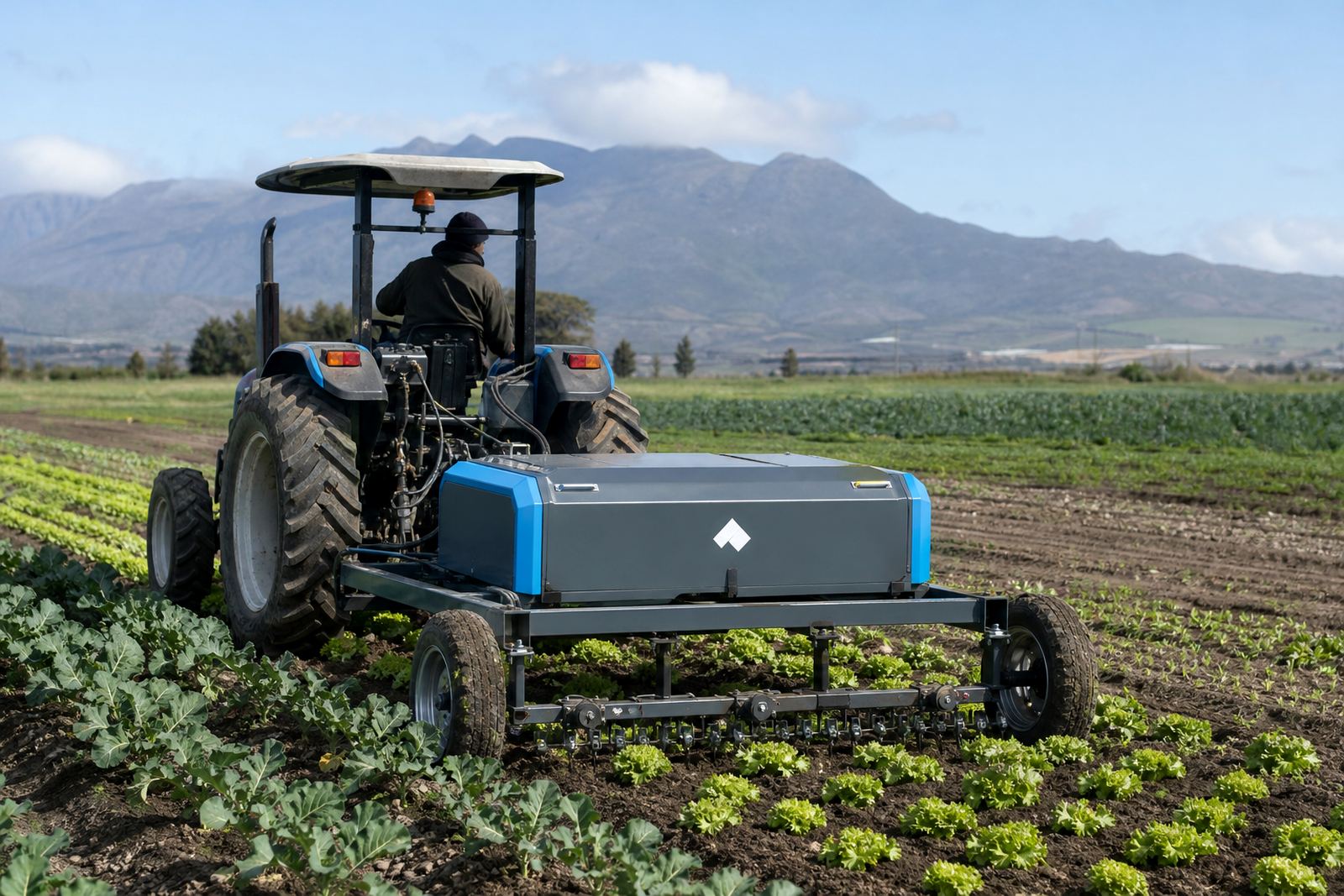
We would also keep the split between a trial strip and the full field plan, because carrot blocks often show their weak points in one section long before the whole land tells the same story. That approach suits growers who need herbicide-free weed control with no soil disturbance and a clear view of what each pass is doing at crop level. In Ceres, the block layout and timing made that practical, and the same pattern would suit other row crops such as onions, lettuce and brassicas when the weed stage is right.
- Start with bed alignment and travel conditions
- Check weed stage before setting field speed
- Use a trial strip where the crop line is representative
- Plan repeat passes by section, not by assumption
Key facts
| Client type | Carrot grower |
|---|---|
| Town | Ceres, Western Cape |
| Crop | Carrots |
| Service | Contract laser weeding assessment and field scheduling |
| Equipment | Tractor-drawn laser weeding unit with trained operator |
| Project length | 3 weeks |