Row shape changes the whole day in the field
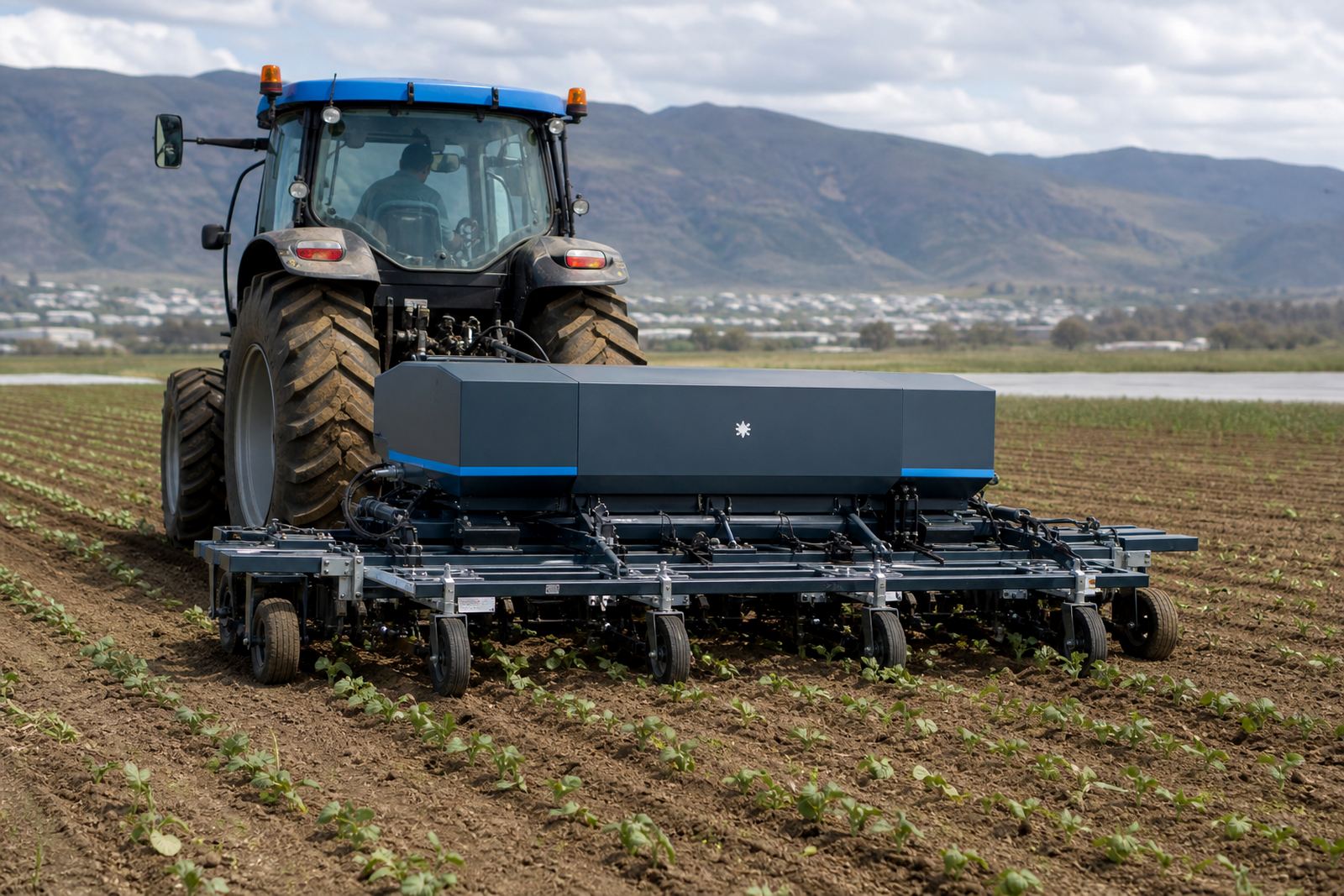
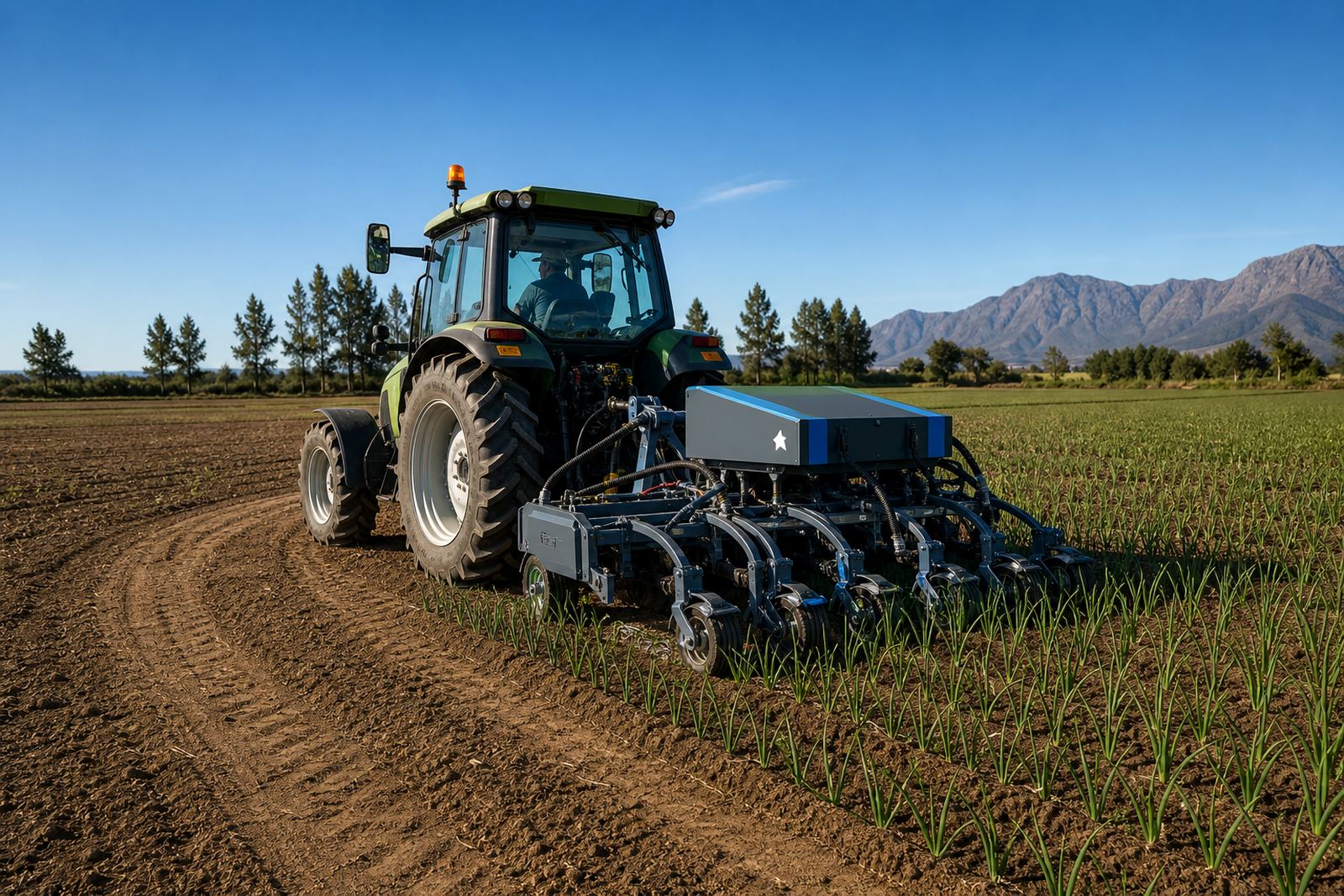
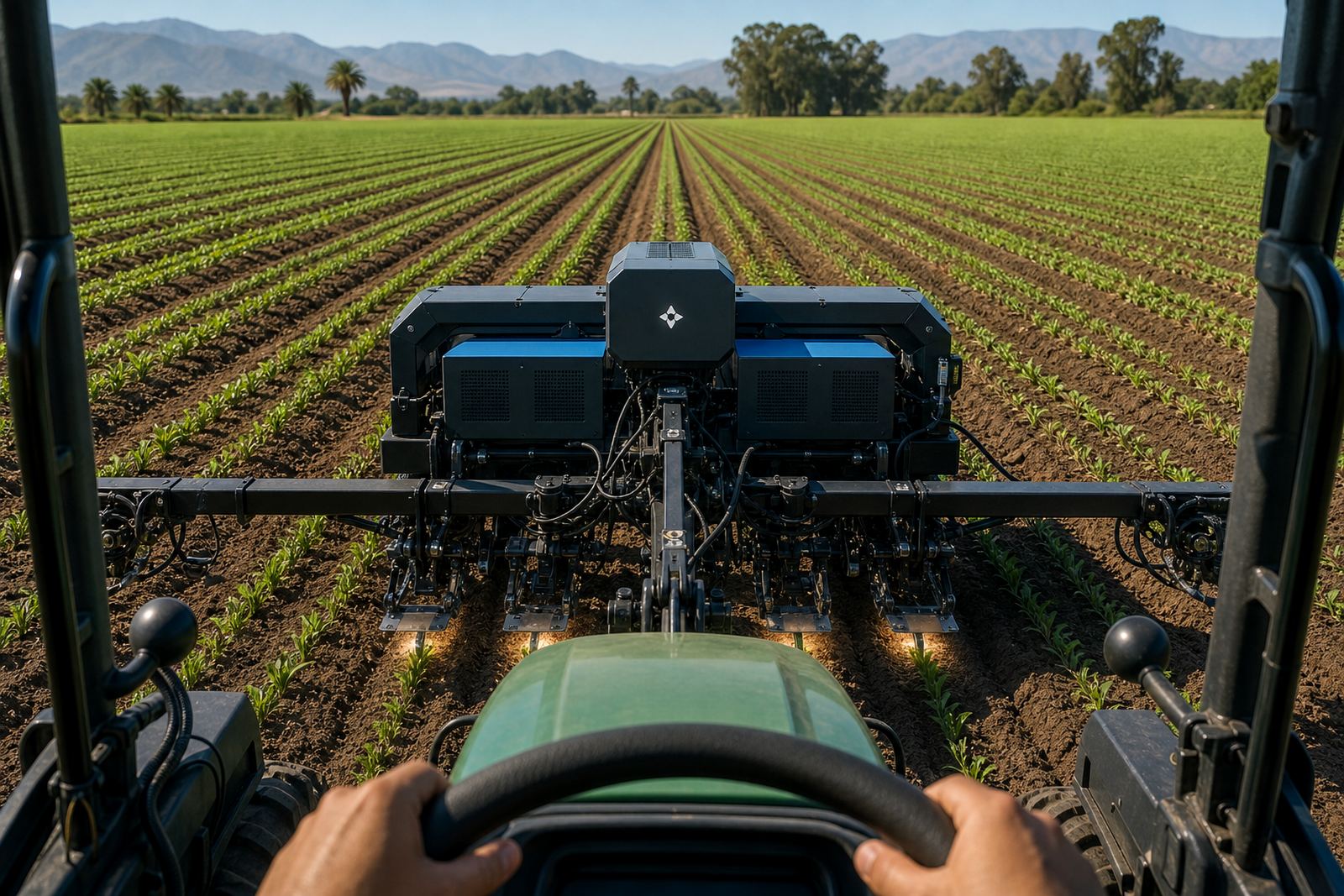
Laser weeding depends on the unit reading the row pattern with camera guidance and moving at a steady pace between plants. When planting lines are straight, the operator can keep the machine centred with less correction, which helps the cameras stay locked onto the crop pattern and the weeds in between.
That matters on onion, carrot, lettuce and brassica blocks where plants are packed close and the working window is tight. A clean row does not remove the need for skilled operation, but it gives the system a clearer field to work with and makes setup less fussy at the lands end.
What straight lines change for the machine operator
A tractor-drawn laser unit still needs judgement from the operator, because weed stage, soil condition and crop spacing all affect the pass. Straight rows give the operator a better reference point for speed, headland turns and row entry, especially on fields where the planting plan was laid out with a clear line from the start.
- Less side drift when entering each row
- Cleaner tracking across long blocks
- Easier repeats when a second pass is needed
- More consistent spacing around crop plants
That consistency helps when weed pressure differs from block to block. A block with light pressure may run at a different field speed to one with heavier pressure, and straight rows make those changes easier to manage without losing line discipline.
Why planning works better when rows are predictable
Our field assessments often start with a look at planting line quality, crop stage and the width between rows. If the rows wander, the plan has to allow for more careful setup, slower work on some sections, and extra attention at corners or short runs. When the rows are straight, timing plans are easier to match to the weed stage and the crop stage.
That is useful for growers running multi farm programmes across places like Philippi, Ceres, Grabouw and Tzaneen, where the ground layout can vary a lot. A field that is neat and even is easier to schedule into a season booking, easier to fit around travel coordination, and easier to revisit for repeat pass planning if the weed flush calls for it.
- Cleaner row maps for scheduling
- Clearer timing against weed emergence
- Better use of operator supplied work
- Less guesswork when planning trial strip runs
What straight planting lines do not replace
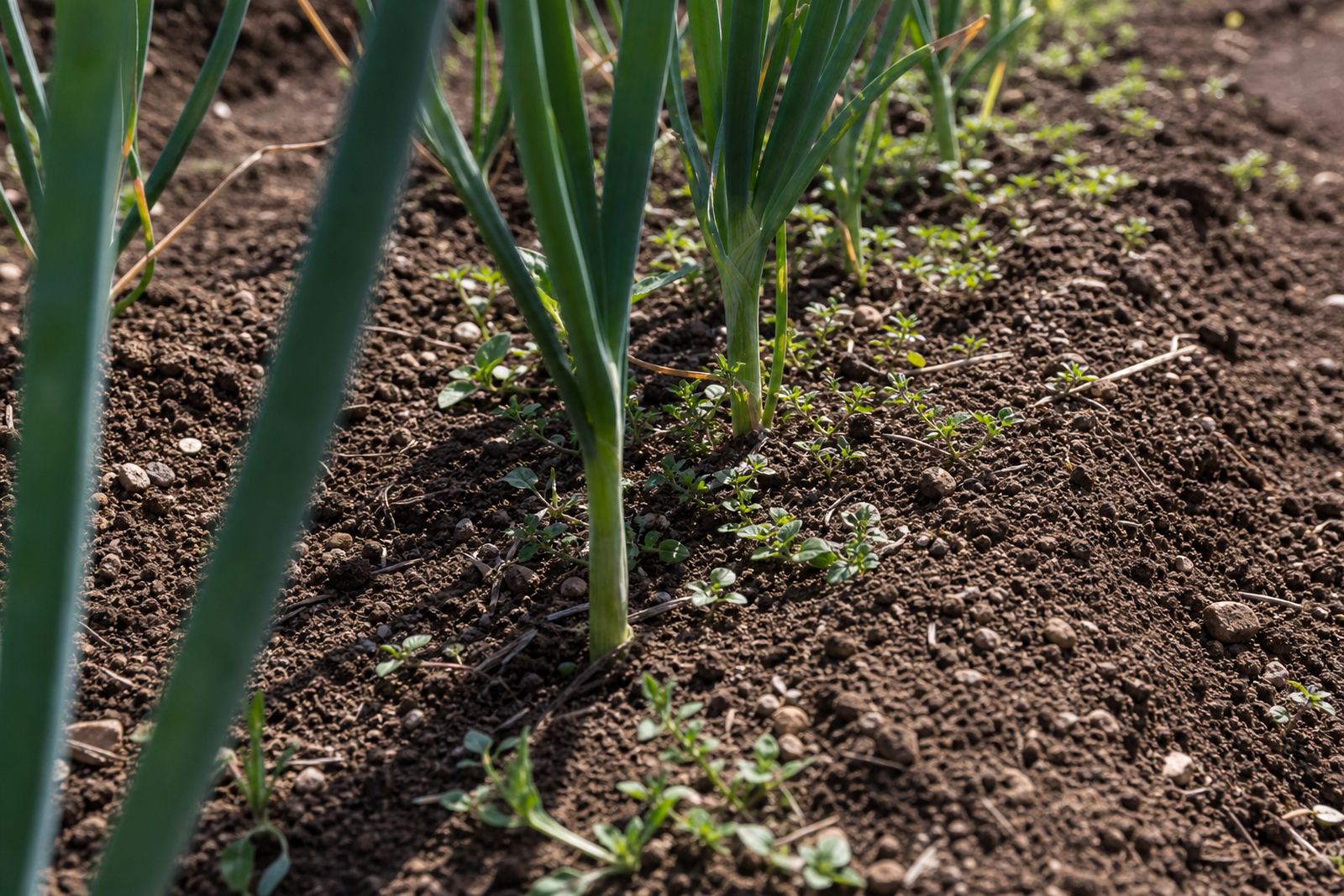
Straight rows help, but they do not fix poor spacing, late weed pressure or a crop that has already closed over the row. Laser weeding still works best when weeds are at the right growth stage, before they get too large and before crop plants create too much overlap in the working zone.
We still look at field conditions on the day, because moisture, dust, plant size and row visibility all shape the pass. A straight block in Bethlehem may still need a different pace from one in Bela-Bela if the weeds have come through at different stages, so the row plan is only one part of the job.
A Philippi example from a mixed vegetable block
On a mixed vegetable block near Philippi, straight planting lines made the first pass easier to line up on a long run of brassicas and lettuce. The crop spacing was tidy, the row centres were visible, and the operator could move through the block with fewer corrections at the headlands. That gave the team a clearer basis for the next pass plan, without disturbing the soil surface.
In a block like that, the benefit is not just neatness. It is the difference between a machine seeing a clear row and a machine working harder to read a loose one. The clean layout helps the team watch the crop, watch the weed stage, and decide where a follow-up strip may be worth scheduling.
When row layout is part of the wider programme
Straight lines are most useful when they sit inside a wider weed control plan. That can include arrival site checks, grower consultation, field scheduling, repeat pass planning and post pass reporting, especially where several farms need to be worked across the season. The row pattern shapes how quickly the unit can settle into a block and how easily it can move from one field to the next.
For growers in Howick, Nelspruit, Grabouw or the Free State, row quality can also affect how the day is organised around travel and timing. If the planting lines are true, the field team can focus on the weeds themselves rather than spending extra time correcting the path through every run.
- Field assessments before the first pass
- Trial strip runs where row shape needs checking
- Season bookings for planned block work
- Post pass notes for the next visit
Straight rows do not guarantee a perfect result, and no field is the same. They do however give laser weeding a cleaner starting point, and that is often what helps a contract programme hold together from the first block to the last.