The headland carries more weight than most growers expect
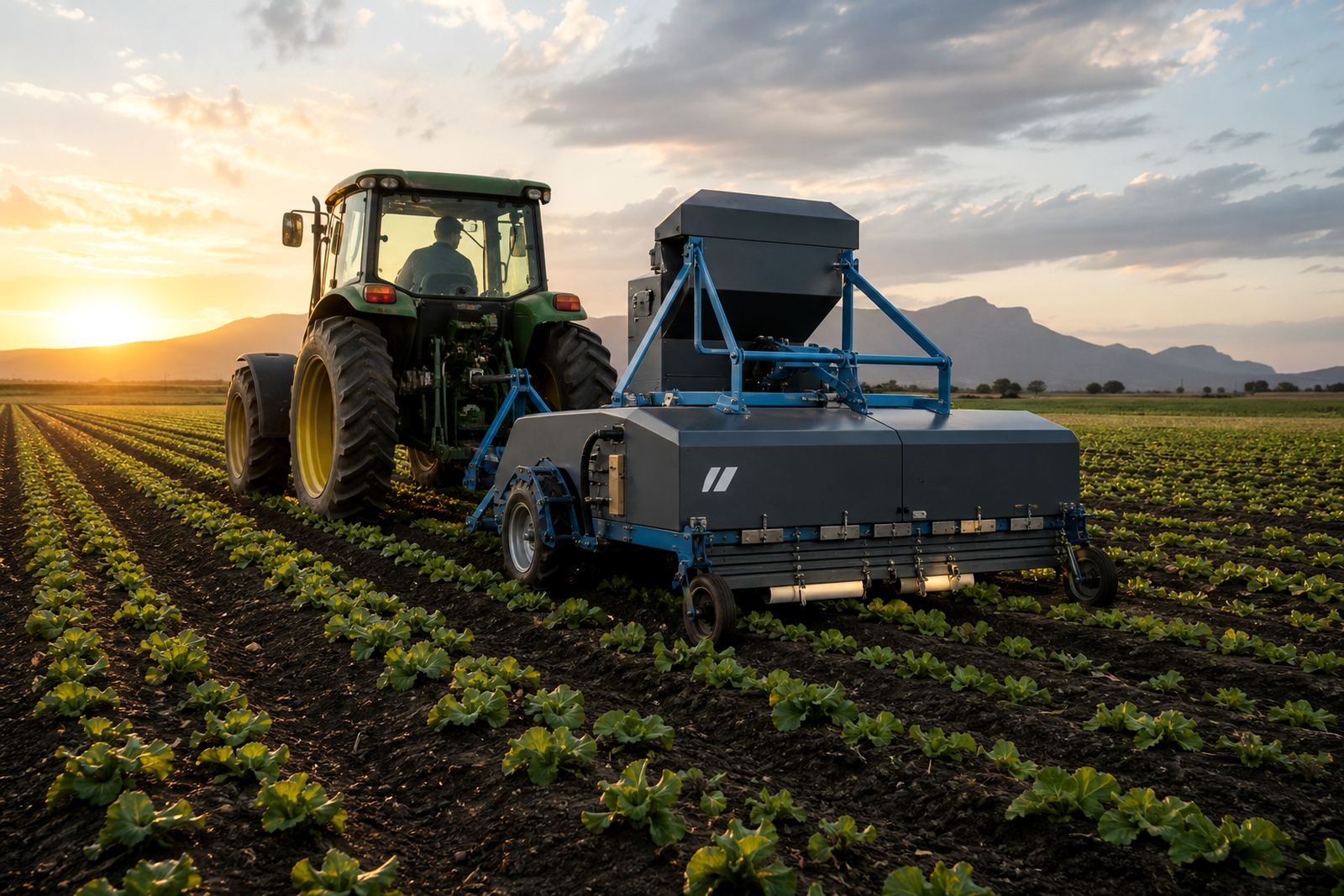
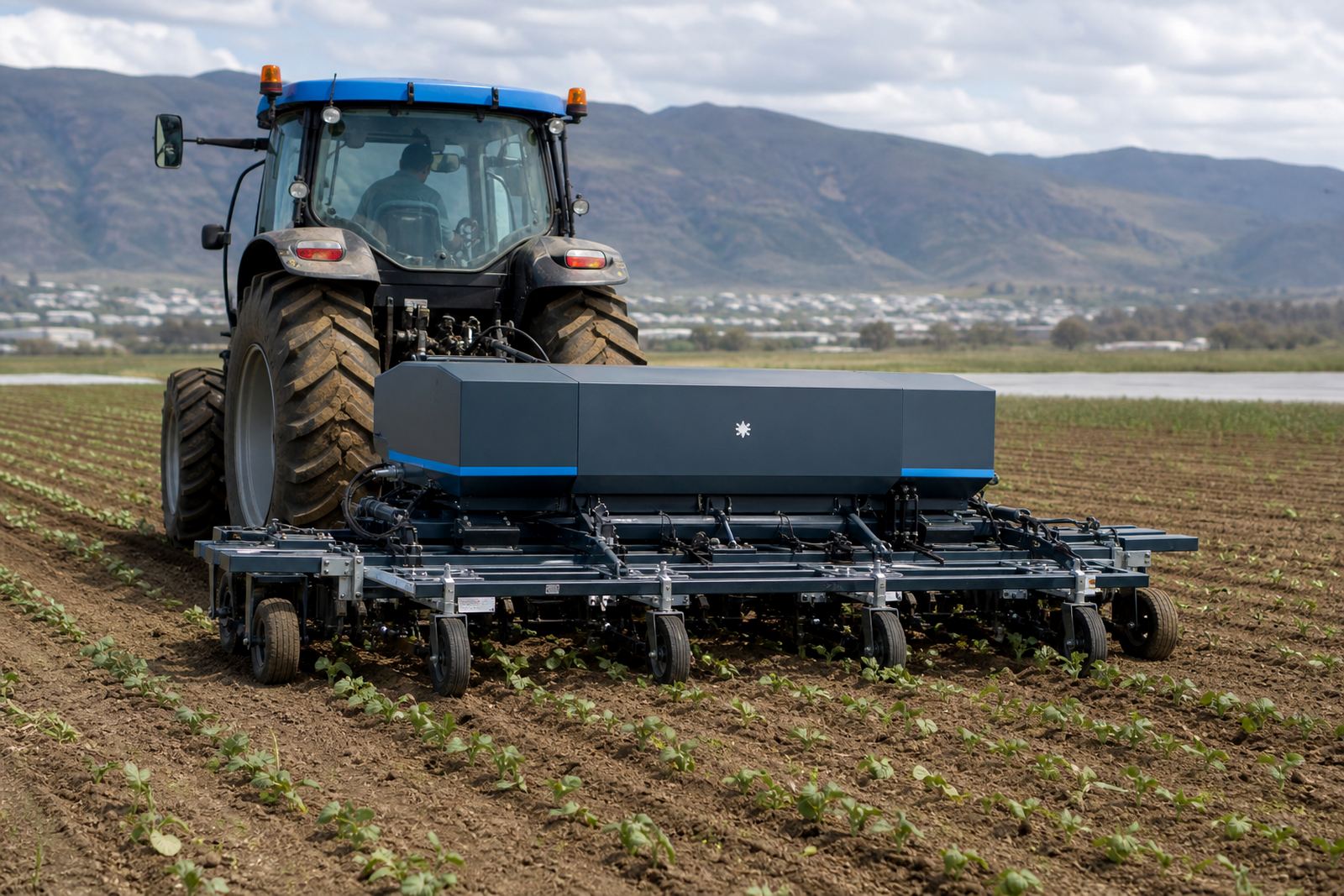
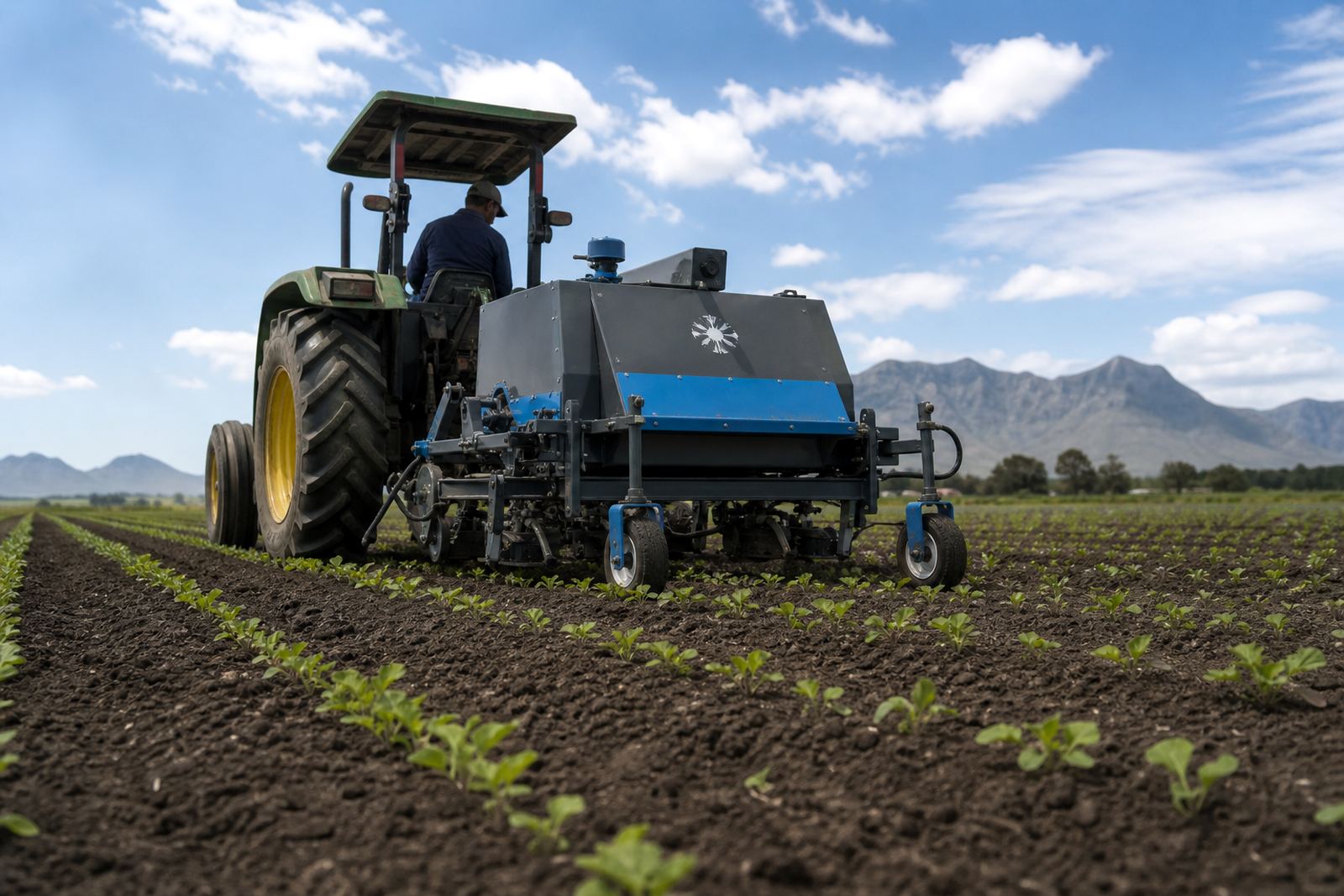
A laser weeding pass is not only about the rows. The unit must enter, line up, turn and settle into the next run without clipping crop plants or losing the gap needed for the cameras and guidance system to work properly. If the headland is too tight, the operator spends more time correcting the line, and that affects field speed when weeds are thick or the crop canopy has already closed in.
On vegetable farms, headland space also matters because the tractor-drawn unit needs a clean approach. Loose soil, irrigation hardware, exposed stones and uneven edge rows can all make the first metres of a pass awkward. A good setup gives the operator room to square up, keep the frame steady and work the field in a pattern that suits the crop and the weed stage.
What the machine needs at the ends of the rows
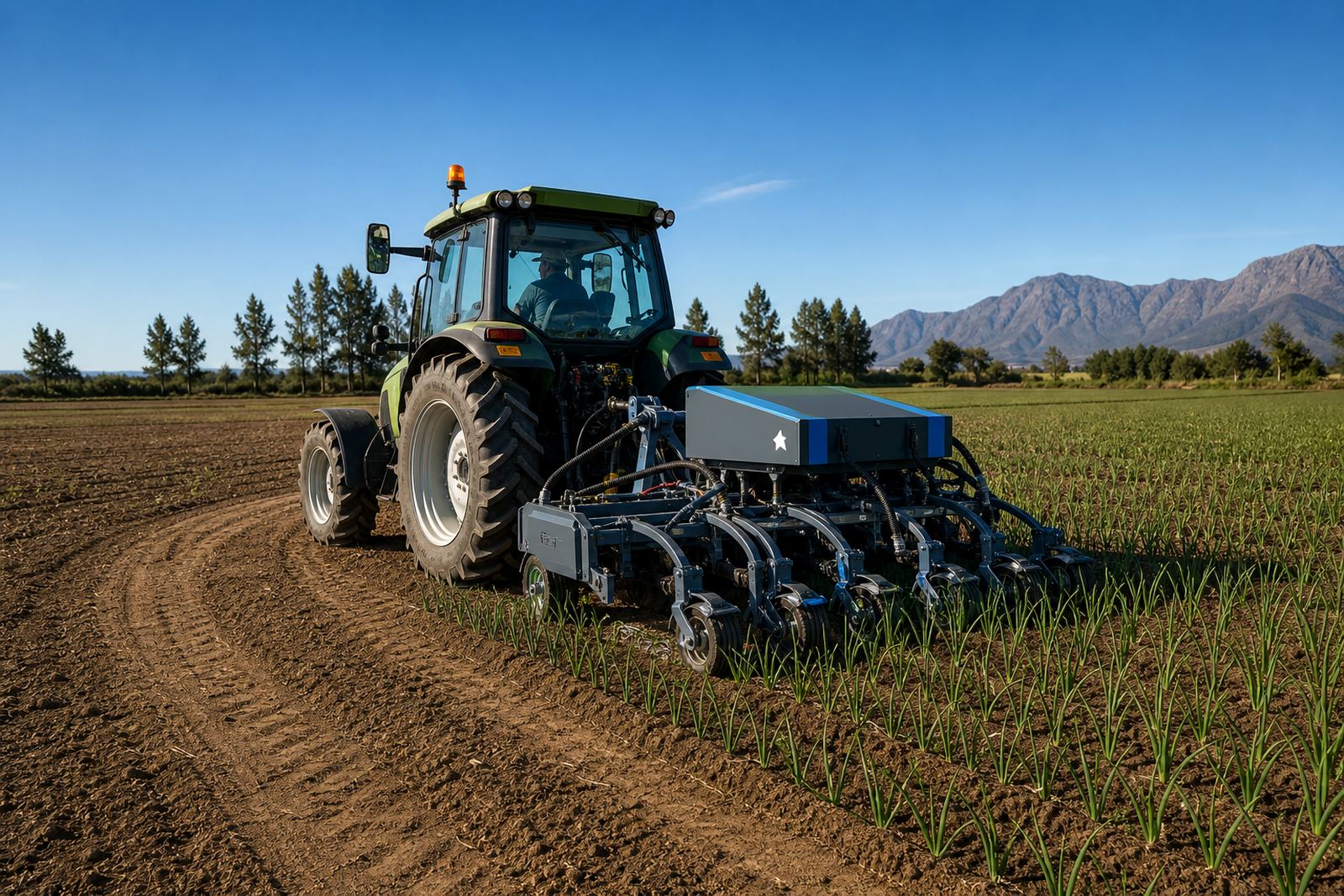
The practical question is not only how wide the block is, but how much usable turning ground sits at each end. In a compact lettuce block, for example, the margin may be just enough for a careful turn. In a longer onion or carrot field, the turn space can be planned more generously so the tractor can stay aligned and the laser unit can re-enter the row cleanly.
- Space for a controlled turn without cutting into the first crop row
- Room to line up the tractor and keep the unit stable
- A clean margin free of gullies, posts and pipe ends
- Enough length for the operator to settle the guidance before the next pass
- Access for field checks before and after the run
That headland needs change with the block shape. A square field behaves differently from a long narrow one, and a windy day on the Cape Flats can make a shallow turn feel tighter than it looked on paper.
Crop timing changes the headland plan
Laser weeding works best when the timing fits the crop stage and the weeds are at a vulnerable point. Very small weeds and overgrown weeds do not behave the same way, and the operator may need a different speed or more careful positioning depending on pressure in the block. That is one reason headland planning is tied to crop timing, not just to road access.
In onions, carrots, lettuce and brassicas, the rows can be narrow and the crop plants easy to disturb at the edge if the turn is rushed. The headland must leave enough room for the tractor-drawn unit to set up without brushing the crop line. If the edge is cramped, even a short correction can upset the next run and leave gaps in coverage near the boundary.
- Younger weeds usually allow a cleaner pass
- Heavier weed pressure can slow the work rate
- Dense crop rows reduce margin for steering error
- Edge weeds often need separate attention in the plan
A Philippi example that shows the issue clearly
On the sandy vegetable ground around Philippi, many blocks have practical limits set by road edges, drainage lines and irrigation layout. A grower may have a neat row crop, yet still lose useful metres at the ends because the turning area is broken up by service tracks or uneven ground. That is where a field assessment earns its place before the unit arrives.
In that setting, the team looks at the headland, the approach line and the crop spacing together. A wider turning area can make the work steadier, but even a modest space can be managed if the field is laid out well and the run order suits the block. The point is not to force one pattern onto every farm, but to match the setup to the land.
For growers moving between Philippi, Ceres, Grabouw or further afield to Tzaneen, Bela-Bela, Nelspruit, Howick and Bethlehem, the same principle holds. The crop changes, the soil changes, the field edges change, yet the machine still needs a workable end zone to turn and re-enter without fuss.
The small details that save trouble at the field edge
Good turning room is only part of the picture. The edge of the block should also be clear enough for an arrival site check, a trial strip run where needed, and any repeat pass planning the grower wants for the season. A tidy boundary helps the operator read the crop line and keeps the work focused on the weeds rather than on avoidable obstructions.
- Mark hidden obstacles before the unit reaches the block
- Keep the headland free of loose plastic, stakes and rope
- Leave enough access for the tractor and trailer movement
- Check whether the edge rows need a different pass pattern
- Plan for post pass reporting if the farm needs records
Laser weeding is herbicide-free and does not disturb the soil, which is useful where surface structure matters. That also means the operator depends on a clean layout. If the headland is rough, the machine still works, but the margin for neat entry and exit gets thinner and the job becomes more stop-start than it should be.
Planning the season around the turns, not only the rows
Season bookings work best when the field schedule reflects the actual shape of the farm. Multi farm programmes need travel coordination, but they also need realistic turning space at each block. A grower with several smaller fields may be better served by grouping similar blocks together, while a single larger farm may want repeat pass planning that follows crop development and weed stage across the season.
At LaserWeeder Hire, the practical part starts with field assessments, crop timing plans and grower consultation. Mandla Adonis leads the business from the Philippi, Cape Town base, with Anele Khoza on operations, Pieter Mokoena on field scheduling, Zanele Naidoo on grower liaison, Johan Daniels as lead operator, Lerato Letsoalo in service coordination and Ruan Mkhabela in the workshop. The point of that structure is simple: the headland, the crop and the machine all have to fit the same plan.
When turning room is measured properly, the whole pass becomes easier to manage. The unit enters cleaner, the operator works with less correction, and the edge of the block gets the attention it needs without turning the day into a series of awkward manoeuvres.