Why row clarity matters before the first pass
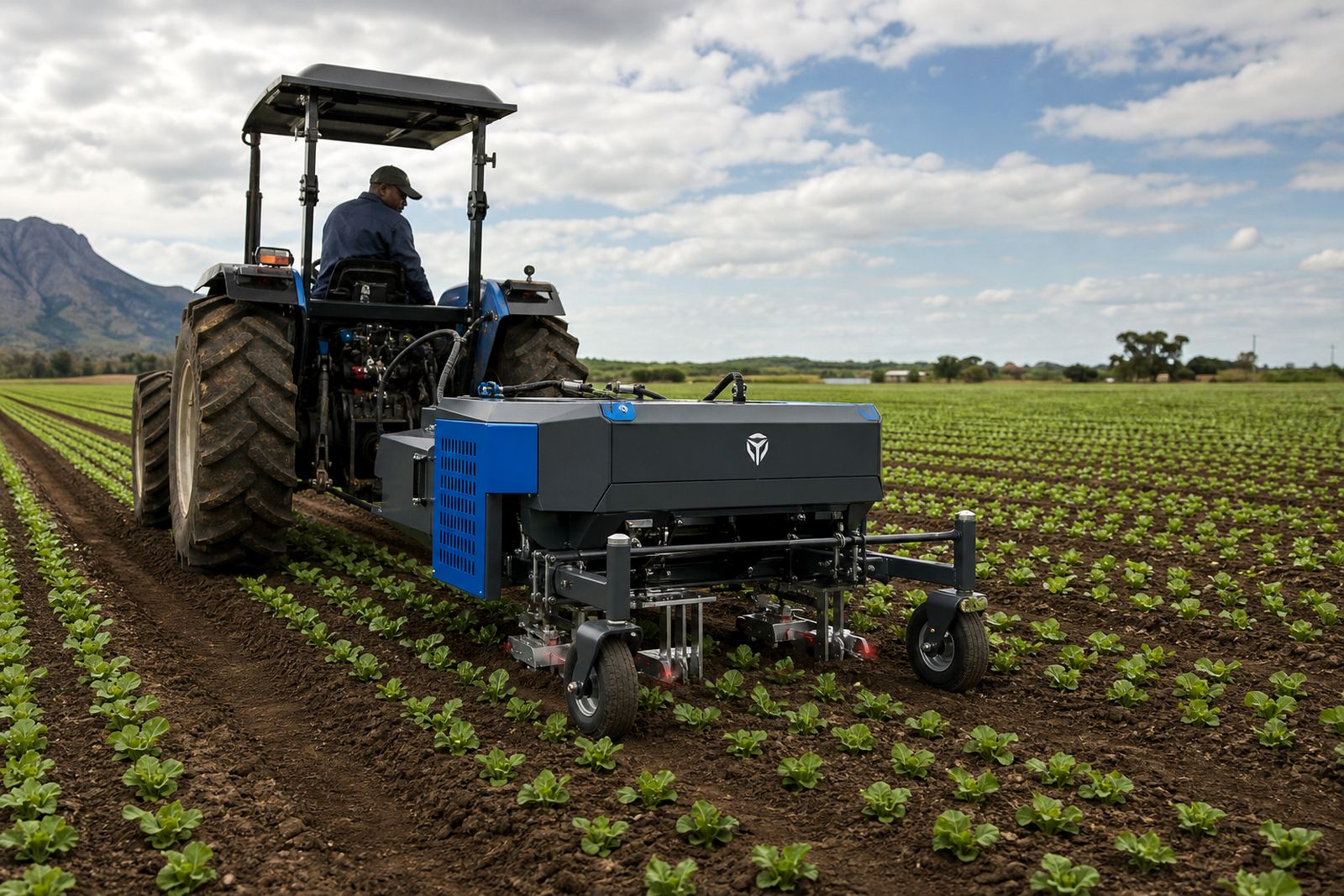
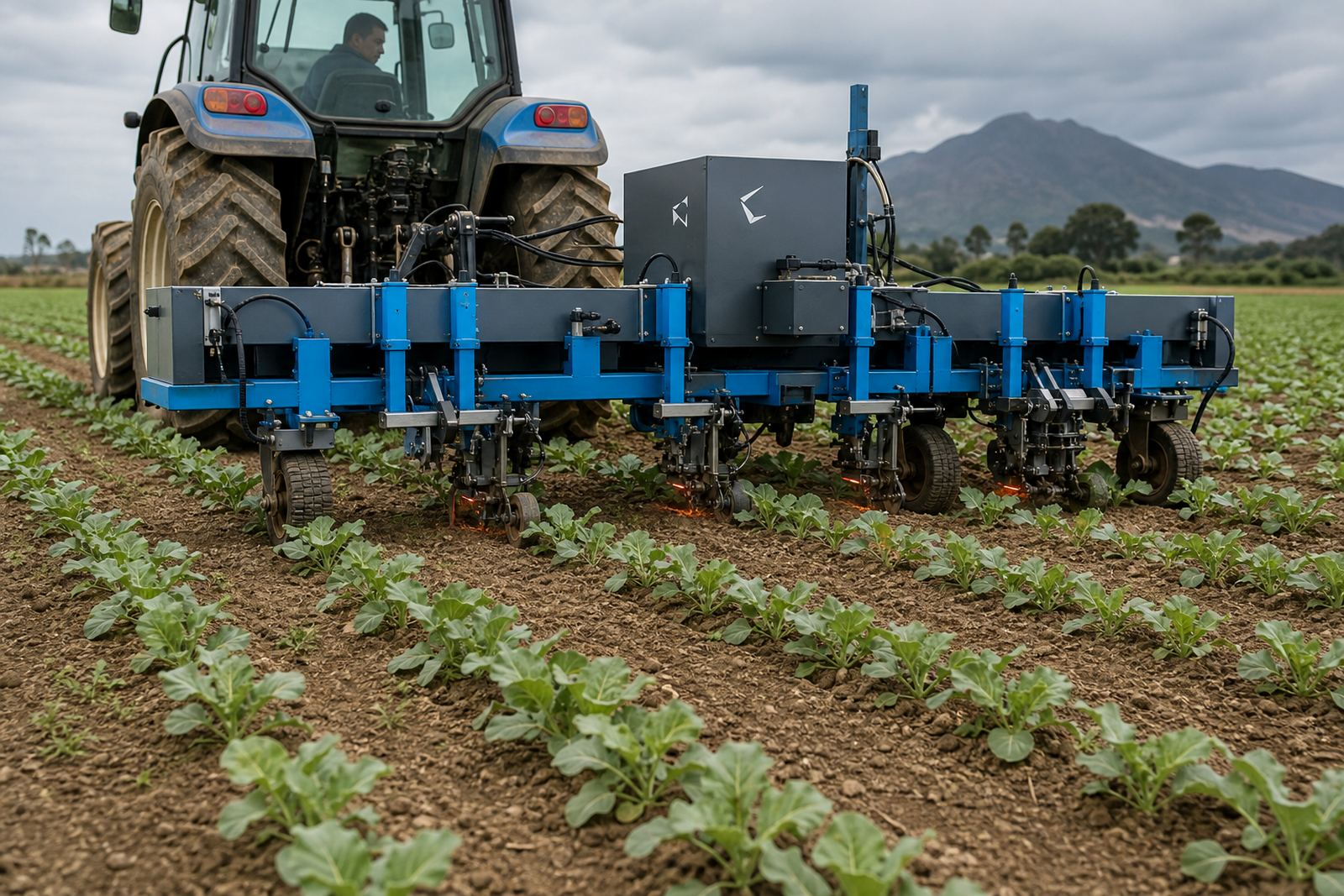
Direct seeded vegetable blocks such as onions, carrots, lettuce and brassicas rely on a clean line between crop and weed. Once the crop is still small, a tractor-drawn laser unit can work down the inter-row space while trained operators watch the row pattern and keep the machine aligned to the planting layout.
That spacing is not just neatness on paper. Camera-guided detection needs the crop line to be readable so the system can tell plant from weed, then target the weed growing points without spraying herbicide or turning soil over. If rows drift, seed depth varies or gaps are uneven, the field needs a closer assessment before the first cut.
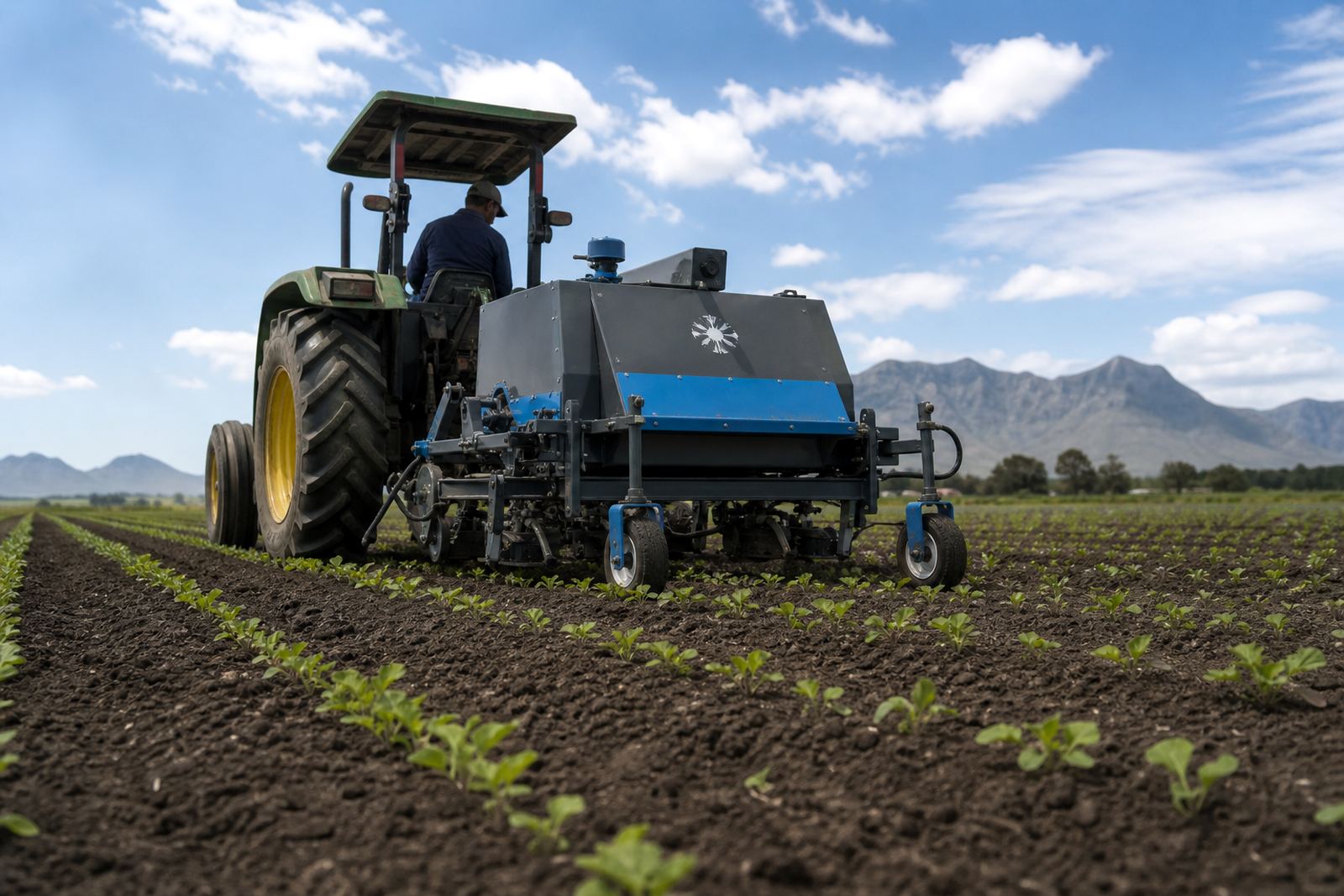
- Even row spacing helps the camera track the crop line
- Regular emergence makes timing easier to judge
- Clear tramlines support tractor movement through the block
Timing the pass around weed stage, not the calendar
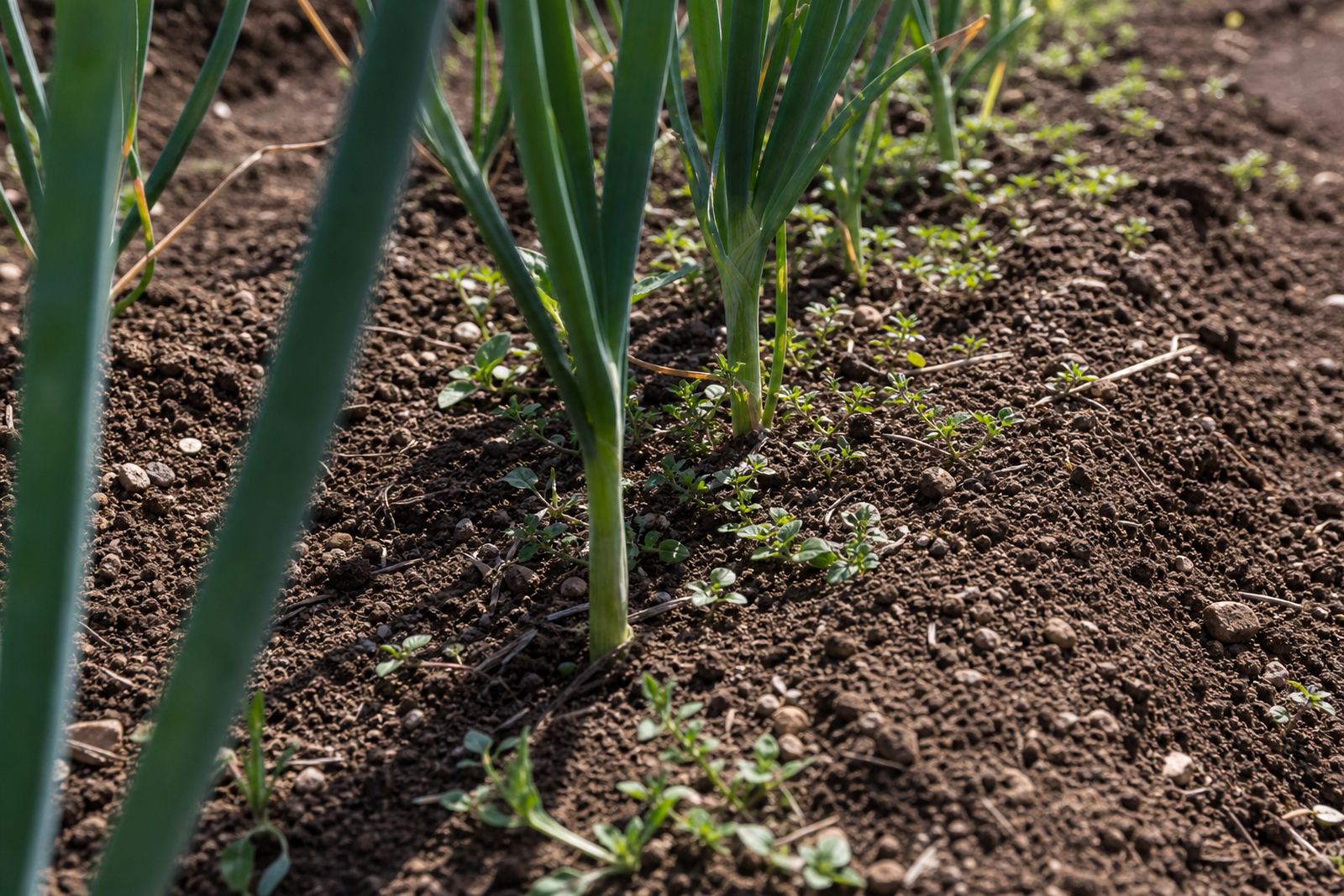
The right moment depends on weed stage, crop size and how quickly the flush has moved after irrigation or rain. Small weeds are easier to target cleanly, while larger ones can need a different pass plan or a follow-up visit. In direct seeded work, waiting too long can let weeds close over the crop row and make visibility poorer.
Field speed changes with weed pressure and crop layout. A lighter block may allow steadier travel, while a weedy patch or a tighter pattern calls for slower work and closer operator attention. That is one reason crop timing plans matter more than fixed booking habits.
- Early weed stage is usually easier to manage
- Heavy pressure often means slower field speed
- Follow-up planning depends on what the first pass reveals
What laser weeding changes in a direct seeded block
Laser weeding removes weeds by focusing energy on the weed growing point, not by disturbing the soil surface. That matters in direct seeded beds because fresh soil movement can bury seedlings, pull up fine roots or bring new weed seed to the top. The method suits growers who want an herbicide-free option between the rows and around young crop plants.
The work is practical rather than dramatic. A tractor-drawn unit travels the block, the operator manages the field conditions and the camera system helps identify where the weed is sitting. The aim is to take out the weed without breaking the bed or roughening the surface, which helps keep later passes more predictable.
- No soil disturbance in the treated strip
- No herbicide spray on the crop block
- Works best where the crop line stays visible
How direct seeded vegetables shape the scheduling plan
Direct seeded fields do not all behave the same way. Onions can sit differently from lettuce, and brassicas can canopy faster than carrots, so the scheduling plan has to follow crop stage rather than a fixed farm routine. Our team looks at row width, emergence count, weed pressure and the travel layout before setting the pass order.
For growers across the Western Cape and further north, the field plan often includes travel coordination, arrival site checks and repeat pass planning. Some blocks need a trial strip run first, especially where the seed line is new or the weed flush is uneven. That gives a clearer read on how the field is moving before the larger block is scheduled.
- Crop type changes how open the row stays
- Emergence pattern affects the confidence of the pass
- Trial strip runs help test tricky blocks
A Philippi example from a mixed vegetable season
In Philippi, where vegetable blocks can sit close to coastal humidity and variable winds, row clarity matters from the start. A direct seeded onion block can look tidy from the road but still carry a thin weed flush inside the rows, especially after a moisture change. In that setting, the field needs close checking before the tractor moves in.
For a block like that, the practical sequence is straightforward: field assessment, crop timing plan, then a pass that matches the weed stage. If the crop line is still readable, the laser unit can work the inter-row area without soil throw. If the weeds have advanced, the operator may slow the run or split the work into more than one pass. That kind of adjustment is normal and it keeps the plan tied to the field, not the other way round.