Why the row itself changes the job
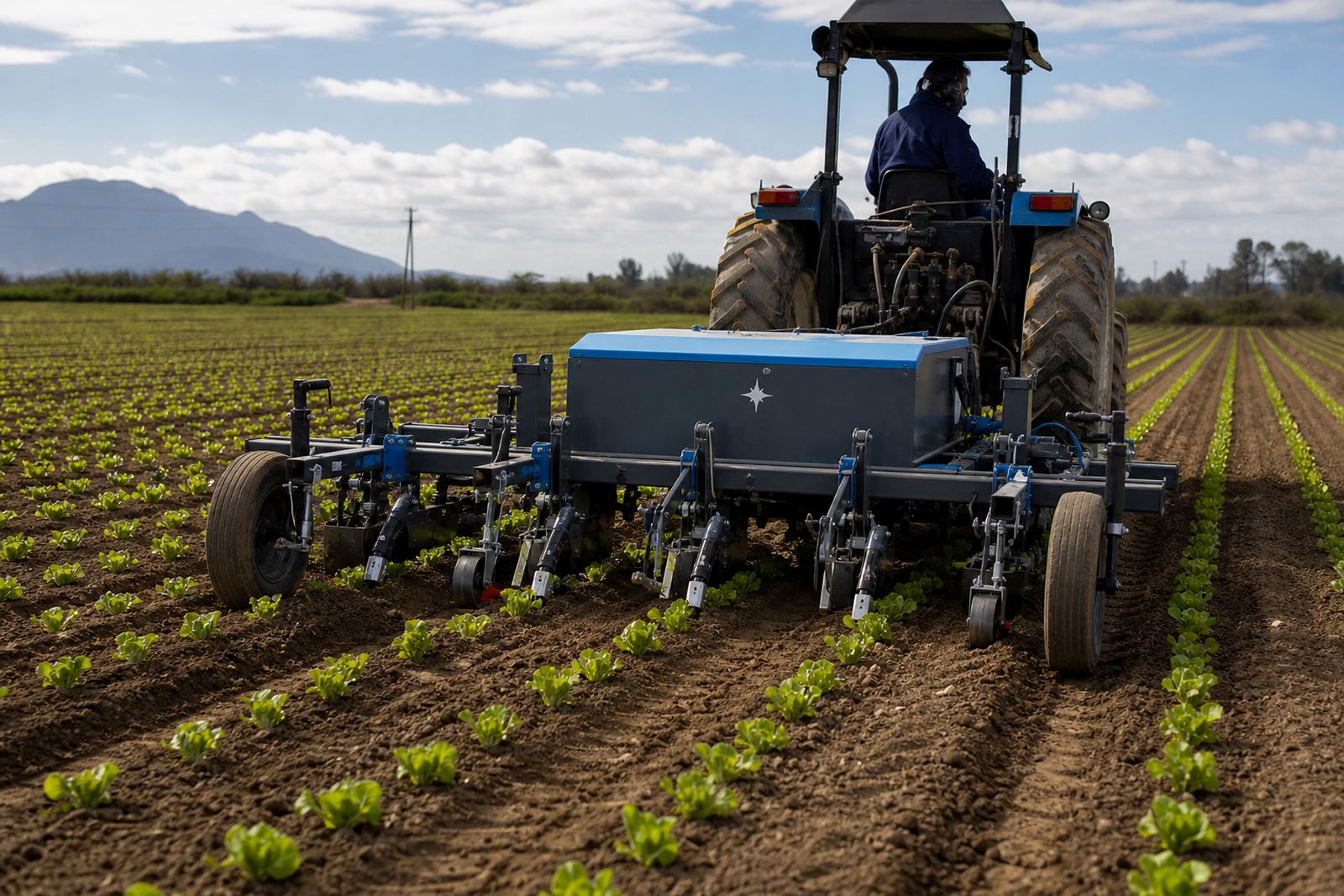
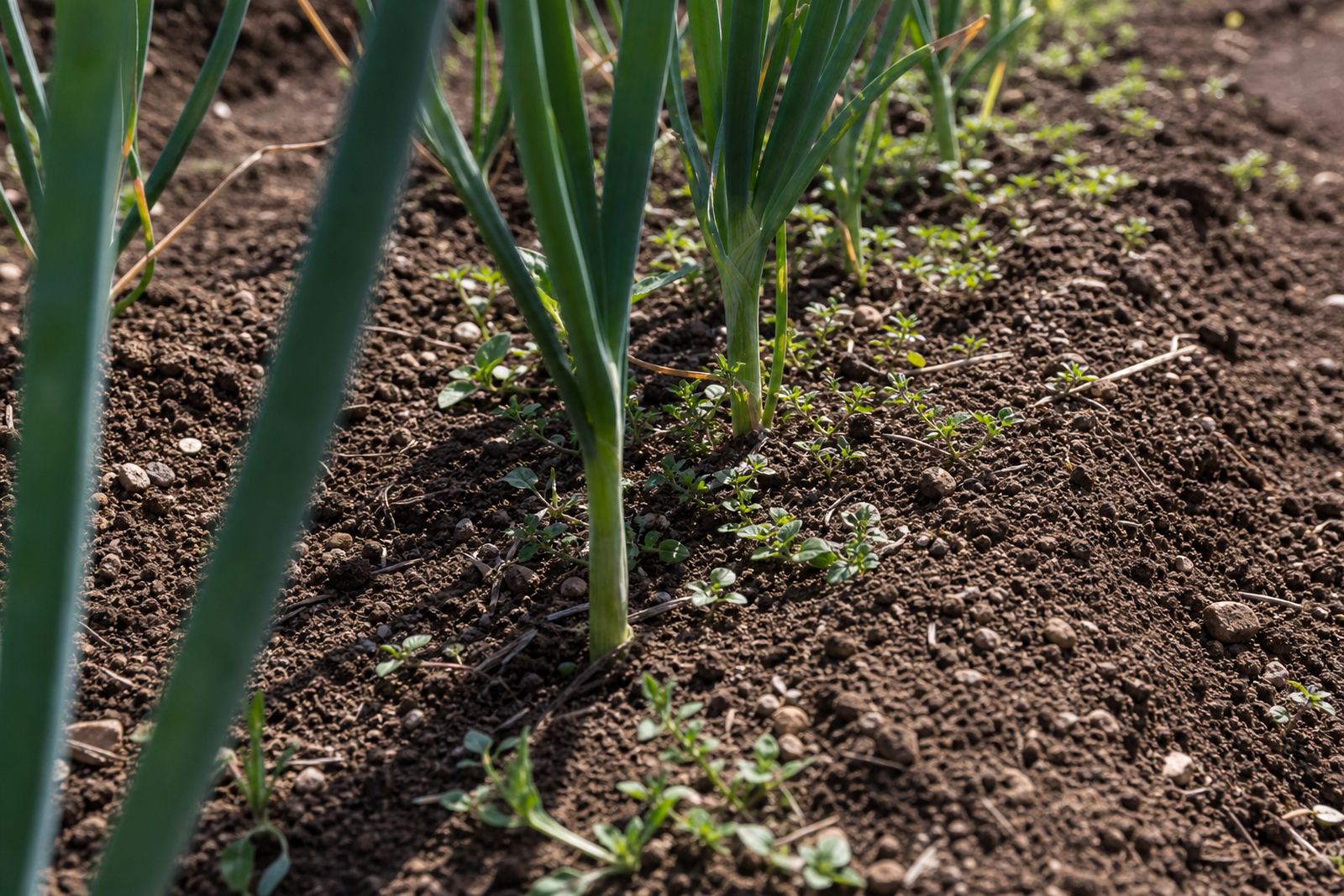
Inter-row work gives the machine a cleaner lane to pass through, while in-row targeting asks it to work inside the crop line where onions, carrots, lettuce and brassicas sit much closer to the weed. That is where camera-guided detection matters, because the system must read plant shape, spacing and movement as the tractor-drawn unit keeps moving.
In a vegetable block the row is not only a place for crop plants, it is also where early flushes of weeds can hide in the same strip. The operator has to read the stand, the seedling stage and the soil surface, then set the pass so the laser can target the weed growing point without disturbing the bed.
How a laser unit works inside the crop line
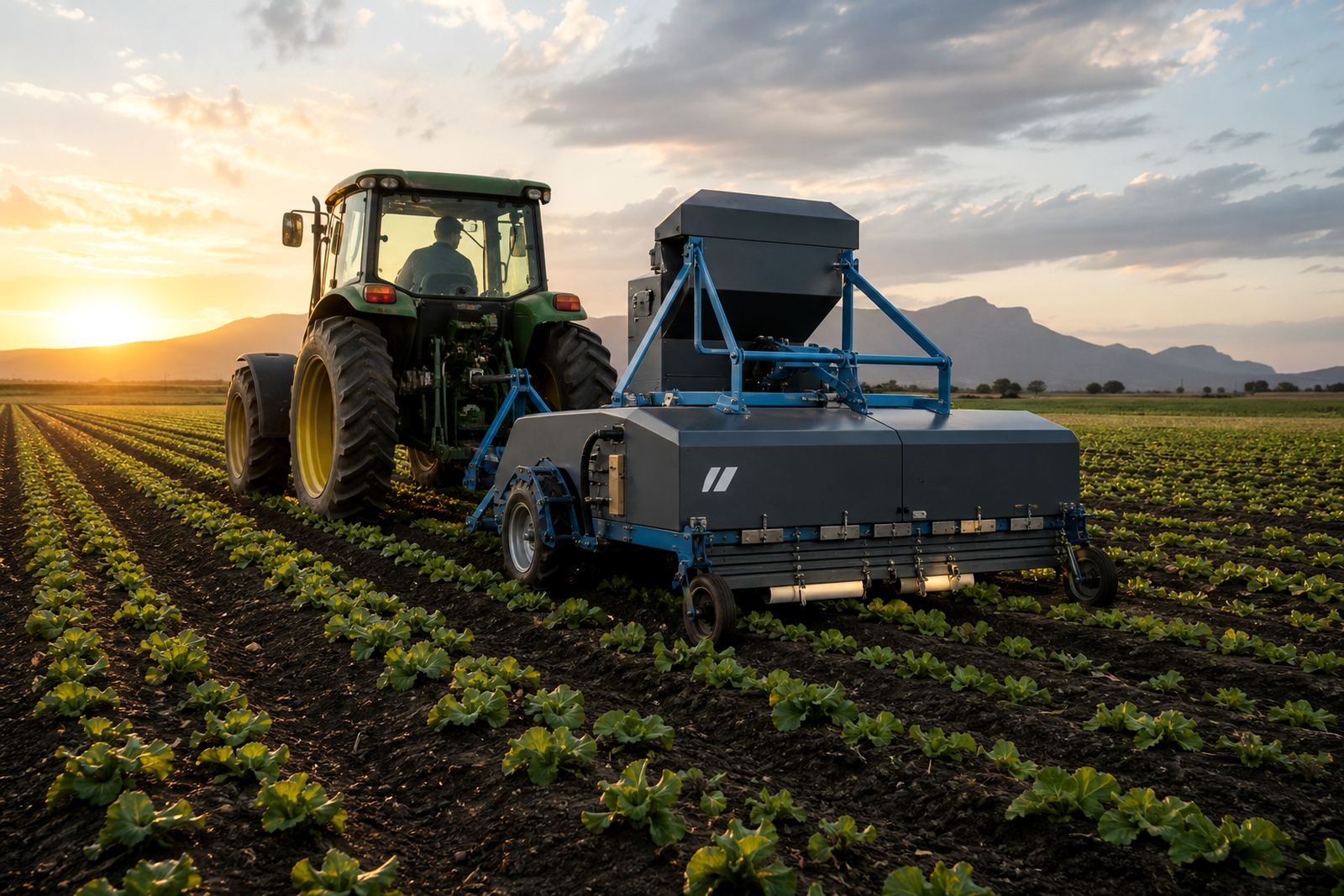
Modern laser weeding units scan the row with cameras and software that separate crop from weed by form, size and position. Once a weed is identified, the laser directs energy to the growing point, which is why very small weeds are often the best target. Bigger weeds can still be treated, but timing starts to matter more as leaf cover thickens.
The process stays herbicide-free and leaves the soil surface intact, which suits beds where growers want to avoid spray drift and mechanical disturbance. That makes the method useful for young crops in lighter soils, and also on blocks where moisture conservation matters after cultivation work has already been done.
- Camera guidance helps track the crop line under changing light.
- Lasers target the weed growing point rather than cutting the soil.
- No blade enters the bed, so soil disturbance stays low.
- Field speed shifts with weed pressure, crop spacing and row clarity.
When timing beats force
In-row control works best when weeds are still small and the crop is readable. A field that looks tidy from the cab may still hide a second flush close to the plants, so timing needs to follow the crop stage and the weed stage together. If a grower waits too long, the weed canopy can hide the point the laser needs to hit.
That is why repeat pass planning often sits behind the first visit. A single pass can fit a clean block, but heavier pressure may need a second visit after emergence patterns settle. In practice, the schedule is shaped by irrigation, rainfall, planting date and the speed at which the block closes over.
- Small weeds are easier to target than advanced ones.
- Younger crop stages usually leave more open space in the row.
- Repeated flushes may call for a fresh field pass.
- Timing shifts with soil moisture and crop emergence.
What changes between a clean block and a weedy one
Field speed is not fixed. A light weed load lets the operator move more freely, while heavier pressure can slow the unit because more plants need detection and more care is needed around the crop. The same machine may work at different pace from one block to the next, and even within a block where weed pressure changes with soil type.
A grower in Philippi once faced uneven pressure in a lettuce block after a warm spell and a short irrigation interval. The rows near the headland had a dense flush, while the centre of the block was lighter. The operator adjusted the schedule so the worst section was handled first, then the cleaner ground was covered once the row pattern remained clear enough for accurate targeting.
That kind of field decision matters in commercial vegetables because a row crop is rarely uniform all the way through. Wind, shade, bed shape and transplant spacing can all alter how the camera reads the line, and the operator has to work with those changes rather than force one fixed pattern across the whole farm.
Practical points for growers planning in-row work
Growers tend to get better value from laser weeding when the block is mapped before the machine arrives. A good field assessment notes crop spacing, weed species, row straightness, bed height and access for the tractor-drawn unit. It also helps to flag any awkward corners, short rows or soft patches where turning is slower.
Our scheduling team coordinates travel, arrival site checks and post pass reporting so each block fits the wider season programme. That is especially useful for farms running several crops at once, because onions may be ready for one treatment window while carrots or brassicas sit at a different stage. The job is not just to send a unit, it is to put the right pass into the right field at the right stage.
- Check row spacing and crop stage before booking a pass.
- Note any wet corners, short beds or tight turning spaces.
- Group nearby blocks into one programme where it suits the farm.
- Use post pass notes to decide on follow-up timing.
A Cape Town example showing the contrast
In the Philippi area, the soil profile and windy coastal conditions can make a row look neat at one end and irregular at the other. That is where in-row control becomes more than a machine setting. The operator has to watch how the crop sits in the bed, how the weeds are emerging, and whether the line stays readable under changing light.
For a grower running brassicas and lettuce, the plan may include an early trial strip run, then a full season booking once the block pattern is clear. If one part of the farm carries a heavier flush after irrigation, the field scheduling lead can split the work into sections so the unit is not pushed too fast through the tougher area. That keeps the programme practical for the farm team and keeps the crop line central to the job.
Across Western Cape, Limpopo, Mpumalanga, KwaZulu-Natal and the Free State, the same principle holds. In-row targeting asks for tighter reading of the crop than inter-row work does, and that is why operator skill, timing and field planning matter just as much as the machine itself.