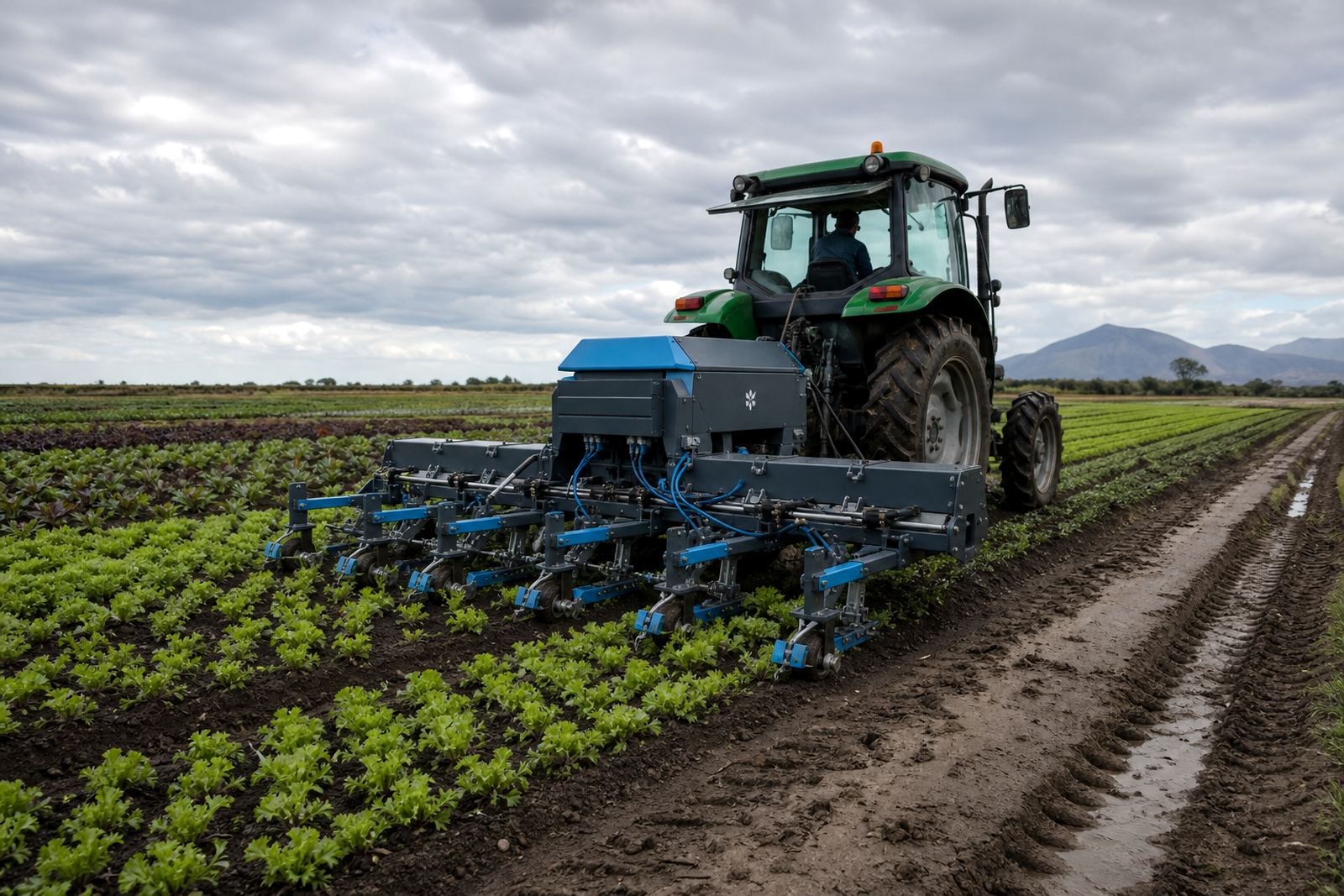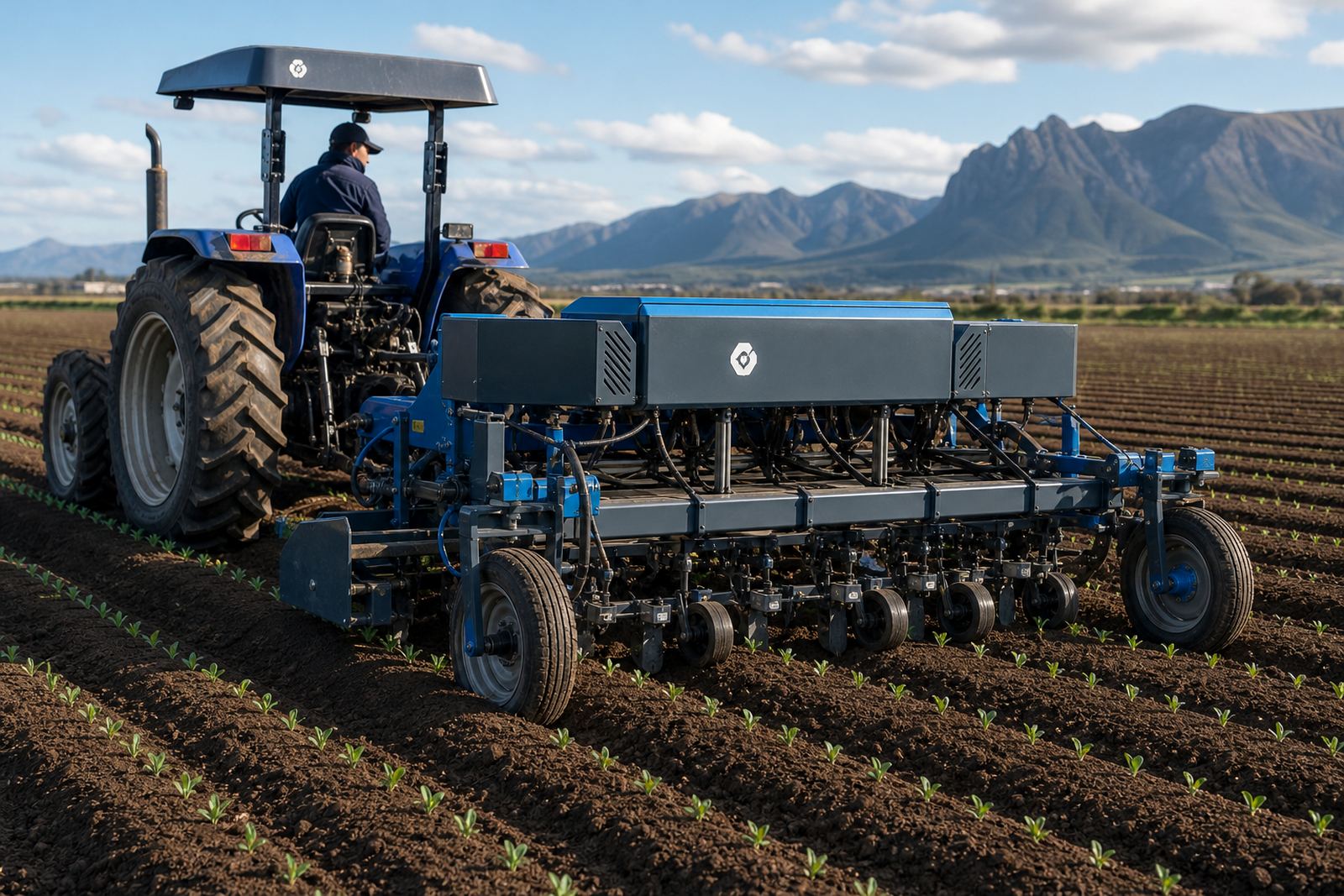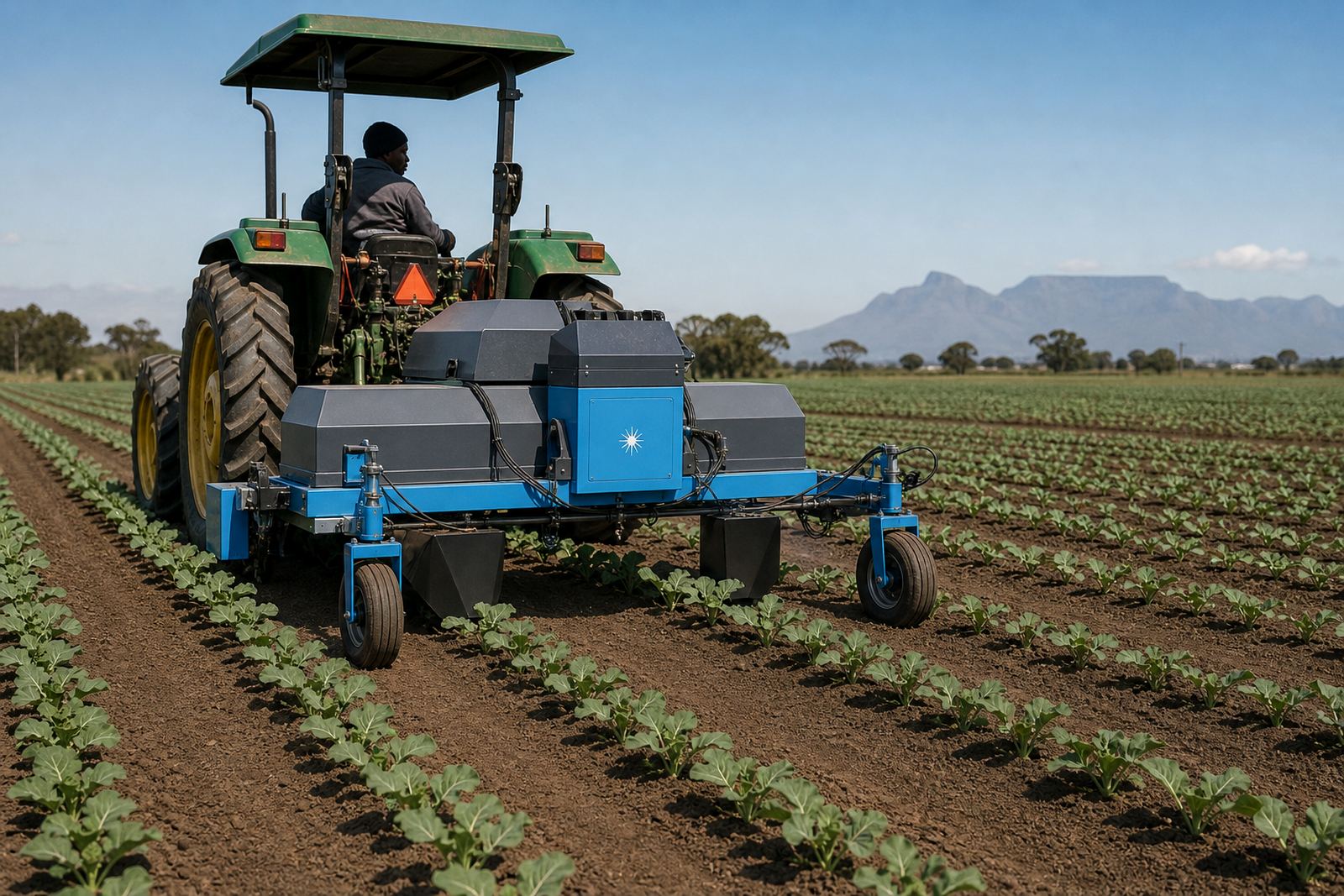
A field calendar before the rig moves
Laser weeding travel planning starts with crop timing, not with the vehicle leaving Philippi. A tractor-drawn laser unit has to arrive when the weeds are still small enough for precise targeting and when the crop row spacing gives the operator clear lines through the block. That matters on onions, carrots, lettuce and brassicas, where one farm may be ready in Tzaneen while another block in Bethlehem is still too wet or too young.
Growers in Limpopo, Mpumalanga, KwaZulu-Natal and the Free State usually work to different planting windows, soil conditions and irrigation schedules. We plan around those local conditions, then fit the travel into a route that keeps the unit and operator working on live field time rather than sitting on tar. That is the part that makes interprovincial work practical, not just possible.
- Crop stage decides whether a pass is worth scheduling
- Row width and bed shape affect the run plan
- Recent rain can push a block out of sequence
- Weed pressure changes the field speed and the pass order
What has to line up before the convoy leaves Cape Town
Long-distance scheduling works best when the grower shares the block details early. We need the crop type, field size, planting dates, irrigation layout and any access limits for the farm roads. A block near Grabouw travels very differently from a field outside Nelspruit, and the same is true for a cold Free State morning versus a humid Lowveld afternoon.
The machine plays only part of the role. A trained operator, fuel, support gear and a workable arrival sequence all travel with it. If there are multiple farms in one district, we can group them into a route that reduces empty distance between blocks. That is useful for seasonal programmes where a grower wants repeat passes or a series of trial strip runs before committing a full programme.
- Block location and access route
- Crop type, row spacing and growth stage
- Weed pressure in the row and between rows
- Travel windows, gate access and farm contact points
- Any need for field checks before a pass is booked
Why timing matters more than kilometres
Laser weeding depends on the crop and the weed being at the right stage. Camera-guided detection looks for the weed in the row and around the plant, then the laser targets the growing point. If the weeds are too large, too dense or mixed with crop leaves, the pass becomes slower and may need a different plan. That is why a Cape Town base can still support work far from the Western Cape, provided the timing is lined up well.
Travel planning also helps with field speed. A block with light weed pressure may run differently from a block that has been left longer between passes. The operator adjusts pace to what is in front of the unit, and that pace can change from one district to the next. In practice, scheduling is about matching the machine to the weed stage, not forcing the farm into a fixed route.
For growers, that means the right question is not only where the unit is going, but what the block looks like on arrival. A better schedule keeps the unit working on crop and weed conditions that suit laser treatment and no soil disturbance.
A Limpopo route that needs more than a map
Take a vegetable grower near Tzaneen with carrots in one block and brassicas in another. Another farm in Bela-Bela may need a separate pass, and a third block in Nelspruit could be due later in the week. Those sites do not sit on one neat line, so the route has to account for road distance, farm readiness and the order in which each block should be treated.
That is where field scheduling and travel coordination meet. We may start with an arrival site check, then move into a trial strip run on a representative section of the block. If the crop spacing, weed stage and ground conditions look right, the rest of the farm can be scheduled with more confidence. If not, the plan can shift without wasting a full trip.
- Tzaneen blocks often need careful timing around moisture and growth flushes
- Bela-Bela farms may have wide open access but uneven weed pressure
- Nelspruit sites can call for early morning starts to use the best field conditions
- Multi farm programmes work best when blocks are grouped by crop stage
How the farm side of the trip stays practical
Growers help the process by keeping access roads clear, pointing out blocked gates and making sure the target block is easy to reach with a tractor-drawn unit. If a block is spread across odd angles or has wet patches, the schedule may need to be broken into sections. That is normal on South African vegetable farms, especially where irrigation, drainage and wind all shape how fast a crew can move.
Travel planning also includes post pass reporting. After the job, the grower needs to know which block was covered, what stage the weeds were at and whether a repeat pass should be planned later in the season. That record helps with follow-up on onions, lettuce or brassicas where weeds can reappear after rain or irrigation flushes. It also helps the next route, because the machine can be assigned where it will be most useful next.
When a Western Cape base supports farms across provinces
Philippi gives us a working base close to vegetable production, but the job does not stop at the city edge. We field schedule for growers across the Western Cape and further afield, including Limpopo, Mpumalanga, KwaZulu-Natal and the Free State. Some farms need one visit, others need season bookings with repeat passes spaced to crop growth rather than to a rigid calendar.
The key is keeping the plan close to farm reality. If a grower in Ceres has a block ready while a farm in Howick needs a later window, the route may shift. If a trial strip run on one farm shows the timing is not right, the next field can be held for a better stage. That kind of flexibility keeps the travel useful and the work tied to crop conditions, not just road distance.
- Western Cape districts can be paired with nearby blocks for efficient routing
- Eastern and inland farms may need more grouped scheduling
- Repeat pass planning keeps weed control tied to crop growth
- Trial strip runs help decide whether a full block is ready
What growers usually need from us
Most interprovincial bookings start with a few plain facts: crop type, farm district, block size and the week the crop will be ready for a pass. From there, we look at travel coordination, operator supply, field assessment and the order of work across the route. That keeps the planning honest and practical.
If you are working outside the Western Cape and need laser weeding for vegetables, our contact form is the place to send the block details. Include the district, crop and row spacing, and mention whether you want a single visit, a trial strip run or a season programme. The plan can then be shaped around your crop and the route it needs.