Straight rows give the camera a clean read
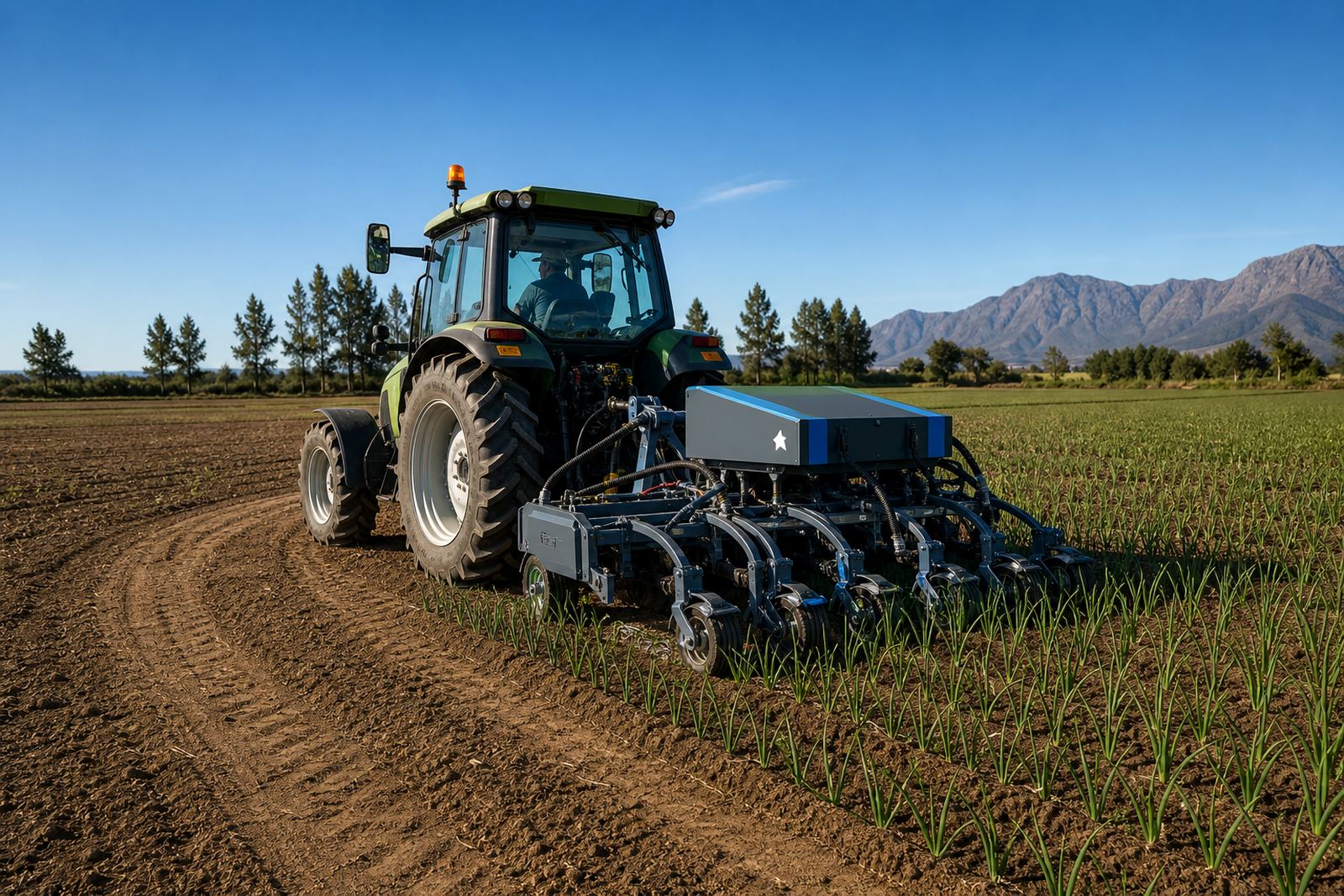
Laser weeding works best where the crop sits in straight, even rows and the gaps between plants stay readable from the cab. Cameras scan the ground, identify weed shapes and the system aims laser energy at the weed growing points rather than the crop itself. That setup is useful in onions, carrots, lettuce and brassicas where row spacing and plant size can be mapped before the pass.
The practical part is not the beam on its own, but the match between crop layout, weed stage and field timing. Small weeds are easier to target cleanly, while bigger weeds may need a different pass plan. A tractor-drawn unit keeps the job in line with standard farm movement, which matters when blocks are already set out for harvest traffic and irrigation access.
Where between-row control fits in a vegetable block
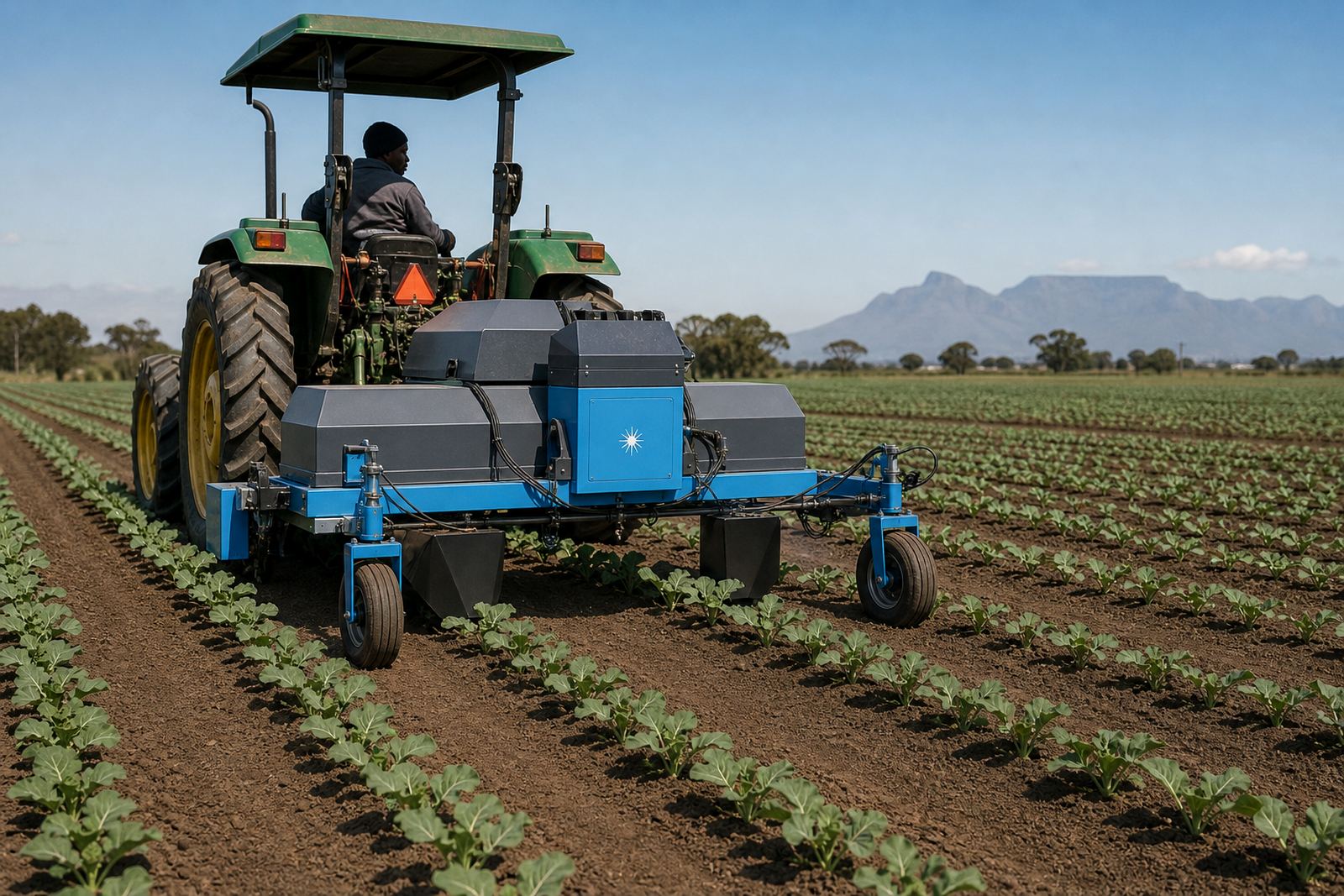
For straight vegetable plantings, between-row work is often the part that gives growers the most room to manage weeds without touching the crop row by hand. The operator keeps the unit moving at a field speed set by weed pressure, crop density and how clean the row definition is on that day. Heavy pressure or uneven emergence usually calls for a slower pass and tighter checking at the headlands.
- Onions and carrots often suit narrow, clearly marked row spacing.
- Lettuce blocks need careful timing because the crop canopy changes quickly.
- Brassicas can give wider gaps early in the cycle, then close in later.
- Field layout needs enough room for tractor movement and turning.
That is why crop timing plans matter as much as the machine itself. If the weeds are already too advanced, the row may need a repeat pass plan rather than one broad sweep through the block.
Herbicide-free work without turning the soil over
One reason growers look at laser weeding is the chance to deal with weeds without herbicide sprays and without soil disturbance. The method does not drag tines through the bed or throw soil back onto young plants. That can matter on lighter soils, in wet winter blocks near Cape Town, or where repeated cultivation is causing crusting and moisture loss.
Because the job is contact-light, it can slot into farms that already manage rows carefully for irrigation, fertigation and later harvesting. The pass is targeted, so the operator is not trying to blanket the whole field. Instead, the work follows the row pattern and deals with what the camera can see at ground level. That is why field assessments are worth doing before a season booking is set.
A Philippi lettuce block with narrow margin for error
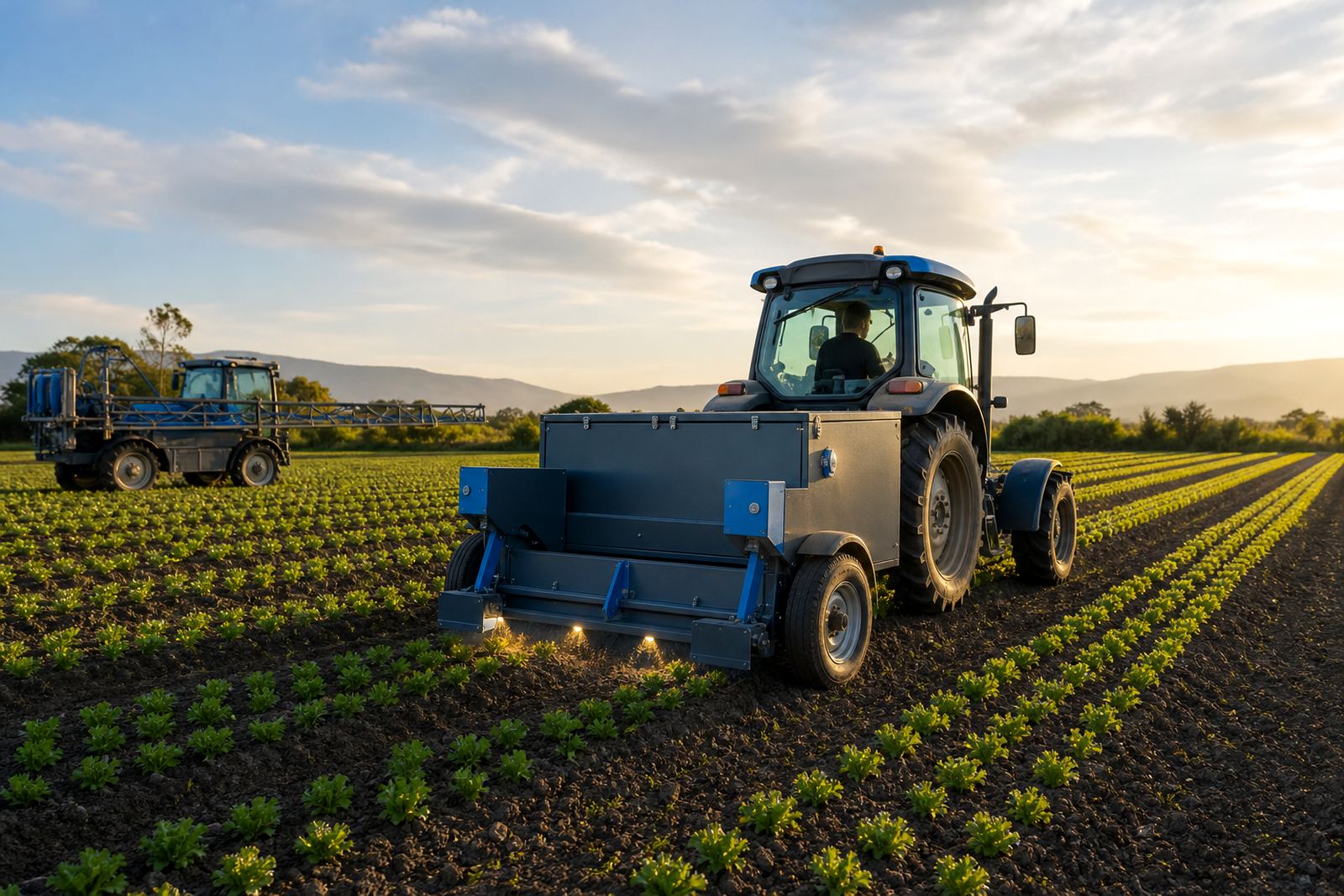
On the Philippi sandveld, a lettuce block can move from clean rows to a crowded edge very quickly after rain and warmer nights. In that kind of setting, a grower may ask for an arrival site check, then a trial strip run on one block before scheduling the rest of the farm. The aim is to read the crop stage, test the visibility of the weeds and see how the tractor unit tracks the rows without pushing soil around.
When the block is ready, the operator works under a field schedule that may also include travel coordination across nearby farms. A grower in Philippi may be timing the same week around blocks in Ceres or Grabouw, while another programme stretches north to Tzaneen or Bela-Bela. That sort of planning matters because weed stage does not wait for convenience.
- Trial strip runs help check row clarity before a full pass.
- Repeat pass planning keeps later work tied to actual weed emergence.
- Post pass reporting helps the grower see where follow-up is needed.
What the field crew watches before the unit enters the row
Between-row control works best when the crew reads the field properly. The crew looks at crop height, weed size, row spacing, moisture on the soil surface and whether the headlands allow clean entry and exit. If rows are uneven or the crop is still too small to separate clearly from weeds, the plan may shift to a later pass or a narrower section of the block.
That is also where the people around the machine matter. A trained operator can hold a steady line, while the workshop team and scheduling lead keep the equipment and movement organised around the farm programme. In practice, the job is part field science and part logistics, with enough judgement to avoid forcing a pass when the crop is not ready.
How growers use the service across more than one farm
Some growers run blocks in more than one area and need the schedule to follow the crop rather than the town. A multi farm programme can link fields in the Western Cape with sites in Limpopo, Mpumalanga, KwaZulu-Natal or the Free State, provided the planting stage and access lines make sense. That is where field scheduling, travel coordination and grower consultation all feed into the same plan.
LaserWeeder Hire works from Philippi, Cape Town, with operator supplied service and support from the team in operations, scheduling, grower liaison and workshop care. For a grower comparing options for straight vegetable rows, the real question is not whether every weed disappears in one pass, but whether the method fits the block, the timing and the crop stage well enough to keep the programme moving.
If you want to talk through a block layout or a season booking, use our contact form on our contact page.