Where a non-spray pass earns its place
On vegetable farms, the pressure is not only about removing weeds, it is about doing it without disturbing rows that are already under stress from wind, heat or uneven germination. A laser pass fits where growers want a herbicide-free option for row crops and fine seeded plantings, especially where hand hoeing is slow or repeated cultivations would throw soil back over the bed.
That makes it relevant for onions, carrots, lettuce and brassicas, where crop spacing and weed pressure can shift from one block to the next. The method works best when weeds are at an early stage and the timing is right for the crop canopy, because young weeds present a smaller target and the crop rows are easier to read.
- Useful for blocks where spray use is limited by crop stage
- Fits row crops with clear inter-row access
- Helps avoid soil movement around shallow roots
- Works as part of a planned weed management sequence
How the tractor-drawn unit works in the field
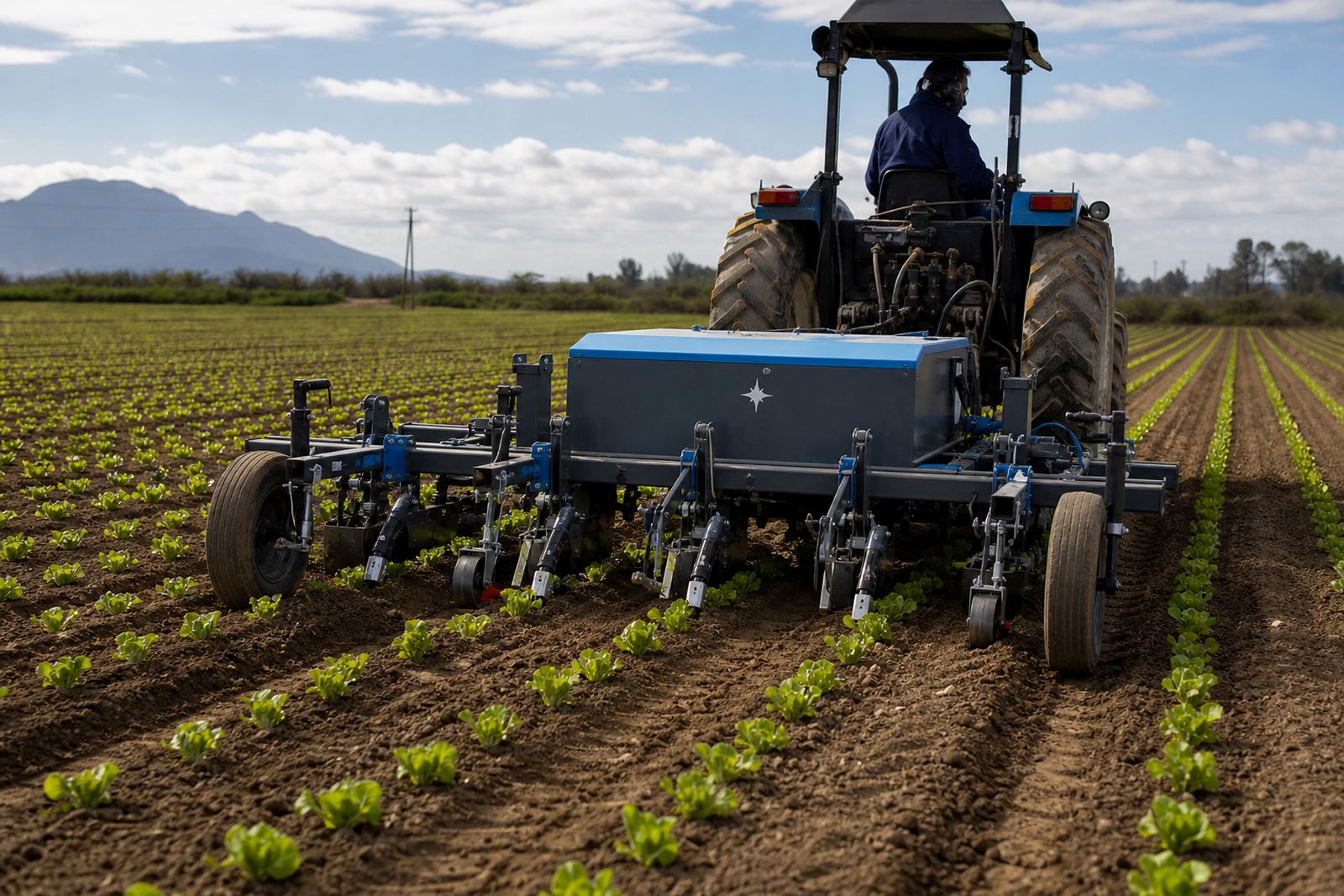
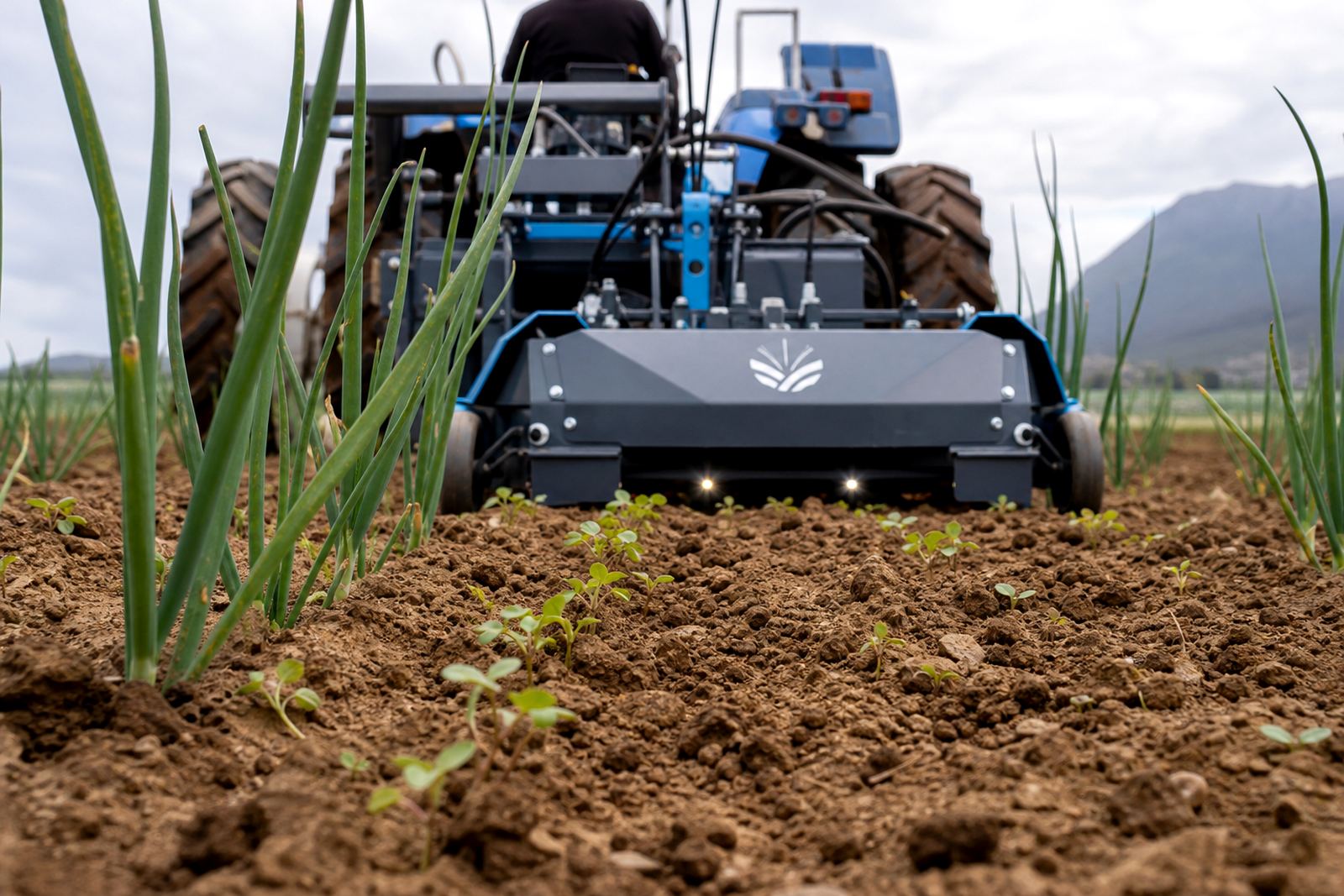
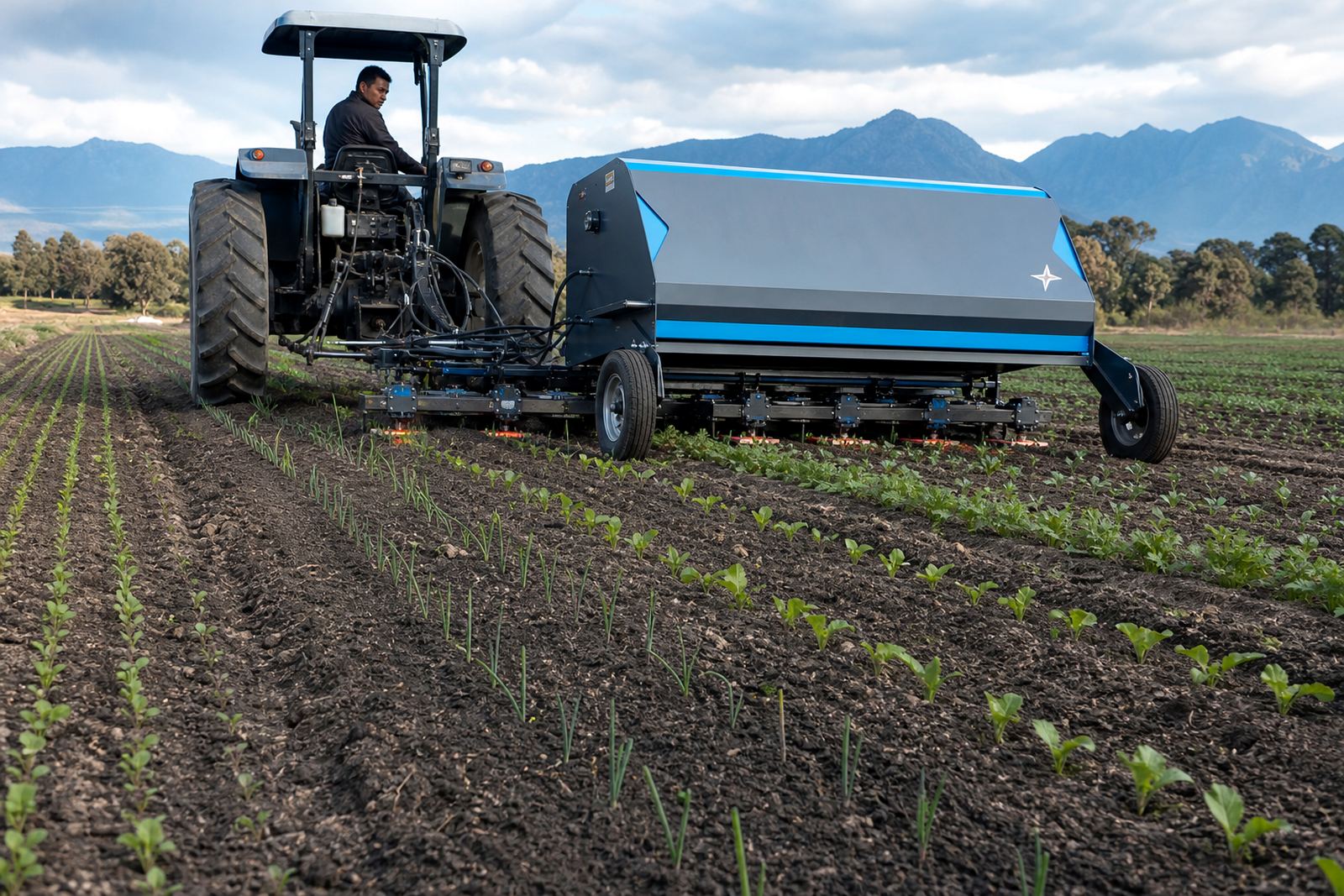
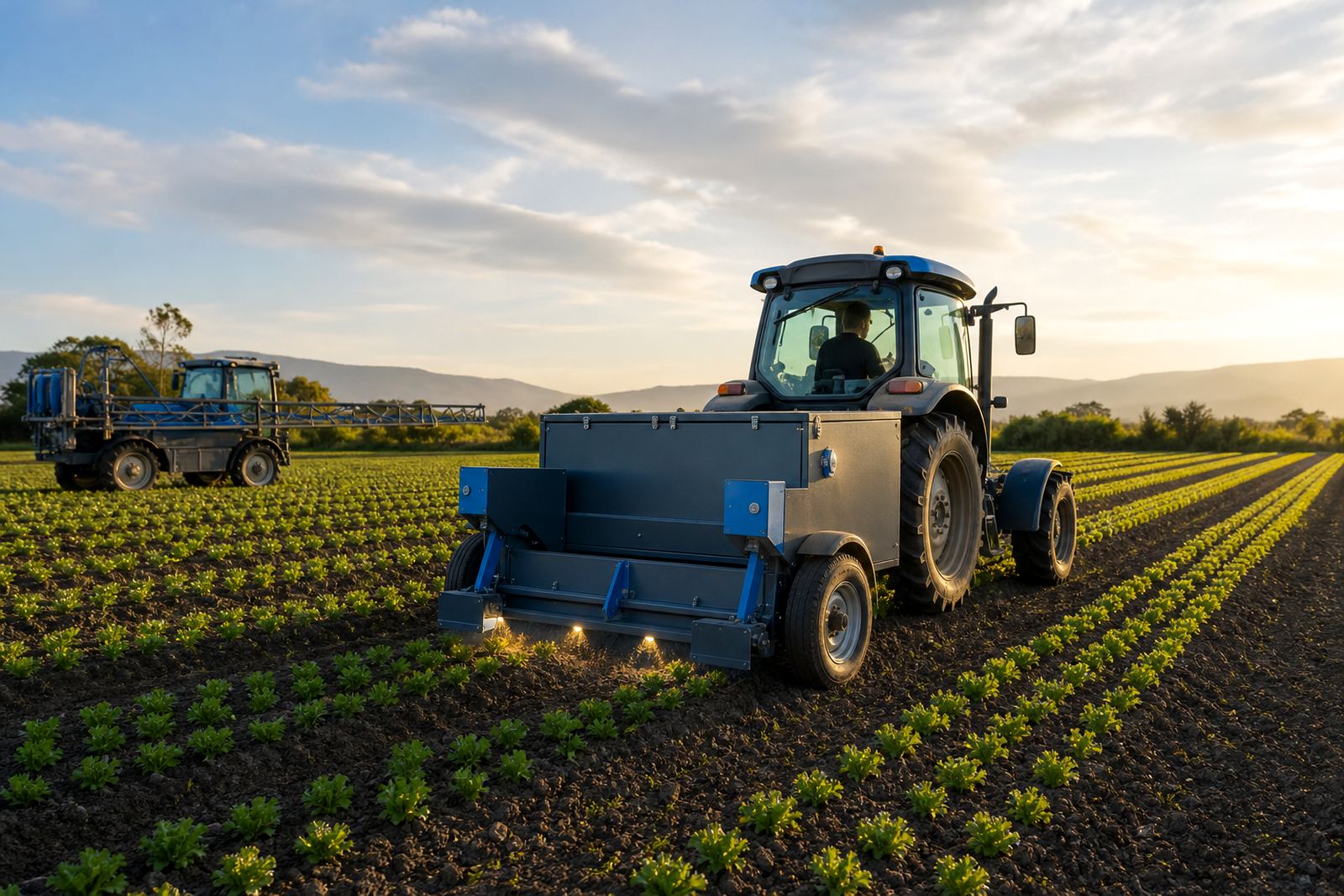
The unit is drawn through the field by a tractor while trained operators manage the pass and monitor the crop line. Cameras detect weed growth in the row gap and around the plants, then the laser targets the weed growing points with short bursts of energy. The crop is not the target, so the operator must keep the machine aligned with the beds and the planting pattern.
Field speed depends on weed pressure, row layout and how uniform the stand is. A clean block with even spacing can be worked differently from a block where the weed flush is heavier or the crop has gaps. That is why arrival site checks and trial strip runs matter, they show how the block is reading before a full pass is set in motion.
- Camera-guided detection reads weeds before the beam fires
- Laser action is focused on the weed growing point
- Tractor-drawn movement suits large vegetable blocks
- Operator oversight matters where rows are tight or uneven
Timing matters more than bravado
Laser weeding is not a last minute rescue for a block that has run away. It works better when the weed flush is still young and the crop is at a stage where the rows can be followed cleanly. In Cape Town's vegetable belt and in warmer inland areas, growth can move fast after rain or irrigation, so crop timing plans need to reflect the season rather than a fixed routine.
For growers in Philippi, Ceres and Grabouw, coastal humidity and cool mornings can change how quickly a flush shows. In Tzaneen, Bela-Bela, Nelspruit, Howick and Bethlehem, timing may shift with heat, moisture and planting windows. The service is most practical when it is folded into season bookings and repeat pass planning instead of being left until weeds are already competing hard.
- Early weed stage gives the system a clearer target
- Uniform emergence makes the pass easier to set
- Weather and irrigation cycles affect planning
- Repeat passes may be needed as the crop develops
A Philippi lettuce block, worked without spray
In Philippi, a lettuce grower with mixed beds and a tight schedule may want a non-spray option when the next cultivation would be too rough on the topsoil. A laser pass can be scheduled after an arrival site check, with the operator reviewing row spacing, weed stage and the condition of the beds before field work begins. The aim is not to force a one size answer, but to set the machine to the block that is actually in front of us.
That kind of planning is where grower consultation and field scheduling earn their place. A trial strip run can show how the crop and weeds are reading, then post pass reporting records what was seen in the block. For farms moving between Philippi and other vegetable areas, travel coordination keeps the programme practical across multiple sites.
- Arrival site checks help match the pass to the block
- Trial strip runs are useful on unfamiliar ground
- Post pass reporting keeps the season notes grounded
- Multi farm programmes help when several blocks need attention
What makes the option different from spray or hoeing
Herbicide free weed control is not just a change in chemical use, it changes how the field is treated. There is no spray drift to manage and no soil inversion from repeated cultivation. That can suit shallow rooted crops, sandy ground and beds where the grower wants to preserve structure between passes.
Hand labour still has a place, and some blocks will need it, but laser weeding can reduce pressure on crews when weed growth is concentrated in the row gap. It also gives growers another path when resistance concerns, residue preferences or market requirements make spray use less appealing. The method is mechanical in its movement, yet the actual weed removal is precise and selective.
Planning for season bookings and repeat passes
For a vegetable farm, the real value of a non-spray option often shows in the planning. Season bookings let a grower lock in field windows around planting, irrigation and harvest. Repeat pass planning helps because one laser pass may not be the end of the story, especially where fresh flushes appear after moisture or cultivation.
LaserWeeder Hire works from Philippi, Cape Town and serves growers across South Africa with operator supplied work, field scheduling, travel coordination and grower consultation. The team includes Mandla Adonis, Anele Khoza, Pieter Mokoena, Zanele Naidoo, Johan Daniels, Lerato Letsoalo and Ruan Mkhabela, each carrying a different part of the field programme. If a block needs a cleaner fit for a herbicide-free option, our contact form on the contact page is the route into the conversation.
- Season bookings suit crops with planned planting windows
- Repeat pass planning helps manage later weed flushes
- Multi farm programmes keep several blocks in sequence
- Travel coordination matters when farms sit across provinces