When the crop canopy starts to matter
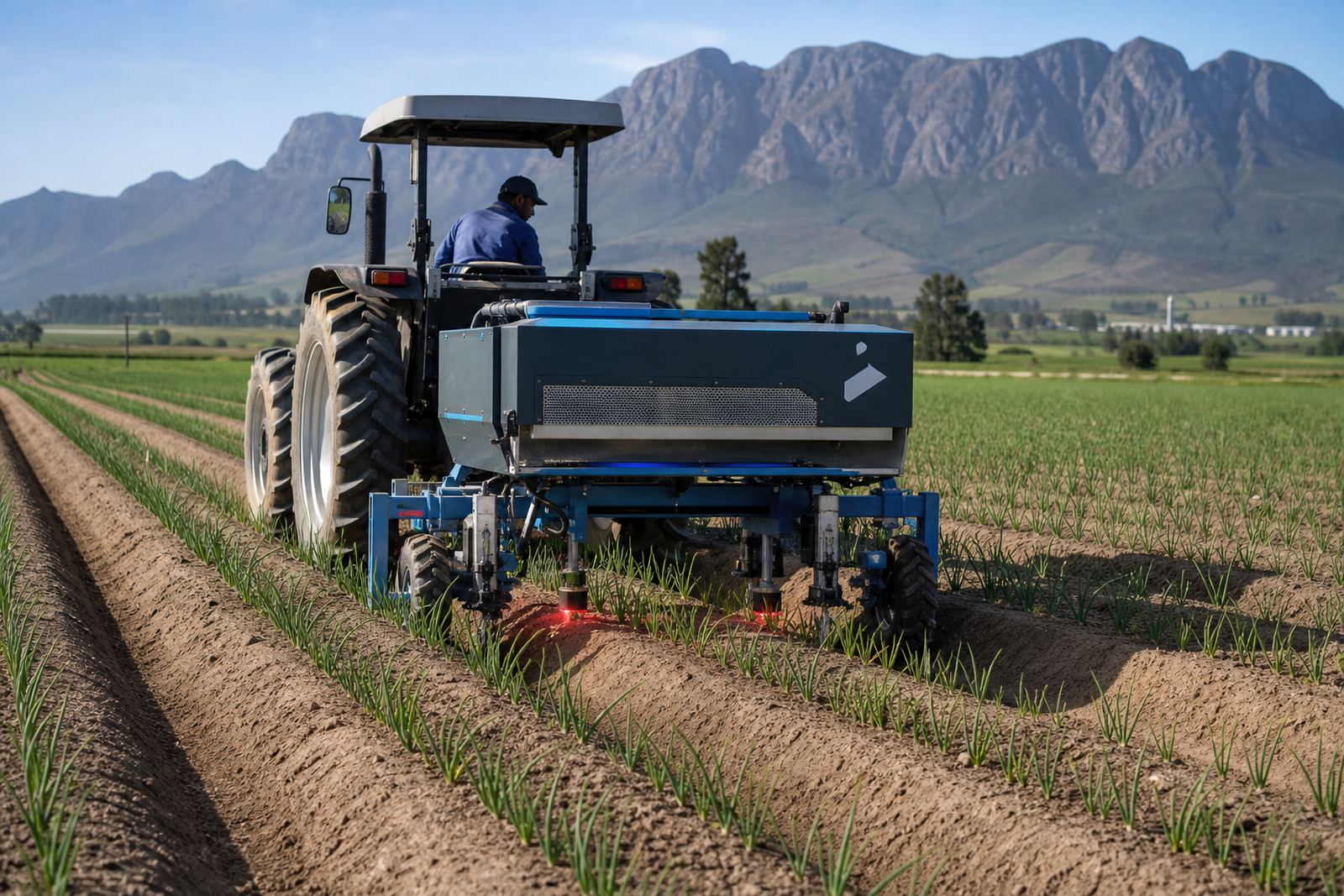
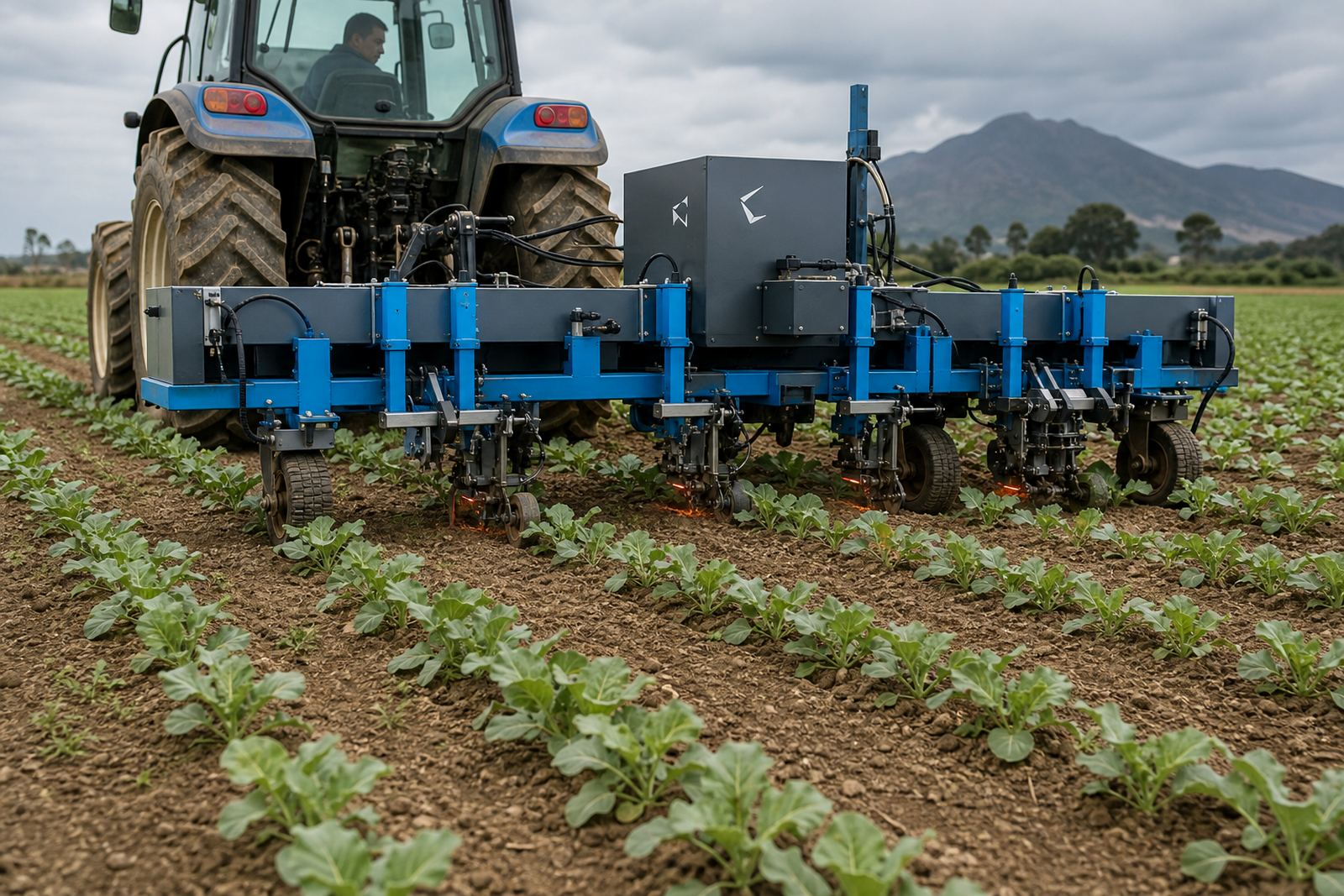
Young vegetable rows leave more bare ground exposed, which makes early weed scouting easier and gives a tractor-drawn laser unit cleaner sight lines. As the crop fills out, leaves can cover low weeds and slow the operator’s view of the row edges, so a block that looked ready last week may need a closer look this week.
That is most common in onions, carrots, lettuce and brassicas, where planting pattern and leaf spread change fast. A crop that is still small can be treated with more access around the plant, while a thicker canopy may leave only narrow gaps for safe work between rows.
- Open rows help camera systems detect weeds near the soil surface.
- Closed canopies can hide small weeds and complicate targeting.
- Row width and planting accuracy affect how cleanly a tractor passes.
- Leaf overlap can change the workable window from one week to the next.
The weed stage usually decides the best window
Laser weeding works best when weeds are at a small, active stage and the growing point can be targeted before the plant becomes woody or too spread out. Once weeds get larger, they may still be treated, but the pass becomes more demanding and the field speed may drop depending on weed pressure and row conditions.
Seedlings with a single stem are easier to read than older weeds with several leaves or branching growth. Timing matters because the machine is looking for the weed, not the crop, and a fresh flush after irrigation or rain can change the plan for a block that seemed ready earlier in the week.
- Small weeds are easier to detect and target cleanly.
- Dense flushes may slow field speed in heavier patches.
- Older weeds can reduce the practical value of a pass.
- Fresh rain or irrigation can trigger a new germination wave.
A field plan is better than a single pass
Contract laser weeding is usually planned as part of a wider crop programme, not as a one-off visit. A grower may need a trial strip run first, then a repeat pass plan if the first scan shows uneven weed emergence across the block. That is common where sandier patches warm faster or where the soil holds moisture longer in low spots.
Field scheduling matters just as much as the machine itself. Travel coordination, arrival site checks and post pass reporting help the team match the field to the crop stage, then adjust the next visit to what actually germinated, not what was expected on paper.
- Trial strip runs show how the crop and weeds look under field light.
- Repeat pass planning helps with staggered weed flushes.
- Arrival checks confirm row layout, headlands and access roads.
- Post pass notes help decide when the next block should be visited.
Weather, soil moisture and timing in the Cape and beyond
In Philippi, coastal humidity and wind can change how a morning field looks by midday. In the Western Cape, a block near Ceres or Grabouw may dry differently to one in the lowlands, and that affects surface visibility and the handling of dust on the day. Further north, a farm in Tzaneen or Nelspruit may face warmer growth rates, so weeds can move from small to too advanced very quickly after a wet spell.
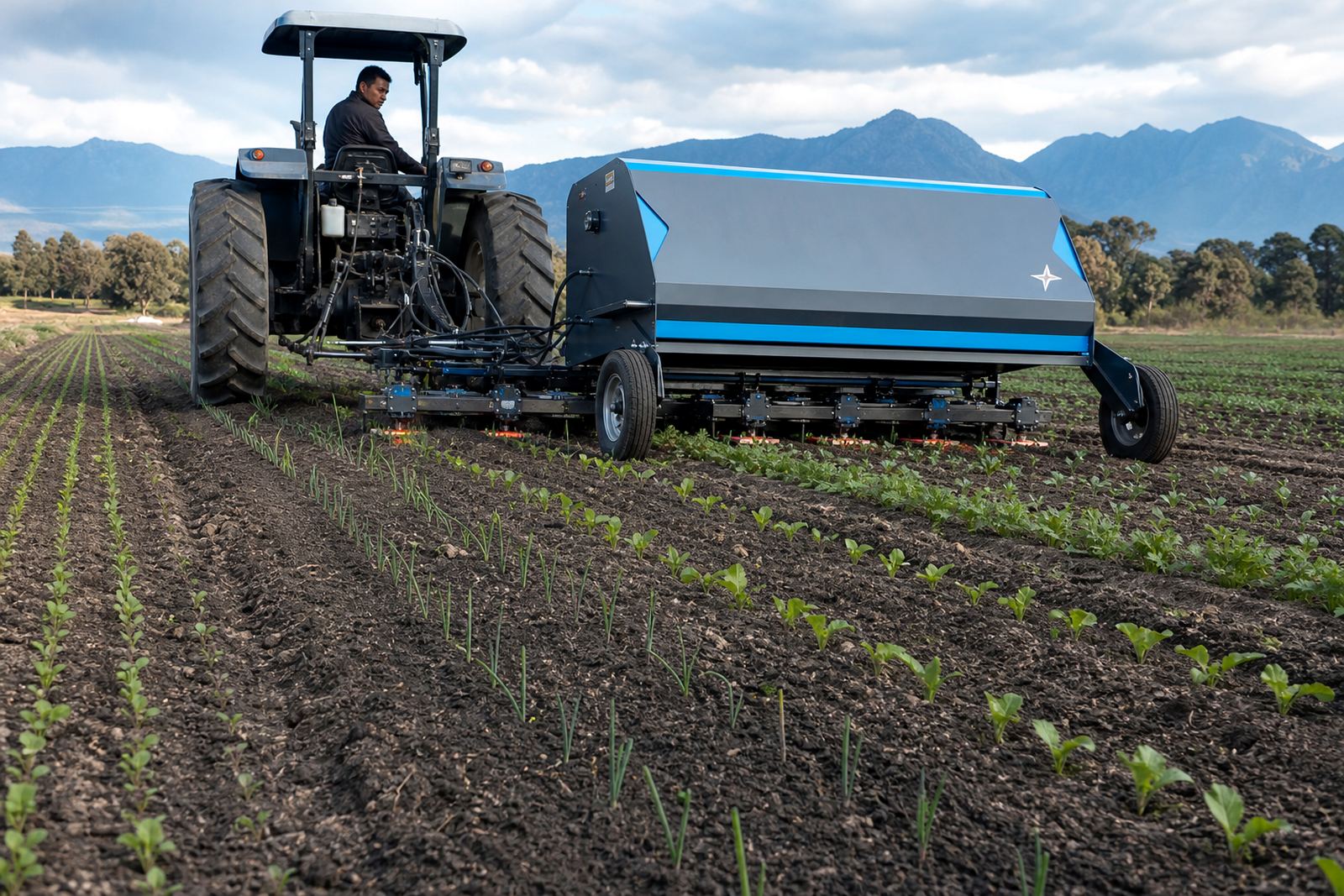
Timing is not about the calendar alone. It is about the crop stage, the weed stage, and how the field sits after irrigation, rain or a period of cooler weather. A tractor-drawn laser unit still needs a clean route through the rows, and the operator needs a crop that is far enough along to guide the machine but not so thick that target visibility drops off.
For lettuce and brassicas, a tight window can open and close fast. On carrots and onions, the row spacing often gives a bit more room, but an uneven emergence can leave some plants ahead of the rest, so a single pass plan may need adjustment before the tractor enters the block.
What a grower can watch in the field
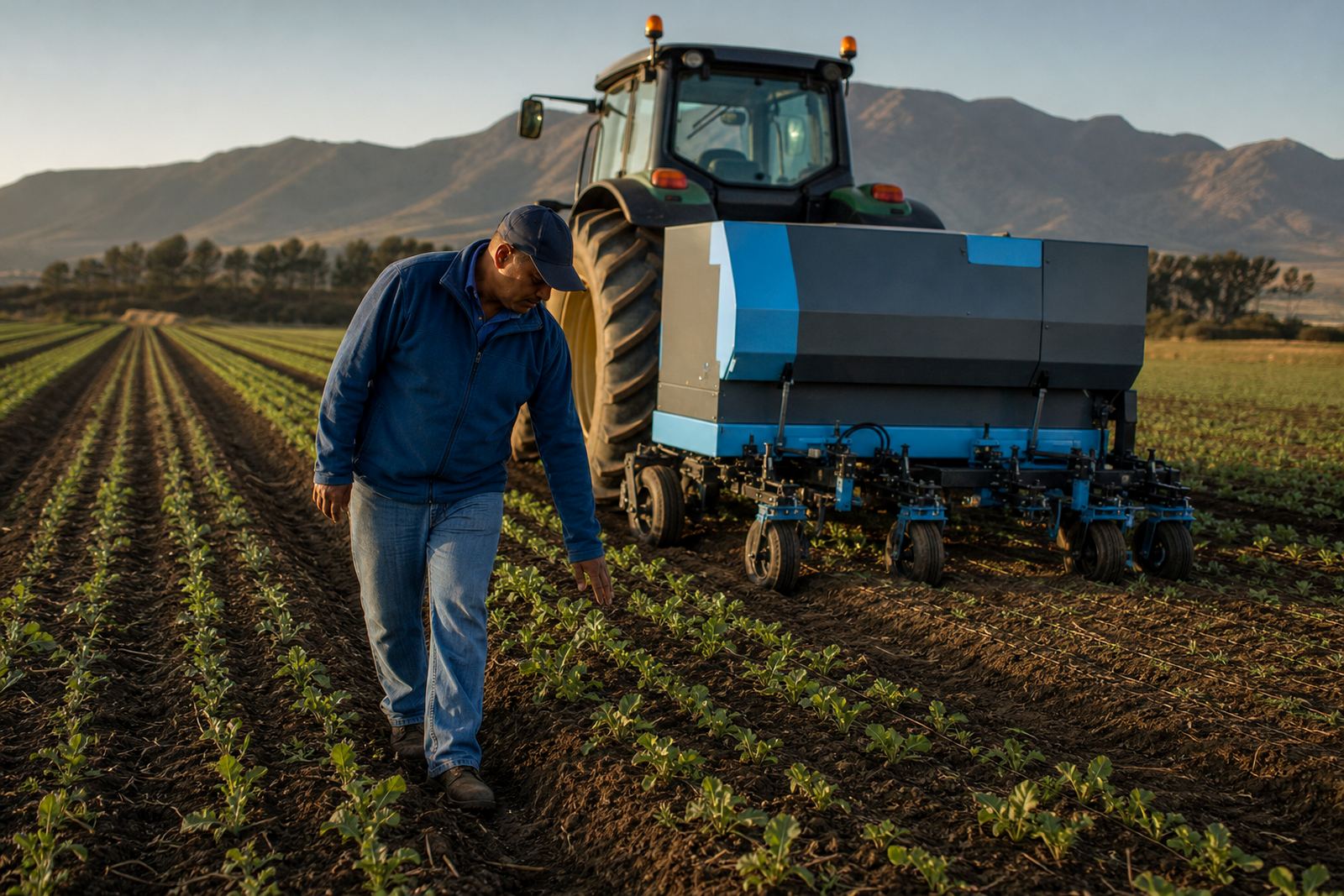
The most useful clues are simple and visible. A grower can walk the rows and see whether the crop is still small enough to allow laser access, whether weed flushes are grouped or scattered, and whether the soil surface is firm enough for a tractor pass without dragging loose material across the bed.
It also helps to note where the crop is most uneven. Headlands, shaded corners and wetter patches often mature at different speeds, and those areas can change the timing of a treatment. In practice, the best window is often the one that matches the most sensitive section of the block, not the easiest part of it.
- Look for weed size, not only weed count.
- Check whether the crop is still open enough for the camera view.
- Mark wet corners, uneven rows and headland problem spots.
- Note any fresh emergence after irrigation or rain.
A Philippi example that feels familiar on the ground
A grower near Philippi with mixed lettuce and brassica blocks may see one section ready for laser weeding while another is still too small and exposed. The operations team can set field scheduling around that difference, then plan a travel route that groups nearby blocks and reduces wasted movement between farms. In that kind of week, the timing choice is made row by row, not by guesswork.
That is where trained operators and grower liaison matter. The machine may be ready, but the crop still has to present the right stage for accurate detection. When the weed flush is still young and the row structure is clear, the pass can be scheduled with less pressure on the operator and cleaner access around the crop plants.
Laser weeding is herbicide-free and does not disturb the soil, so the crop stage has to be right enough for the technology to do careful work on the growing points of the weeds. If the field is too early, too dense or too uneven, it is usually worth waiting for a better window rather than forcing the block into the schedule.