Bed edges decide whether the unit stays centred
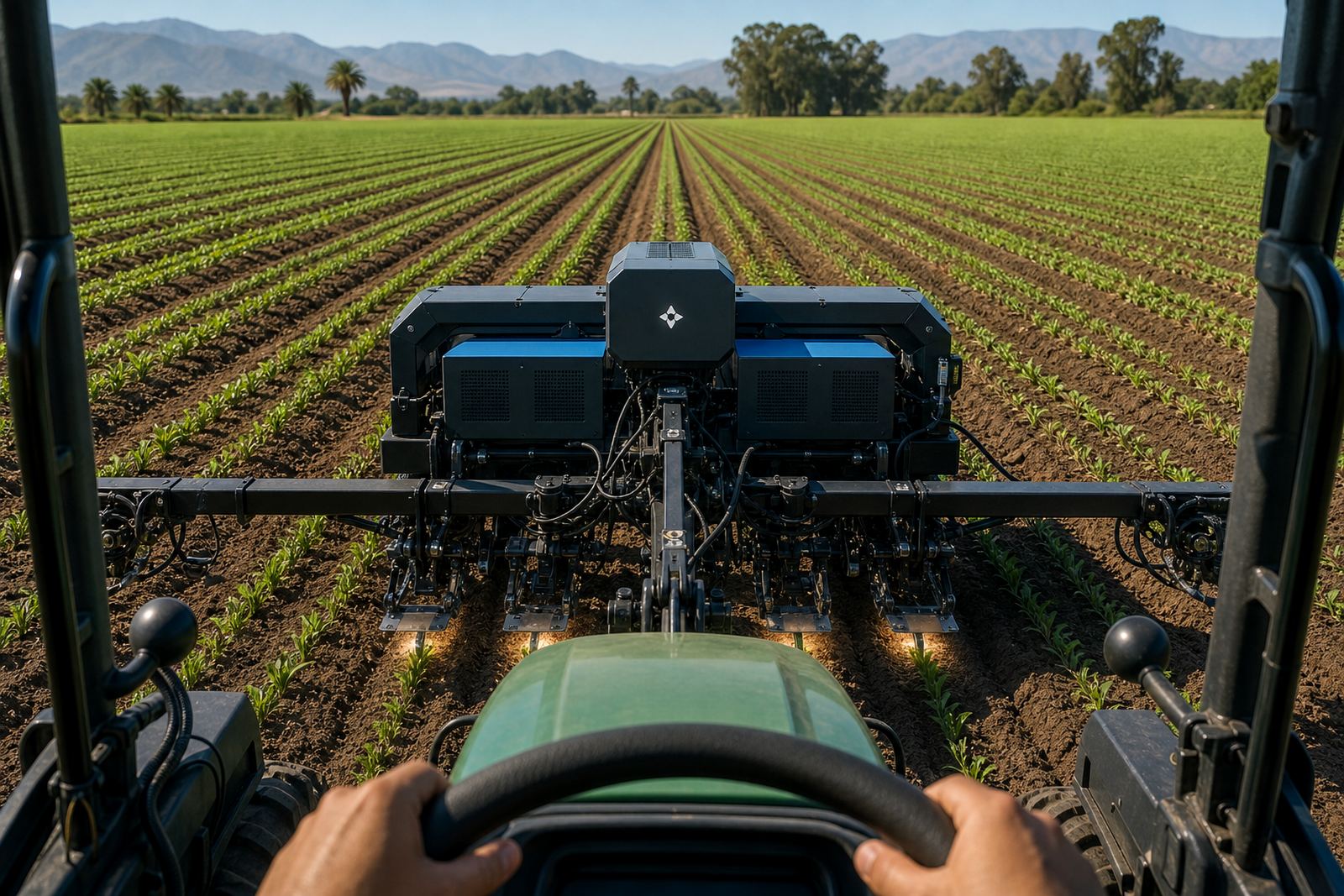
On vegetable farms, a neat bed is not only about plant spacing. It gives the tractor a clear line, keeps the laser frame steady and reduces the little corrections that waste time in long blocks. When beds are uneven, the operator has to manage drift, tyre bite and crop position at the same time.
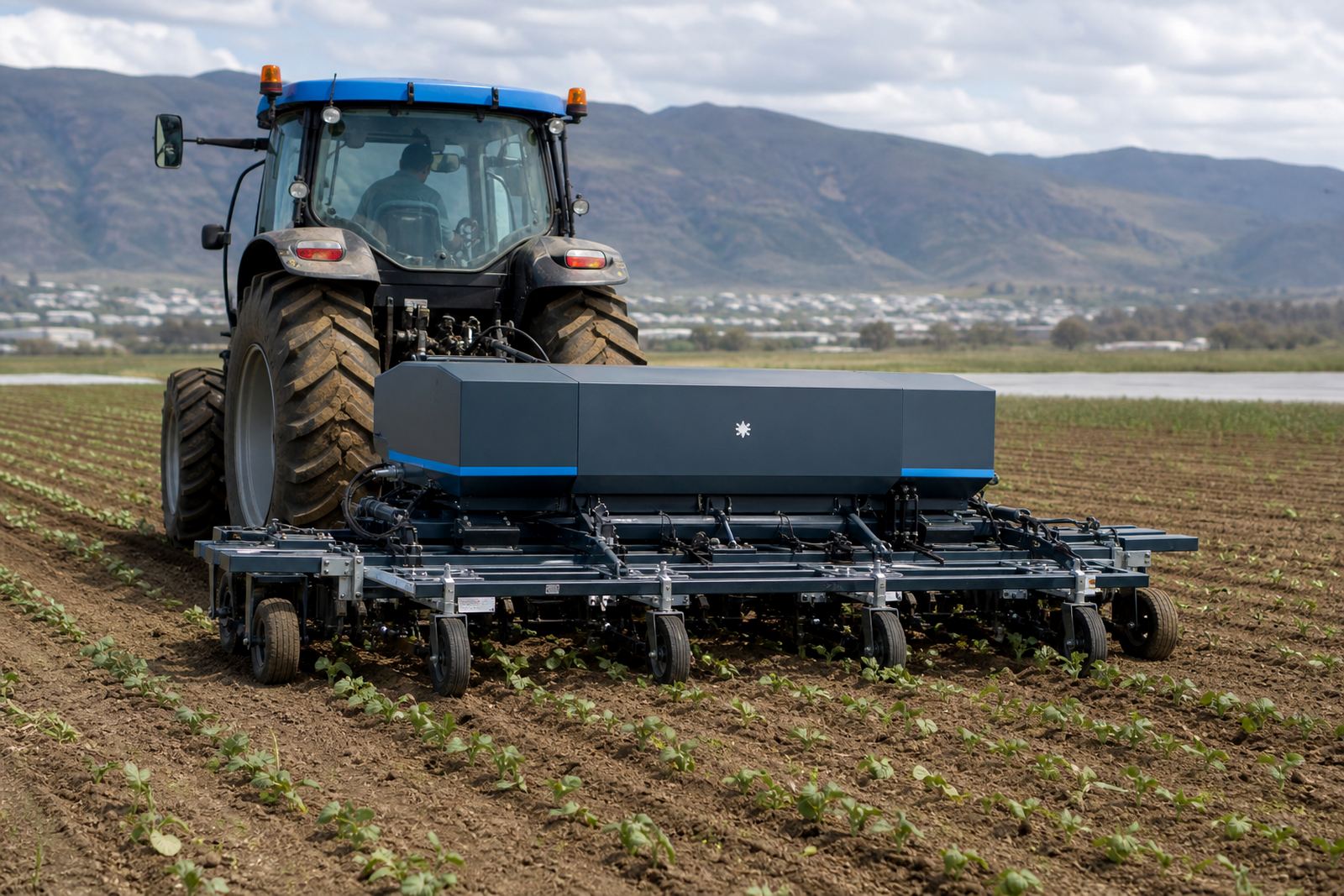
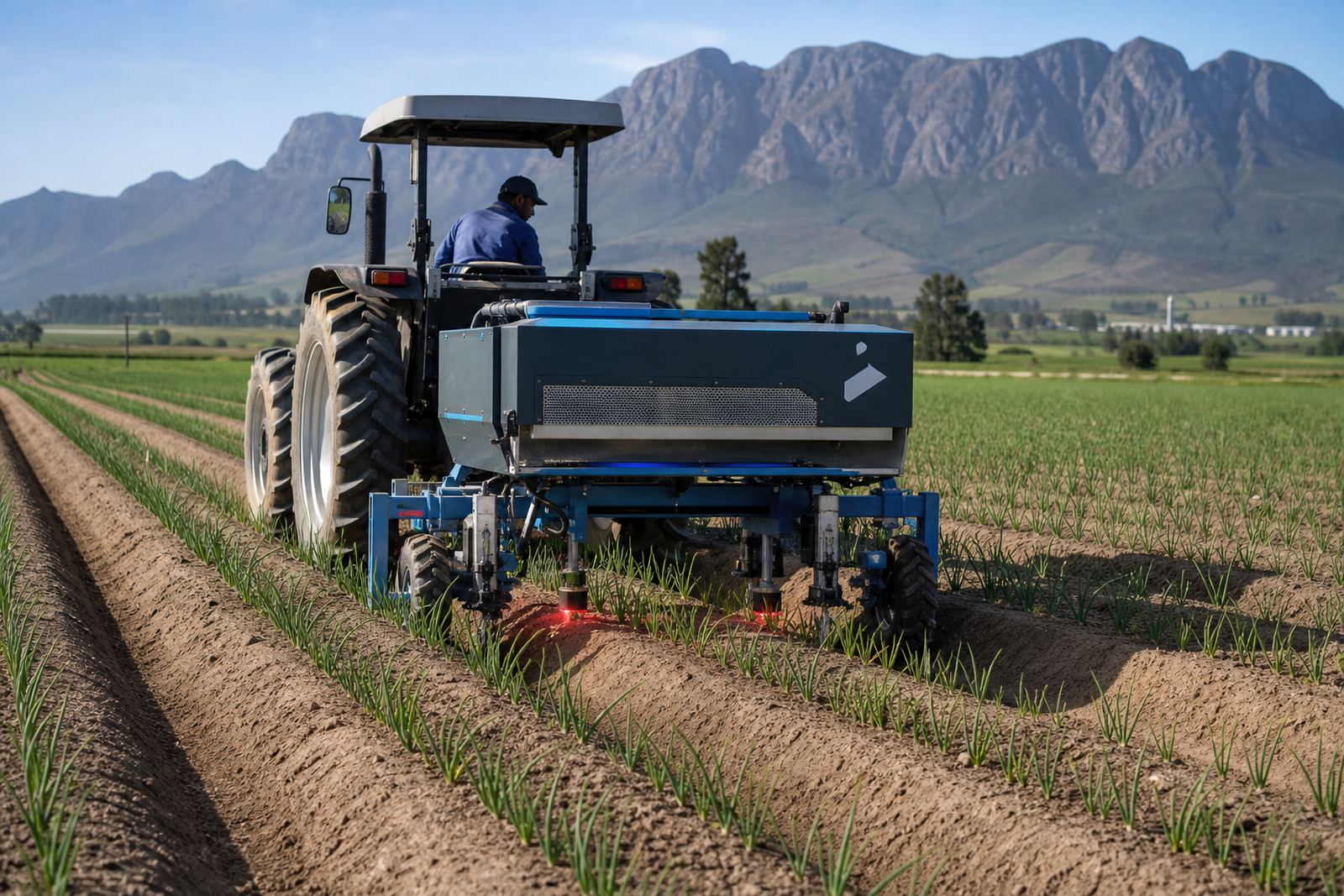
Laser weeding units read the crop row with cameras, then target weed growing points between and around the plants. That only works properly when the bed crown is predictable and the shoulder does not crumble into the row. In sandy Philippi ground, soft shoulders can shift after rain or irrigation, so bed repair matters before field work starts.
- Keep bed tops level enough for repeat passes.
- Trim loose soil from shoulders before the booking.
- Mark the row centre where beds run unevenly.
- Leave enough space for tractor wheels without clipping plants.
Shoulders need shape, not just width
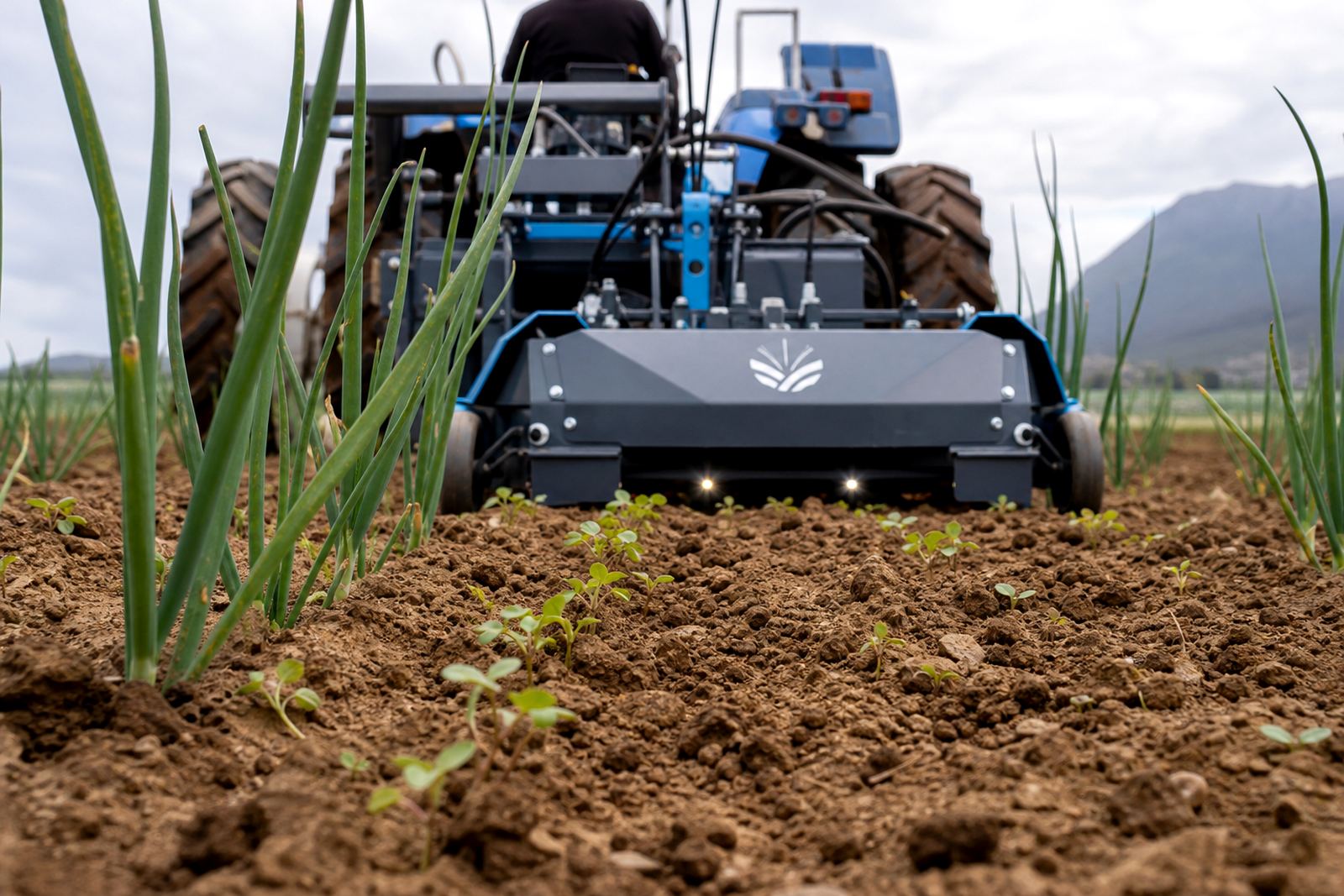
Shoulders carry more weight than many growers expect. They hold the edge of the bed together, help water move off the row and give the tractor a better line when the unit is working close to the crop. If the shoulder is too steep, the wheel can drop and nudge the frame off line.
For onions, carrots, lettuce and brassicas, the crop stand is often close to the shoulder at early stages. That is when the weed stage also matters most. Small weeds are easier to target, while larger weeds may sit closer to the crop and need slower movement through the block. Field speed changes with weed pressure, bed shape and how stable the row looks on the day.
- Steep shoulders create wheel drop and a rougher pass.
- Flat shoulders give the operator a steadier track.
- Freshly repaired edges help protect young crop rows.
- Broken shoulders often slow the whole block down.
In practical terms, a clean shoulder can save a lot of line correction across a long block. That matters when the farm has several plantings running in sequence and the same unit must move from one crop to the next without unnecessary resets.
Access lanes carry more than traffic
Access lanes are not just entry roads. They are the working space for turning, parking the support vehicle, checking alignment and moving between blocks without chewing up the field edge. If lanes are too narrow or muddy, the tractor arrives at the row already compromised.
In coastal areas near Cape Town, damp conditions can leave access lanes slick and uneven. In drier inland districts, dust can hide ruts and old wheel marks that throw the tractor off line on the approach. Good access is part of the crop plan, not an afterthought.
- Keep entrance points clear of loose debris and stones.
- Give the tractor enough room to enter without sharp turns.
- Plan access around irrigation lines and drainage cuts.
- Use firm turning space at block ends and gateways.
Where several farms share the same route in a season, access planning also helps with travel coordination. It keeps arrival site checks cleaner and gives the operator a better first look at the field before the unit drops into the row.
Timing the pass to the weed stage
Laser weeding works best when weed growth is still at an early stage and the crop row is well defined. If the block is left too long, weeds become larger and harder to separate from the crop pattern. That pushes the operator to work more carefully, and the field speed changes with that pressure.
Bed form and access both affect timing because they shape how easily the unit can return for a repeat pass. A farm with good access, firm shoulders and clean beds can fit more dependable seasonal scheduling than a block that needs repairs every time the tractor enters. Repeat pass planning is especially useful where the same crop has several flushes of weeds after irrigation or rain.
Growers in Bethlehem, Howick or Tzaneen may face different moisture and soil conditions, but the principle stays the same. The earlier the crop row is stable and readable, the easier it is to set a sensible crop timing plan. That is one reason trial strip runs matter before a full booking is fixed.
Philippi clay, sand and the real movement of a tractor
Philippi farms often deal with sandy ground, sharp drainage changes and blocks that dry out unevenly. Those conditions can make the bed look better than it feels under load. A laser unit needs the tractor to hold a steady course, so the surface below the tyres matters as much as the crop above it.
On a mixed vegetable block near Cape Town, one side may be firm from earlier traffic while another side is loose after irrigation. The operator sees that difference in how the machine tracks, and it can change the pacing through the block. In some cases the best answer is not more speed, but better field preparation and a cleaner access route before the pass starts.
From Ceres to Grabouw, and from Nelspruit to Bela-Bela, the same issue appears in different ways. Soil texture, slope and headland width all shape movement. Bed form tells the operator how much room exists between crop, shoulder and wheel path. Access tells the team whether the plan is practical for that day.
What a good field visit checks before the unit arrives
A proper field assessment looks beyond weed pressure. It checks whether the beds are even, whether the headlands allow safe turning and whether the lanes can carry the tractor without damage. It also looks at crop stage, because the row must be visible enough for the camera-guided system to read it accurately.
Our field scheduling team uses that information to decide where the unit should enter, how the pass should be sequenced and whether a trial strip run is worth doing first. Where bed shape is awkward, a small change in entry point can improve movement across the whole block. Where the access lane is poor, the plan may need a different start time or a different route between blocks.
- Check whether bed crowns are consistent across the field.
- Look for shoulder collapse near irrigation lines.
- Measure turning space at both ends of the block.
- Confirm that the crop row is readable at working height.
In the end, bed shape and access are part of the same job. One controls how the unit sits in the row, the other controls how it gets there and leaves without making a mess of the edge.