The weed is not beaten where the eye first lands
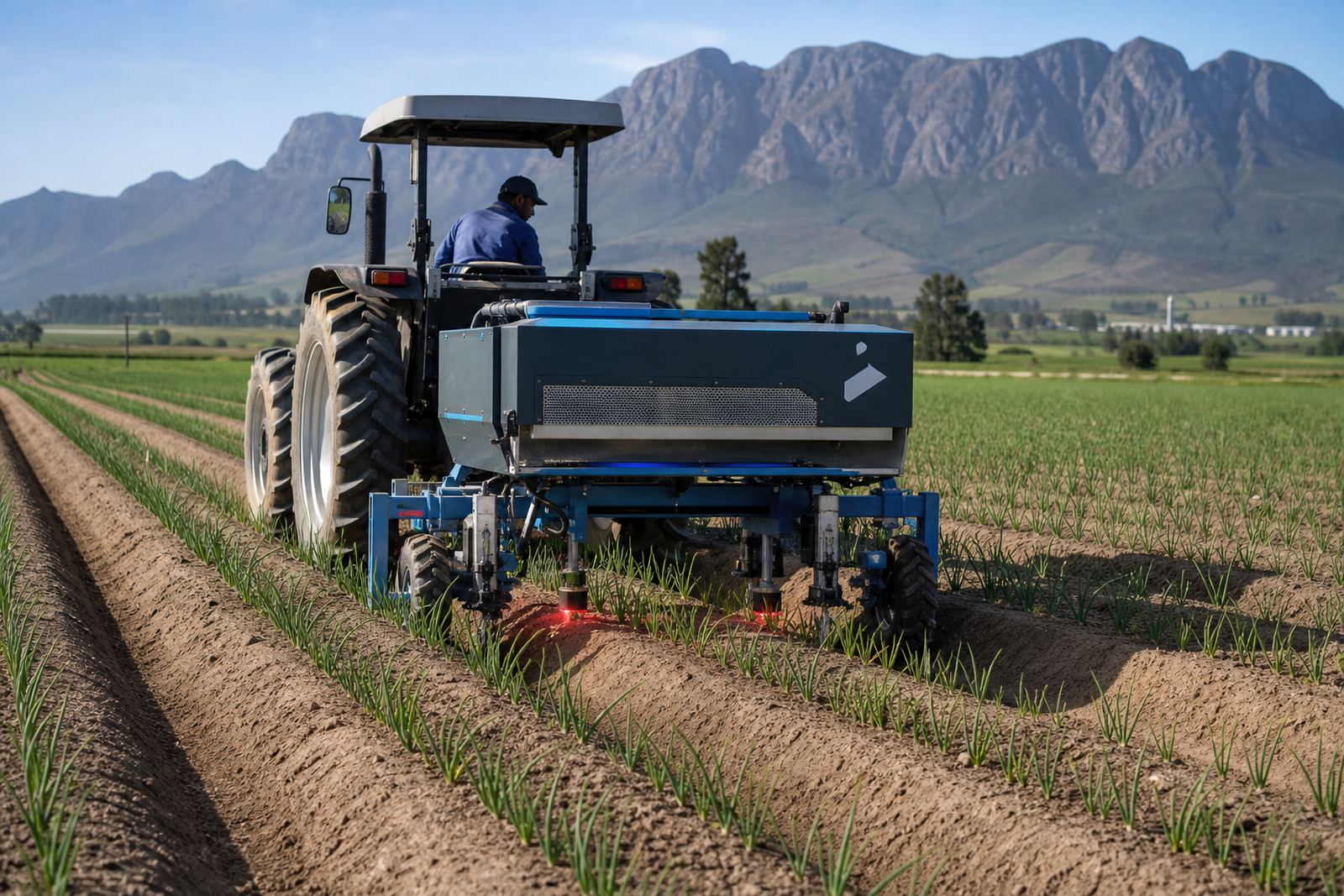
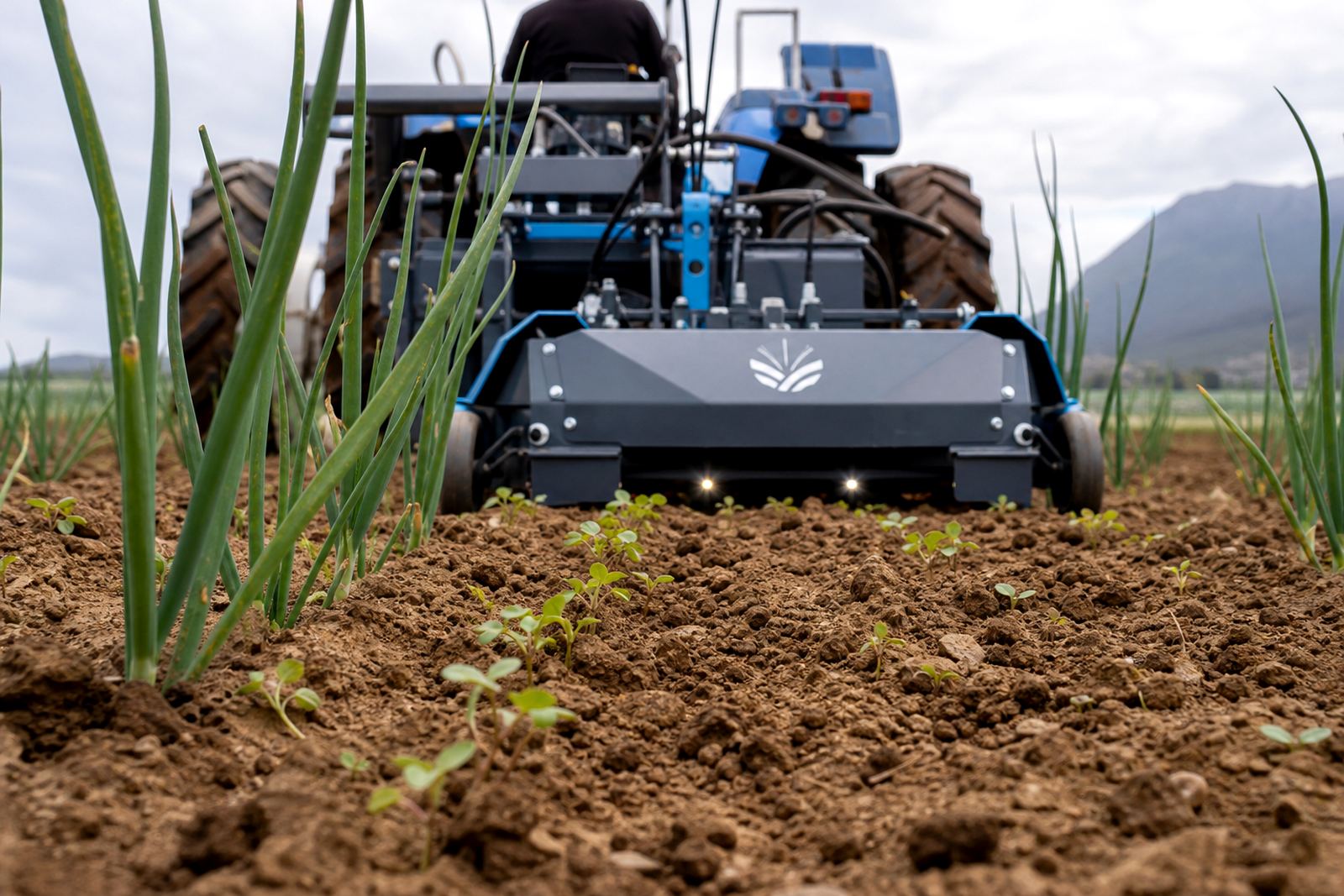
Most weeds look vulnerable at the surface, yet the leaf tips tell only part of the story. The growing point sits where new cells keep forming, often close to the centre of a young broadleaf weed or inside the crown of a grass weed. A camera-guided laser unit reads the row, identifies the target and directs energy to that small active zone rather than heating the whole field.
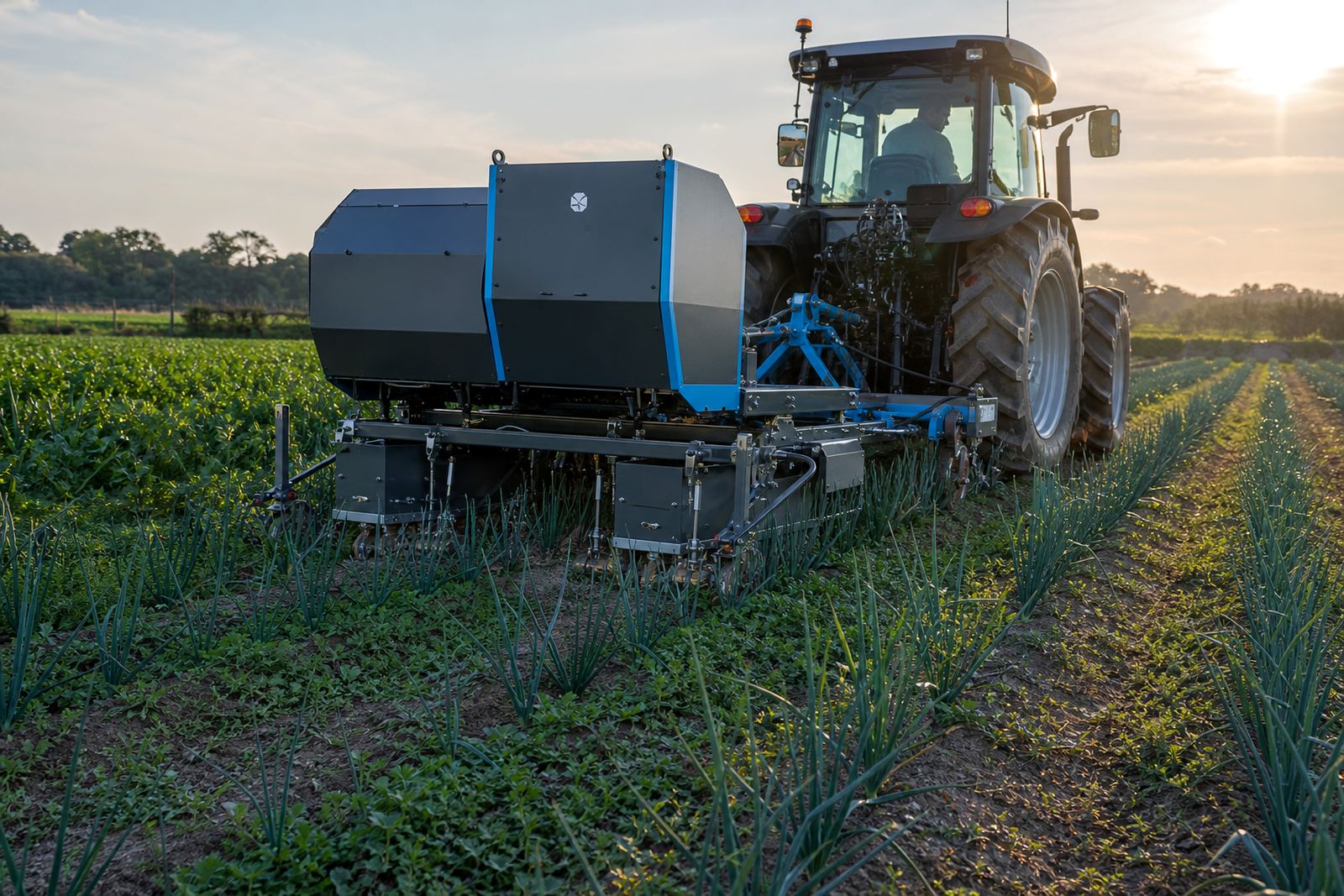
That matters on vegetable farms because the crop itself can be close by. Onions, carrots, lettuce and brassicas all sit in narrow bands where a missed weed can set seed or take water, but a blunt pass can also leave unnecessary damage if the system is not set up properly. The point of the method is precision. The machine is drawn through the field, the operator monitors conditions, and the laser works on the part of the weed that keeps it growing.
Growth stage changes the whole pass
Timing shapes the result more than many growers expect. Young weeds are easier to target because their growing points are exposed or still near the surface. Older weeds can have thicker stems, more leaf cover and a stronger root base, which makes field speed and scan settings more sensitive to weed pressure. When pressure is high, the unit may need a slower pace so the camera and laser can deal with each plant in sequence.
- Early flushes are often the best time to plan a pass.
- Dense patches usually need slower travel across the row.
- Mixed weed stages can call for repeat pass planning.
- Crop canopy cover affects how clearly the target can be seen.
That is why field scheduling is not only about booking a tractor and driver. It is about matching weed stage, crop stage and ground conditions so the growing point is still visible enough to be treated properly.
Why no soil disturbance matters in sandy and friable ground
Laser weeding sits differently from cultivation. It does not turn soil over, which helps keep the seedbed stable and reduces the risk of bringing fresh weed seed to the surface. That can be useful on lighter ground around Philippi, where wind and moisture can change the working face of a block quickly. In wetter districts too, a no-disturbance pass can help avoid clods, wheel marks and the extra cleaning that follows an untidy cultivation run.
Herbicide-free control is one part of the appeal, but the lack of soil movement is just as important. A grower dealing with a clean bed one week and a fresh flush the next does not want another operation that resets the whole field. The laser approach leaves the surface as it found it, apart from the treated weeds.
What a field run looks like on a vegetable block
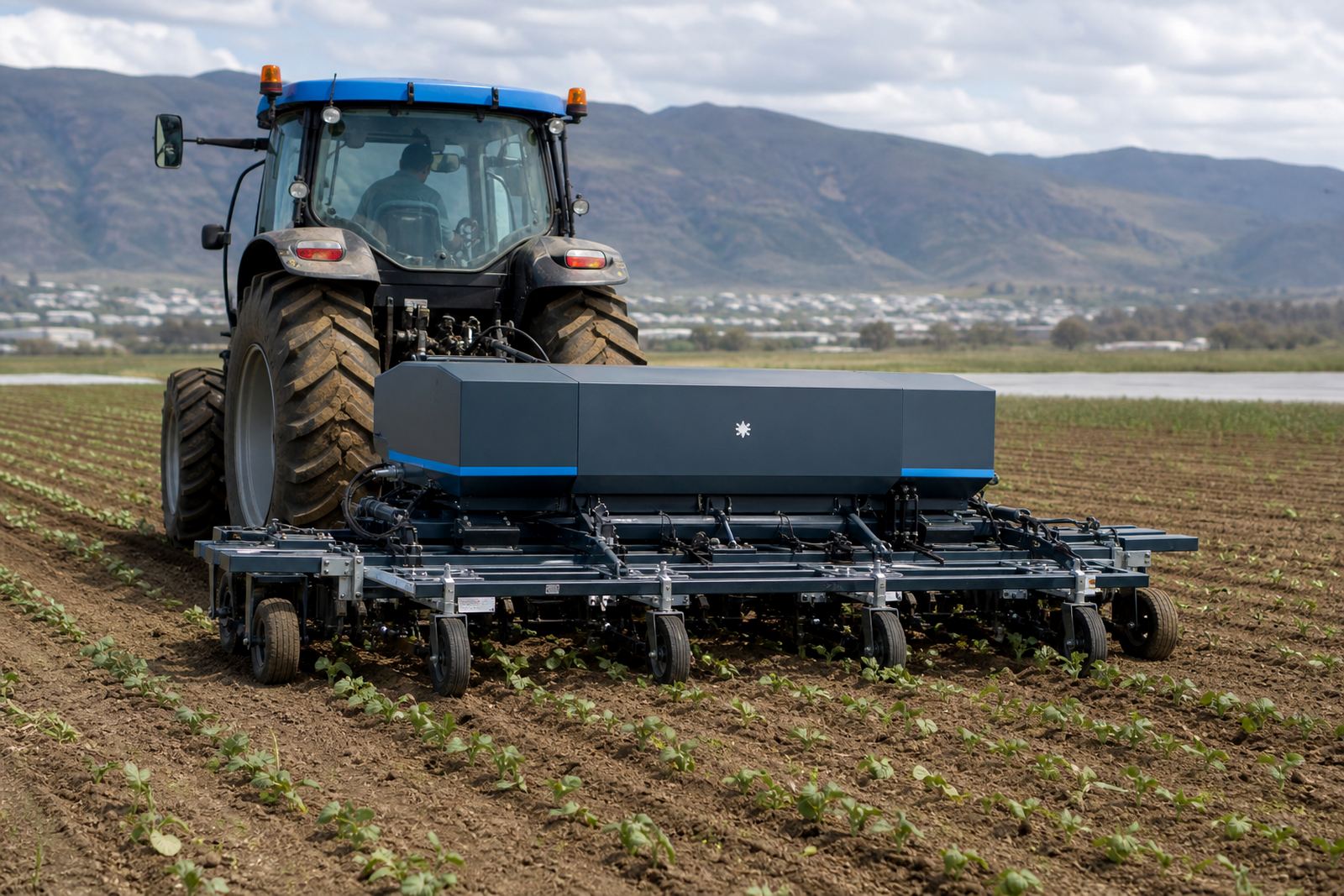
A practical job starts with a field assessment and crop timing plan. The team checks row layout, weed species, crop height and the stage of emergence. In a lettuce block near Ceres, for example, the pass may be planned for a tighter window because the crop sits low and the weed profile can change quickly after irrigation. On carrots near Bethlehem, the row width and early weed flush may point to a different travel pattern and slower sections through heavier patches.
- Arrival site checks help confirm access, row direction and turning space.
- Trial strip runs show whether the current weed stage is suitable.
- Operator supplied work keeps the unit settings tied to the job.
- Post pass reporting gives a record of what was treated and where pressure remains.
When the field is split across more than one farm, travel coordination and multi farm programmes matter as much as the machine itself. A row crop block in Grabouw may need a different schedule from another site in Limpopo, even if the crop is the same, because temperature, irrigation rhythm and weed flush do not behave alike.
The narrow strip between crop and weed is where the money sits
The hardest part of laser weeding is often the gap between the crop plant and the weed plant. The machine has to read that gap cleanly, then place energy on the weed growing point without wasting time on healthy crop tissue. That is why trained operators matter. They know when the row is reading cleanly, when the canopy is hiding the target and when the block needs another timing plan rather than a rushed pass.
Farmers sometimes treat weeding as a single task. In practice, it is closer to a sequence. One pass may clean the early flush, a second pass may deal with survivors, and a later one may target fresh emergence. Repeat pass planning helps the grower keep pressure under control without disturbing the soil or leaning on herbicide sprays.
A Philippi example with row crops and moving weather
In Philippi, the soil can dry off quickly after wind, yet a short spell of moisture can bring another flush across a vegetable block. That mix makes timing especially important. A grower with onions and brassicas in separate fields may need one block treated early in the week and another held until the weed stage is right. If the crop is at a tender stage, the operator may adjust field speed and coverage so the machine can still pick out the growing points without crowding the rows.
That sort of work is also about movement across provinces. The same contract approach can suit growers in the Western Cape, Limpopo, Mpumalanga, KwaZulu-Natal and the Free State, but each district brings its own weed mix and field window. A clean pass in Tzaneen may not call for the same pace as a pass in Howick, and that is normal. The machine is one element of the work The other part is knowing when the weeds are still young enough for the growing point to be reached cleanly.
What growers usually look for before a booking is fixed
Before a season booking is set, the useful details are not decorative. They shape the plan. Crop type, row spacing, weed stage, field size, access for a tractor-drawn unit and the likely number of passes all help the team work out the schedule. If the block is split across several farms, that needs to be mapped early so travel coordination does not cut into the field plan.
- Crop type and row spacing
- Weed stage and dominant weed species
- Farm location and access for equipment
- Whether the block needs a trial strip run first
- Any repeat pass planning across the same season
For growers who want a contract laser weeding plan, our contact form is used for the first details. From there, the field note can be built around the crop, the weed stage and the ground underfoot, not a generic promise that fits nobody.