Row geometry decides what the operator can do
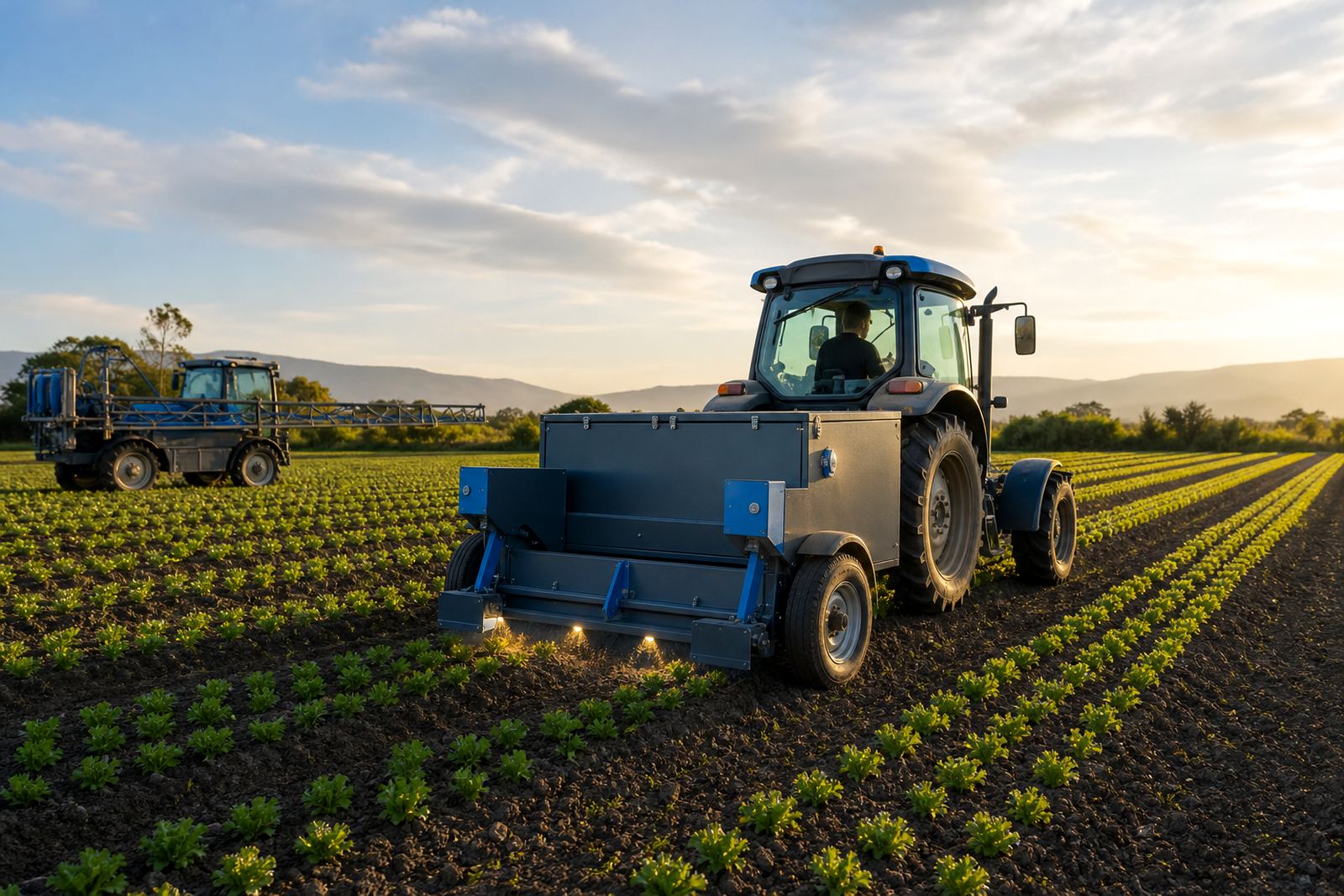
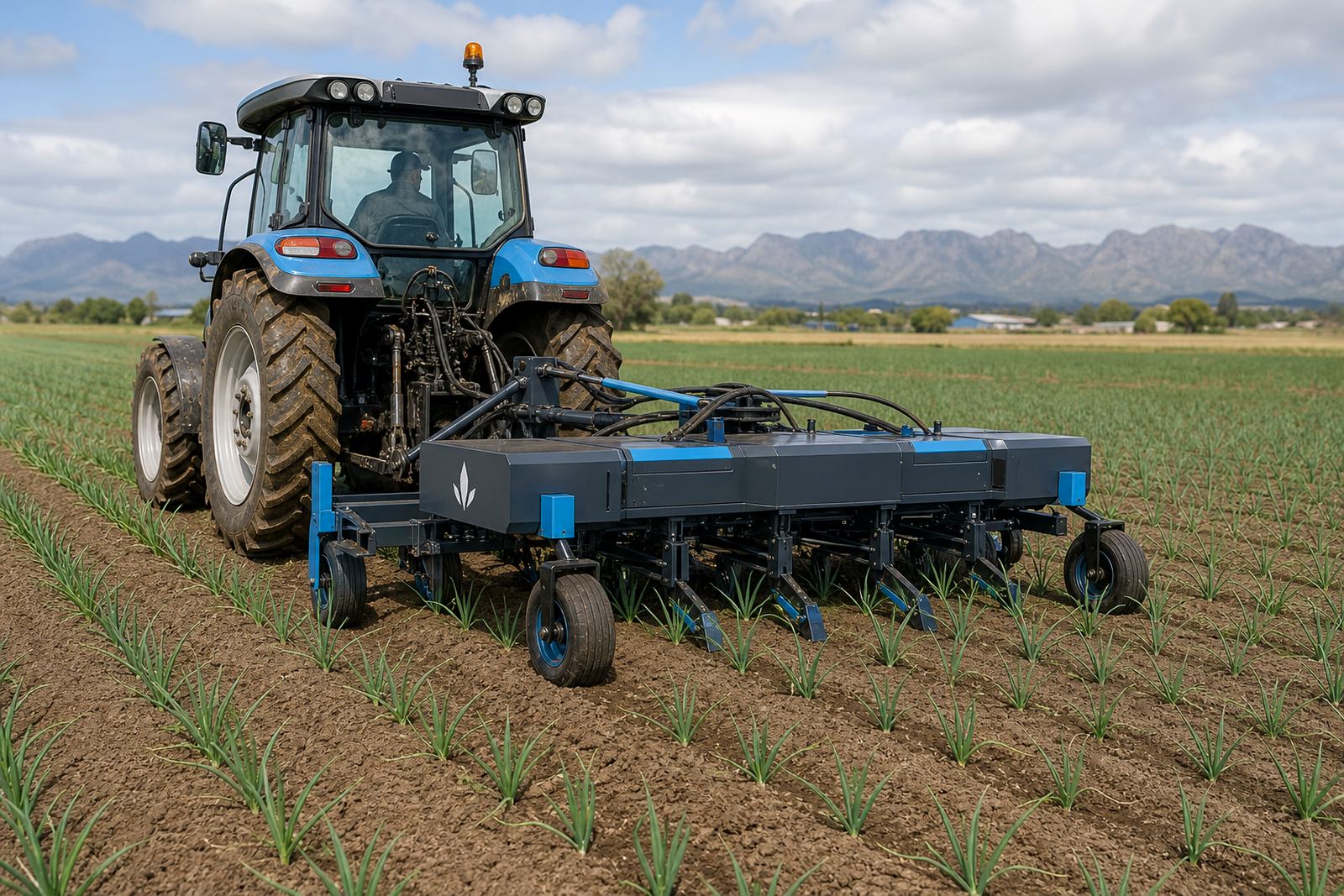
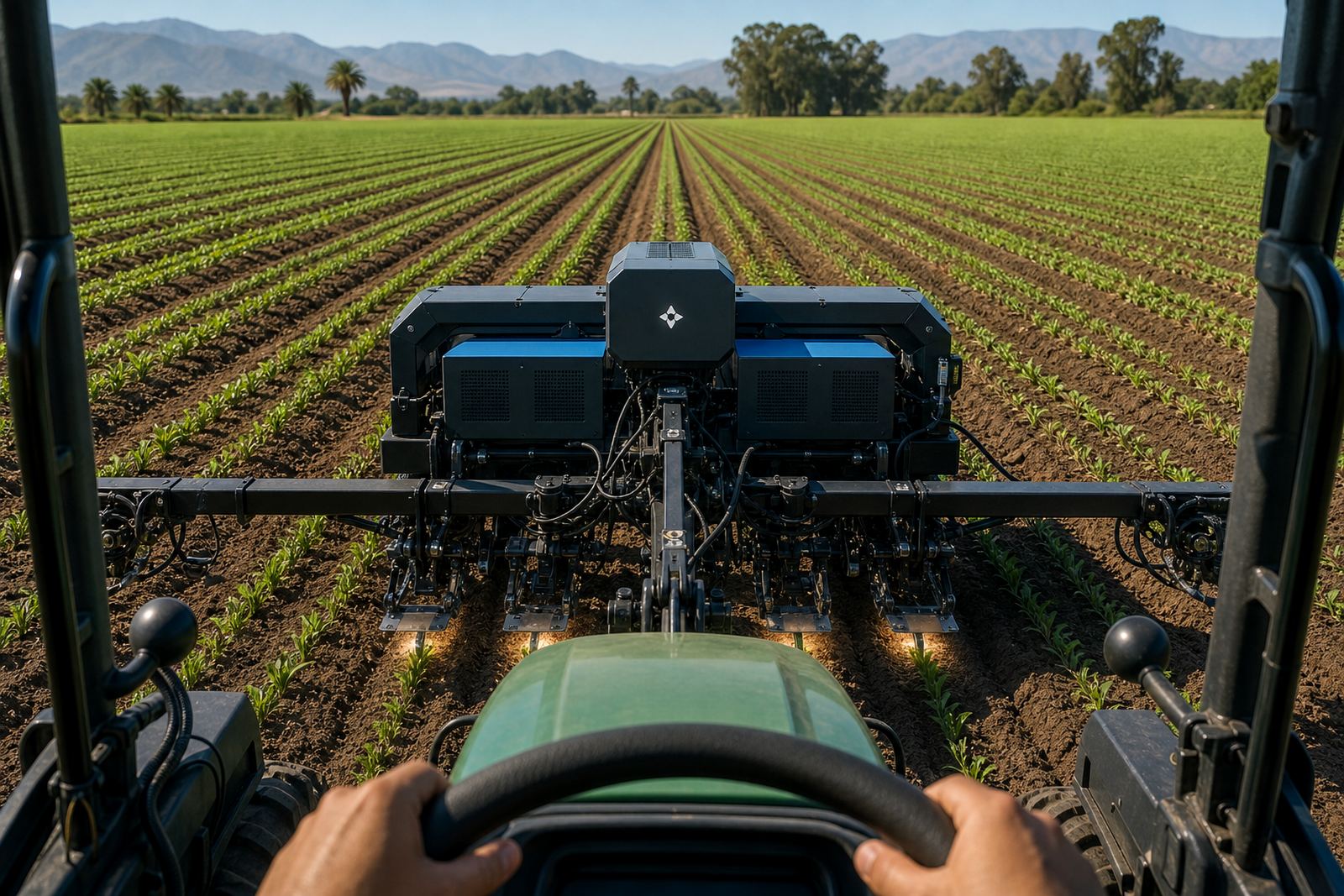
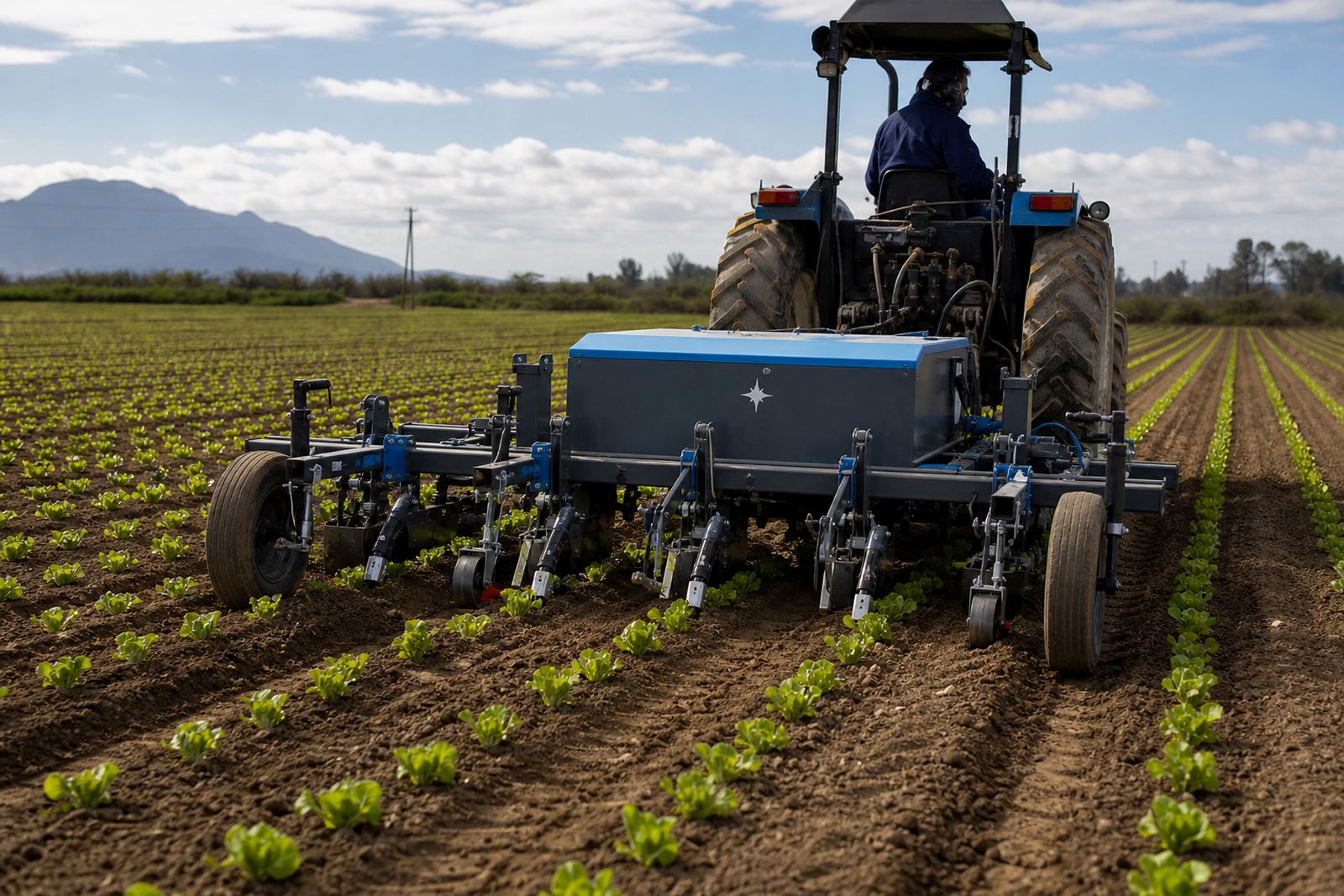
Lettuce is usually planted in tight, even rows, so the first question is not the weed itself, but the space between crop plants and the strip the machine must travel over. A tractor-drawn laser unit needs clean row alignment and enough open ground to track between beds without clipping the crop edge. Where rows wander or bed crowns break down after irrigation, the operator has less room to work and the pass has to be set with more care.
In practice, row spacing, bed shape and the stage of the lettuce all matter together. Young transplants leave more exposed soil and a clearer target, while older stands close over the inter-row space and can limit the sightline for camera-guided detection. That is why a field assessment matters before any schedule is fixed, especially on blocks that were planted under different soil conditions or with slight layout changes from one season to the next.
Weed stage is the real booking window
Laser weeding targets the weed growing point, so the most useful window is when weeds are small, visible and still open enough for the system to identify them accurately. If the stand is left until weeds have thick stems or have started to spread across the row edges, the work becomes less efficient and the field may need a follow-up pass. That is less about the lettuce and more about the weed stage at the time the unit arrives.
- Small broadleaf weeds are easier to detect between lettuce rows.
- Mixed flushes need earlier attention than single weed species.
- Wet patches often bring uneven germination, so those strips need checking first.
- Once weeds shade the inter-row area, visibility drops and timing gets tighter.
For growers in Philippi and the surrounding vegetable belts, the best booking window often opens soon after emergence or after a light flush following irrigation or rain. The exact timing shifts with cultivar, planting density and the speed at which the field warms up. Coastal humidity can also keep weed flushes moving in the lower, wetter parts of a block, which is why the same farm may need different timing on different sections.
Spacing and crop habit shape the field plan
Lettuce is not one uniform crop. Loose leaf, crisphead and baby leaf plantings all behave differently in the row, and each one asks for a different level of care around the crop crown. Narrow spacings leave less tolerance for steering error, while wider rows may allow a steadier tractor line and a clearer weed target. The point is not to force every field into the same pattern, but to match the machine work to what is already in the soil.
Where beds are raised and the irrigation lines are neat, the field can usually be worked with less interruption. Where there are soft edges, recent re-ridging or patchy germination, the operator may need to adjust speed and line choice more often. A trial strip run is useful here because it shows how the crop presents in real field conditions before the whole block is committed.
- Uniform rows help the camera system follow the weed line.
- Bed firmness affects how steadily the tractor tracks.
- Patchy establishment can leave blind spots near the crop base.
- Mixed planting ages in one block often need separate planning.
What the tractor speed changes on the day
Laser weeding is not a fixed-speed exercise. Field speed depends on weed pressure, crop alignment and how clean the row surface looks when the operator starts the pass. Heavier weed pressure usually means slower travel so the system has more time to detect and target the weed growth point. Cleaner fields may allow steadier movement, but that is still guided by what is happening in the row rather than by a preset pace.
In lettuce, speed also needs to account for the crop canopy. If the plants are open and the inter-row space is visible, the work can proceed with more confidence. If the canopy has closed in quickly, the machine still works on the exposed weeds, but the margin around the crop narrows. That is why our field assessments and crop timing plans are linked to scheduling, not treated as separate jobs.
Tractor-drawn units also need safe turning space at the headlands and clear access along the field edge. A block with tight corners, soft gateways or narrow entrances can slow the day down more than the weed count itself. On farms around Grabouw or Ceres, where blocks may sit on uneven ground or beside drainage lines, arrival site checks help avoid wasted movement before the first pass starts.
Herbicide-free work and no soil disturbance
Laser weeding removes the need for herbicide sprays in the worked strip and it does not disturb the soil in the way cultivation tools do. That matters in lettuce because the crop root zone is shallow and the surface layer is often kept fine and level for establishment. A laser pass aims at the weed, not the soil profile, so the bed stays intact and there is no mechanical throw into the crop line.
That said, herbicide-free does not mean the field can be left unmanaged. Weed pressure still needs watching, especially where moisture lingers after overhead irrigation or where wind has moved seed into the row shoulder. Repeat pass planning is part of the work in those fields, because one clean pass may not be the whole season answer. The timing is set around what the field shows, not around a fixed calendar note.
A Philippi lettuce block and the booking sequence
On a Philippi lettuce block, the useful pattern is often a quick field assessment, then a crop timing plan that fits the row stage and weed flush, followed by a trial strip run if the crop layout is uneven. From there, field scheduling can be built around the block size, travel distance and the order of other farms in the programme. For growers serving Cape Town markets or moving between western Cape production areas, that planning keeps the work tied to crop stage instead of last minute pressure.
Anele Khoza often looks first at how the block is laid out and whether the tractor can move cleanly through the field. Pieter Mokoena then works on the sequence for the week, especially when multiple farms need attention across different towns. Zanele Naidoo handles grower consultation, while Johan Daniels leads the machine work on site. Lerato Letsoalo keeps season bookings and arrival site checks in order, and Ruan Mkhabela oversees the workshop side of the unit before it heads out.
- Field assessments help match the machine to the row layout.
- Trial strip runs show how the crop presents in real conditions.
- Repeat pass planning helps when weed flushes come in waves.
- Multi farm programmes suit growers with blocks spread across regions.
For lettuce, the useful question is usually not whether laser weeding can fit the crop, but whether the rows are ready for it. When spacing, weed stage and booking windows line up, the work is far easier to place into a farm programme and much less likely to get crowded out by the next irrigation cycle or harvest date.