Why undisturbed soil matters in vegetable rows
In crops such as onions, carrots, lettuce and brassicas, the work is happening right where the crop is most vulnerable. Traditional in-row cultivation can shift soil onto small plants, clip roots, and bring buried seed closer to the light and moisture it needs. A laser unit does the job from above the soil line, which means the beds stay formed and the row edges stay where the grower set them.
That difference is practical, not theoretical. When the soil is not moved, there is less chance of burying seedlings, less surface disruption after rain, and less chance of setting up a new flush of weeds from the seedbank. In sandy Western Cape soils, for example, a hard cultivation pass can alter the top layer very quickly, while in heavier soils it can leave clods that complicate later passes.
For growers balancing crop spacing, irrigation timing and harvest access, keeping the soil stable can make planning easier. It also suits farms where hand weeding alone is too slow and where herbicide use is being reduced or removed from the programme.
How laser weeding works in the field
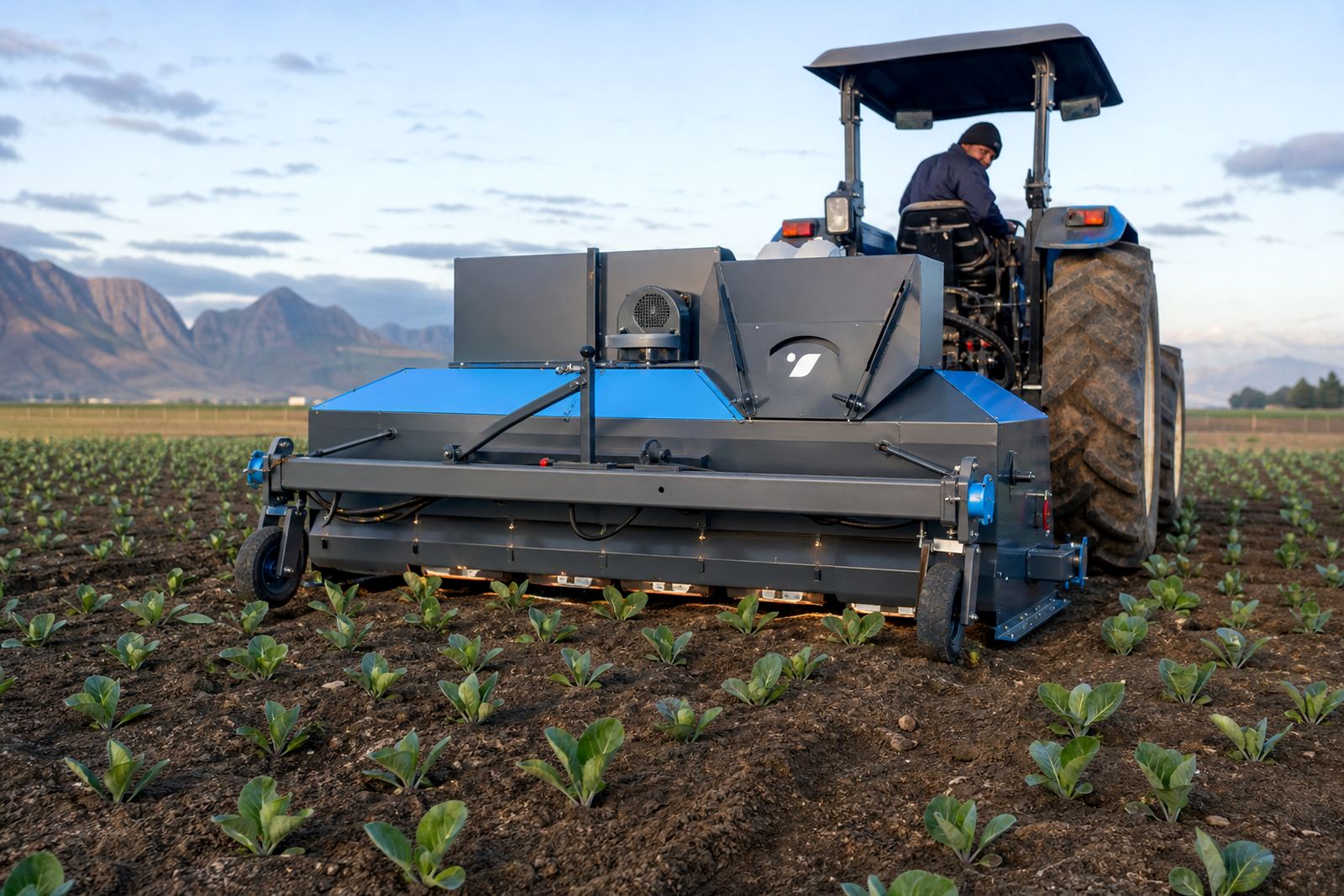
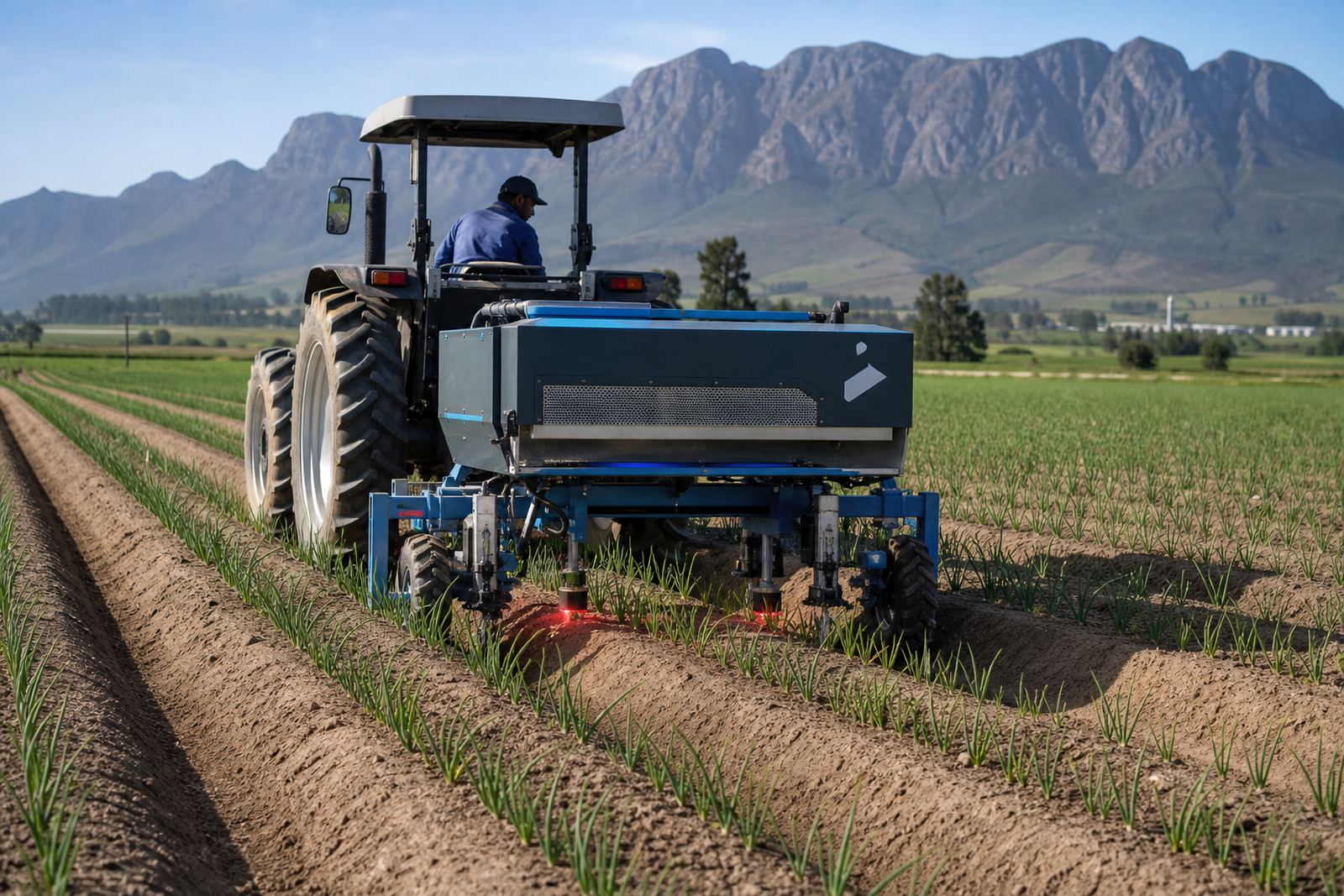
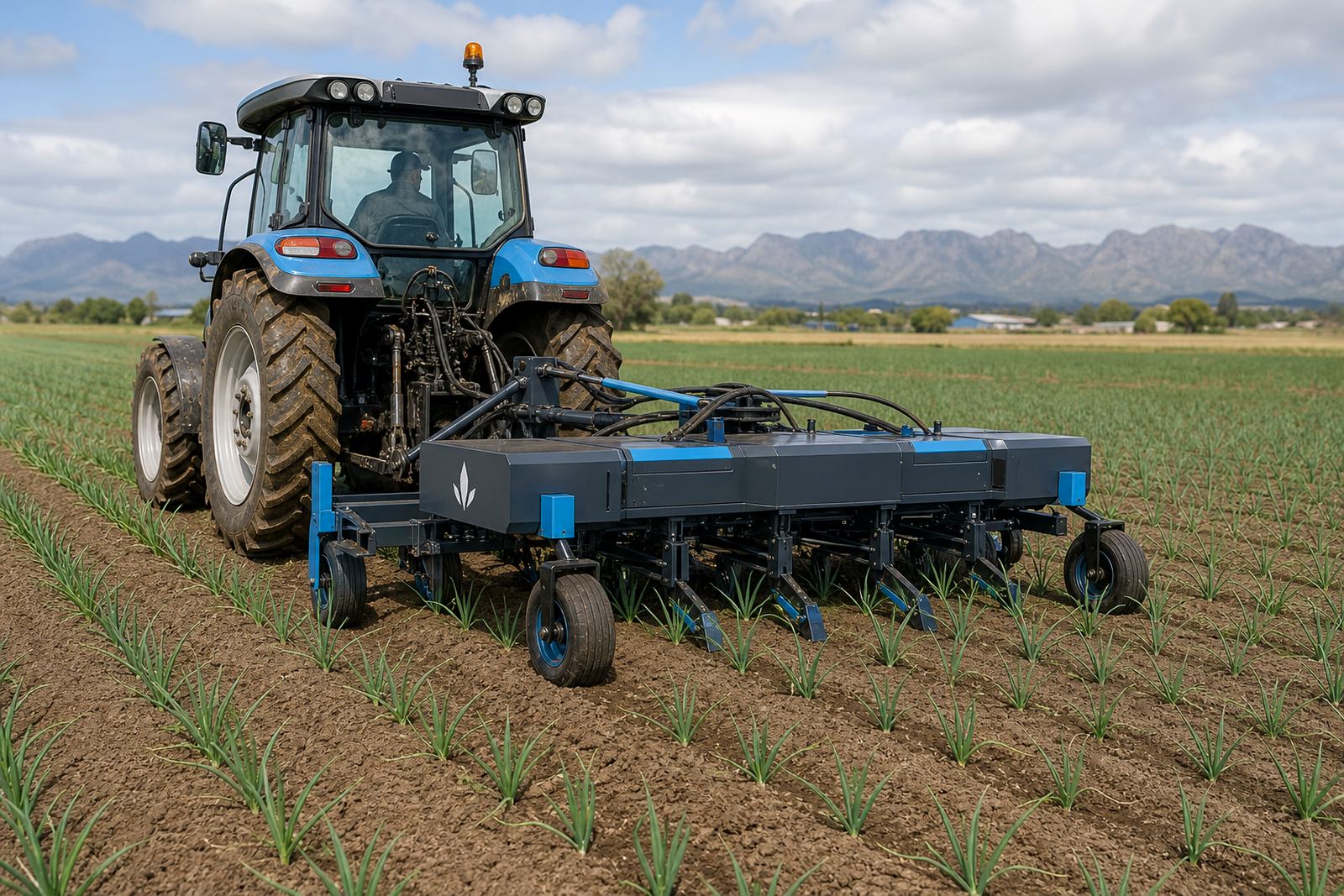
A tractor-drawn unit carries camera-guided detection equipment that scans the crop row and identifies weed seedlings. Once a target is recognised, the laser is directed at the weed growing point. The intention is to stop the weed before it gains strength, while leaving the crop plant alone.
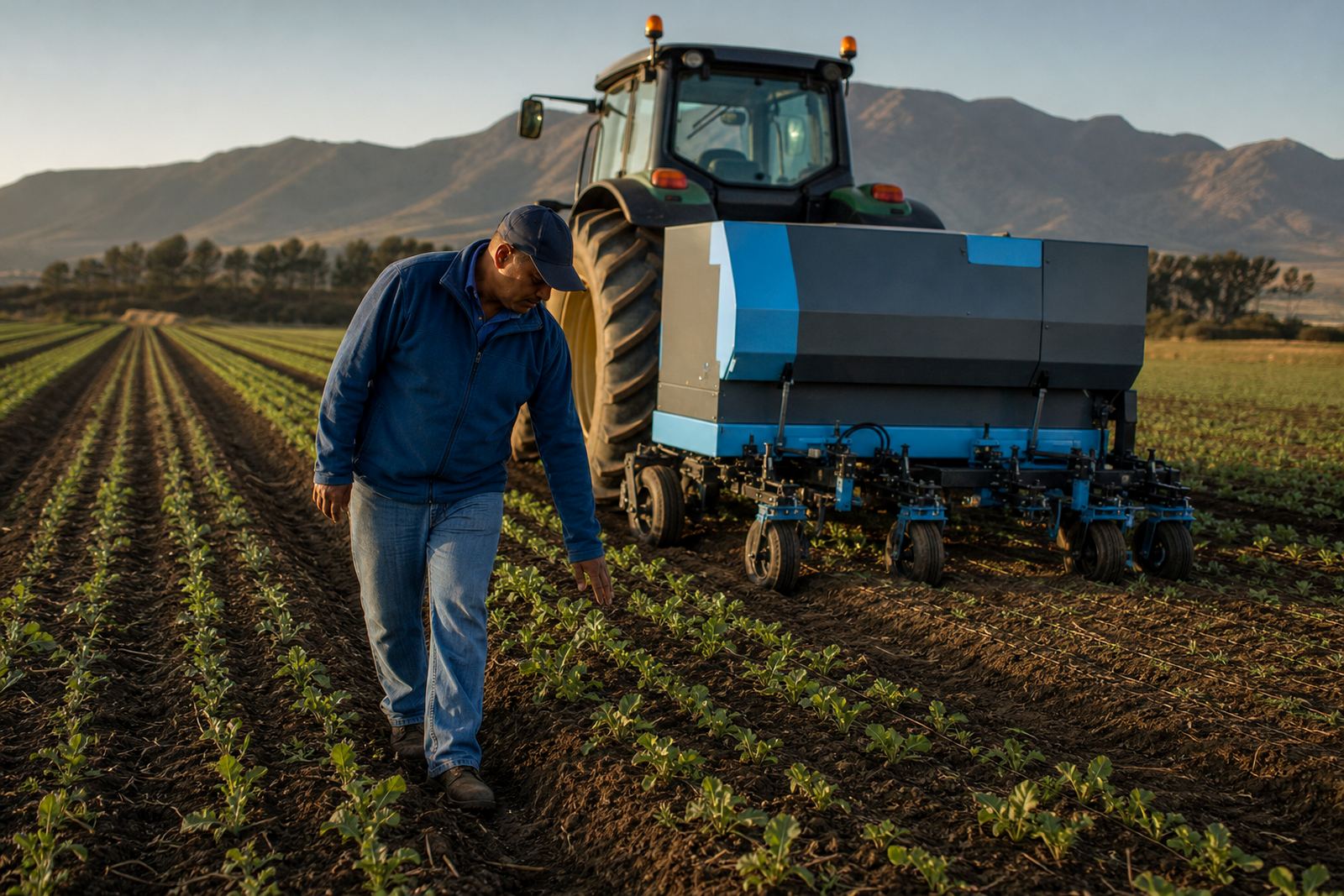
The system depends on timing. Small weeds are easier to target than larger ones, and the stage of the crop matters as well. A young brassica block with clean row definition is a different job from a patchy carrot field after rain. Field speed changes with weed pressure, crop density and ground conditions, so the operator works at a pace that suits the block rather than forcing a fixed pace across every farm.
- Best results usually depend on early weed stages, not late escapes.
- Row crops with visible spacing are easier to programme and follow.
- Moist, cloddy or uneven ground can change the field plan.
- Operator skill matters because crop shape and weed size vary within the row.
When the benefit shows up on a real vegetable block
The no soil disturbance benefit is easiest to see after a few field passes. A grower in Philippi with mixed lettuce and brassica blocks may want weed pressure reduced without dragging soil onto the crown line. In that setting, a laser pass keeps the bed surface intact and avoids the small ridges that can form after mechanical hoeing.
On farms further afield, the value can be even more obvious. In the Tzaneen area, where moisture and growth can move fast, the aim is often to keep weed seedlings from getting ahead of the crop without disturbing the wetted strip around the plants. In the Free State, where weather windows can be narrower, a well-timed pass can fit into the crop schedule without calling for cultivation that changes the bed profile.
The point is not that laser weeding replaces every other practice. It is that growers can use it when they want targeted weed control and a clean soil surface to stay in place.
Practical reasons growers value this approach
A soil-saving approach usually helps in more than one part of the season. It can support crop uniformity, make later irrigation easier to manage, and reduce the chance that a pass through the field leaves a fresh weed flush behind. Where beds are already formed for a specific crop, leaving them intact can also protect the row layout that the packhouse team and harvest crew depend on.
There is also a labour angle. Hand weeding remains important in many vegetable programmes, but it is not always the only answer. Where labour is stretched, a tractor-drawn laser unit with a trained operator can cover ground in a planned way and leave the row structure alone. That matters on multi farm programmes, where each block may need a different timing plan and a different travel arrangement.
- Less bed disturbance can mean fewer corrections later in the season.
- Stable rows help where drip lines, mounds or shallow crowns are already set.
- Cleaner pass planning can suit farms with many small blocks.
- Non-contact weed targeting avoids the scrape and throw of cultivation tools.
What timing means for onions, carrots and lettuce
Timing is where this method earns its keep. Onion seedlings, carrot stands and young lettuce can all be sensitive when weeds are still tiny. If the weeds are allowed to grow too large, the laser has more work to do and the crop has less room to compete. That is why field timing plans are usually built around crop stage, weed stage and field access.
Growers often ask for repeat pass planning because one run is rarely the full story. A first pass may clean the row early, then a later pass can deal with a fresh emergence window. The advantage is that the soil stays where it was formed, so each visit builds on the same bed rather than undoing previous work.
In coastal areas around Grabouw and Philippi, surface moisture and windblown seed can change weed pressure very quickly. In warmer inland zones, the growth cycle can move faster still. The right field schedule takes those differences seriously, because the value of a no disturbance pass depends on doing it at the right point in the crop cycle.
A Philippi example with a wider South African schedule
At the Philippi base, the team works with vegetable growers who need field timing, travel coordination and site checks to line up across several blocks. A grower might need a trial strip run in one area, then a larger multi farm programme once the crop stage and weed pressure are clear. That sort of planning is useful when the same farm has onions in one block, lettuce in another and brassicas in a third.
Because the work is contracted, the focus stays on the field plan rather than on a single machine sitting idle between jobs. Operators move with the unit, arrival checks are done on site, and post pass reporting helps record what was treated and where follow-up is likely to be needed. For growers in Ceres, Howick, Bethlehem, Nelspruit, Bela-Bela and Limpopo production zones, that kind of planning can make a no soil disturbance programme workable across a season.
It is a practical method for growers who want weed control that does not force the soil to move. The crop bed stays in shape, the row stays readable, and the weed work happens with a lighter touch.