Rain can help the crop and complicate the visit
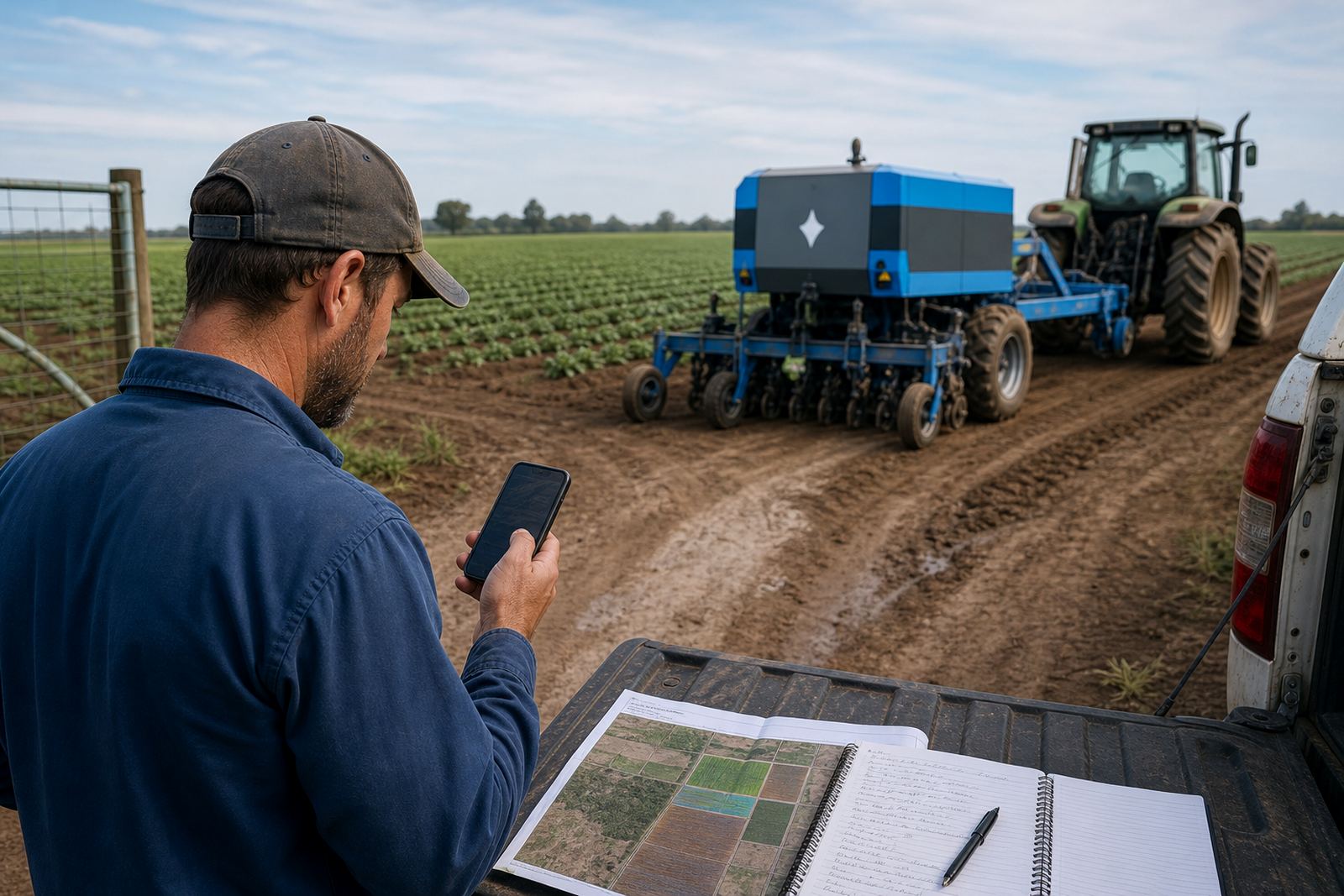
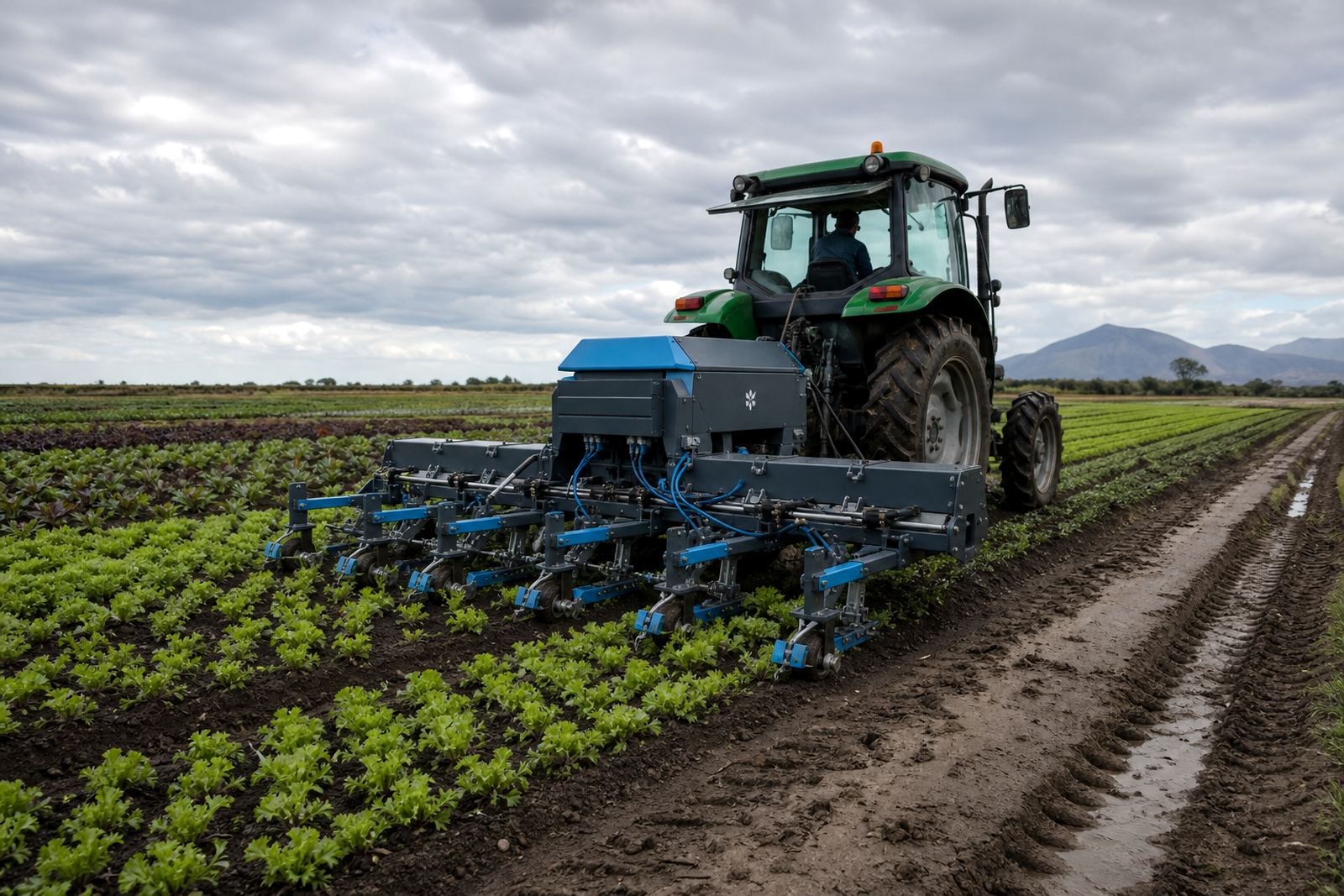
Rain changes more than the feel underfoot. It can soften headlands, leave ruts from other traffic and make a tractor-drawn unit harder to place cleanly on the rows. In heavier soil, surface moisture can hold wheel marks longer, which matters when the crop sits in neat beds and the work needs steady movement between lines.
Weed timing also shifts after rain. Fresh moisture can bring a flush of small weeds, but if the ground is still tacky the field may not be ready for a pass. Laser weeding works best when the weeds are at the right stage and the tractor can move with control, so a wet spell often means the plan needs a small reset rather than a rushed start.
Wind changes what the operator can hold steady
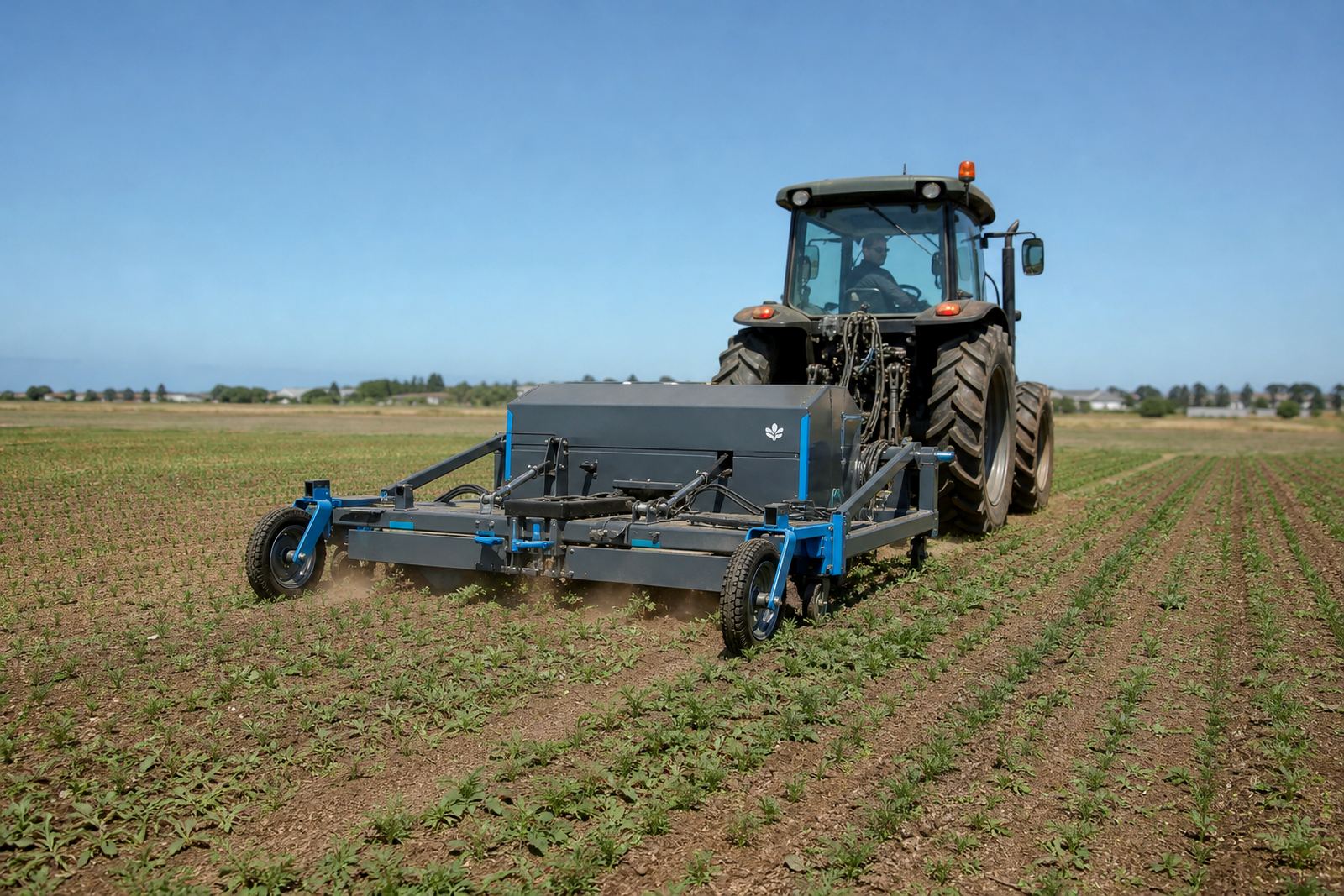
Wind may look harmless in the yard and still make a real difference in the field. On open blocks near Philippi or along exposed parts of the Western Cape, gusts can move leaves, bend finer crop tops and make visual tracking less settled. A camera-guided system still reads the row, but the operator needs stable conditions to keep a clean line through the pass.
For leafy crops and younger plants, that steady view matters. If the crop canopy is moving too much, the timing may be adjusted so the work lands when the row is easier to read. It is one of those small field decisions that saves trouble later, especially where the crop is tight and the weeds are close to the plants.
- Light wind often creates little trouble in sheltered blocks.
- Strong gusts can make row tracking less comfortable for the operator.
- Open, flat ground usually feels different to a protected valley block.
Surface condition decides whether the unit should go in
Surface condition is often the first thing that decides the day. A field can be dry on top and still carry too much moisture below. The tractor needs enough grip for controlled movement, and the beds need to hold shape when the wheels pass. If the ground is soft, the pass can leave more disturbance than the crop will welcome.
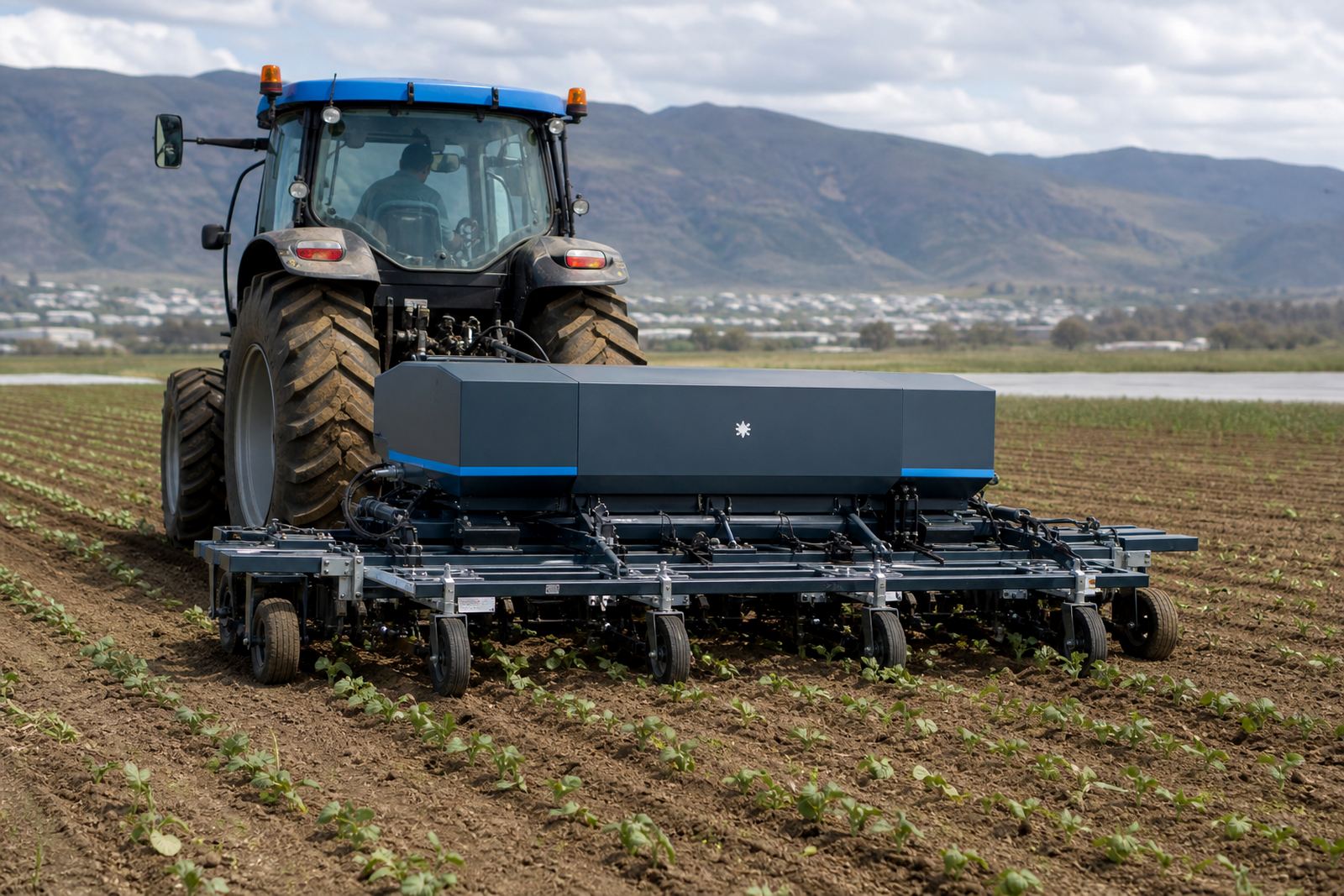
Laser weeding is valued because it avoids herbicide sprays and does not disturb the soil the way mechanical cultivation can. Even so, the surface still has to carry the equipment sensibly. In practical terms that means checking whether the rows are firm, whether the headlands are sound and whether the block has dried enough after rain or irrigation.
- Firm beds help the unit stay on line.
- Soft headlands can slow turning and entry.
- Crusted or uneven patches may need a revised route.
Weed stage matters more than many growers expect
Laser systems target the growing point of the weed, and that works best when the weed is still at a useful stage for treatment. If the rain has triggered a flush and the field is ready, the timing can be favourable. If the weeds have grown too far or the crop has closed over the row, the pass needs a different approach, and sometimes a trial strip helps judge the block before the full run.
This is where field conditions and weed stage meet. A clean, dry day is not enough on its own if the weeds are too mature. On the other hand, a slightly cloudy or cool day can still suit the work if the rows are clear and the surface holds up. That balance is part of the planning around onions, carrots, lettuce and brassicas.
A Philippi week can turn on one wet front
In Philippi, a winter rain can change a whole schedule for vegetable blocks across the Cape Flats. A grower may have a lettuce block ready in the morning, then find the lower corner still wet after an overnight shower. The field can be reachable in one section and soft in another, so the visit has to be judged block by block, not by the calendar alone.
That same sort of judgement travels with us to Ceres, Grabouw and farther north to Tzaneen or Bela-Bela, where soil type and rainfall behave differently. A dry surface in one district and a tacky one in another do not call for the same plan. The team looks at access, row condition and crop stage together before the unit goes in.
For growers, that means a field visit is not just about turning up. It is about reading whether the ground will carry, whether the weeds are at the right stage and whether the crop row is clear enough for the pass to make sense.
What we look at before a tractor unit enters the block
Our field checks are practical and specific. The aim is to avoid wasted movement, protect the crop and make the pass useful for the block at hand. If the conditions are not right, the plan can shift to another field, another day or a different section of the same farm.
- Rainfall in the last stretch and how wet the headlands feel.
- Wind strength, especially on open or exposed blocks.
- Bed firmness, wheel marks and drainage across the rows.
- Weed stage and whether the crop is still easy to read.
- Access for the tractor and space for safe turning.
That sort of check also helps with multi farm programmes and season bookings. A grower with blocks in Grabouw and Bethlehem may not need the same sequence on both farms, even if the crop is the same. Weather, surface and weed pressure can pull the schedule in different directions.
What growers can send us when the weather shifts
If rain or wind has changed the plan, a short note with the field name, crop stage and a few photos helps the scheduling team judge the block properly. The useful details are the ones that show surface dampness, row shape and any traffic marks from recent field work. That is often enough to decide whether the visit should stay on the list or move to the next safe slot.
Our contact form is the best way to send those details, especially when the same farm has more than one block to manage. The service side of the work, from trial strip runs to post pass reporting, depends on what the field is actually doing on the day, not just on a general forecast. A wet patch under the wheel track can matter more than a clear sky overhead.