Why the wheel lane matters before the first pass
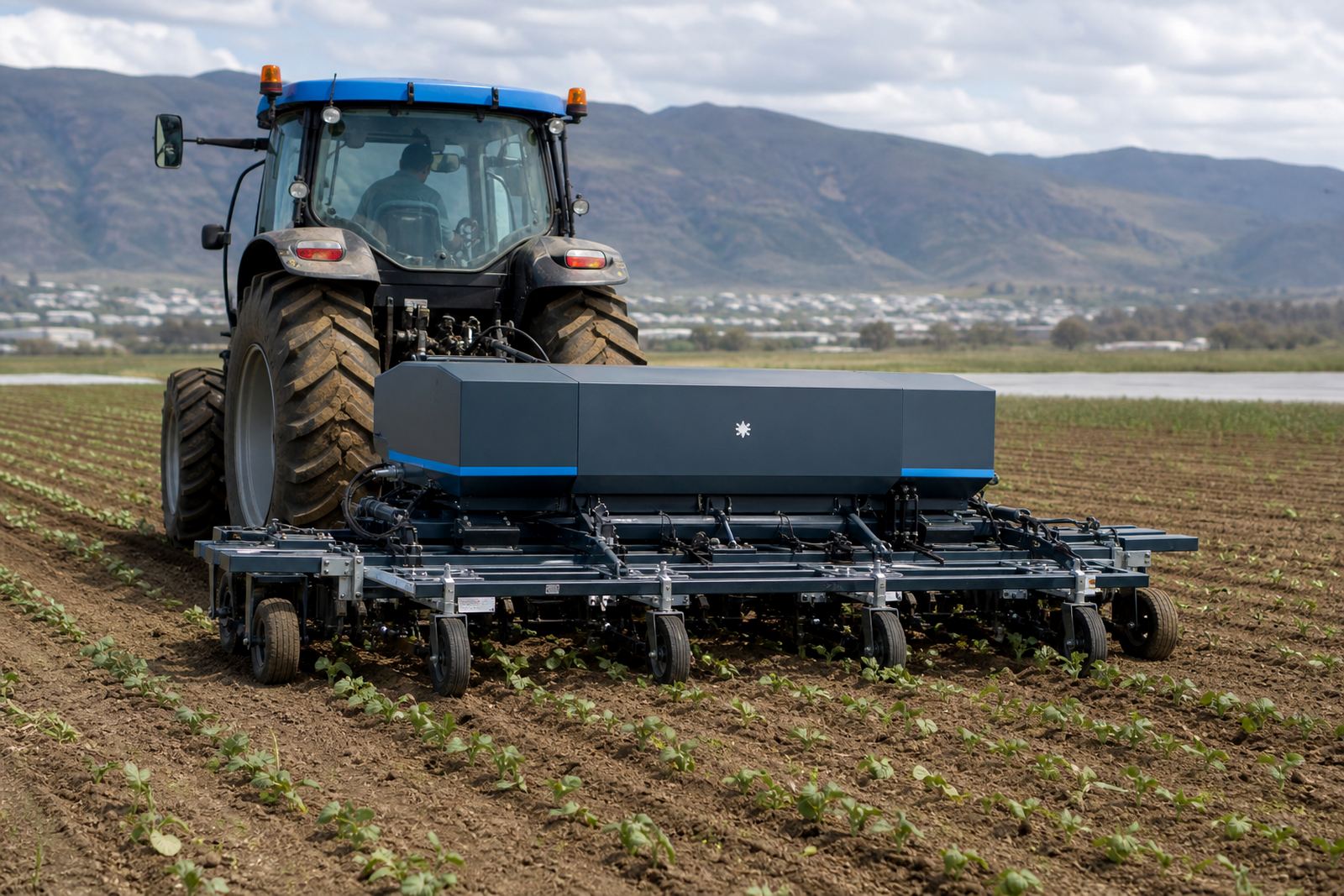
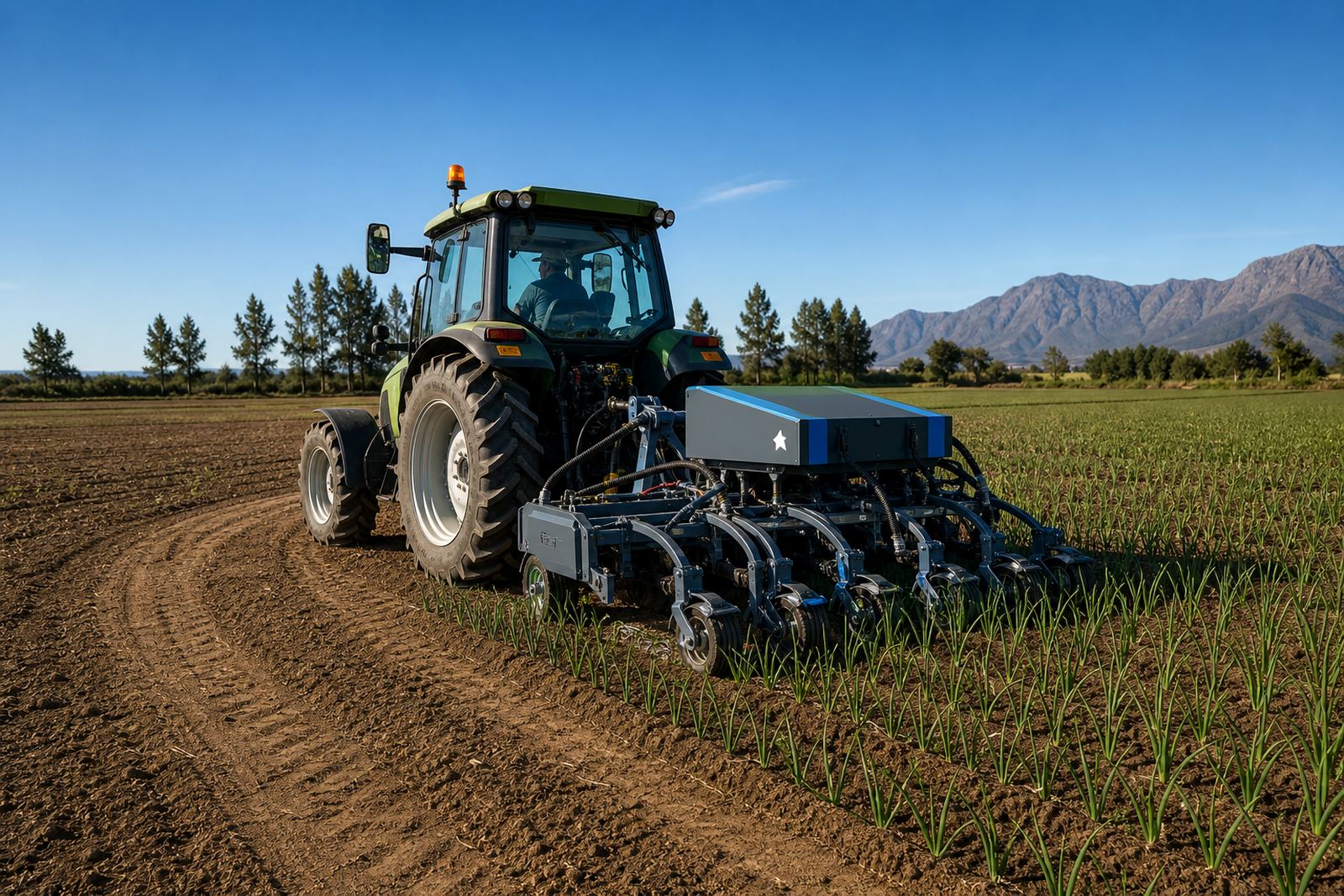
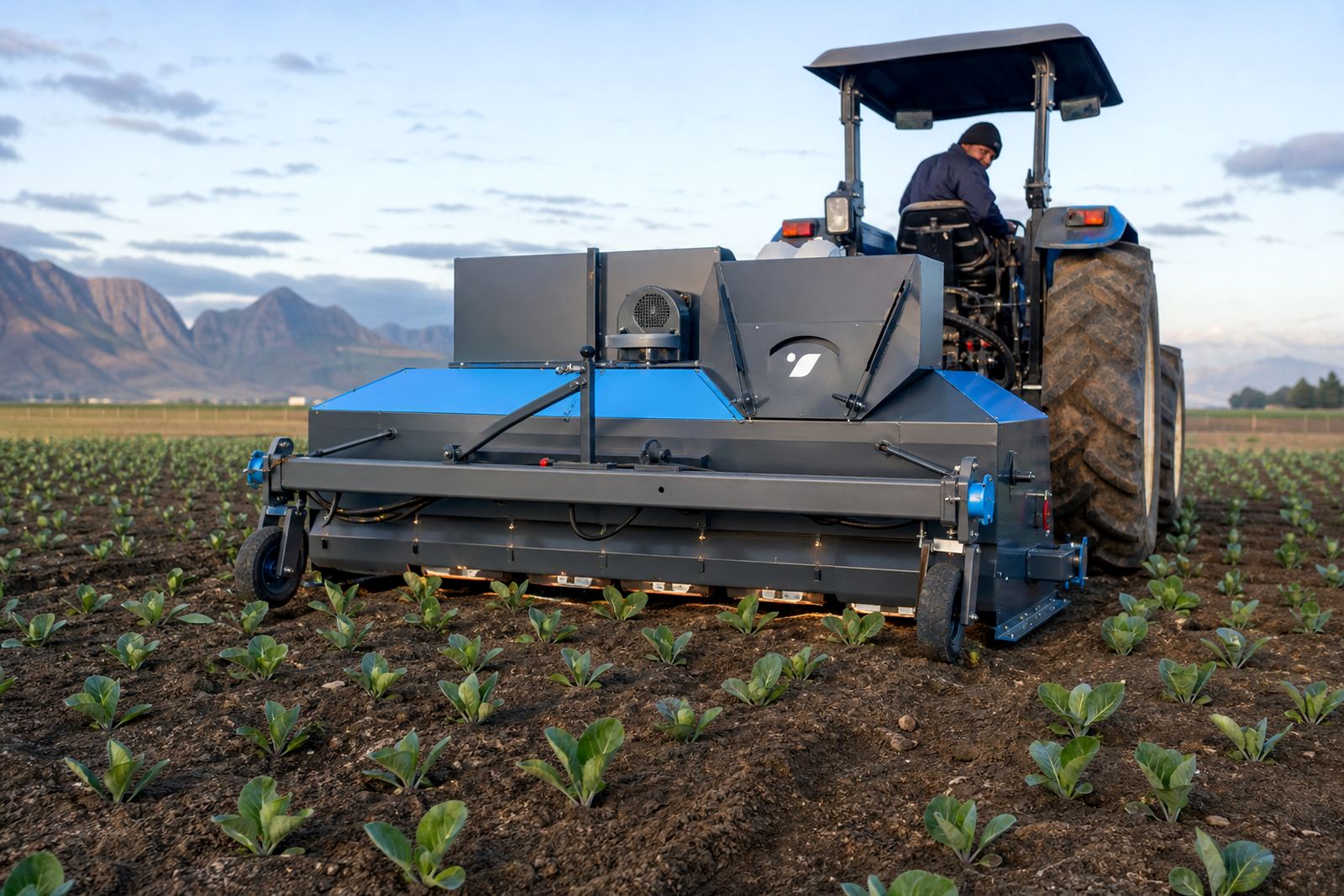
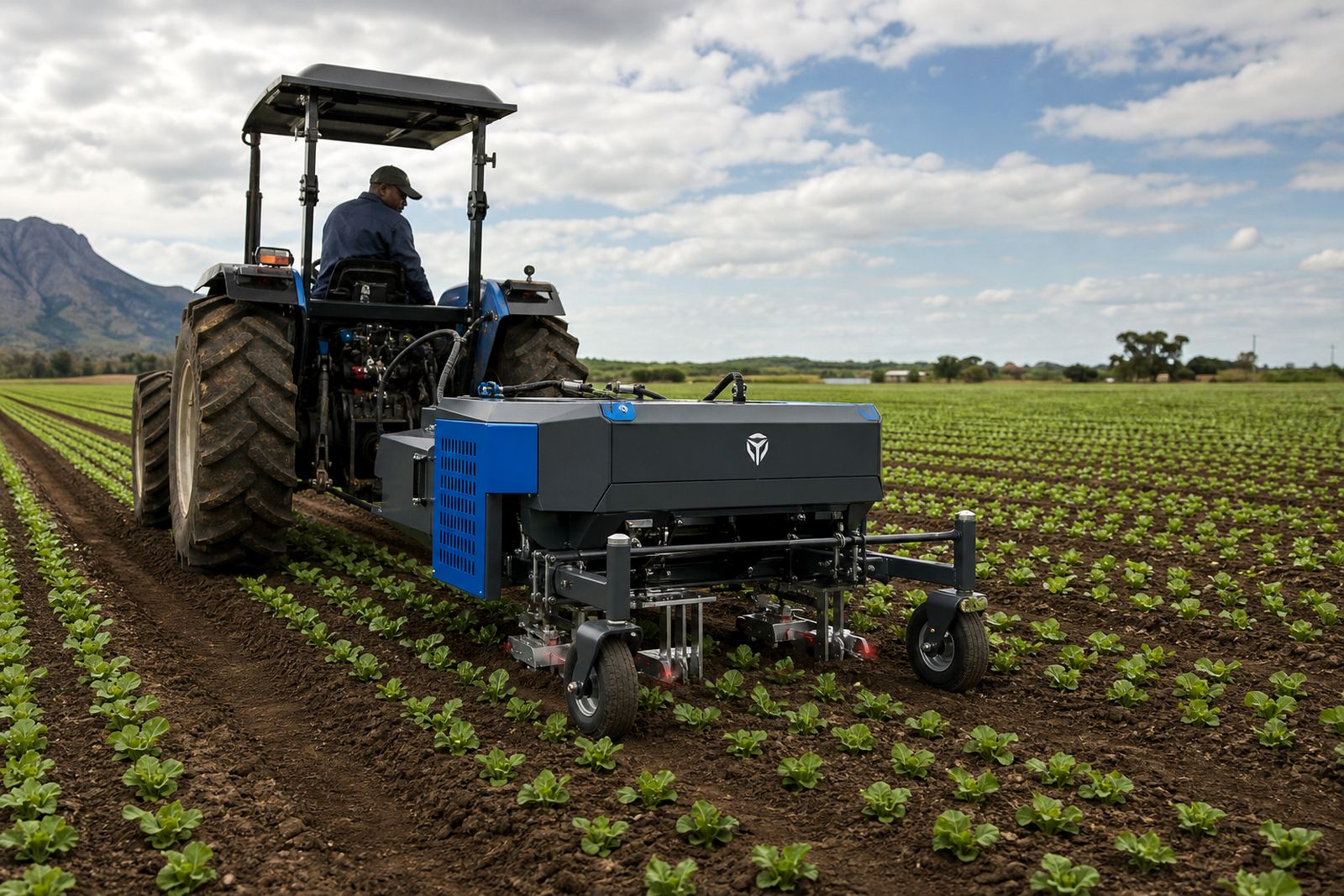
Laser weeding works best when the machine can read the row pattern without second guessing the crop edge. On vegetable ground, that starts with wheel lanes that are easy to follow, with headlands kept clear and field entrances marked in a way the operator can read from the seat. A tractor drawn laser unit needs a steady run if the camera system is to track weeds between and around crop plants with confidence.
When tramlines wander, the unit spends more time correcting course and less time holding a neat line through the crop. That matters in onions, carrots, lettuce and brassicas, where plant spacing and row visibility shape how the pass unfolds. The crop is not only a target, it is the guide. If the guide shifts from block to block, the whole day becomes less predictable.
On sandy soils around Philippi and the Cape flats, the wheel lane can hold shape well if traffic is kept to the same lines and turns are planned with care. After rain or irrigation, a soft shoulder can drag the tractor off line, and then the next pass starts with a correction that should never have been needed.
What repeatable movement gives the operator
Repeatable field movement gives the operator a clear rhythm. The machine can move at a field speed that suits the weed pressure, the crop stage and the row condition, rather than slowing for avoidable steering changes. That helps when the brief covers a trial strip run first, then a larger block once the field pattern is understood.
- Less drift at row ends and tighter turns into the next tramline
- Cleaner camera view where crop and weed spacing stays consistent
- Better planning for repeat passes when weeds are at a smaller stage
- Less chance of disturbed soil beside the crop line
Repeatable movement also helps with timing. Laser weeding is strongest when weeds are still small and the growing point can be targeted before the plant gets too woody or sprawling. A field that is laid out neatly lets the operator work through that timing without fighting the lane pattern at the same time.
Timing the pass to the weed stage
Weed stage matters as much as the row map. Laser technology depends on accurate detection of the weed growing point, and that is easier when the weed is small, upright and not tangled into the crop. If the weeds have moved past that point, the job still has value as part of a planned programme, but the field should not be read as if every pass is the same.
Crop timing plans usually work better when they are built around the first flush after planting or transplanting. For a lettuce block with clear row definition, the unit can read the pattern more cleanly than in a patch where the canopy closes early and the tramline has drifted. For carrots and onions, row visibility stays important over a longer stretch, so the line of travel must remain consistent from one booking to the next.
Field scheduling is not only about the calendar. It is also about which block is ready, which block is still too wet underfoot, and which block needs another look after a first pass. That is where guidance and timing meet.
A Philippi example from vegetable ground
In Philippi, a mixed vegetable grower with several blocks across the same farm can lose time if each block has its own rough entry line. One bay may be planted neatly, while the next has a turn point that forces the tractor to swing wider than planned. A laser weeding unit will still work, but the operator now has to read the row and the access lane together, which is never ideal on a day with multiple blocks to cover.
With a proper travel plan, the entry point is marked, the headlands are checked and the first pass is run as a trial strip if needed. Once the row spacing is confirmed, later passes can follow the same track. That is useful where brassicas move through a different canopy stage from the carrots nearby, because each crop block may need its own timing and its own field speed.
The advantage is practical rather than dramatic. The operator arrives with a clear route, the tractor stays in the tramline, and the field does not have to be read from scratch at every turn.
How our team handles field layout on the day
Our work starts with the ground as it is, not as the plan says it should be. Field assessments look at row spacing, access, crop stage, moisture, weed pressure and the shape of each turn. From there, the team maps the sequence for the day, including arrival site checks and any travel coordination needed across more than one farm.
- Field assessments for row pattern, access and crop stage
- Operator supplied work with a tractor drawn laser unit
- Repeat pass planning for blocks that need staged treatment
- Post pass reporting that notes movement, pressure and field notes
The scheduling side matters just as much as the machine. A block near Ceres may run very differently from one near Tzaneen or Howick, not because the crop changes name, but because the ground, row layout and weather history shift the way the pass is handled. Good guidance keeps those differences on the surface where they can be managed.
When tramlines are part of the season plan
Tramlines are not only for one visit. They become part of the season plan when a grower books multi farm programmes, season bookings or repeat pass planning across several blocks. In that setting, the lane has to be treated as an asset, because every clean return to the same route saves confusion later.
For growers in Bela-Bela, Bethlehem or Nelspruit, the same principle applies even when the blocks are far apart. The route into the field, the spacing of the rows and the sequence of the farms all affect how the operator reads the day. A stable tramline does not remove weed pressure on its own, but it supports the laser work by keeping the machine in the right place and the crop pattern easy to follow.
That is why guidance and tramlines belong in the same conversation. When both are right, the field feels organised, the row stays readable and the work stays focused on the weeds, not on correcting avoidable movement.