When a compact field is worth sending the unit to
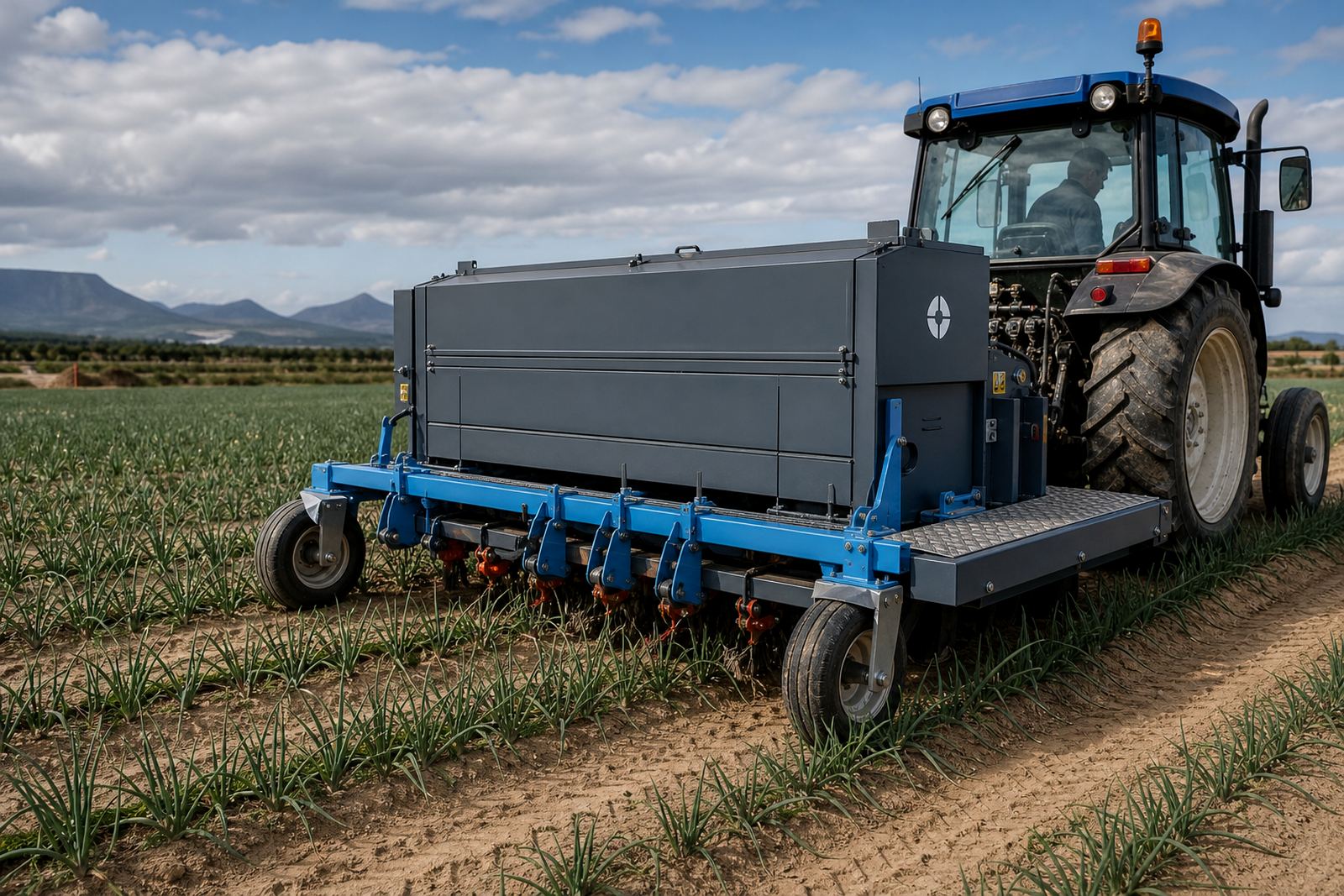
A small block is not a problem on its own. What matters is whether the field gives the tractor-drawn unit enough room to work without unnecessary turns, missed rows or damage to crop edges. A neat block of onions, carrots, lettuce or brassicas can be easier than a larger field that is broken up by drains, soft corners or awkward access points.
Compact fields also suit growers who need a careful first pass on a trial area before adding more hectares later. That is useful where weed pressure varies across the farm or where the crop plan is tight and the grower wants to see how the timing fits the planting window.
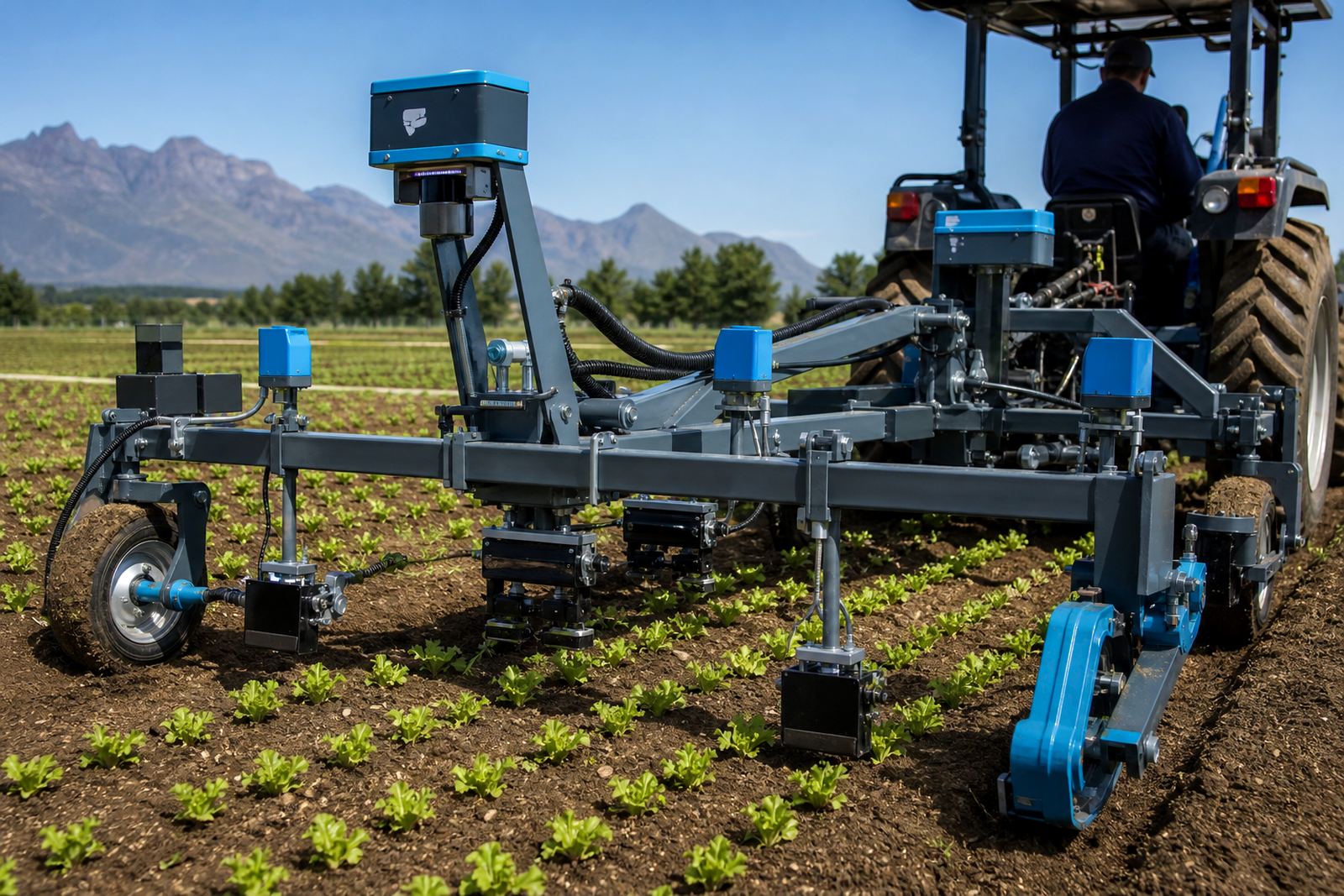
- Regular row spacing helps the cameras stay on line.
- Clear headlands make entry and exit less awkward.
- Even ground reduces jolts near the crop row.
- Firm access roads matter after rain, especially in the Western Cape and Limpopo.
The parts of a small block that slow the day down
Some blocks look simple from the boundary fence but become awkward once the tractor turns in. Narrow gates, soft spots after irrigation, low overhanging branches and short row runs all affect field speed. On a compact block there may also be more time spent lining up than actually treating weeds, so the shape of the field can matter as much as the size.
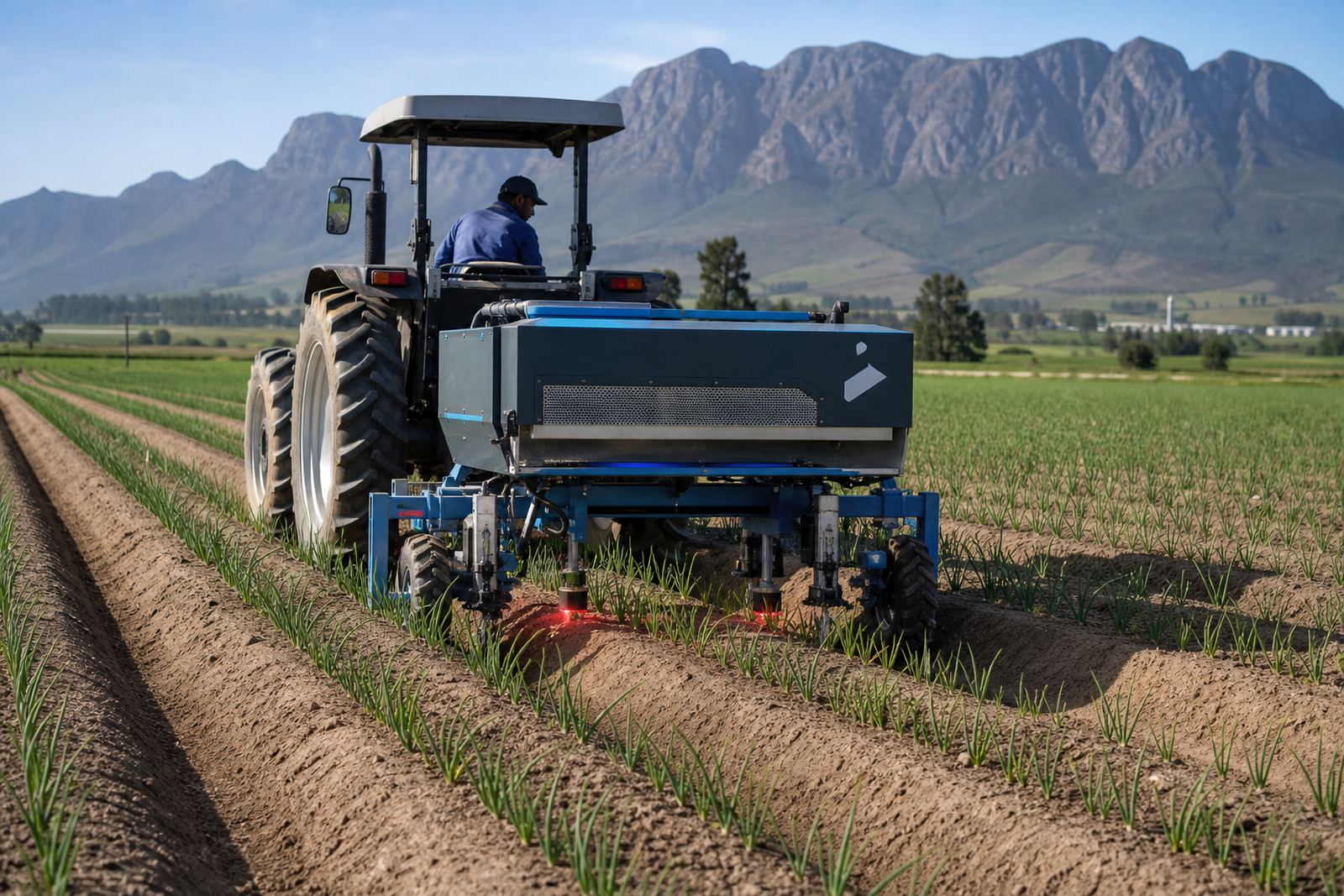
Weed pressure changes the picture too. A light flush on young weeds is quicker to manage than a block where weeds have been left too long and have thicker growth points. The laser works best when the weeds are still at a stage where the growing point can be targeted cleanly, before the crop row is crowded.
- Short rows mean more turning and lining up.
- Wet corners can slow the tractor and leave marks.
- Broken rows make camera tracking less steady.
- Mixed weed ages in one block complicate planning.
Timing the pass so the crop row stays open
Laser weeding is a timing job as much as a machinery job. The crop must be at a workable stage, the weeds should be at a vulnerable stage and the field should be dry enough for the tractor to travel properly. On small blocks the timing can be even more sensitive because there is less room to recover if the crop row is already crowded.
For growers in Philippi and nearby vegetable belts, a compact block often works best when it is folded into the rest of the season plan rather than treated as a one-off job. That may include a first pass, a follow-up strip run if the weed pressure shifts, or repeat pass planning where the same block is revisited after a new flush.
In brassicas and lettuce, for example, row clarity can change fast after irrigation or wind. In carrots and onions the row structure is different, but the same principle holds. The cleaner the row, the easier it is for the camera-guided system to detect weeds and direct the laser at the right point.
Access, turning space and farm traffic around the block
Small blocks are often surrounded by other activity, so the route in matters nearly as much as the field itself. If workers, bins, crates or other implements are moving through the same space, the operator needs a clear path and a sensible order for the day. That is where field scheduling and travel coordination save time on a compact site.
A grower in Ceres may have a neat field that still becomes awkward because the entrance sits close to a packhouse yard. In Grabouw the issue may be soft ground after irrigation. Around Tzaneen or Howick it can be tight road shoulders and narrow internal tracks. The block can still be workable, but the plan has to match the layout.
- Leave enough turning room at the ends of the rows.
- Keep the access line free of bins and parked machinery.
- Mark wet patches before the unit arrives on site.
- Confirm where the tractor enters and exits the block.
A Philippi example with a tight lettuce block
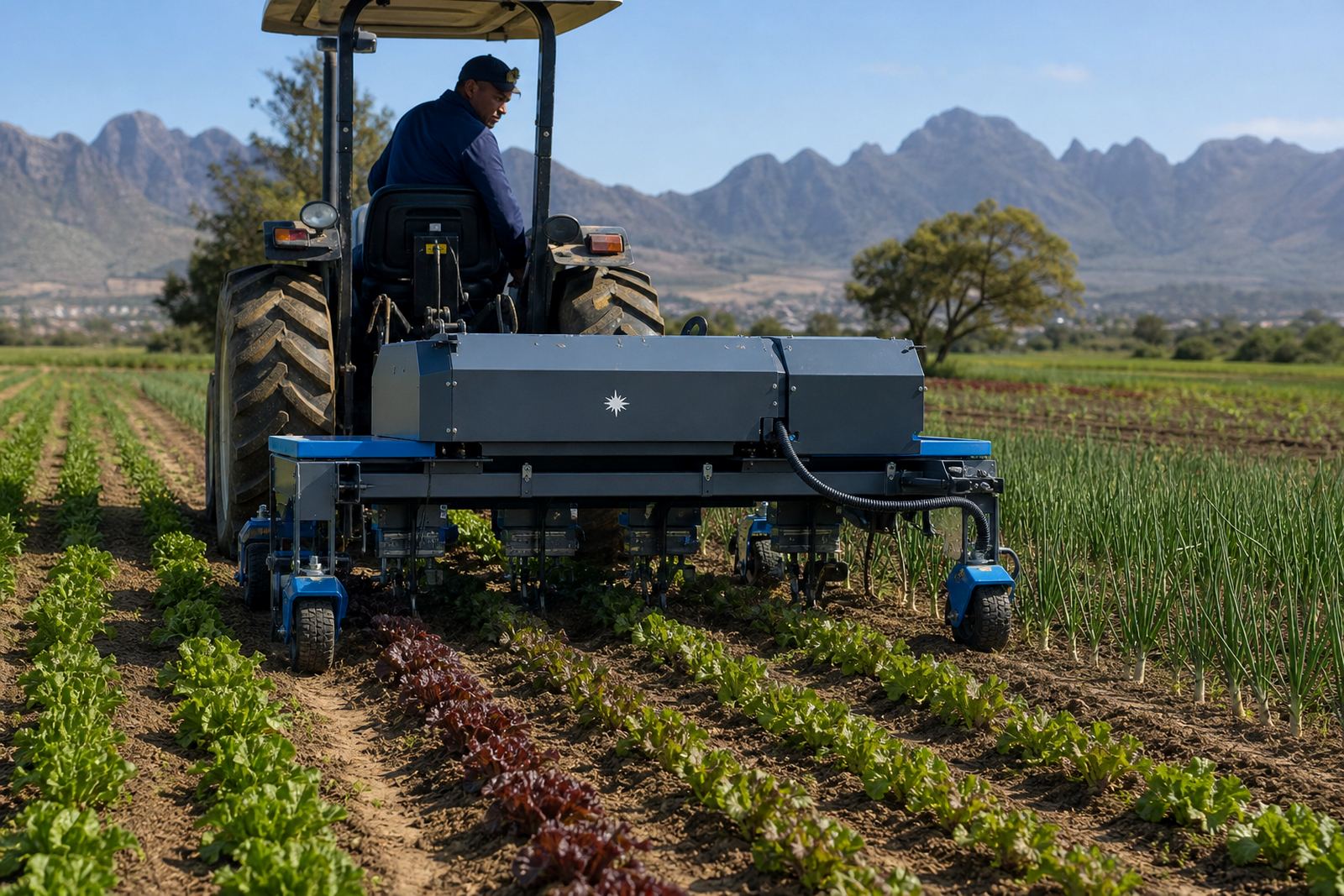
On the Cape Flats, compact vegetable land is common, and Philippi gives a good example of how small blocks can still make sense. A lettuce grower with short rows and steady access can often fit a laser pass into the week if the timing is right and the weed stage is even across the block. The field does not have to be large, it has to be usable.
If the same block is split by uneven corners or if the weeds are already running ahead of the crop, the day becomes less tidy. Then the operator spends more time adjusting line-up and less time moving steadily through the rows. That is also why trial strip runs are useful on small farms. A grower can see how the crop layout, weed pressure and access shape the work before booking the rest of the season.
For blocks like this, post pass reporting helps the grower see where the field was straightforward and where the layout or weed stage made the pass slower. That is practical information for the next booking, especially when the same land is used through more than one planting cycle.
How small block bookings are planned across more than one farm
Many growers do not have one big field, they have several compact blocks spread across different localities. A multi farm programme can work well when the blocks are grouped by crop stage and travel route, rather than treated as separate emergency jobs. That is common across the Western Cape, Limpopo, Mpumalanga, KwaZulu-Natal and the Free State.
Small blocks are easier to handle when the schedule takes account of crop timing, road access and the weed stage in each field. That may mean starting with the block that is ready for treatment, then moving to the next site once the rows, weather and ground conditions line up.
- Season bookings help fit compact blocks into the crop calendar.
- Field assessments show whether the block is cleanly workable.
- Grower consultation helps set the order of the fields.
- Arrival site checks reduce surprises at the gate and on the rows.
For small blocks, the best result is usually a tidy plan, not a rushed one. If the field is shaped well, the rows are open and the crop stage suits laser weeding, a compact block can sit neatly inside a larger season plan without becoming a burden on the day.