1. Sand moves, so the machine reads the field differently
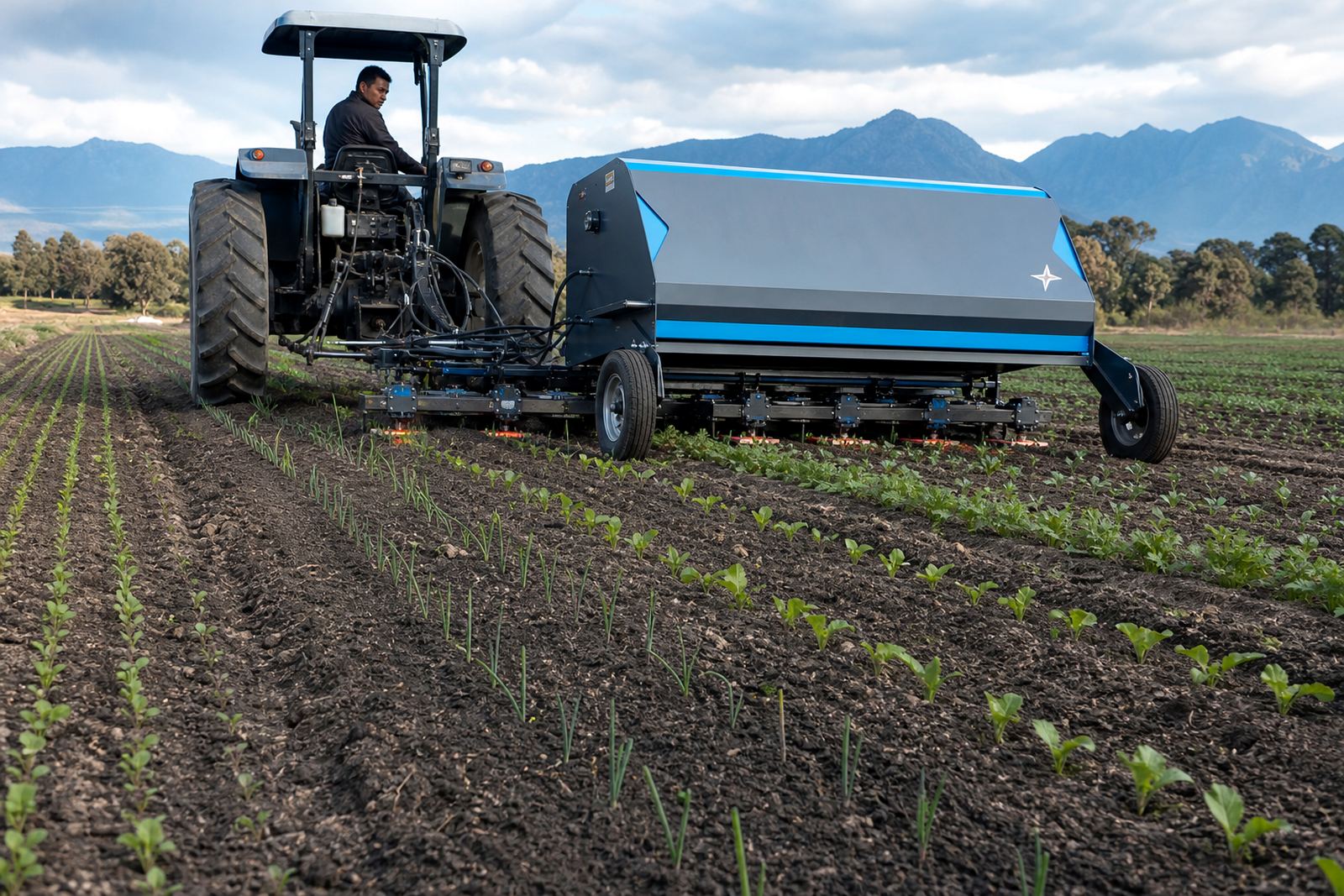
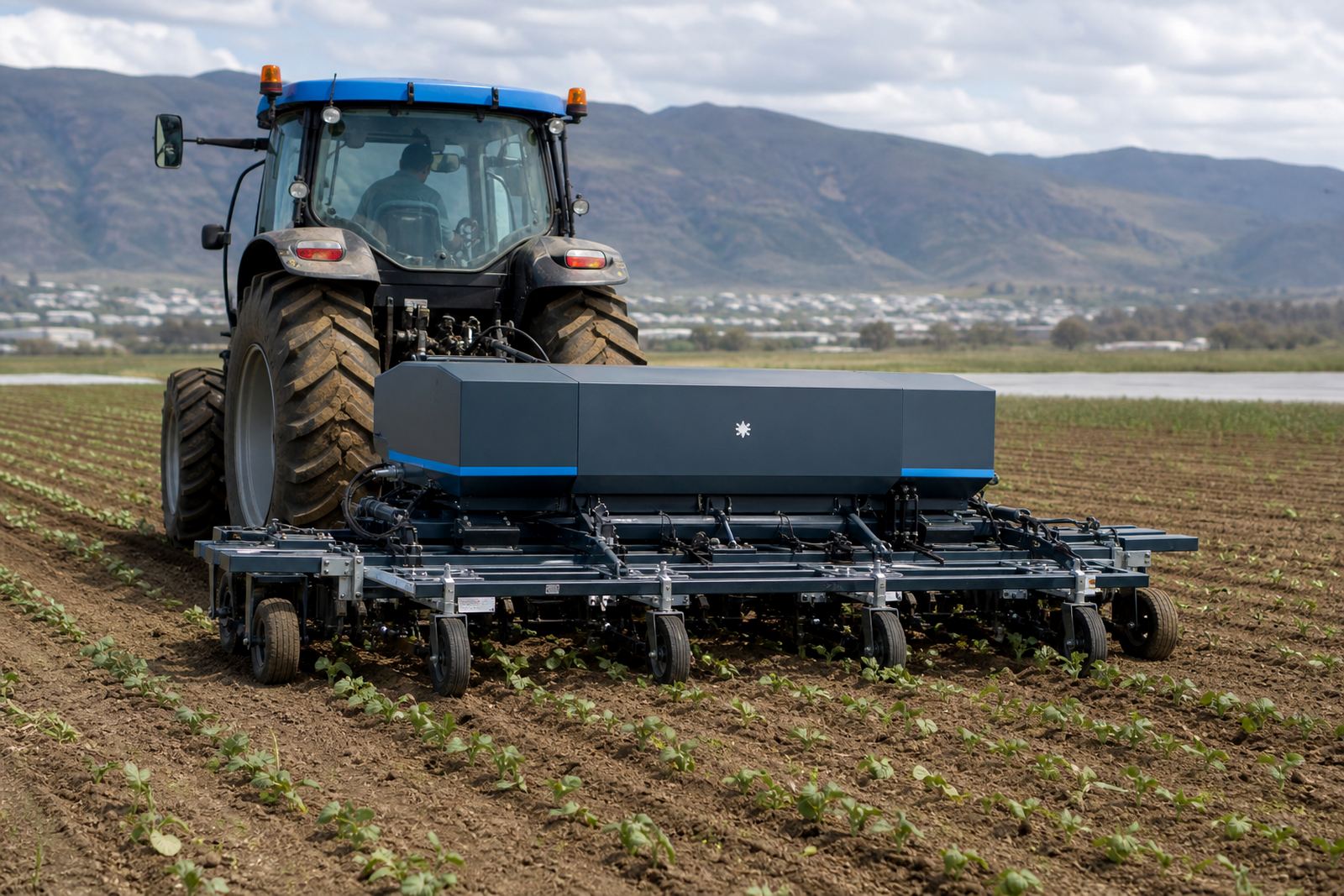
On loose sand the tractor can float a little, then settle into a softer patch and lift out again. That change is not dramatic in the cab, but it matters for laser weeding because the unit has to stay steady enough for camera-guided detection and accurate targeting at weed growing points.
In Philippi and other coastal areas, sandy vegetable land often dries fast on the top layer while holding more moisture lower down. The surface may look even from a distance, yet small dips, wheel tracks and old bed edges can change the ride. That is why a field check is worth doing before a pass, not after the crop row is already under stress.
2. What setup checks matter before the first pass
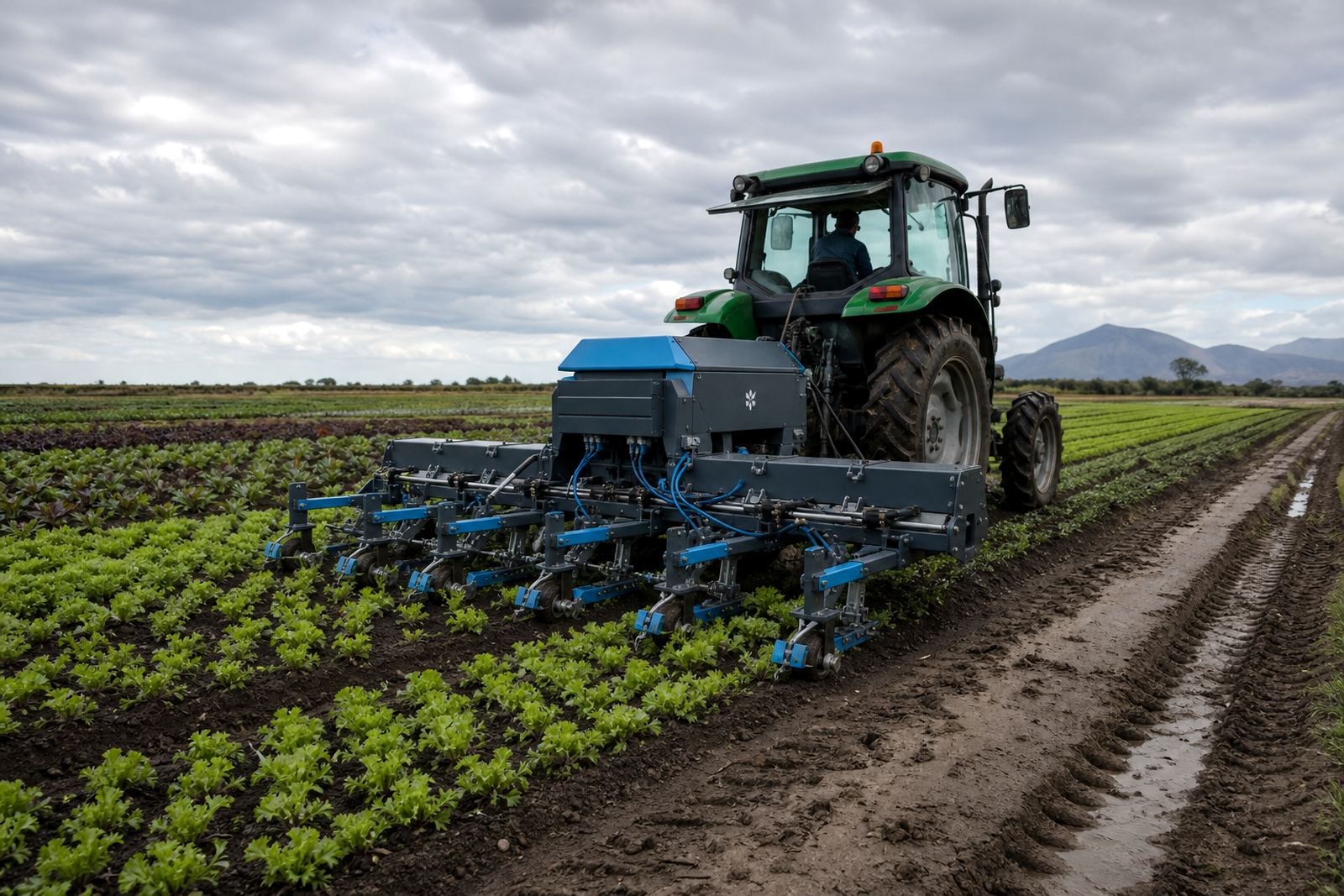
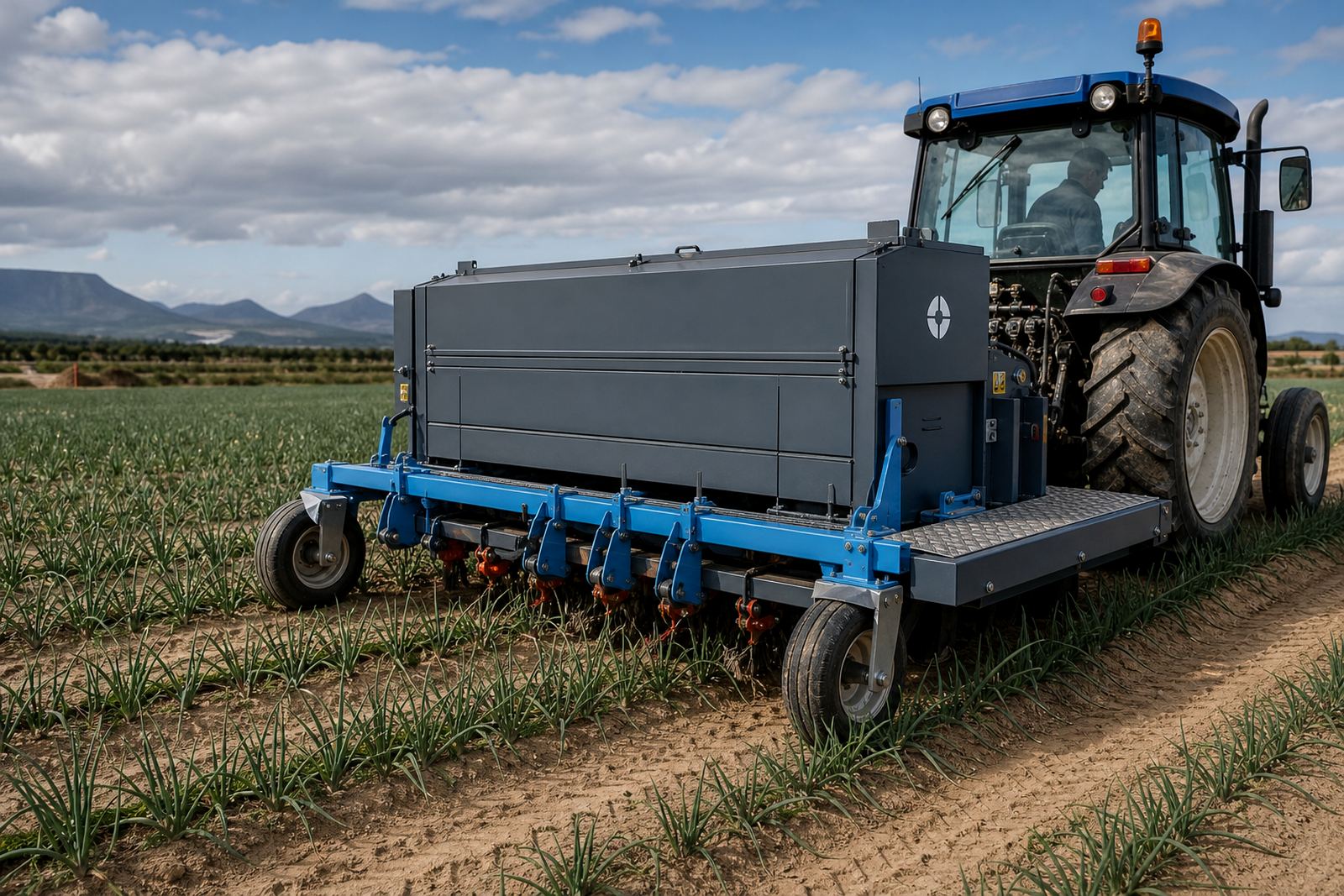
Row crops such as onions, carrots, lettuce and brassicas can all be worked with laser weeding, but the crop stage and weed stage matter more than the crop name alone. Small weeds are easier to target. If they have grown unevenly, or if the crop canopy has started closing in, the machine settings and driving line need closer attention.
- Bed height and row spacing, especially on reshaped sandy beds.
- Wheel track firmness where the tractor enters and leaves the block.
- Visibility of crop rows under morning light and dusty topsoil.
- Weed pressure near headlands, irrigation edges and low spots.
- Any drift in row alignment from earlier cultivation.
A clear arrival site check helps the operator and grower agree on what the ground is doing. That is usually where the real work starts, because sand can hide small changes until the first metres are under the unit.
3. Timing is tied to weed size, not the calendar
Laser weeding is strongest when the weeds are still at a vulnerable stage. The camera system detects the target and the laser energy is directed at the growing point. If weeds are too large, shaded or tangled around the crop, the pass becomes harder to set and may need more careful planning.
On sandy soils the field can dry quickly after wind or heat, which shifts how firm the surface feels by the afternoon. That can affect field speed, though the actual pace still depends on weed pressure, row shape and how clean the crop line is. In practical terms, a block that looks ready in the morning may need a different setting by the time the second lap starts.
4. A Philippi example from mixed sandy blocks
In the Philippi area, a grower with sandy vegetable beds and a strong flush of small weeds needed operator supplied work across two adjacent blocks. One block carried carrots, the other brassicas. The beds looked similar from the gate, but one had tighter turns at the ends and more soft patches near the irrigation lines.
For that kind of field, travel coordination and field scheduling matter as much as the machine itself. Our team plans the route, checks the arrival sequence and then reviews the first pass before the next block is opened. Pieter Mokoena handles the field planning side, while Johan Daniels leads the on-ground operation and Ruan Mkhabela looks after workshop readiness when the unit is due back in the base at Philippi, Cape Town.
5. What growers usually watch on lighter soils
Sandy ground does not hold mistakes for long, which is useful and awkward at the same time. A row that was straight yesterday can look less certain after wind, watering or light soil movement. Growers often focus on the following points when they book trial strip runs or repeat pass planning:
- Whether the crop line is still clear enough for camera-guided work.
- Whether the topsoil is loose enough to affect tractor balance.
- Whether the weed flush is even, or patchy after rain.
- Whether a second pass should be booked for the same block.
- Whether nearby farms should be grouped into one multi farm programme.
On sandy vegetable land, the first pass is not only about weeds. It also tests how the field behaves under the tractor-drawn unit, which helps shape the next schedule. That is where post pass reporting earns its place, because the notes show where the block was steady and where it was not.
6. Field reports help the next block run cleaner
After a pass, the grower needs more than a quick nod at the gate. A proper report should note weed stage, problem corners, row visibility and any places where the unit had to slow down. Those details help with crop timing plans, season bookings and repeat pass planning later in the cycle.
Sand can make the same farm feel different from one week to the next, so the report has to be plain and practical. Anele Khoza and Lerato Letsoalo keep the operator notes moving through the office side, while Zanele Naidoo handles grower consultation for farms that want the next block lined up before the current one closes out. In short, the ground tells a story and the report keeps it from getting lost.