What the cameras need to see in a planted bed
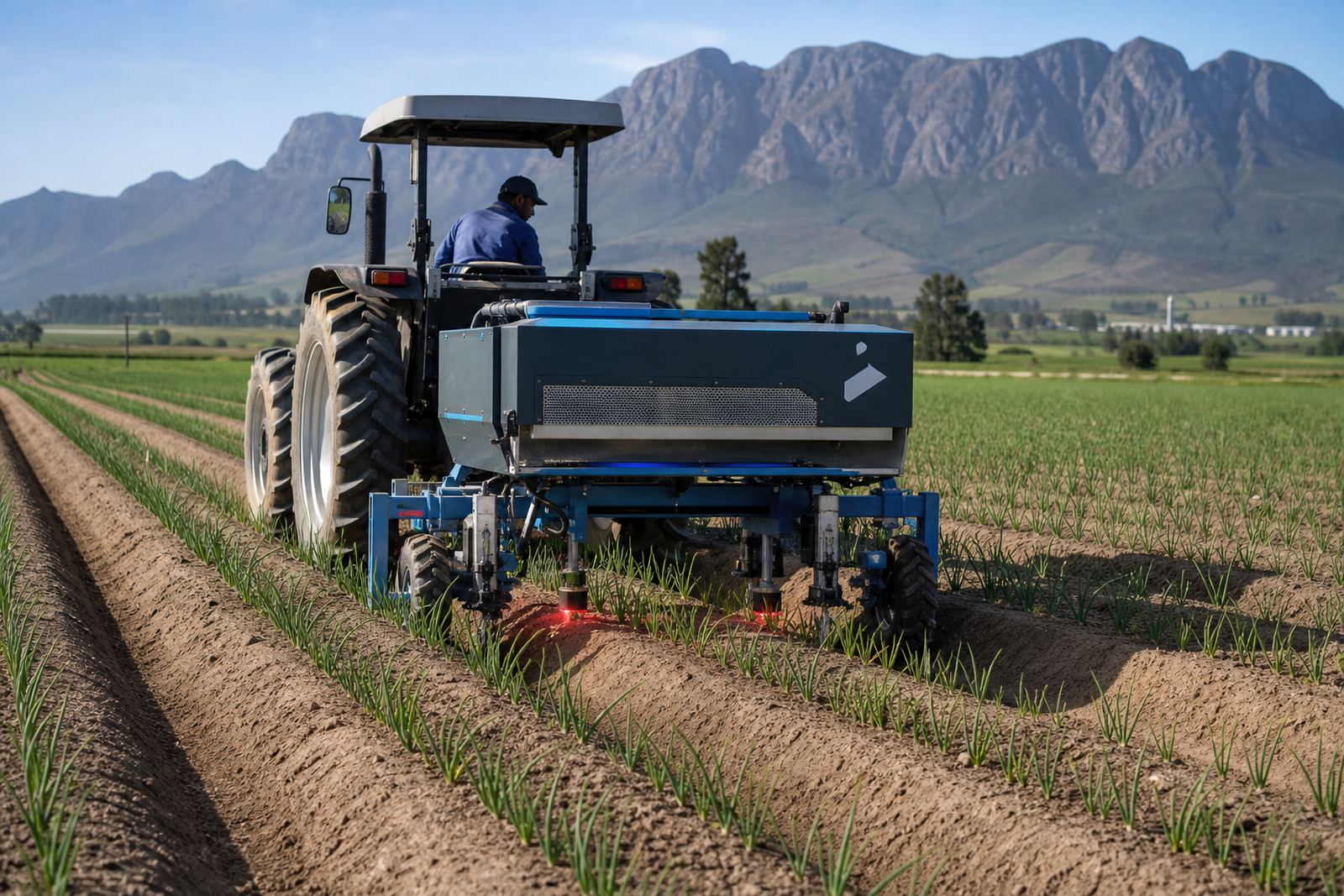
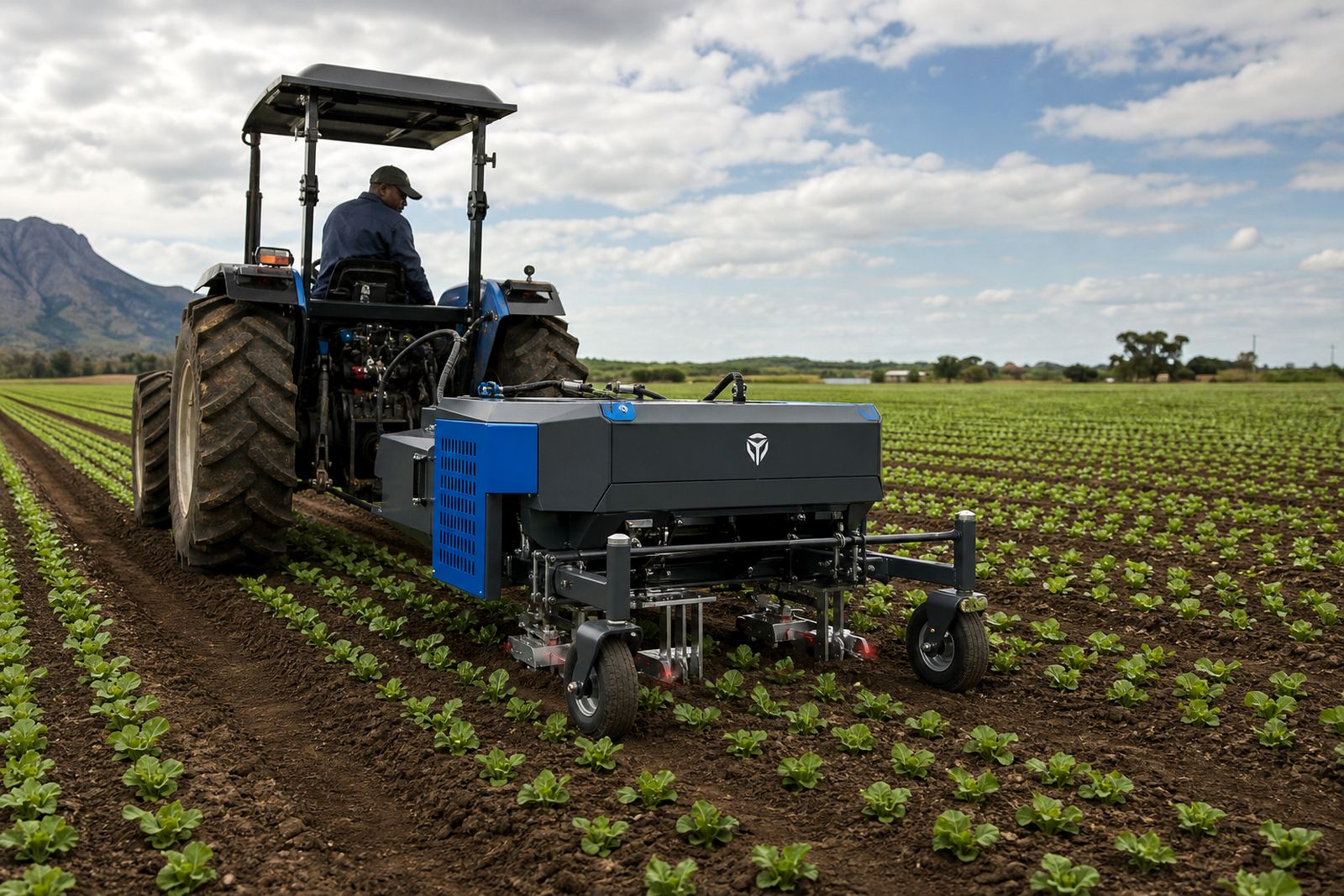
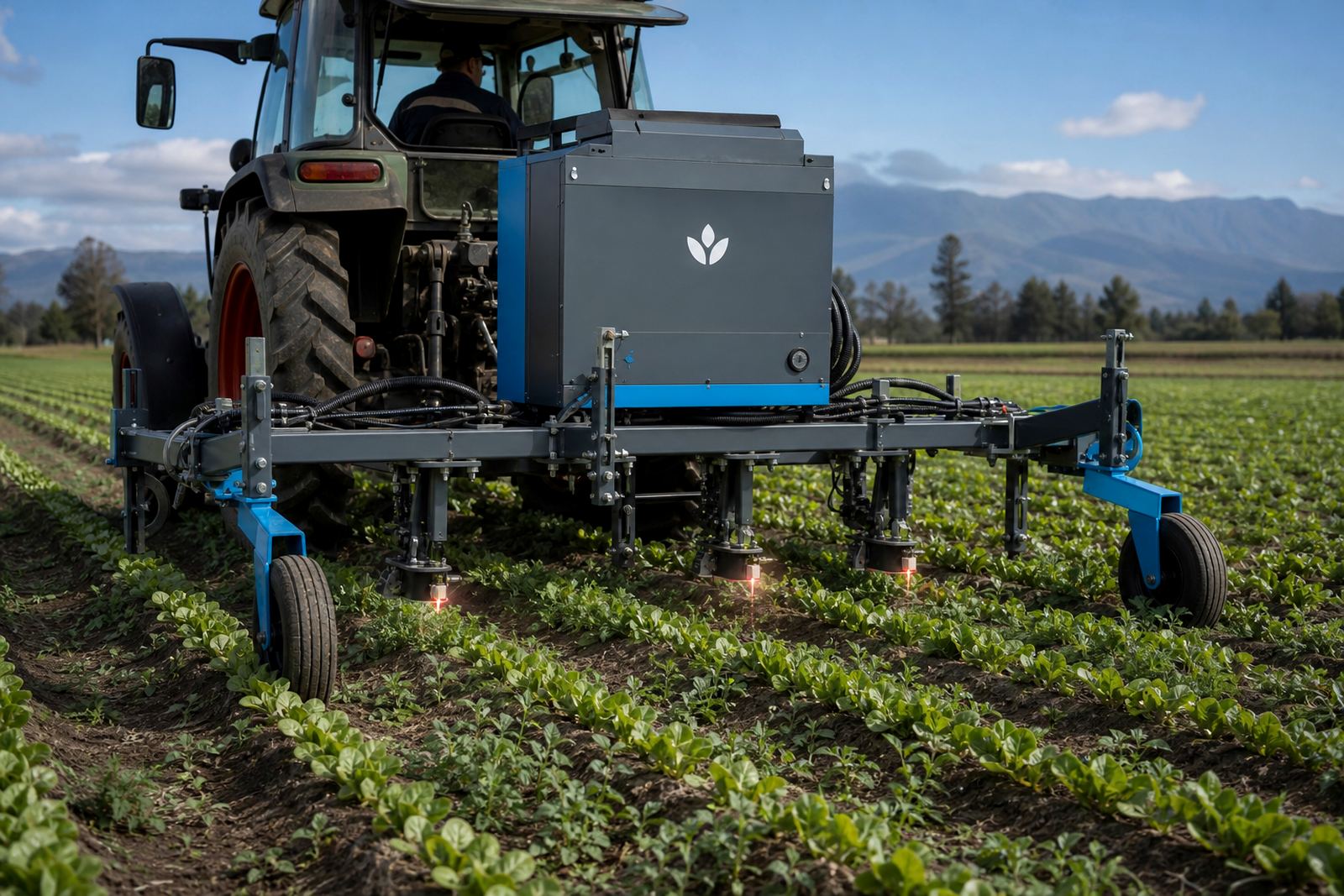
Camera-guided laser weeding works best when the crop row is easy to read from the operator’s seat and from the machine’s vision system. The cameras look for repeatable spacing, leaf shape, and the line of the planted row, then target weed growing points while the tractor-drawn unit moves through the field.
When rows are tidy, the machine can stay focused on the spaces that matter. When plants lean over the row, seedlings are irregular, or soil has slumped across the bed edge, the system has more visual clutter to sort through. That does not make the field impossible to work, but it does change how carefully the pass needs to be planned.
Bed shape, spacing, and the marks a camera can follow
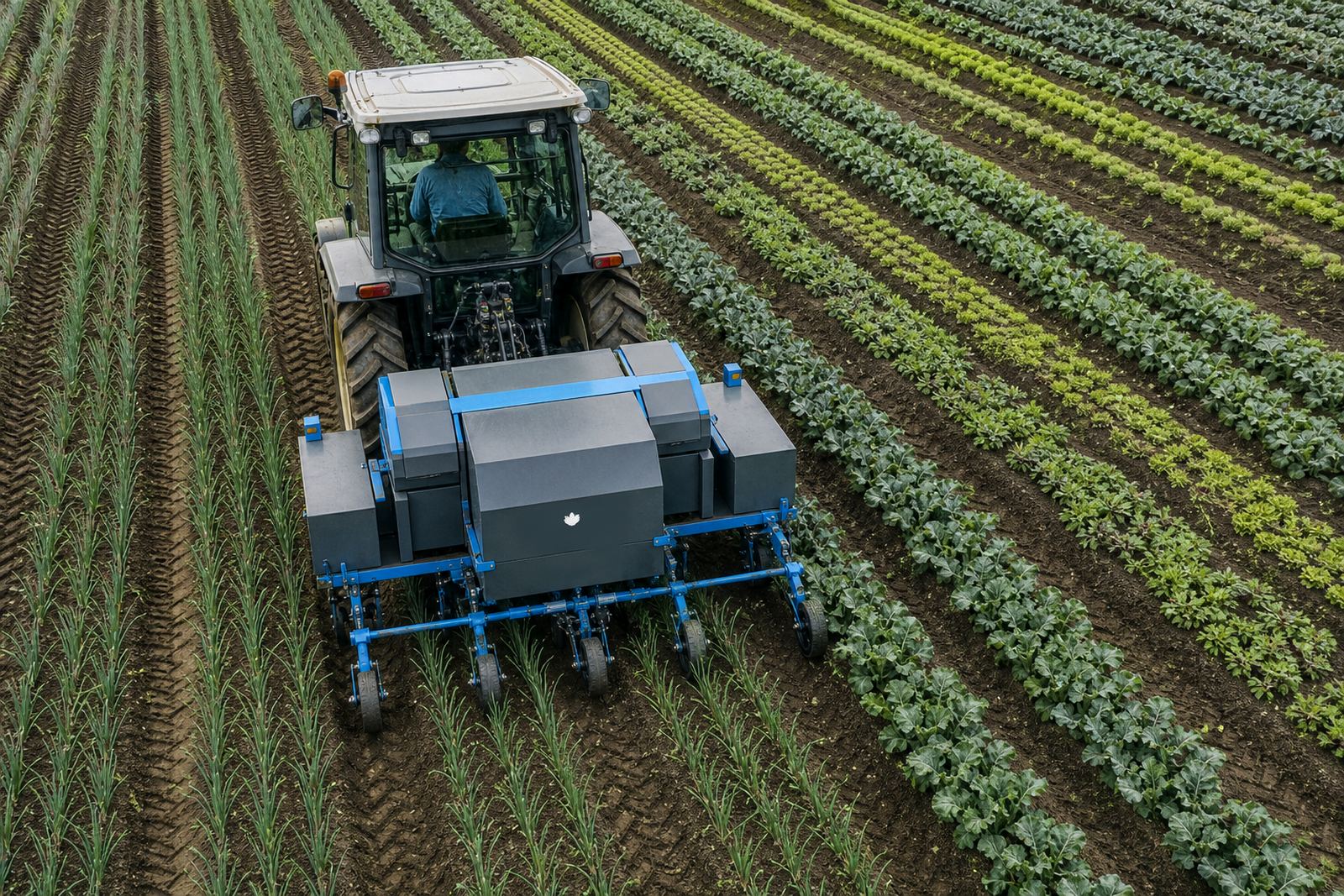
Row visibility starts long before the unit enters the field. Straight beds, consistent spacing, and a clear gap between crop and inter-row give the cameras a reliable pattern to track. That is useful on planted vegetables such as onions, carrots, lettuce, and brassicas where the crop line can be narrow and the weeds may sit close to the stem.
- Keep the planted line as even as the crop allows.
- Preserve bed shoulders so soil does not spill into the row.
- Avoid heavy wheel marks that blur the edge of the planting line.
- Leave enough separation for the operator to read the crop from the cab and monitor the pass.
In practice, clear line work helps the unit follow the same track across the block. That matters on mixed farms near Philippi and also on larger vegetable programmes in the Western Cape, Limpopo, Mpumalanga, KwaZulu-Natal and the Free State.
Timing the pass while weeds are still young
Laser weeding is most useful when weeds are still small and the crop has enough size to be recognised. If weeds are left too long, the bed gets visually messy and the growing points may be harder to target cleanly. Field timing therefore matters just as much as machine setup.
A grower looking at row visibility should think in terms of weed stage, not only the calendar. A fresh flush in the first leaf stage is usually easier to work than a bed where the weeds have already spread across the row edge. Field speed also changes with weed pressure, so a lighter field can move differently from a block with dense pressure and uneven emergence.
- Check where the crop line is visible from end to end.
- Look for weed flushes before they shade the row.
- Plan passes around crop stage, not guesswork.
- Allow slower travel where the bed has heavy pressure or patchy emergence.
Local conditions around Philippi and the coastal belt
Philippi growers work in wind, sand and changing moisture, and those conditions can soften a bed edge faster than people expect. Coastal humidity can also keep some weeds active longer, which makes the line between crop and weed more important on the next pass. In Grabouw or Ceres the row may hold a different shape from a warmer inland block, while Tzaneen and Nelspruit often bring a different weed mix altogether.
The lesson is plain enough: if the line is hard to read on foot, it will be harder to read from a moving tractor unit too. A neat bed is not about appearance alone, it gives the camera cleaner contrast and gives the operator a steadier run through the field.
What the operator looks for before the unit moves in
Our operator and field team use the arrival site checks and crop timing plan to judge whether the bed is ready for a pass. That includes the shape of the row, the size of the crop, the weed flush, and any places where water movement or cultivation has changed the bed profile. If the field needs a trial strip run, the team can use that to read how the cameras pick up the row under current conditions.
It is about keeping the field productive, not making it look perfect. It is to work with enough row definition that the laser can target weed growing points while leaving the soil undisturbed. In row crops, that no-soil-disturbance approach is part of the appeal because the bed stays intact and the crop line is not thrown open again.
- Clear crop line from the cab position.
- Weed flush low enough for targeting.
- Bed shoulders stable and not crumbling.
- Spacing that still matches the original planting pattern.
A Bethlehem block that shows the difference
A mixed vegetable block near Bethlehem gives a useful example. One section had onions planted in straight beds with a tidy centre line and a clean shoulder. Another section had a patch where the row edge had slumped after watering, and small weeds were sitting closer to the crop. The first section allowed a steadier pass, while the second needed slower field speed and more careful watch on row definition.
That kind of difference is common across South African vegetable farms. The machine does not read every field the same way, because the field is never the same all the way through. A grower who keeps the lines visible gives the system a better chance to work as intended, especially on multi farm programmes where timing has to fit several blocks.
Planning the season around row visibility
Row visibility is easier to manage when it is built into the season plan from the start. That means crop timing plans, repeat pass planning, and field scheduling arranged with the row in mind, not only the harvest date. A good programme leaves room for travel coordination, post pass reporting, and another look at the block if weed pressure builds after rain or irrigation.
For growers using operator supplied service, the cleanest results usually begin with a clear brief on crop stage, row spacing, and any sections where the bed has drifted. That helps the team set the right approach before the unit arrives on site. It also keeps the work practical for lettuce, brassicas, carrots and onions where the crop line is often close to the weed zone.