When one block has three weed ages at once
Mixed flushes are common after patchy rain, irrigation changes or a missed cultivation window. One part of the block may show tiny white-thread weeds, another may carry broadleaf weeds with a few true leaves, and a third area may already be too advanced for the most precise timing. That spread matters because laser weeding works best when the target weeds are still small and the crop row is clearly mapped by the camera system.
In those fields, a drive-through on its own is never enough. The operator needs to look at weed stage, row width, soil moisture and canopy cover before a booking is set. A bed with onions at one stage and a flush of later weeds beside them asks for different handling than a cleaner block with even emergence.
- Uneven germination changes where the tractor can travel safely
- Mixed weed sizes affect how the machine is set up for the pass
- Patchy crop growth can narrow the working window
What the camera and laser are trying to read
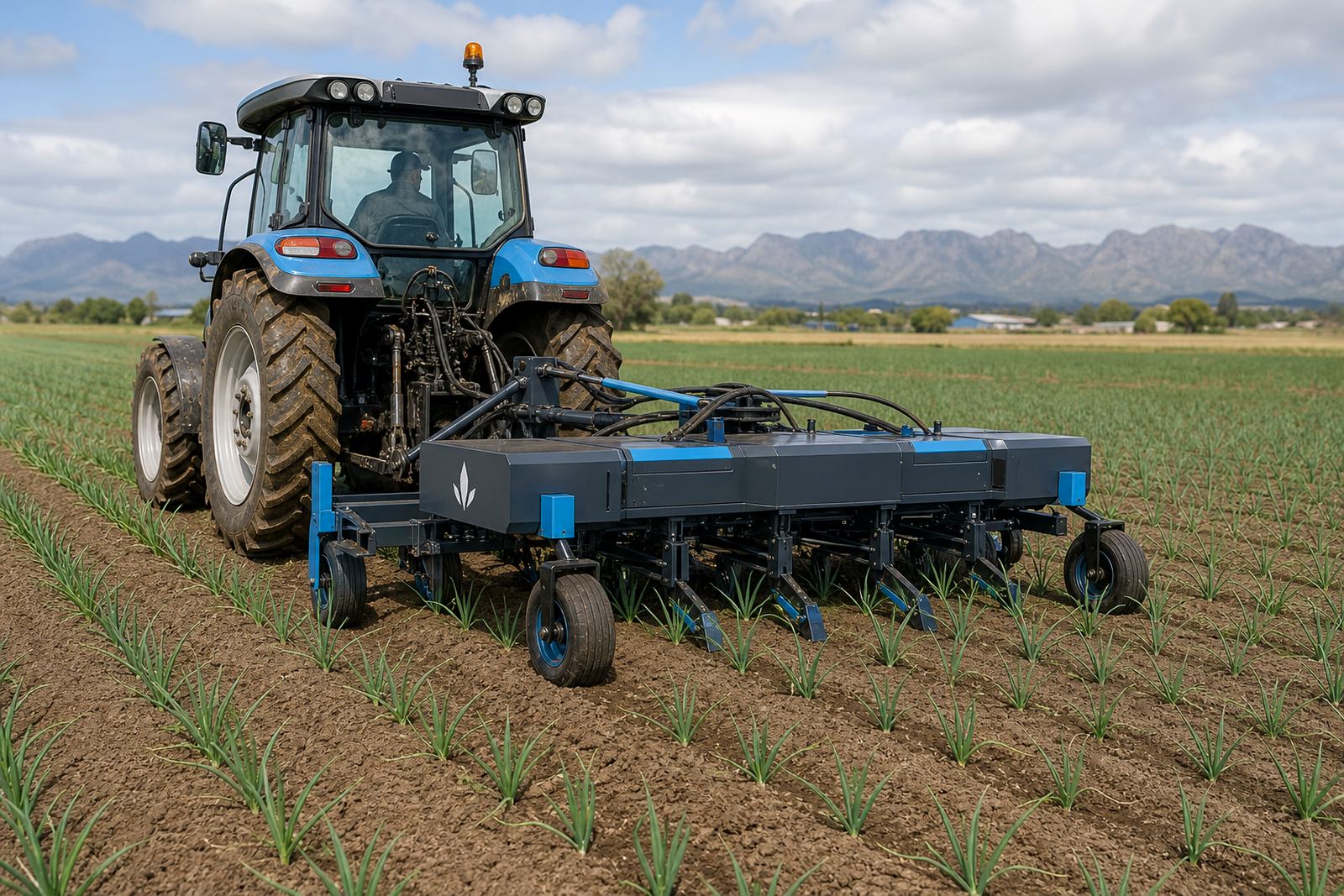
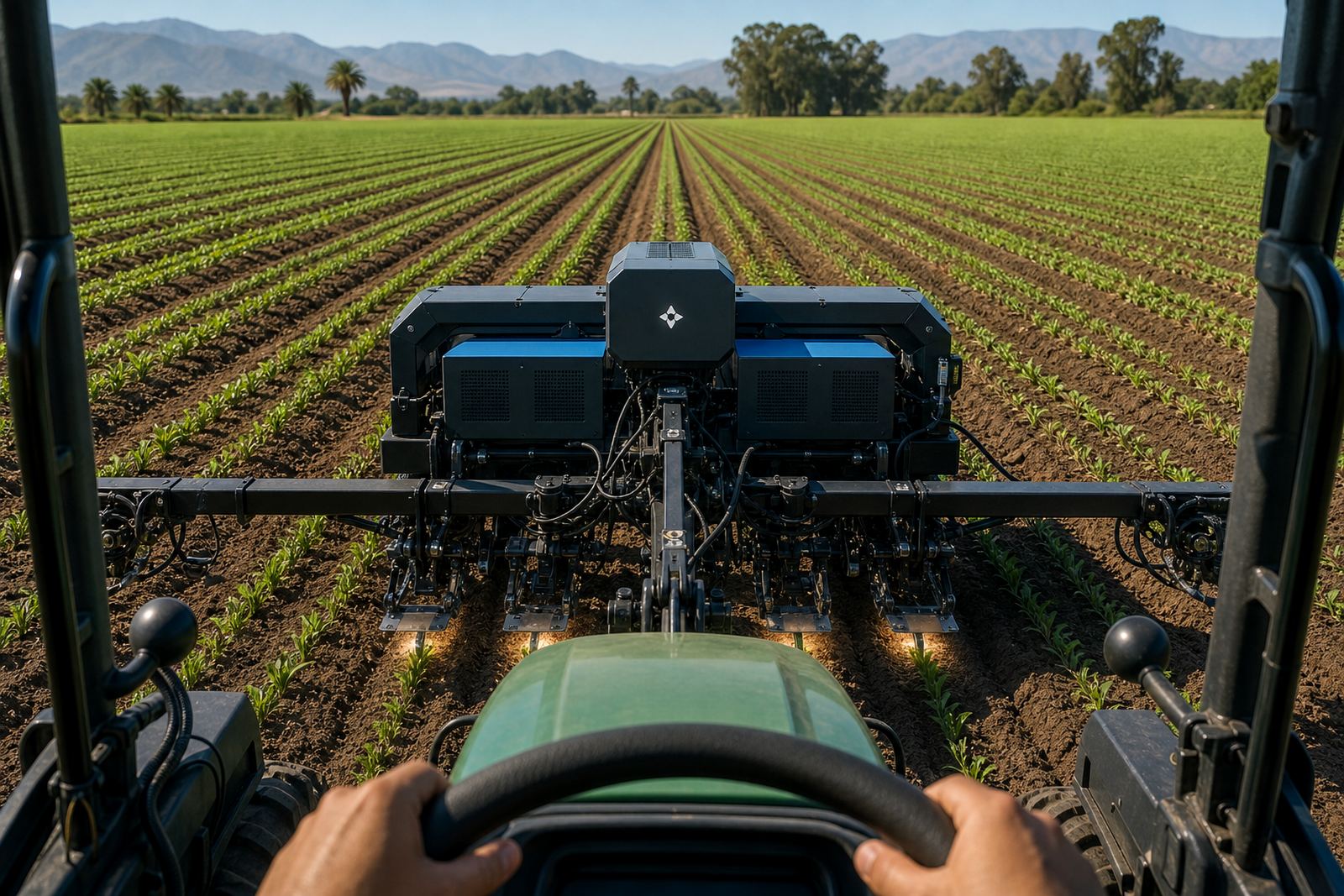
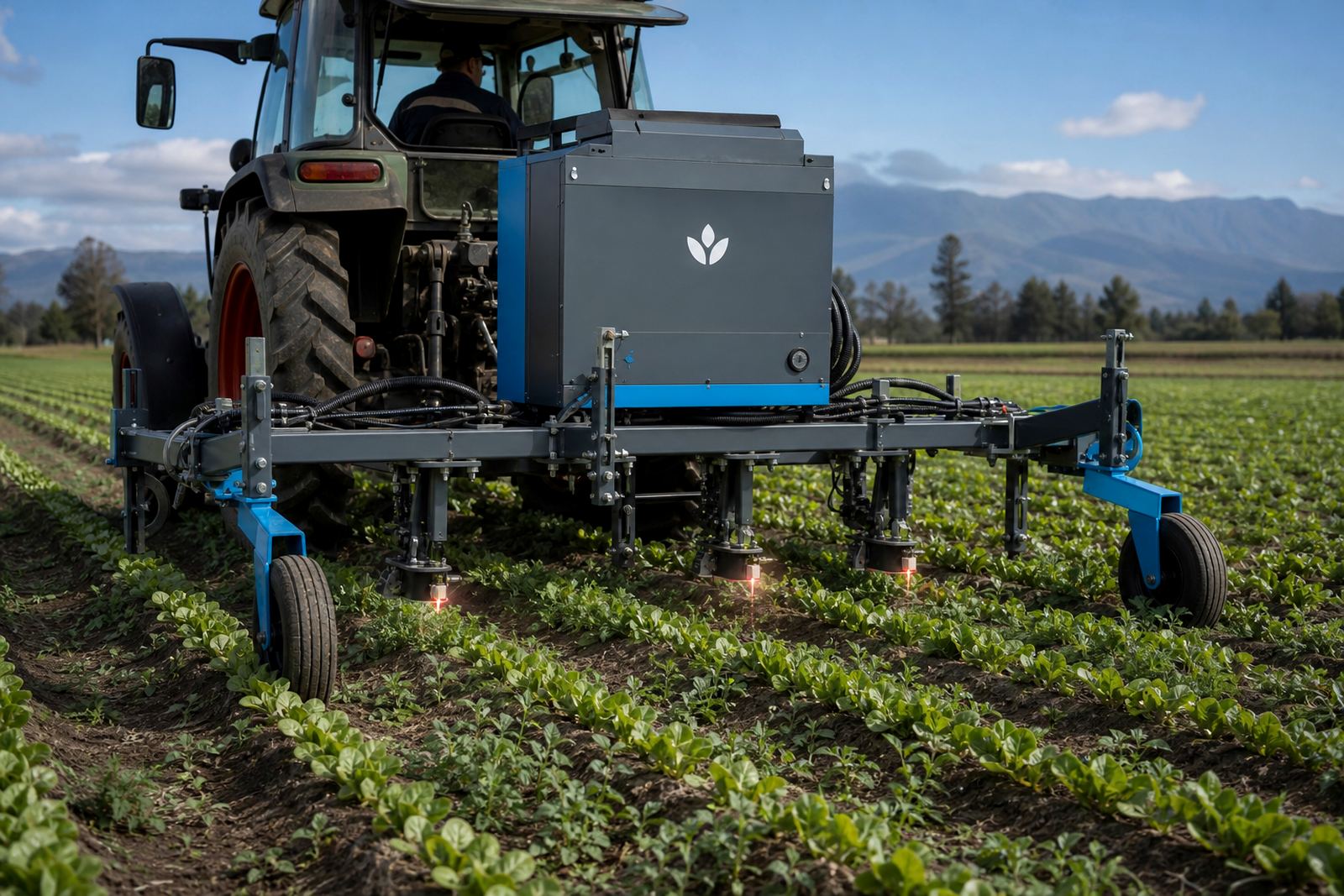
Modern laser weeding units use cameras to identify the crop row and the weeds between plants. The system then targets the weed growing point with a laser pulse, aiming to damage the weed without touching the crop. That method is useful in row crops such as onions, carrots, lettuce and brassicas where the row structure gives the machine a clear path.
With mixed flushes, the challenge is not only spotting the weeds, but reading the crop and weed together. Small weeds are easier to treat cleanly. Larger ones may need a different pass plan, or a repeat visit once the block is at a better stage. Laser weeding stays herbicide-free and leaves the soil surface undisturbed, which matters in beds that crust easily after rain or irrigation.
- Camera guidance supports work between closely spaced rows
- Laser action focuses on the weed point of growth
- No soil disturbance means the bed structure stays intact
A Philippi example from a wet start and a hot finish
A grower near Philippi may have one section of carrots that came through evenly after irrigation, while another corner held back because the soil was cooler and heavier. A week later, the first section can carry a fresh flush of weeds while the slower section is only just starting to close the row. That is the kind of block where a single assumption can waste time and leave gaps in the plan.
For a case like that, we would look at the field in sections rather than treating the whole block as one shape. The assessment may lead to a travel plan that separates the stronger rows from the uneven corner, with trial strip runs used to check how the crop and weeds present under the laser unit. In coastal areas around Cape Town, humidity and changing wind can also affect the working rhythm, so the schedule has to suit the ground conditions, not just the calendar.
Mixed flushes often show up after:
- uneven irrigation across long beds
- rain followed by warm, fast weed germination
- patchy crop emergence after variable soil temperatures
- delays between planting and the first clean-up pass
The timing window is tighter than most people expect
With laser weeding, timing is not only about the crop age. It is also about weed stage. Very small weeds are easier to target, but once a block has mixed flushes the faster-growing species can move ahead while slower ones remain tiny. That means the timing window can close unevenly across the same field.
We look at the whole block in practical terms: where the crop row is readable, where the weeds are still soft enough for a clean pass, and where another visit may be wiser than forcing one pass through everything. Field speed also changes with weed pressure. A cleaner section can usually be worked more steadily than a block with dense pressure and a lot of target searching.
- Small weeds are easier to treat than taller, tougher ones
- Dense pressure can slow the field pace
- Repeat pass planning helps when flushes are staggered
How scheduling works when several farms need the same unit
Mixed weed flushes become more complicated when a grower is running several farms between Philippi, Ceres, Grabouw, Tzaneen or further inland. One farm may be ready for a pass, while another needs a few more days of crop growth before the unit can move in safely. That is where field scheduling matters as much as the machine itself.
We build the work around crop timing plans, travel coordination and arrival site checks, so the unit is not sent into a block before the rows are readable. For growers handling onions in the Western Cape and brassicas in KwaZulu-Natal, the order of work can change quickly after rain or heat. A mixed flush on one farm may be ready for treatment now, while another block needs a trial strip run first to test how the crop and weeds are showing.
- Season bookings help keep the unit moving between farms
- Arrival checks confirm the block is ready for the pass
- Travel coordination reduces wasted movement across distant farms
What growers should bring to the assessment
A good assessment starts with clear field details and a plain description of what is happening in the block. Our team looks for the crop stage, weed species mix, row spacing and any wet patches or wheel tracks that may affect the unit. That gives the operator and scheduling lead enough detail to map the job without guessing.
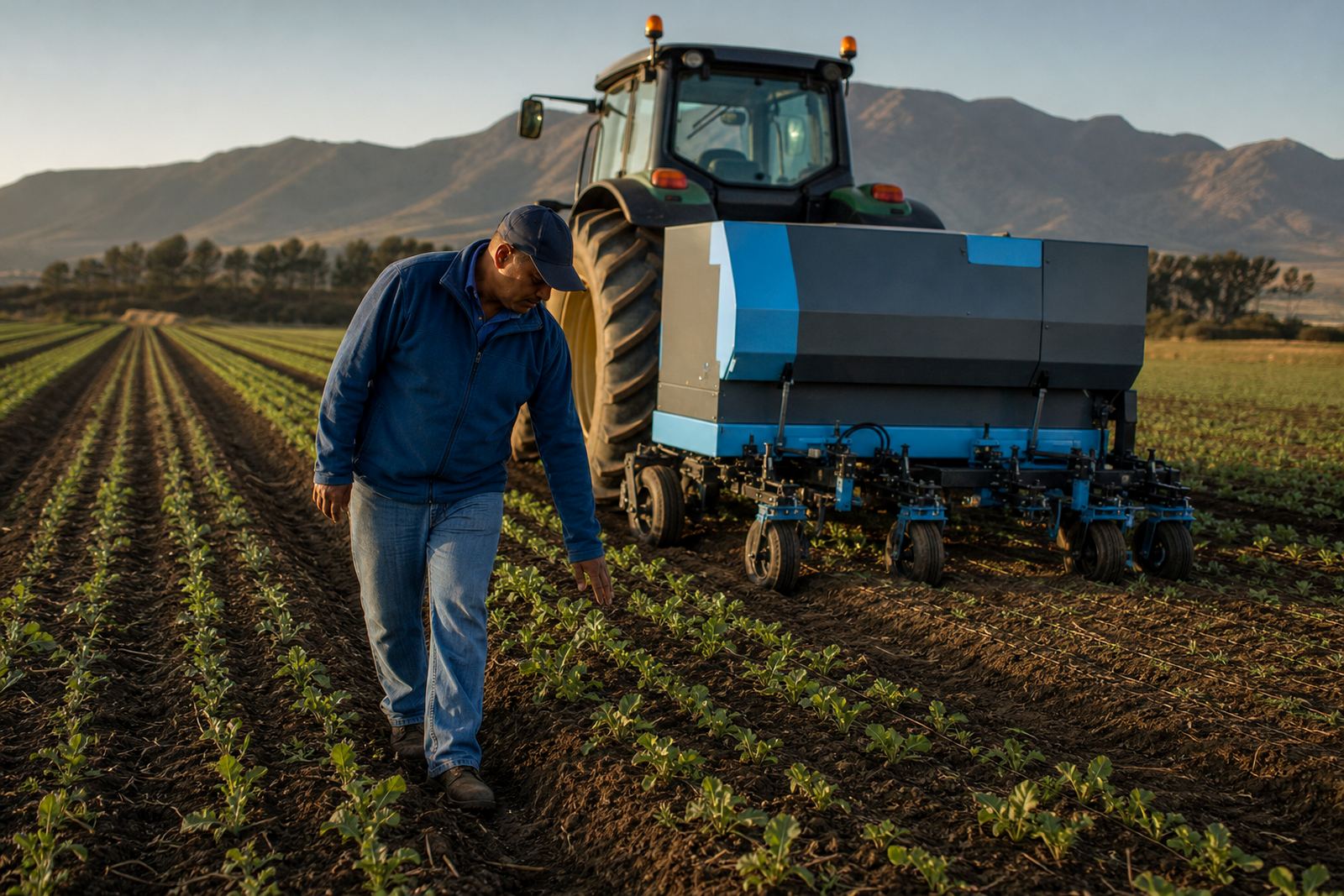
For mixed weed flushes, the most useful information is often the least glamorous. A walk through the block, a note on when the last irrigation ran, and a look at where the weed flush is strongest can save a bad booking. Grower consultation helps decide whether the field is ready now, better split into sections, or more sensible for a repeat pass plan.
- Crop stage in each section of the block
- Where the weed flush is strongest or weakest
- Recent irrigation, rain or cultivation notes
- Any narrow turns, wet corners or awkward headlands