The first minutes on site shape the whole pass
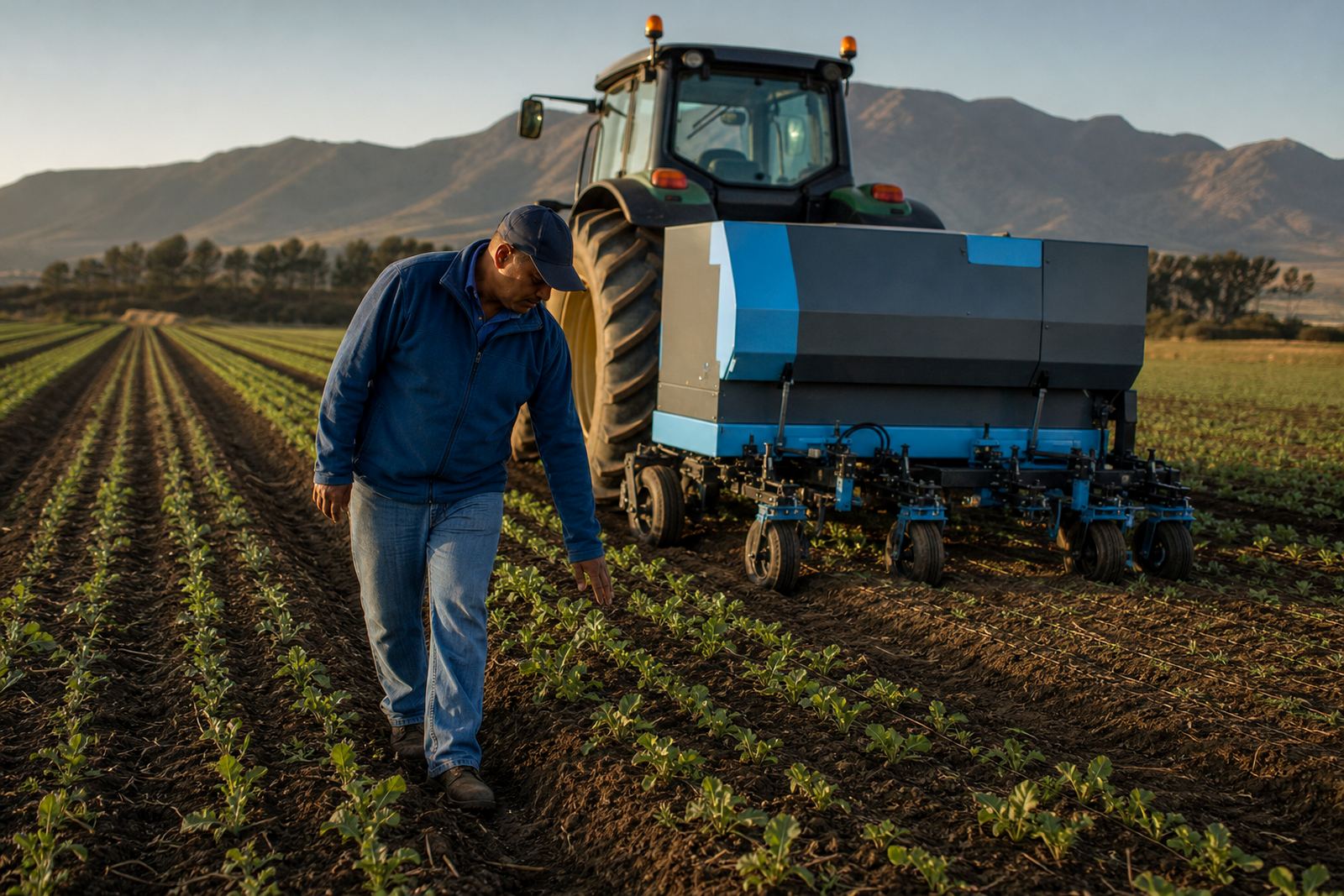
The operator begins with the field edge, not the row centre. Arrival checks cover access routes, turning space, crop stage, row alignment and any soft patches after rain or irrigation. In Philippi, where sandier ground can shift under a tractor and winter moisture lingers in low spots, those checks matter before the first metre is covered.
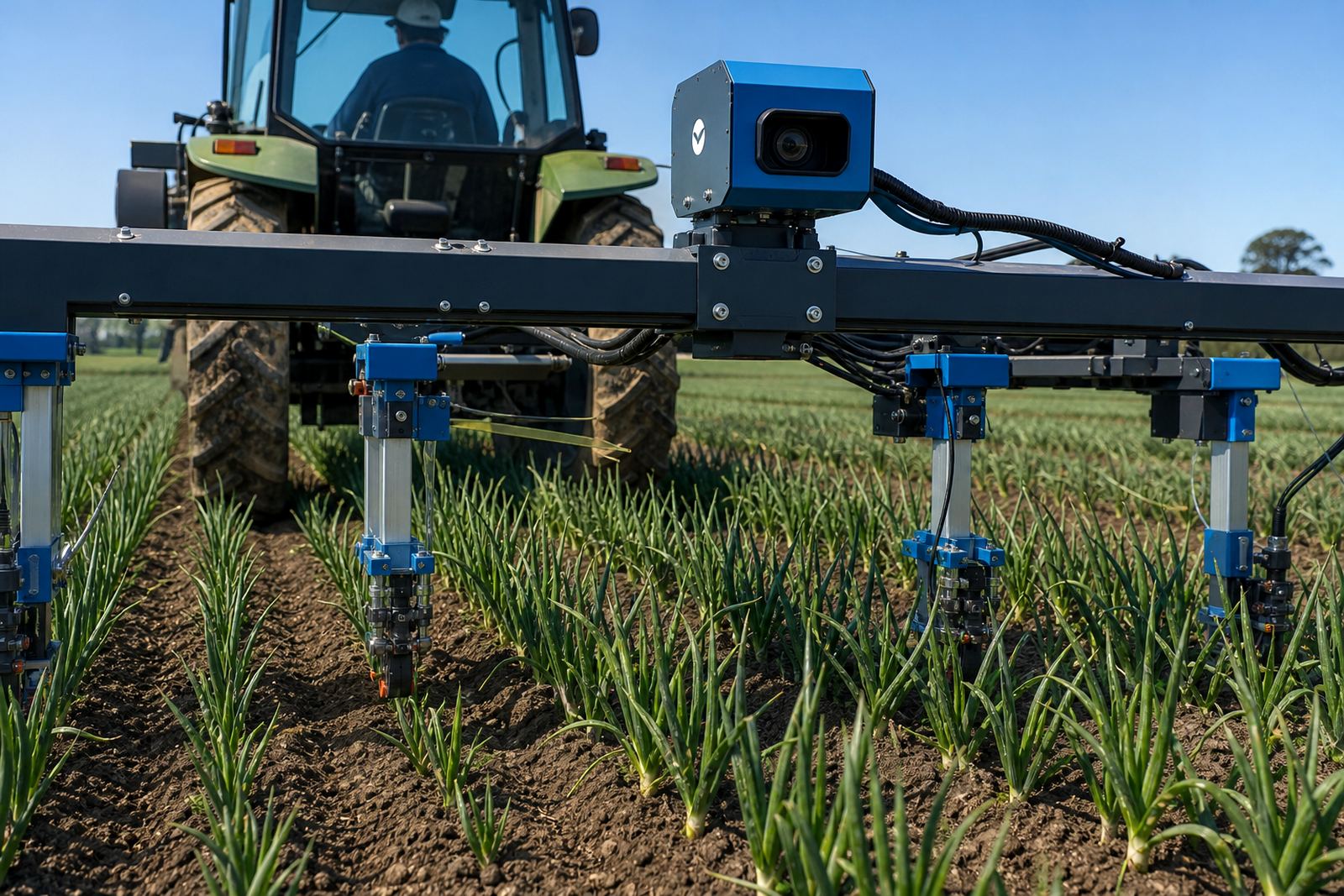
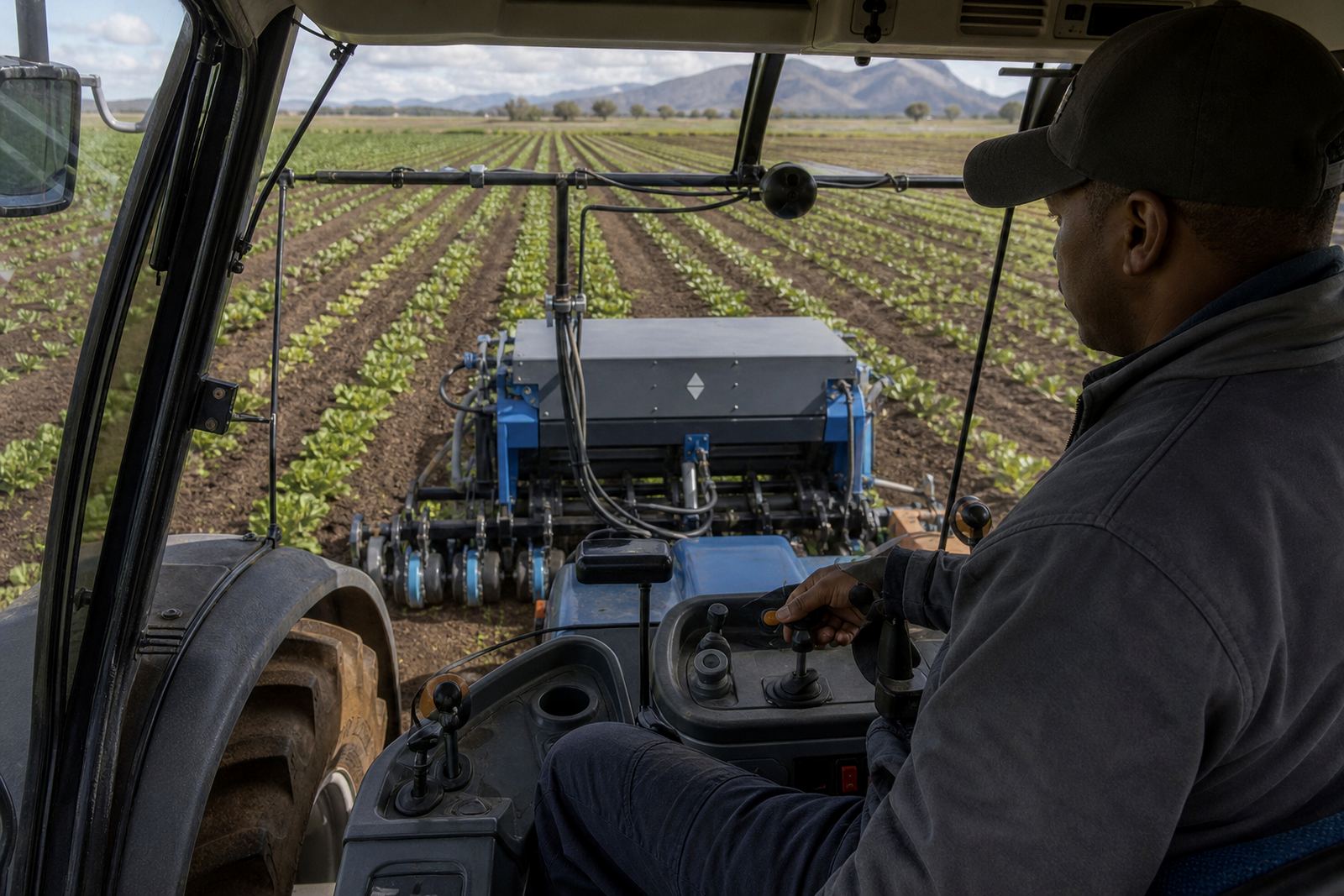
Once the unit is in the block, the operator confirms the crop rows, checks camera view, and watches how the machine reads weeds at ground level. The work is not about speed on paper. It is about holding a steady line and keeping the laser focused on the weed growing points without brushing the crop.
Reading crop stage before the machine moves
Laser weeding works best when the operator matches the pass to the weed stage and the crop stage. Small weeds are easier to target because the growing point is exposed and the crop plants are still clearly separated. If weeds have already crowded the row, the operator may slow the travel rate, adjust the pass pattern or call for a repeat pass plan.
For onions, carrots, lettuce and brassicas, spacing changes from block to block. A trained operator keeps that in view and treats each crop differently, even when the farm uses the same tractor-drawn unit across the season.
- Check whether the crop has enough leaf lift for camera tracking.
- Watch for weeds that sit close to the crop crown.
- Adjust travel speed to the weed pressure in that block.
- Pause if the row pattern changes or the ground becomes uneven.
What happens during the pass itself
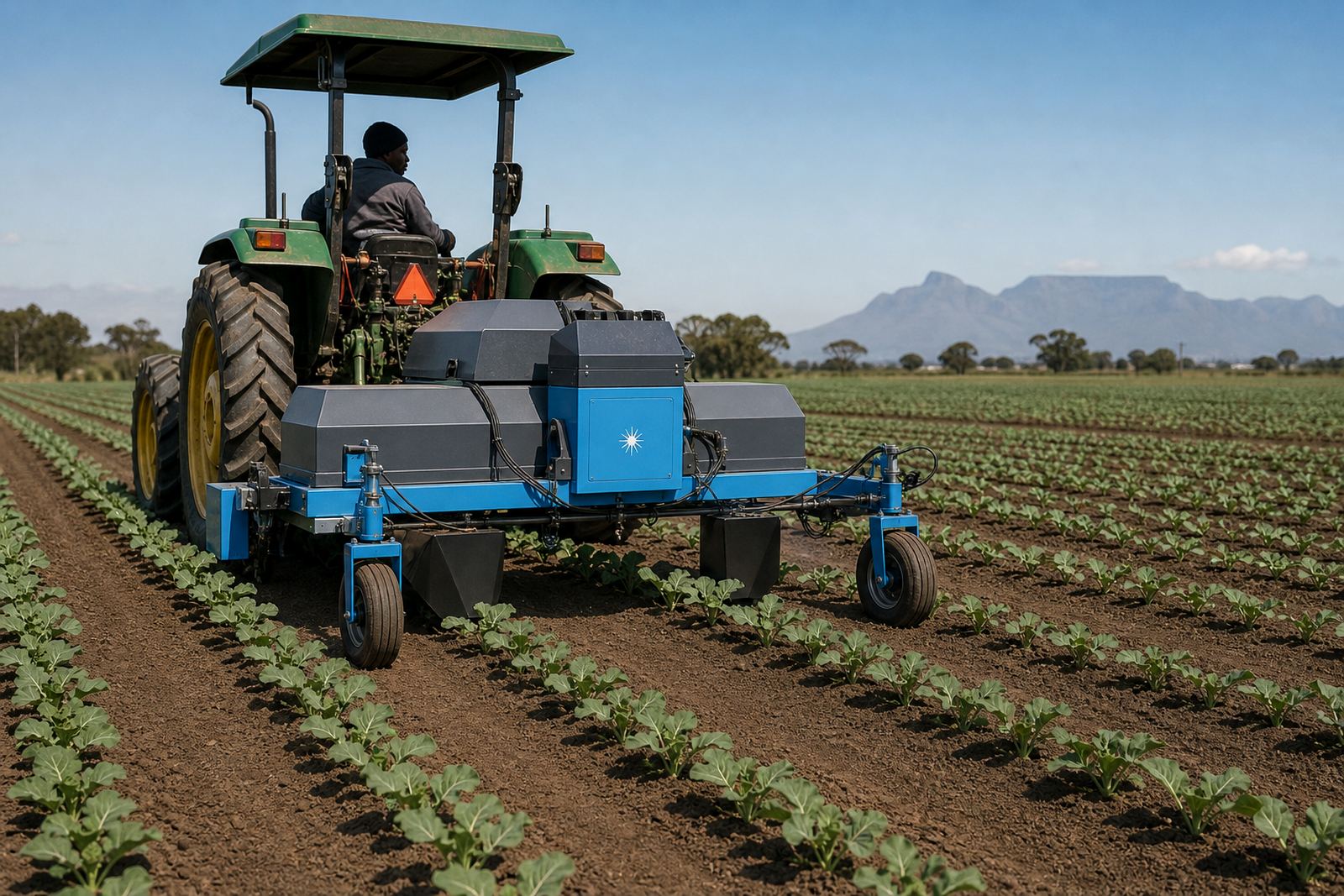
During the pass, the operator balances machine settings, steering and crop safety. The tractor-drawn laser unit uses camera-guided weed detection so the beam can target the weed growing points rather than the crop plants. That only works well when the operator keeps the unit square to the row and avoids sudden movement at the headland.
The practical side is often overlooked. The operator listens for changes in engine note, checks dust lift in dry fields and notices when the beam is meeting dense flushes of weeds that need a slower run. No soil disturbance is part of the appeal, especially on lighter soils where cultivation can dry the top layer and leave new weed seed close to the surface.
On-site checks that protect the crop
Good operators keep a short list in mind every time they stop. They look at crop leaves, row gaps, wheel tracks and the weed line just treated. If the field has a twist in the rows, a patch of uneven emergence or a wet corner near a drainage line, the operator adjusts the pass rather than forcing the same setting through the whole block.
Those checks also help with season planning. A farm in Grabouw may need a different field rhythm from a warmer block near Tzaneen, because crop pace and weed pressure do not move in lockstep across regions. The operator is the person who sees that difference early and keeps the work practical.
- Confirm row line before entering each new block.
- Inspect treated strips for missed weed points.
- Note wet patches, wheel ruts and headland stress.
- Record where the next pass should be set.
How the operator supports the grower team
The operator is part of a wider field crew, not a separate function parked at the gate. Grower liaison, scheduling and post-pass reporting all depend on clear notes from the person on the machine. A short field note about crop stage, weed pressure and site access can shape the next visit far better than a vague summary.
On a multi farm programme, the operator also helps keep travel and set-up realistic. A block in Bela-Bela may be ready for a later pass than one in Bethlehem. That sort of timing is easier to manage when the operator feeds back what was seen in the field, not just what was planned on paper.
A Philippi example from a mixed vegetable block
In Philippi, where vegetable blocks can sit close to windblown sand and exposed edges, the operator often starts with a trial strip run. That gives a clear view of crop spacing, weed size and how the unit behaves in the actual field. If the weeds are small and the rows are clean, the pass can move steadily. If pressure is heavier, the operator slows the run and keeps a tighter watch on the row edge.
For a lettuce block near Cape Town, the key was not force or speed. It was patient set-up, careful line holding and a clean handover to the grower team after the pass. That is the sort of field work that keeps laser weeding useful on real farms, where weather, soil and crop stage all change the plan.
The operator’s job after the last row
Once the field is done, the operator still has a few important tasks. They check the treated area, note any row sections that need another look and pass on the day’s field detail for repeat pass planning. If a block showed uneven weed flushes, the next visit can be timed more carefully around crop stage and weed emergence.
That final check closes the loop. It keeps the work tied to the field, not the calendar alone, and it gives the grower a clear sense of what was covered and what still needs attention.