Why onions need a sharper weed window than most row crops
Onion seedlings are slow to fill the row, and that gives weeds a long window to compete for light and moisture. By the time a patch looks busy from the headlands, some weeds may already be past the stage where a laser pass does the best work.
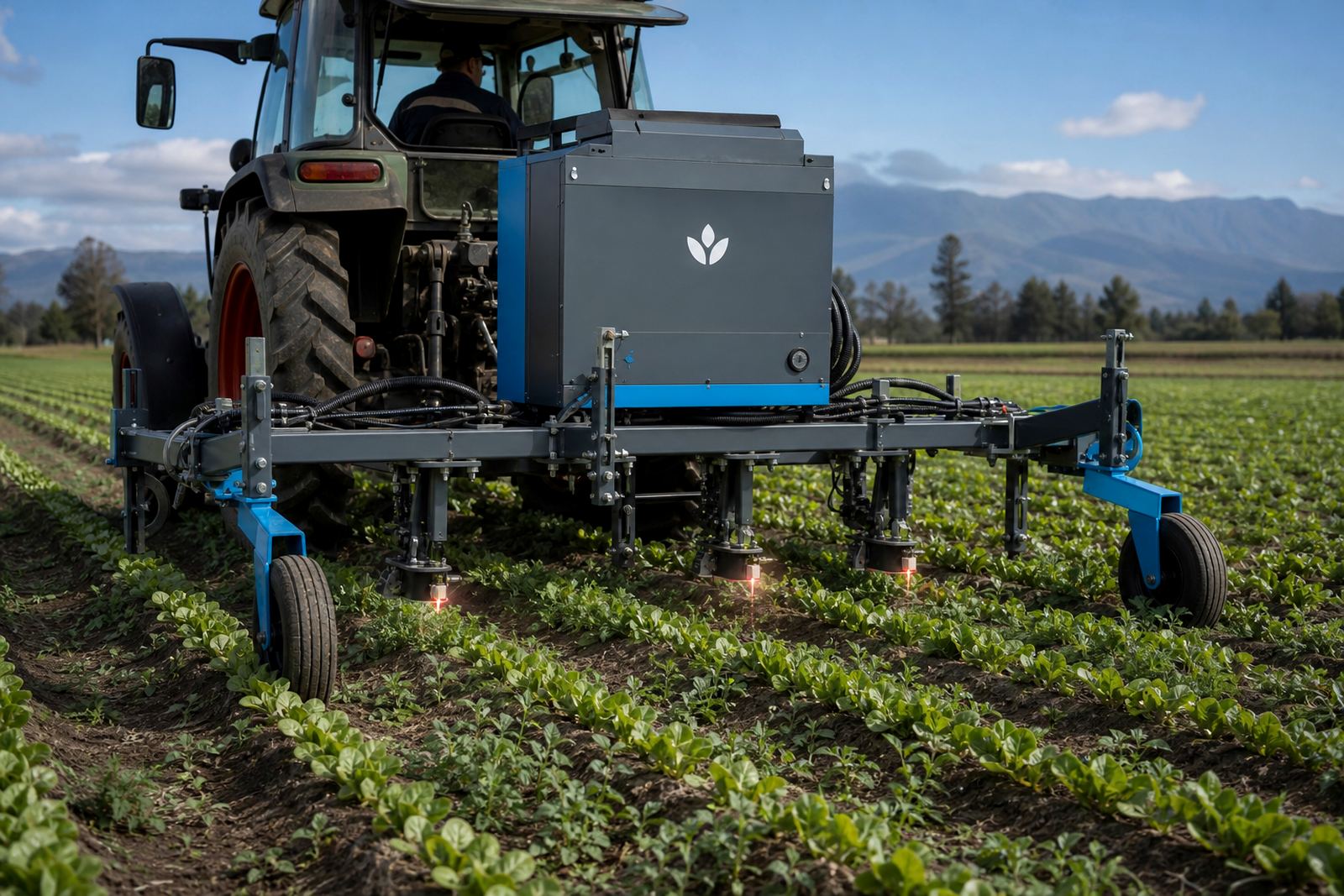
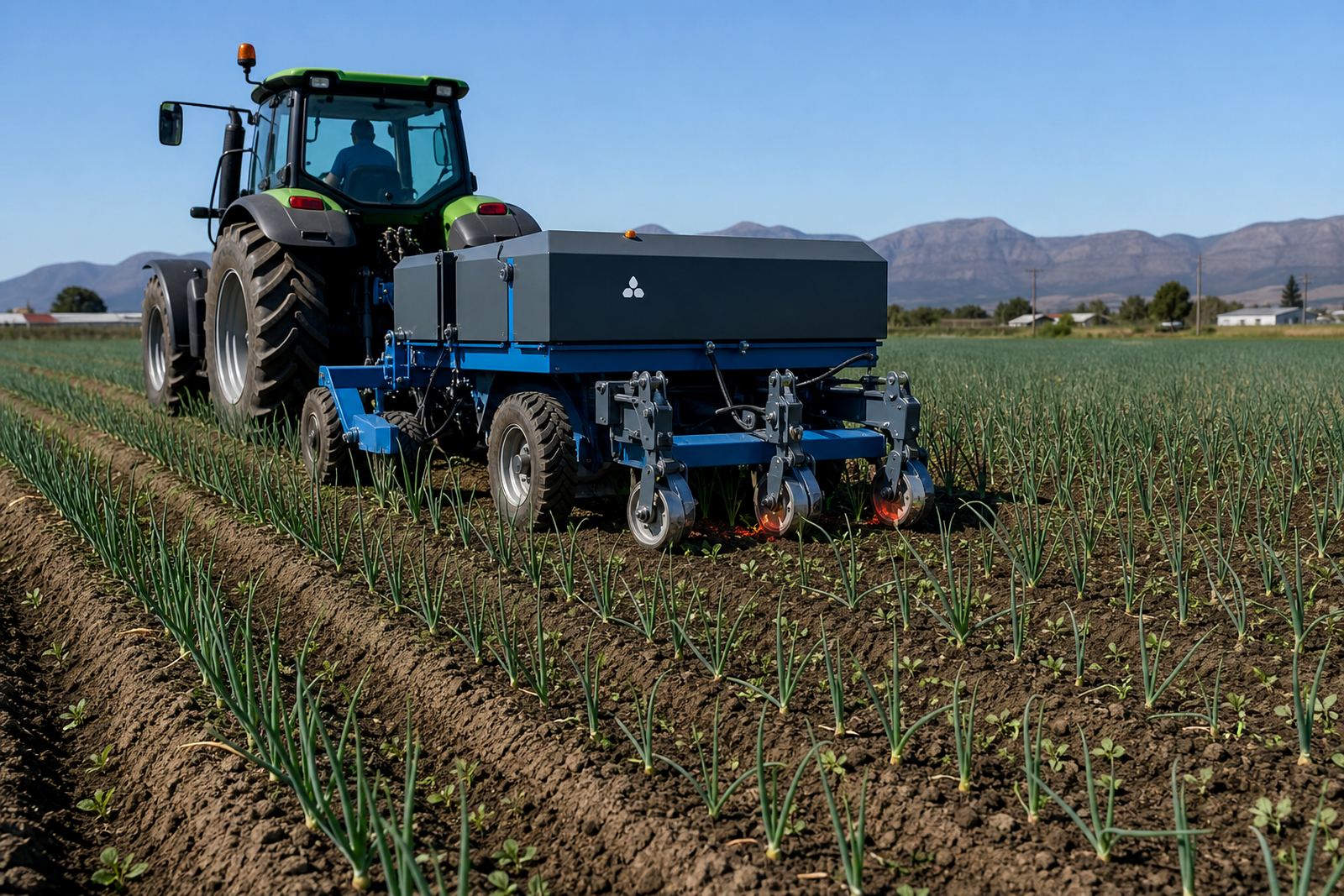
Laser weeding is strongest when the crop is mapped cleanly and the weeds are still small. Camera-guided systems detect the weed and the laser targets the growing point, so the job depends on spacing, emergence uniformity and how even the bed sits after planting. In onions, the crop itself can be delicate early on, so the field needs a tidy layout and sensible timing.
For growers in the Philippi area, sandy soils and wind can dry the surface fast after irrigation. That matters because a field that looked workable on Monday may have crusted or changed by Wednesday, and the weed flush can move quickly after a light rain or a pivot cycle.
What a field walk should check before an onion programme is booked
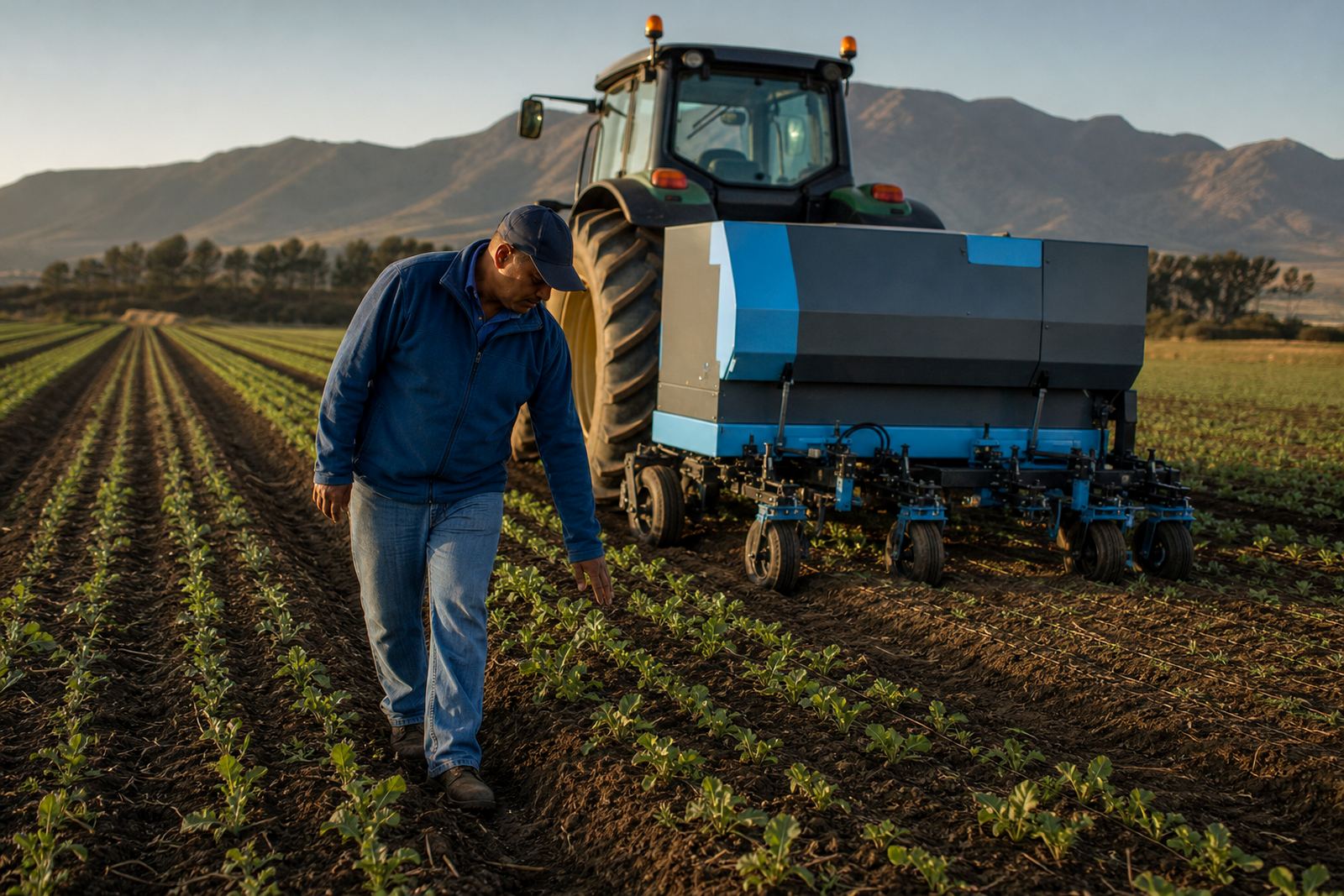
A proper field assessment starts with row position and plant stand. If the rows wander, if gaps are heavy, or if transplants have leaned, the laser unit has to work harder and the operator must slow the pass. That can change the practical schedule for the block.
- Row spacing must be consistent enough for tractor travel and camera recognition.
- Bed edges should be firm, with no washouts or soft patches that pull the tractor off line.
- The crop stage should suit laser work without risking tender onion necks.
- Weeds should still be at a manageable stage, not tangled into the crop canopy.
- Headlands need enough turning space for the tractor-drawn unit and support vehicle.
Our field assessments also look at irrigation lines, spray marks that may already be on the crop, and the places where a row starts to crowd. Those notes help shape the crop timing plan and the repeat pass planning where more than one visit is needed in a season.
Timing matters more than volume when weeds are small
Onion fields are not usually judged by how many weeds can be seen from one point. The real question is whether the weed flush is at the right size for laser targeting. Small weeds are easier to hit cleanly because the growing point is still concentrated and the crop is less likely to be affected by the pass.
Field speed changes with weed pressure. A lighter block can be worked at a steadier pace, while dense patches need more caution and a slower pass so the camera and operator can keep the row reading cleanly. That is normal on commercial farms and it is one reason travel coordination and arrival site checks matter before the tractor rolls in.
- Early flushes are often the best candidates for a laser pass.
- Older weeds may need a different plan or a follow-up pass.
- Mixed-size weeds in one row can slow the block and alter field scheduling.
- Wet leaves, dust or residue can affect visibility in the working zone.
Weed stage is not a guesswork point. A field with small broadleaf weeds between onion rows is one thing, while a patch with grass weeds and scattered escapes around the crop base is another. The method is the same in principle, but the practical pass plan is not.
Row crops like onions fit the process, but the layout must be honest
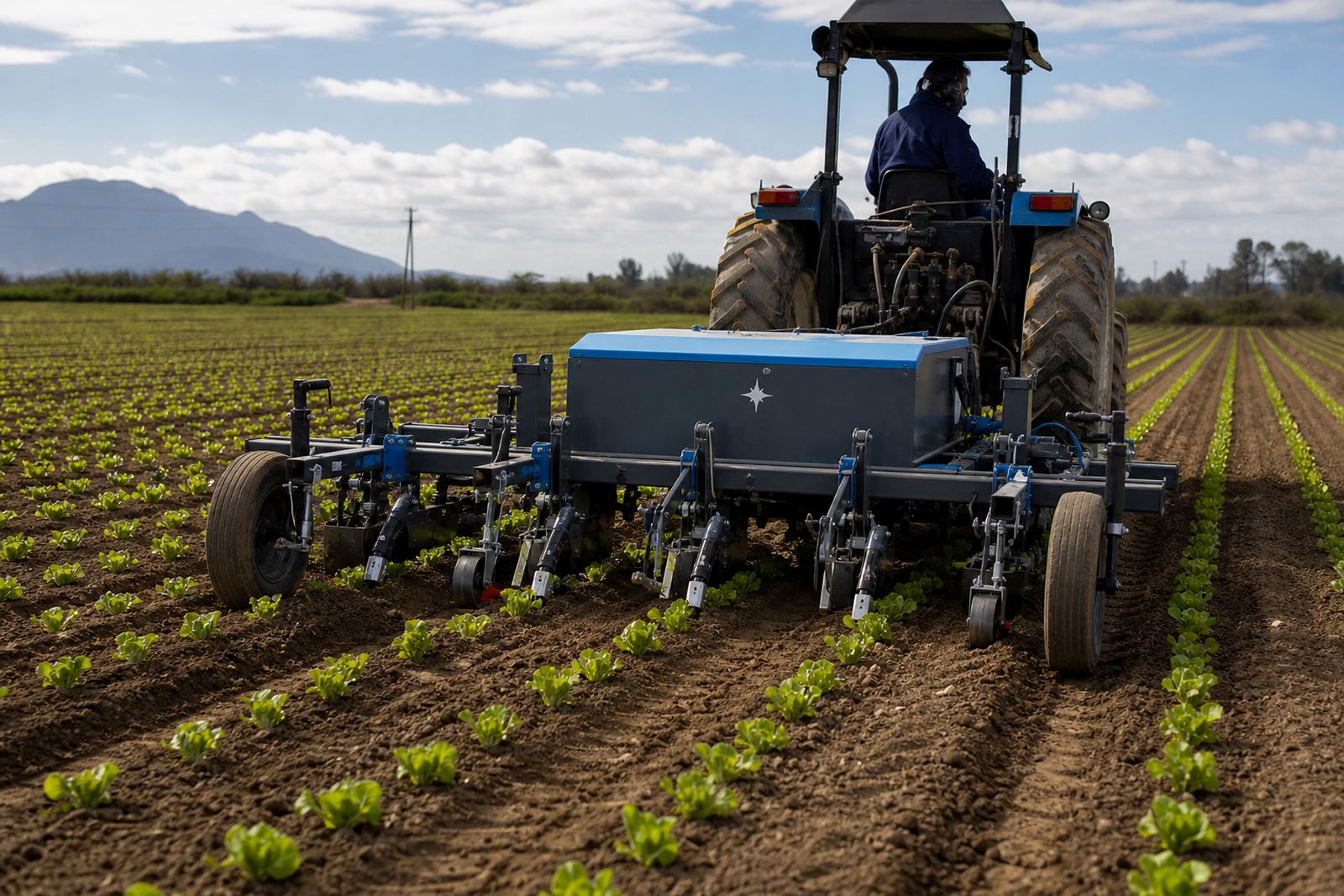
Onions sit well within the broader group of row crops suited to contract laser weeding, along with carrots, lettuce and brassicas. The common thread is orderly spacing and enough room for the tractor-drawn unit to move without disturbing the bed.
In onions, the crop canopy stays open for a long stretch, which is useful for weed detection, yet the open canopy also exposes the row to pressure from sun and wind. That means the operator and grower need to agree on the block by block plan, not only the season plan. A single farm can carry different row widths, different planting dates and different weed histories across the same week.
On a mixed vegetable farm near Grabouw, for example, one onion block may be clean enough for a straightforward pass while another block sits on slightly uneven ground after a rain event. In that case the scheduling lead may split the work, then set the order so the easier block goes first and the more awkward block gets the slower treatment it needs.
What contract laser weeding can do for onion growers without changing the ground
The appeal for onions is not only the weed knock-down. It is also the fact that the process is herbicide-free and does not disturb the soil. That matters where growers want to keep the surface stable, avoid bringing up new weed seed and reduce stress around shallow roots.
Because the unit is tractor-drawn, it fits into normal farm logistics and can be scheduled around irrigation, harvesting and labour plans. The operator supplied service is useful where the farm team does not want to take on specialist equipment handling or where a multi farm programme needs one trained crew across several blocks.
- Field scheduling can group onion blocks by locality and weed stage.
- Trial strip runs help test a section before a full pass is booked.
- Post pass reporting records what was seen in the row and around the headlands.
- Repeat pass planning supports fields that flush again after irrigation or rain.
For growers in Limpopo, Mpumalanga, KwaZulu-Natal or the Free State, the same principles apply even when climate and planting windows differ. A cooler site near Bethlehem may hold moisture differently to a warmer block near Tzaneen, but the key questions stay the same: row order, weed stage and practical travel through the field.
A useful onion brief starts with field reality, not wishful thinking
The best onion programmes are built on what the block actually looks like under tractor conditions. That includes row width, plant size, weed density, access roads and the distance between farms when a season booking covers several properties.
Mandla Adonis leads our Philippi, Cape Town base with a team that includes Anele Khoza on operations, Pieter Mokoena on field scheduling, Zanele Naidoo on grower liaison, Johan Daniels as lead operator, Lerato Letsoalo on service coordination and Ruan Mkhabela in the workshop. That team structure helps keep the work practical when a grower wants assessments, crop timing plans, arrival site checks or a multi farm programme across different provinces.
If your onion block is at an early weed stage and the rows are laid out with enough room for the tractor-drawn unit, contract laser weeding may fit neatly into the season plan. If the field is uneven or the weed flush is too advanced, the honest answer is to adjust the timing rather than force the pass.