Big blocks do not run like small fields
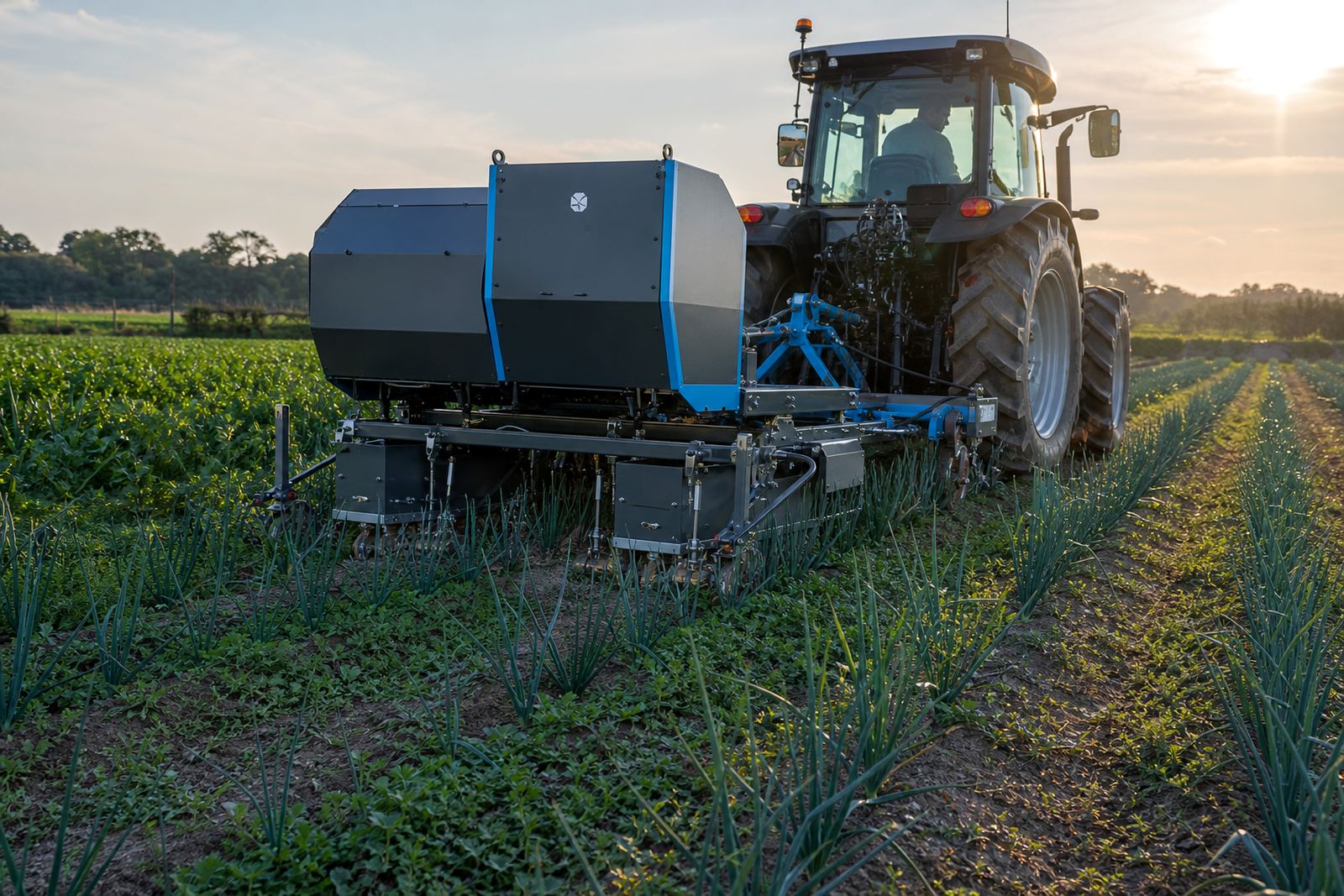
On a larger commercial vegetable block, the work is shaped by distance as much as by weed pressure. A tractor-drawn laser unit can cover a fair stretch of ground, but the day still turns on gate access, headlands, turning room and the order in which blocks are tackled.
That is why large bookings need a field plan, not only a date. If onions sit beside brassicas, or carrots are at a different stage from lettuce, the sequence has to match the crop and the weed flush. A run that looks straightforward on paper can slow down if the first block has wet corners, narrow access or mixed row spacing.
For larger farms around Philippi, Ceres or Grabouw, the aim is to keep the machine moving while protecting the crop rows. On blocks with good layout, the pace is steadier. On tighter ground, the work has more stops for line checks, turning and operator sighting.
Routing matters before the tractor enters the field
With multi block bookings, routing is part of the job, not a side note. The travel plan has to fit the farm layout and the wider regional run, especially when the same crew is moving between production areas in the Western Cape, Limpopo, Mpumalanga, KwaZulu-Natal and the Free State.
A sensible route can reduce wasted road time and keep the operator fresh for the field work that follows. It also helps when a farm has several blocks at different growth stages. One block may be ready for a first pass, while another needs a little more growth before the laser can read weeds cleanly among the crop.
- Block order is set around crop stage, weed stage and access.
- Headland space matters for tractor turns and clean line work.
- Travel timing has to fit road distance, not only field size.
- Wet patches and soft corners may change the sequence on the day.
Pacing changes with weed pressure and crop stage
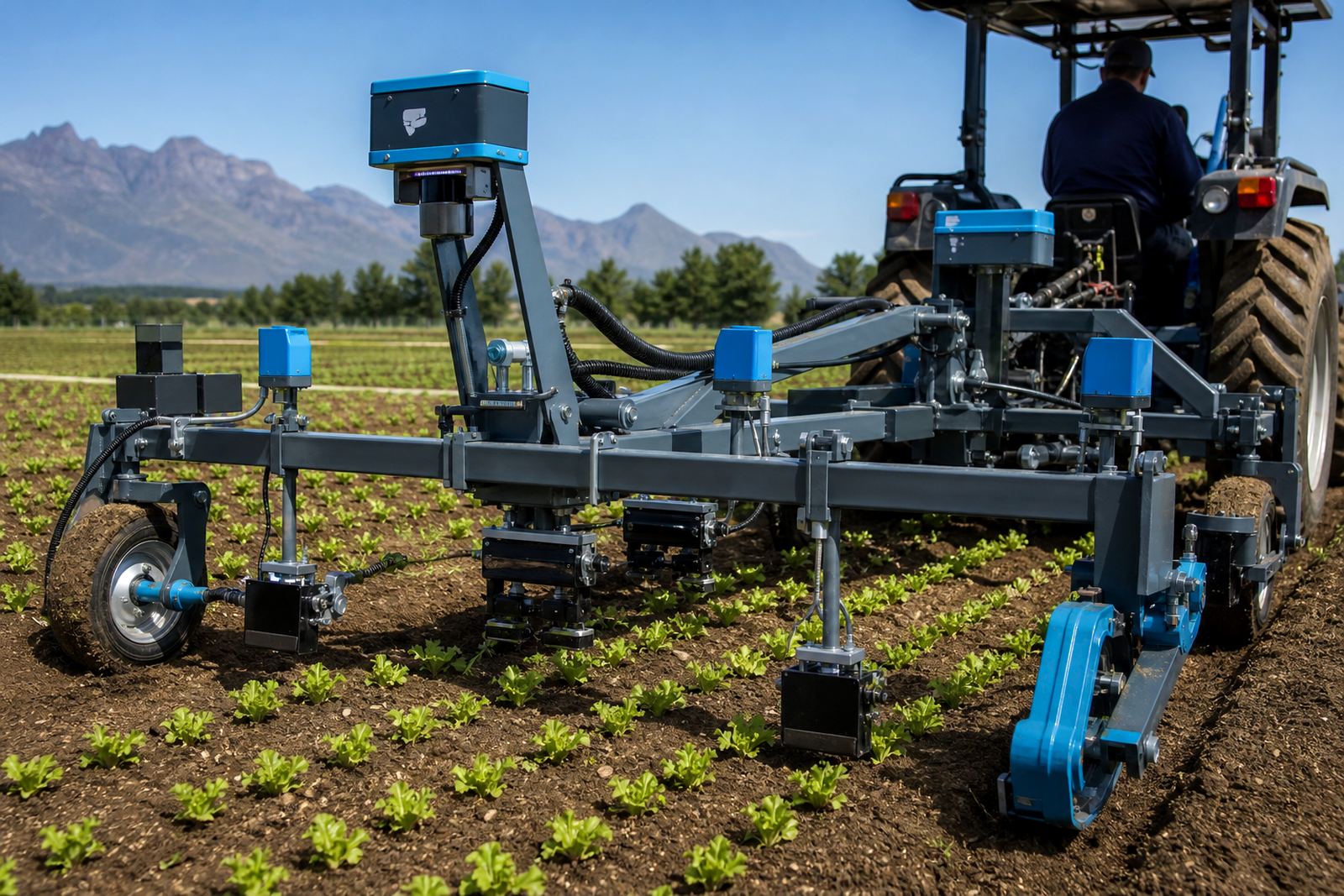
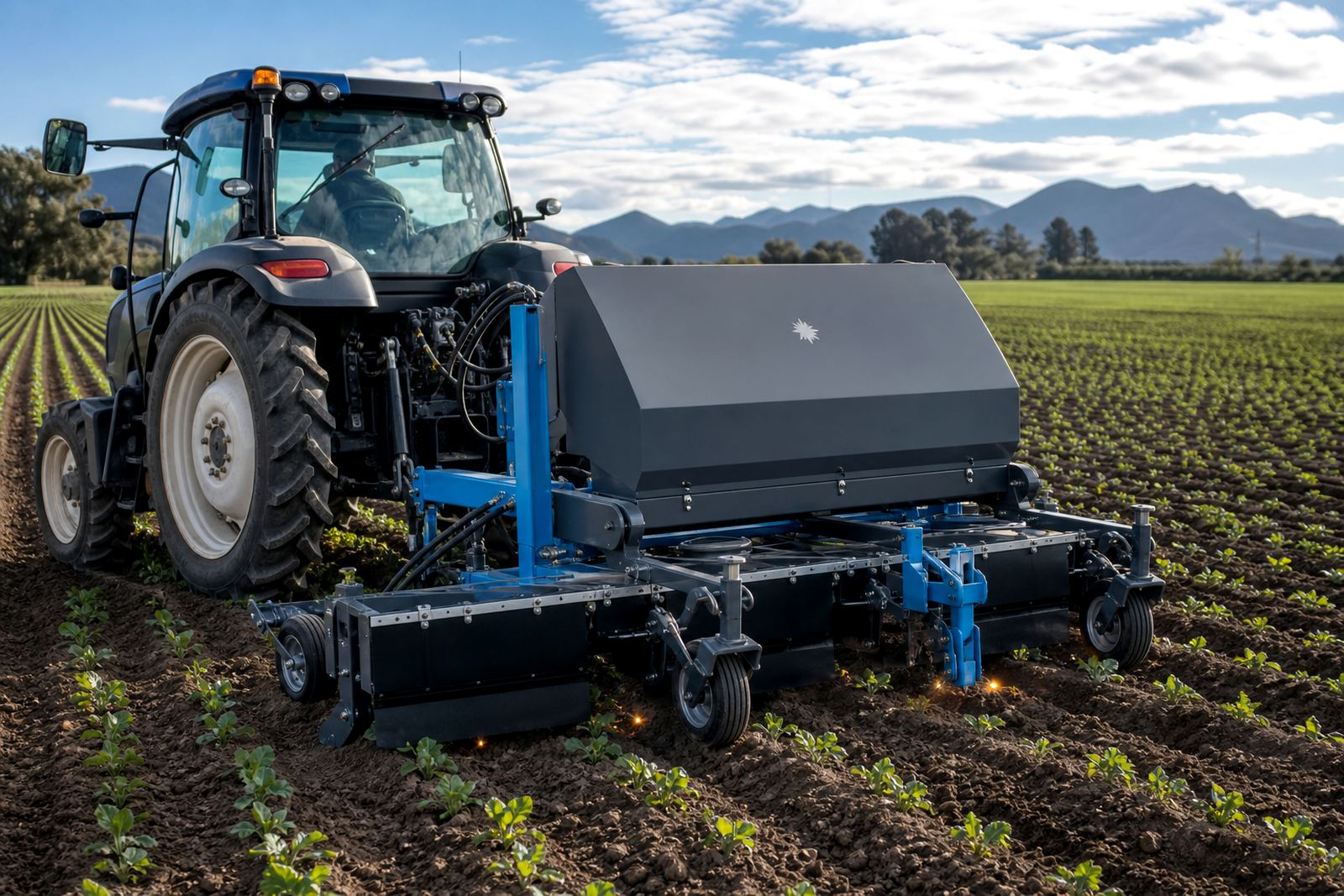
Laser weeding works best when weed growth is at the right stage for detection and targeting. The camera-guided system reads the weeds, then the lasers target the growing points. That means a lightly weedy block can move differently from a block with heavier pressure, even when the hectares are similar.
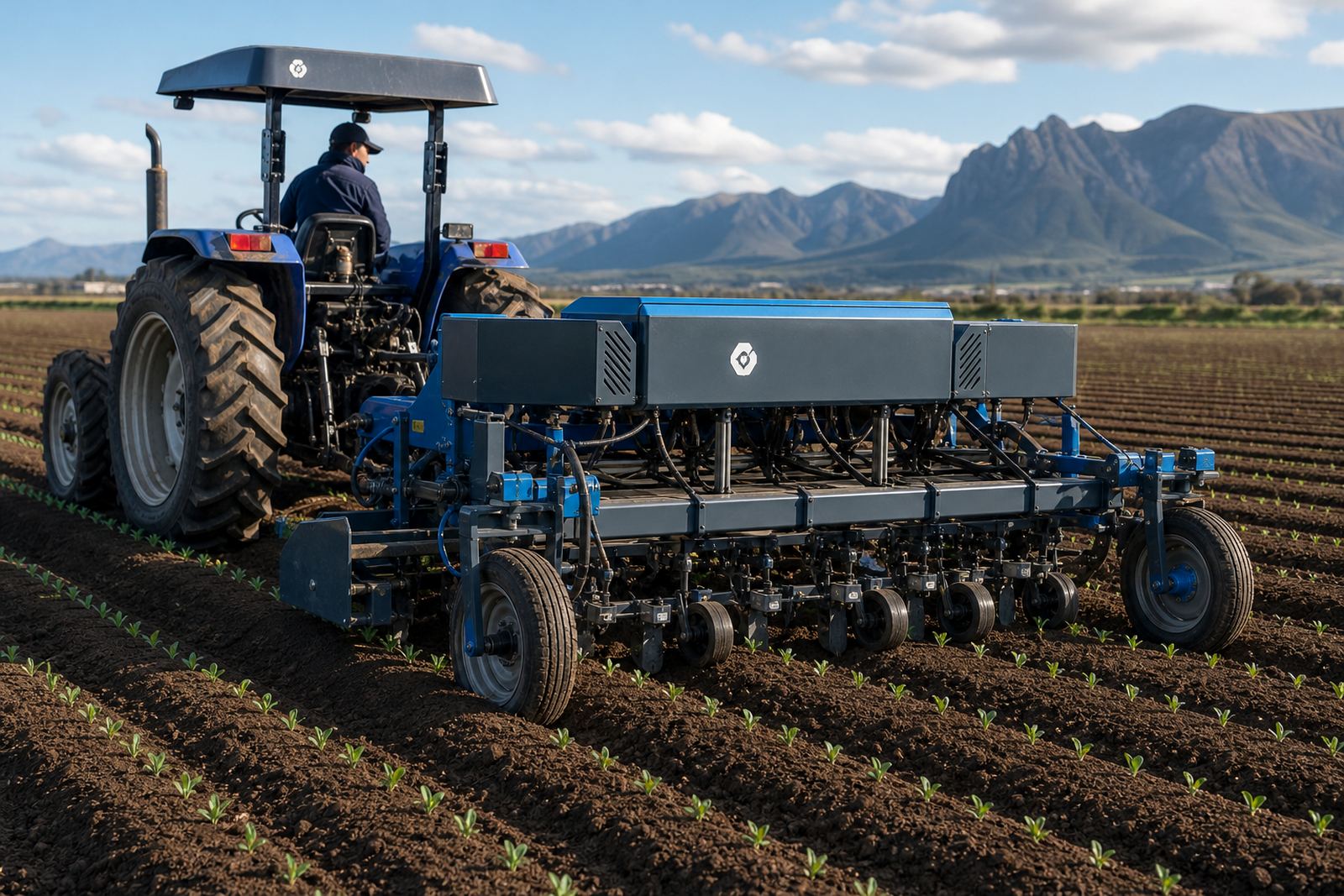
At a larger scale, pacing also depends on crop spacing and canopy cover. Row crops such as onions, carrots, lettuce and brassicas each bring their own timing window. If the crop is still open and the weeds are small, the run can be more fluid. If the weeds have grown on, the operator may need to move more carefully through the rows.
This is where timing plans earn their keep. A first pass on one block may open the way for a cleaner second run later in the season. Miss the weed stage, and the pacing changes fast.
What changes on a multi farm programme
Large block bookings often sit inside a wider programme. One grower may want several farms included, or one base block may feed a set of satellite fields that all need the same timing logic. In that case, field scheduling becomes the core of the service.
For growers in places like Tzaneen, Bela-Bela, Nelspruit, Howick and Bethlehem, the local distance between farms can be a real factor. The team has to plan arrival site checks, operator supply, travel coordination and repeat pass planning so the day stays orderly.
- Field assessments help match the machine to the crop stage.
- Crop timing plans keep the work aligned with weed emergence.
- Arrival site checks look at gates, access tracks and turning space.
- Post pass reporting gives a clear record of what was covered.
Why soil disturbance stays low on larger blocks
One reason growers move to laser weeding is the lack of soil disturbance. The unit does not need to stir the soil, and that matters on prepared beds where structure and moisture are part of the crop plan. On a large block, that can help preserve the condition of the rows between passes.
There is also the herbicide-free aspect. For farms working around tighter residue requirements or rotation plans, the absence of spray changes the programme entirely. The job still needs timing and good operator judgement, but the field is not handled like a conventional spray block.
In coastal areas near Philippi and Grabouw, humidity can shift the weed flush and the feel of the ground. In drier inland areas, the timing can move another way. That is why a fixed route without crop checks often falls short on bigger bookings.
A Philippi example with several vegetable blocks
Picture a vegetable grower with separate blocks near Philippi and another set further inland. One set carries onions and carrots, while another has brassicas and lettuce at a different stage. A large booking for that spread cannot be treated as a single run from start to finish.
The practical route is usually to group by stage, then by travel line. If the first block has the right weed flush and open row visibility, it goes first. The next block may wait for the crop to settle or for weeds to reach a better detection stage. That kind of pacing keeps the work useful instead of rushed.
Mandla Adonis leads the business, with Anele Khoza on operations, Pieter Mokoena handling field scheduling, Zanele Naidoo on grower liaison, Johan Daniels as lead operator, Lerato Letsoalo in service coordination and Ruan Mkhabela supervising the workshop side. On a large programme, that mix matters because one missed detail at the gate can affect the rest of the day.
For growers, the value is in a booking structure that can hold several fields without losing field discipline. The machine, operator and routing all have to move together.