Speed is a field decision, not a fixed gear
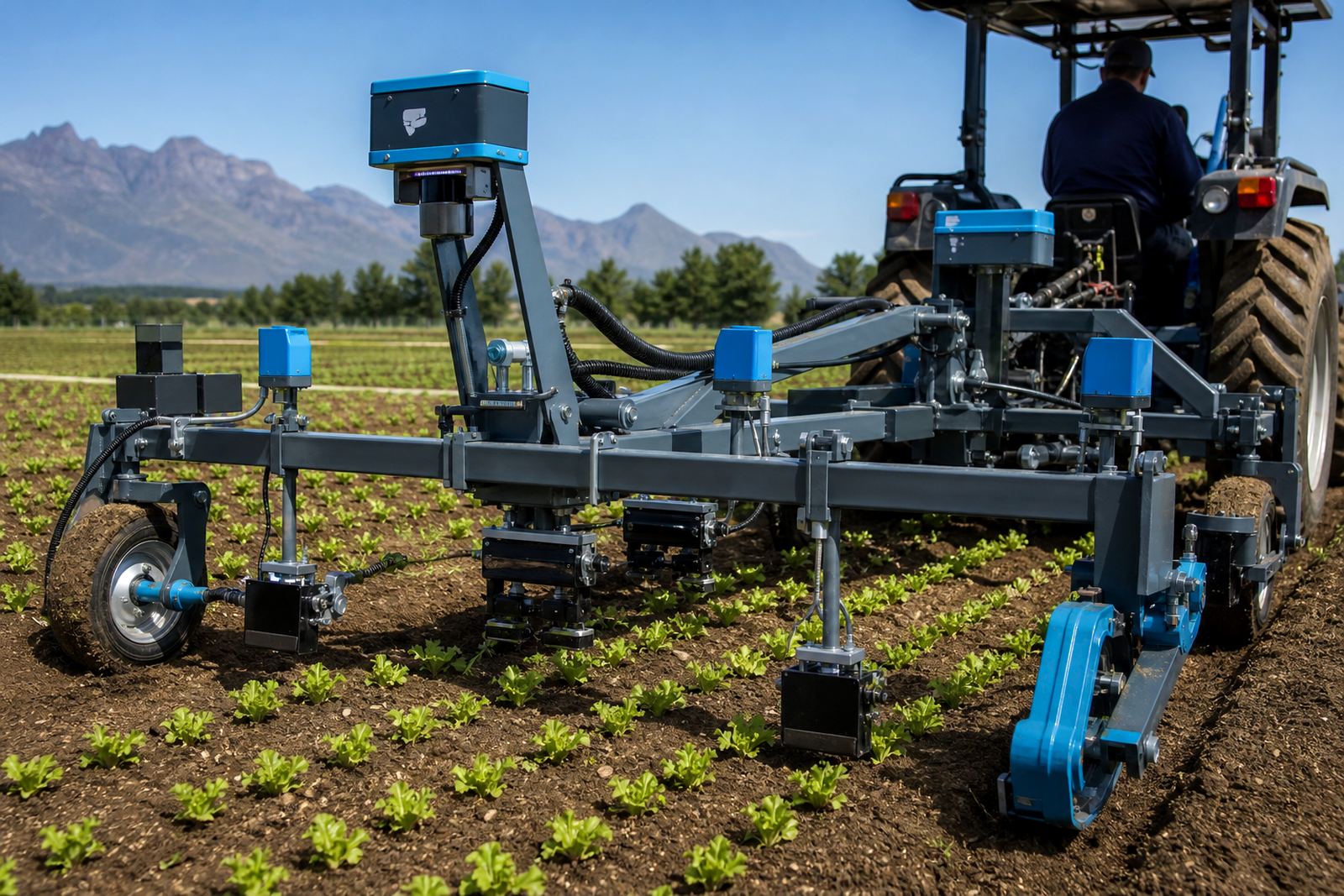
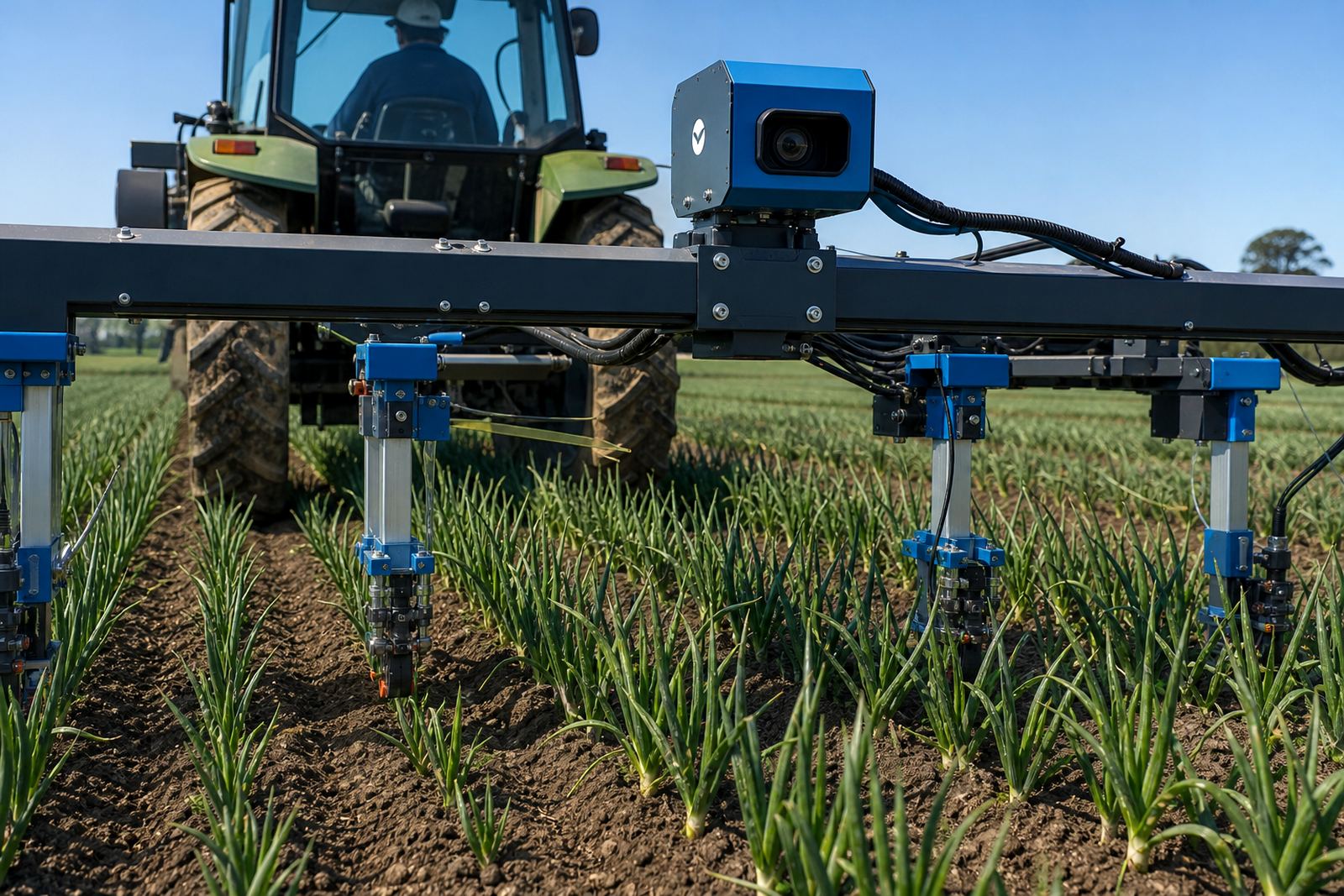
With tractor-drawn laser weeding, the unit is working at row level, not open ground. That means the operator has to keep the machine moving at a pace that gives the camera system time to read the row, find the weed growing point and fire accurately without touching the crop. If the field is light on weeds and the planting pattern is even, travel can stay steadier. When weeds are thicker or more mixed in size, the pace drops so the unit can keep up with what is actually in front of it.
The same farm can need different field speeds from one block to the next. A lettuce block with tight, even spacing is handled differently from brassicas with wider rows and more variation in canopy. Onions and carrots often sit in long, straight runs, but the surface condition still matters. Wet headlands, soft beds and ruts can force a slower pass because the tractor needs to hold its line while the laser unit stays centred on the crop row.
Weed stage changes the pace more than most growers expect
Laser weeding works best when the weeds are still at an early stage. Small weeds are easier to detect and the beam can target the growing point with less time spent on each plant. Once weeds have put on bulk, or when there are several flushes across the same block, the operator spends more time reading the row and the pass can slow down. That is normal. It is part of making the tool match the field rather than forcing the field to match the tool.
- Seedling weeds are usually easier to read than tall or branching weeds.
- Mixed weed stages in one block often need slower travel.
- Wet patches and clods can reduce the working pace.
- Heavy residue or damaged rows can make the camera work harder.
Timing matters just as much as speed. A block that is treated at the right weed stage may move through neatly, while the same block left longer can need a more careful pass. That is why crop timing plans and field assessments matter before a season booking is locked in.
Row shape and crop layout shape the working pace
Laser systems are strongest where the crop is planted in clear rows and the spacing stays regular. Straight, open rows give the operator a cleaner view, while tight turns, short beds and uneven joins slow the pass. On farms around Philippi and Ceres, for example, long vegetable beds often allow a more even rhythm than blocks with broken headlands or frequent gate crossings. The machine still needs room to enter and leave each run without scraping beds or drifting off line.
Crop layout also affects how much checking is needed. If the crop is young and the stems are small, the unit can work closer in and the operator can keep a more even speed. Once foliage closes over the row, there is less visual room and the pace may need to drop. That is one reason growers ask for a trial strip run before the wider block is scheduled. It gives a real read on the field, not a guess from the edge.
Soil condition can slow the whole pass
Laser weeding is a no soil disturbance method, but the tractor still has to drive on the ground. That means soil condition matters a great deal. Loose sand, wet spots, wheel tracks and uneven beds all change how the unit tracks the row. In coastal areas, damp mornings and softer ground can make the first pass less predictable. In hotter inland blocks, a crusted surface may hold the tractor well but leave more clods in the row, which can confuse the camera and force the operator to ease off.
- Soft ground can reduce wheel grip and alter alignment.
- Clods and crusting can make crop and weed edges harder to read.
- Standing water or muddy patches usually call for caution.
- Even bed preparation helps keep the pass more consistent.
Travel speed is not only about moving fast enough to cover hectares. It is about keeping the machine steady enough to do the job cleanly across the whole block.
A Philippi example with cabbage beds and young weeds
On a vegetable farm near Philippi, a block of brassicas may be ready after a dry spell followed by a flush of small weeds. If the rows are even and the soil has settled, the unit can work at a measured pace with the operator holding a clean line down the bed. If another section has patchy weeds after a recent irrigation cycle, the pace usually drops there so the system can read each plant more carefully.
That same farm may schedule different fields on different days. One block can be set for a trial strip run first, then a larger run once the row structure is confirmed. Another block may need a repeat pass plan because weed pressure has risen unevenly. This is where field scheduling and grower consultation matter. The work is not just about arriving with a machine, it is about matching the machine to the crop stage and the block conditions.
What growers should expect from a real field day
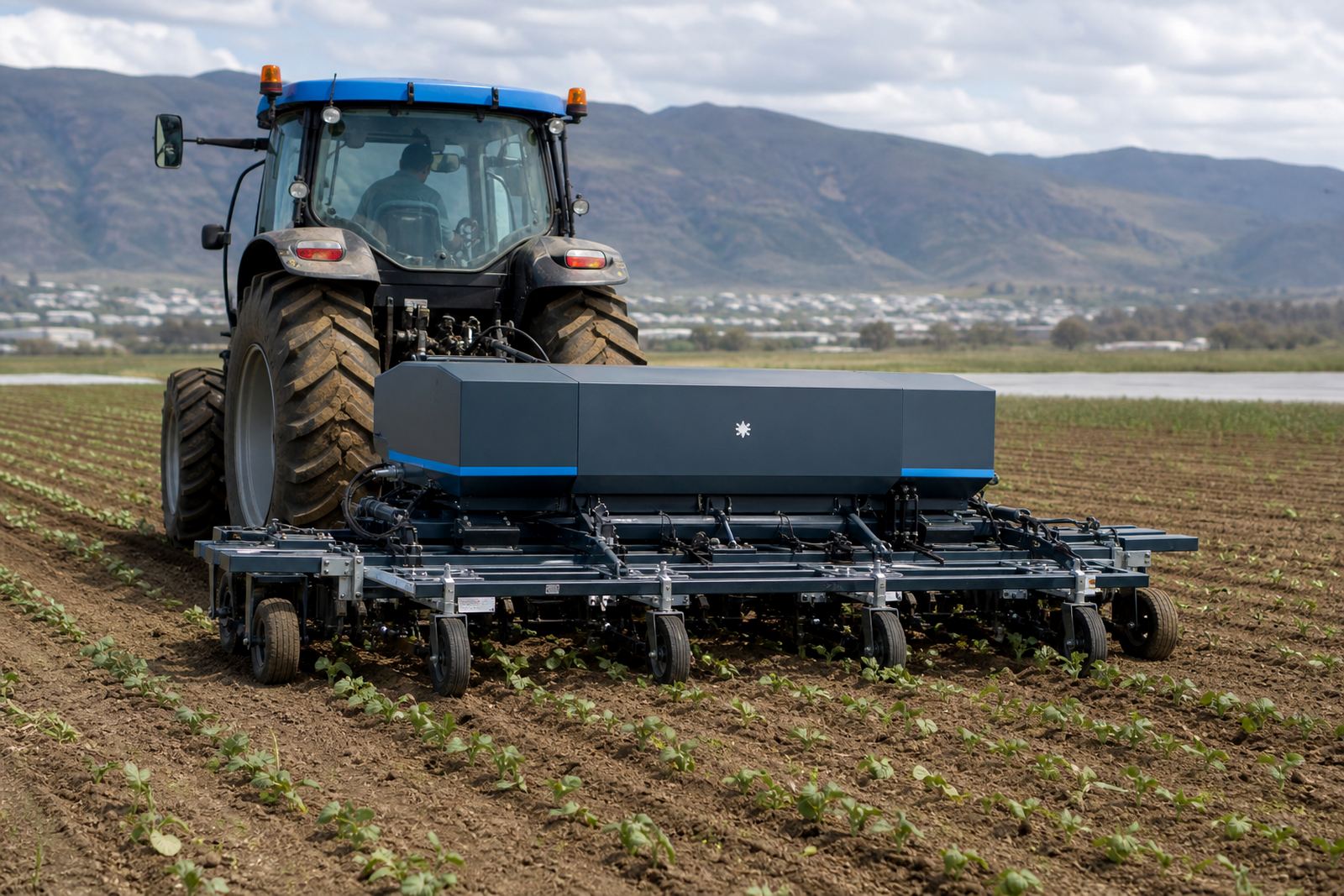
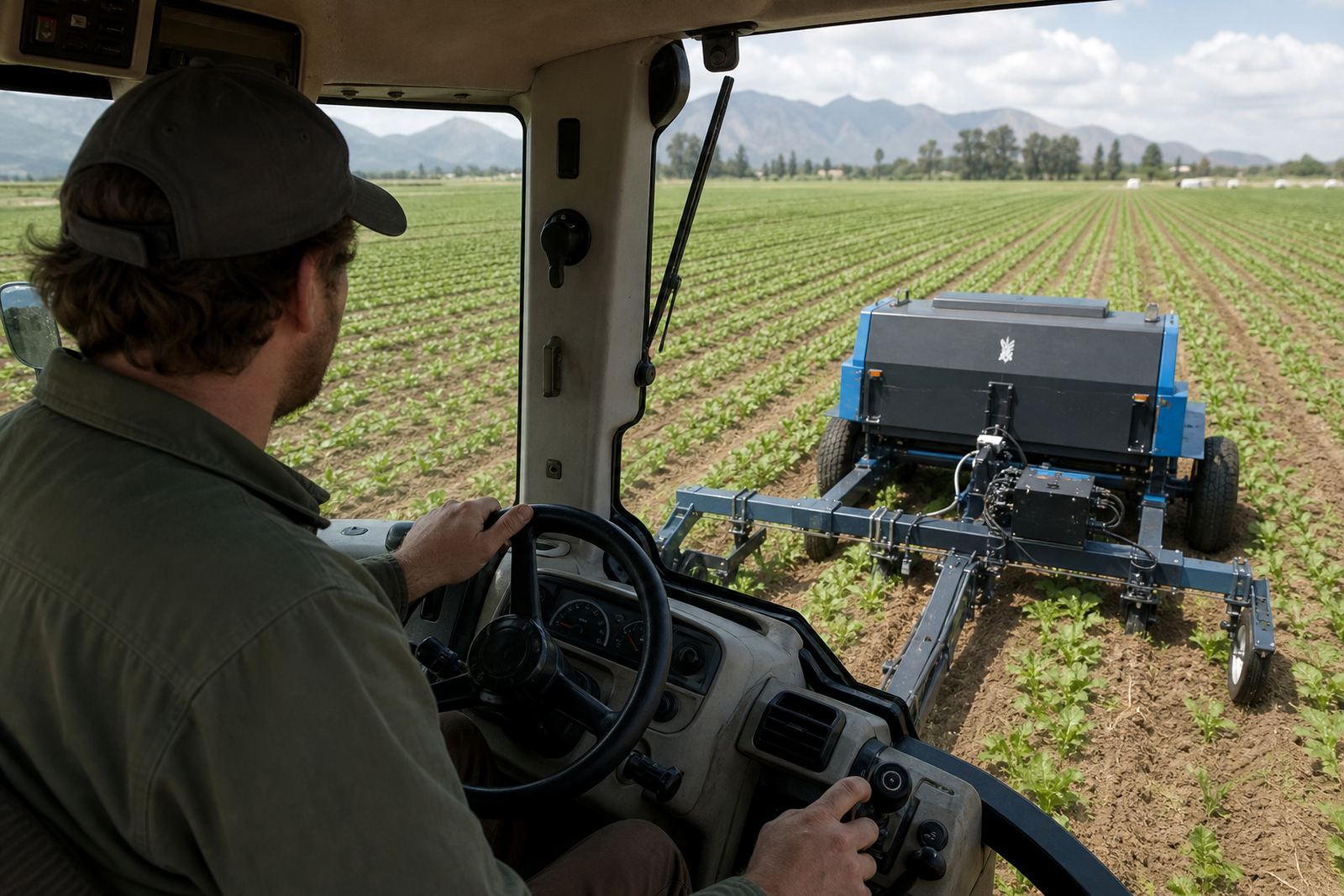
Field speed is best treated as a working decision, not a promise on paper. A trained operator will adjust the pace according to weed pressure, crop layout and the shape of the field. On some blocks the pace feels steady all morning. On others it changes from one run to the next because one section is clean and the next section has thicker weed pressure or a rougher surface.
That is the practical part of contract laser weeding. The unit is tractor-drawn, the operator stays in control, and the schedule can be shaped around the block rather than around a fixed number. For growers planning season bookings across the Western Cape, Limpopo, Mpumalanga, KwaZulu-Natal or the Free State, the useful question is not how fast the unit can go in theory. It is what pace the field can honestly support on that day without losing accuracy.
What matters more than top speed
Fast travel means little if the beam misses the weed growing point or the row drifts off line. In practice, the better question is whether the pass is timed to the weed stage and the crop is laid out in a way that lets the machine work cleanly. A slower run in the right window is often more useful than a rushed pass through poor conditions. That is why arrival site checks, post pass reporting and repeat pass planning are part of the service, not extra flourishes.
For growers, the main takeaway is straightforward. Field speed rises and falls with the block. Weed pressure, row clarity and soil condition decide it. The machine and operator adapt to that reality, because that is how herbicide-free laser weeding stays practical on commercial vegetable farms.