Route planning that fits real farm days
Travel coordination starts with the field list, crop stage, road access, and the distance between farms. For work beyond Cape Town, we map the movement of the tractor-drawn laser unit and the crew so the day follows a workable order, not just a map app route. That matters when a grower has onion blocks near Philippi and another block near Ceres, or when a multi farm programme links more than one district in the same week.
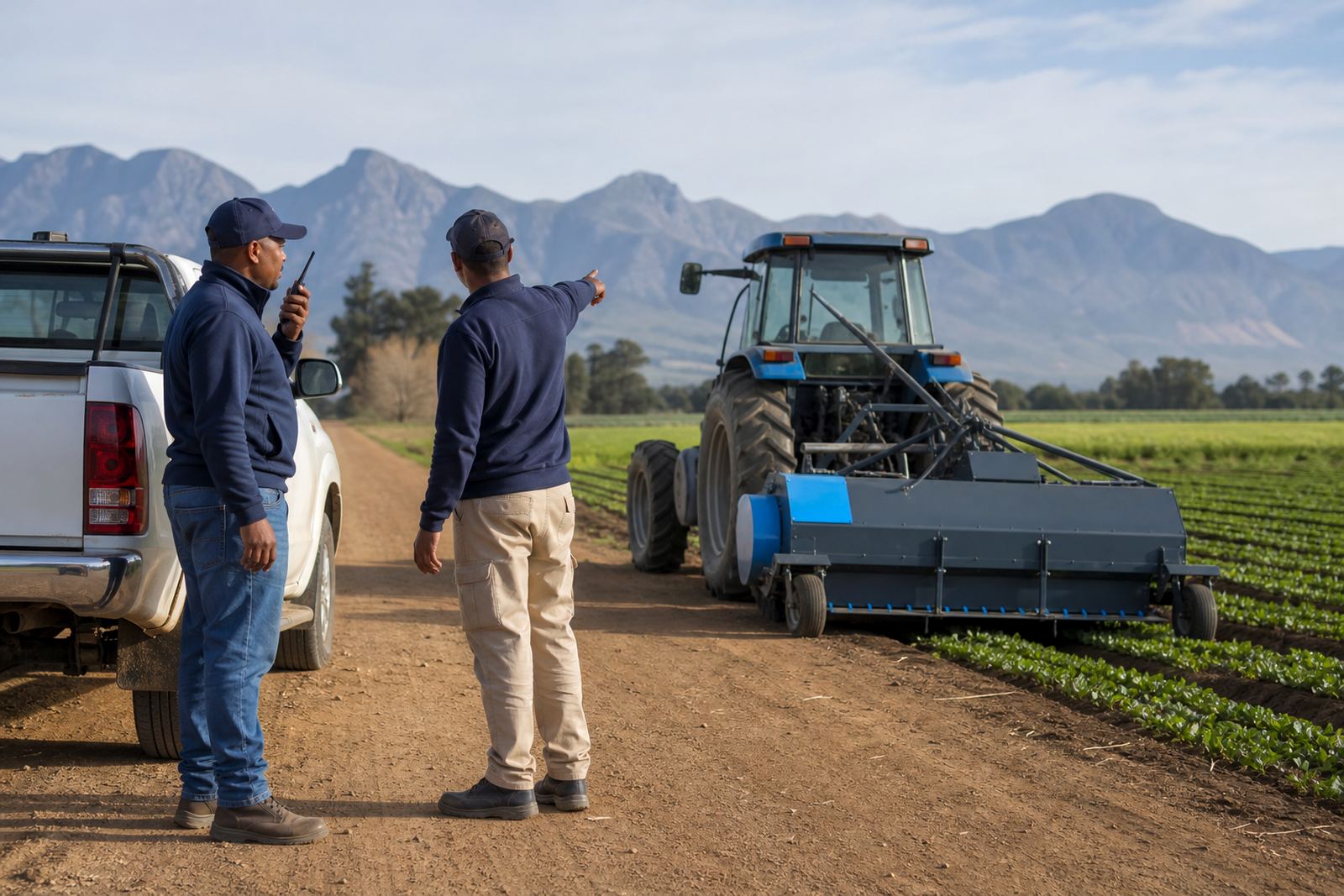
We look at where the unit can move safely, where turning space is tight, and which sites need earlier arrival for field checks. In windy coastal conditions or after rain, the sequence may shift to protect timing and access. The point is to keep the machine, operator and support vehicle moving in a sensible line between farms, with less standing around and fewer crossed instructions.
What travel coordination covers on a working programme
This service is for growers who need the work planned beyond one local site. It links the field schedule to the road plan and keeps each stop tied to the crop stage, not only to the kilometre count. We include site order, travel notes, and coordination for the operator supplied team where a single day has more than one block to cover.
- Routing between multiple grower sites in one region or across provinces
- Arrival site checks so the unit enters the correct block first
- Sequence planning for row crops such as onions, carrots, lettuce and brassicas
- Travel notes for tight farm roads, wet edges, and gate access
- Coordination for season bookings and repeat pass planning
- Support for trial strip runs where the first block sets the pace for the rest
We also take note of where the weed stage is ready for laser treatment and where another pass would be too early. That way travel does not pull the programme away from crop timing, which is the part that usually matters most.
How the moving parts are lined up
Before travel is locked in, we work through the practical side of the programme. The field scheduling lead checks the block list, the grower liaison confirms site details, and the operations team aligns the tractor-drawn laser unit with the day’s route. If there are several farms in Limpopo, Mpumalanga, KwaZulu-Natal or the Free State, the route is shaped around road distance, crop readiness, and the order that gives the cleanest working flow.
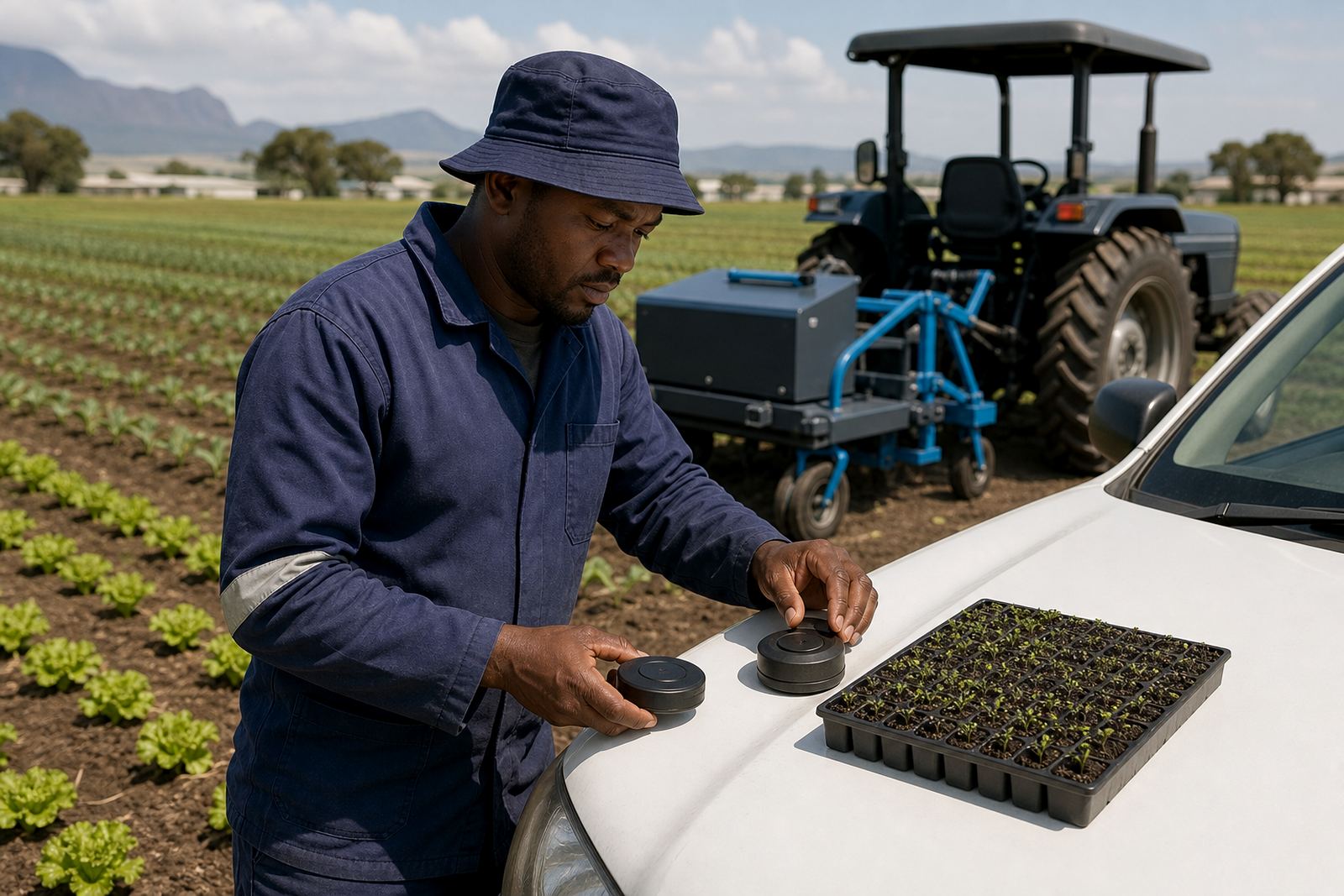
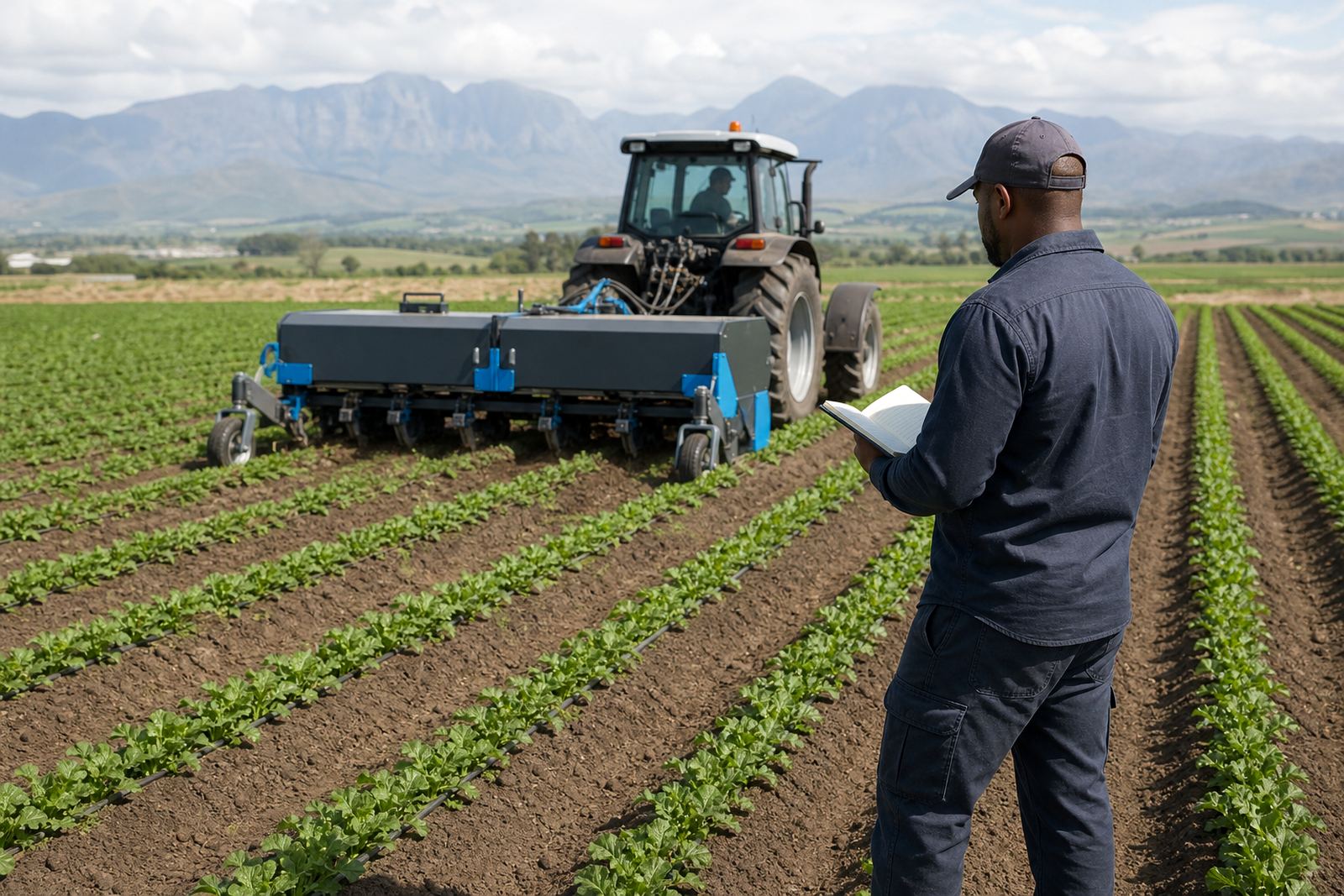
The laser weeding unit itself is normally used in row crops where weed pressure can build between plants and around stems. Camera guided detection helps identify weeds, while the lasers target the weed growing points without disturbing the soil. Travel planning supports that work by making sure the crew arrives with the right block in front of them, not the wrong one. Small changes in order can matter when one site is ready at a different weed stage from the next.
Where farm access is awkward, we note the gate, track width, headland space and any local rule that affects movement on the day. That keeps the handover at each site sharper and avoids scrambling once the unit is already on the road.
Pricing that follows distance and programme shape
Travel coordination pricing is normally tied to the shape of the trip rather than a flat guess. The main factors are distance from the Philippi base, number of sites, road time between blocks, whether the unit is staying on one farm or moving across several, and the amount of scheduling work needed around crop timing. Longer runs into the Western Cape interior, or north into other provinces, need more careful planning than a single coastal route.
We keep the pricing approach tied to the actual travel load, fuel movement and schedule complexity, because no two grower programmes look the same. If the work involves more than one district, the route often needs more site notes, more handover detail, and a tighter order for loading, travel and field entry. That is where the budget sits, not in guesswork.
- Distance from Philippi and the site spread
- Number of farms or blocks on the programme
- Route changes linked to crop readiness or weather
- Operator supplied travel requirements
- Extra coordination for trial strip runs or repeat pass planning
Aftercare once the route is done
After the route is complete, the service does not stop at the last gate. We keep the notes from the trip together with the field observations, so the next programme day starts from the same facts. That includes where the unit arrived, which block was treated first, and whether any site needed a different order the next time.
For growers managing several farms, aftercare often means tightening the next round of travel so the crew does not have to rebuild the route from scratch. If a site near Tzaneen, Bela-Bela, Nelspruit, Howick or Bethlehem needs a repeat pass, the earlier movement notes help shape the next booking. It is practical work, and it keeps the handovers cleaner for the field team and the grower.
We also use the trip notes to support grower consultation around later planning. If a block is too early, too close to harvest, or not worth loading into the sequence, that is recorded before the next movement is set.
Working from Philippi to the wider vegetable belt
The Philippi base gives us a practical starting point for routes into the Western Cape and beyond. Some programmes stay close to Cape Town, while others link several vegetable farms across provinces. Travel coordination keeps those movements tied to the crop and not to a generic schedule. When a grower needs the unit in Ceres one day and further inland the next, the route has to respect road time, field readiness and operator work limits.
Laser weeding itself is suited to fields where weed pressure is managed by timing as much as by machinery. The earlier the weeds are at the right stage, the better the route can be set around them. That is why travel planning is part of the service, not an add on. It helps the crew arrive where the crop is ready and the block order makes sense.
For growers across the country, the aim is straightforward: keep the movement organised, keep the field order sensible, and keep the tractor-drawn unit working where it is needed most.
Key facts
| Service area | Philippi, Cape Town base with travel across South Africa |
|---|---|
| Typical crops | Onions, carrots, lettuce and brassicas |
| Equipment | Tractor-drawn laser weeding unit with trained operator |
| Planning scope | Routing, site order, field notes and arrival sequencing |
| Travel support | Multi farm programmes, season bookings and repeat pass planning |
| Coordination focus | Weed stage, access, road distance and crop timing |