Season slots built around planting blocks
Season bookings are set up for growers with more than one planting date, or for farms where a block must be worked before the crop closes in. The booking covers the planned season window, operator supply and the farm sequence, so the work can move from block to block without last minute scrambling.
Laser weeding is best timed when weeds are at an early stage and the crop row spacing still gives the unit clear travel lines. Our team looks at crop type, row width, growth stage, field access and the weed pressure already in the ground before the season is fixed. That matters on onions, carrots, lettuce and brassicas, where timing can make the pass neat or difficult.
- Planned coverage for one farm or several farm blocks
- Field order set around crop stage and access roads
- Tractor-drawn unit and trained operator supplied
- Booking windows for repeated passes where the crop plan calls for it
What sits inside the booking
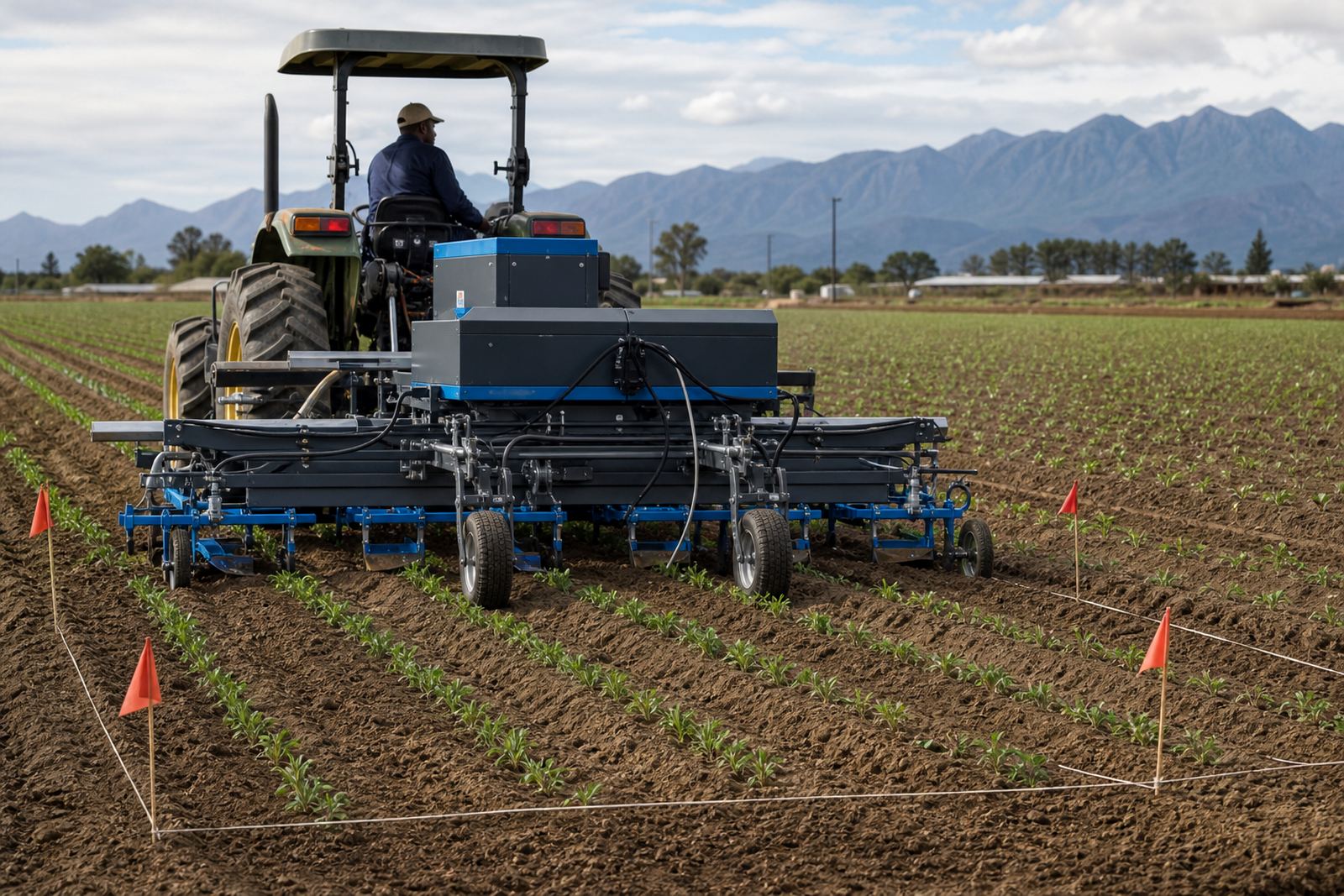
A season booking can include field assessments before work starts, crop timing plans, travel coordination and arrival site checks. Where a trial strip run is useful, we set one up first so the grower can see how the unit moves through the rows before the wider block is scheduled. If the season has many plantings across different farms, multi farm programmes help keep each visit in the right order.
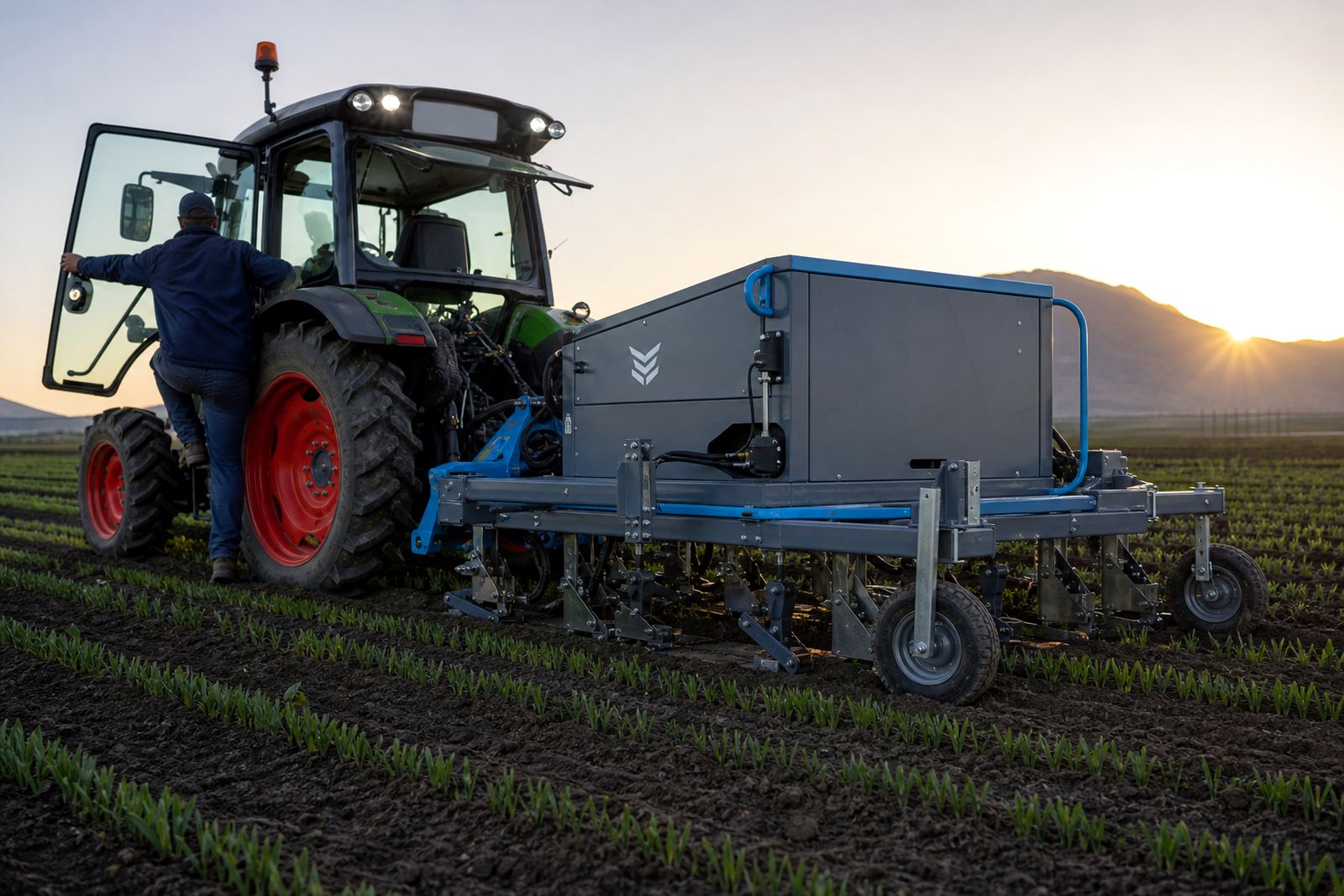
The work itself uses camera-guided weed detection and lasers aimed at the weed growing points. That lets the machine target weeds between and around crop plants without spraying herbicide over the bed. Because the unit is tractor-drawn, it stays in the field system the grower already uses, and it does not disturb the soil surface in the way a mechanical pass can.
- Field assessments and crop timing plans
- Trial strip runs where the crop situation needs checking
- Travel coordination for farms in more than one area
- Repeat pass planning where weed flushes are staggered
How the season is mapped
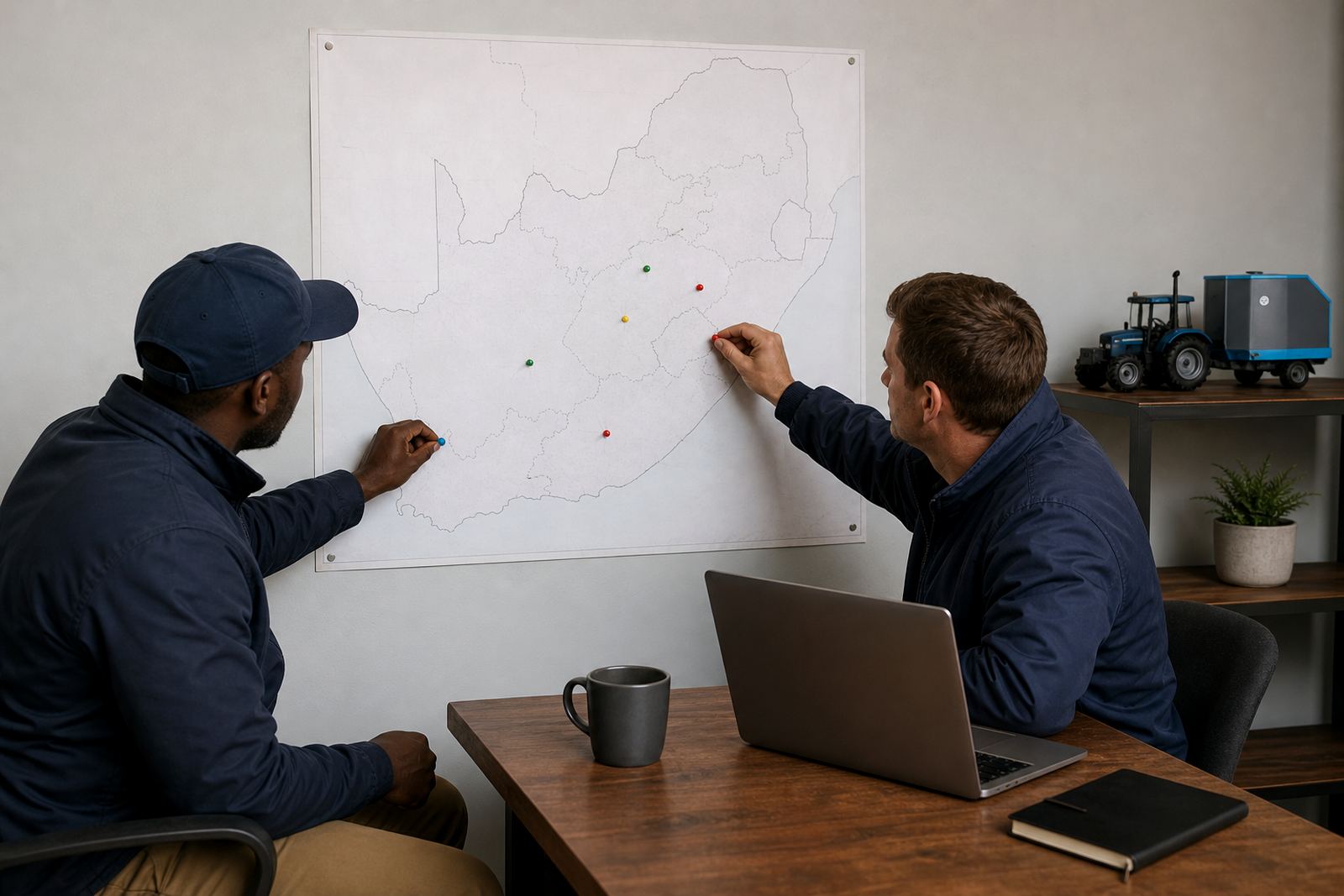
Scheduling begins with the crop calendar, not with the machine. We look at when each block is due to close over, when weeds are likely to be most vulnerable, and which fields can be entered first without causing avoidable delay across the programme. A season booking may cover one crop type or several, depending on the rotation on the farm.
For growers in Philippi, Ceres, Grabouw, Tzaneen, Bela-Bela, Nelspruit, Howick and Bethlehem, the route plan is built around farm access and the distance between blocks. Coastal humidity around the Western Cape can affect how weed flushes show up, while inland rainfall patterns can shift the work window from one week to the next. That is why the schedule is kept practical and flexible, not fixed on a guess.
- Block-by-block order for the planned season
- Weather and crop stage considered in the sequence
- Route planning for farms across several provinces
- Adjustments where weed pressure or access changes
Rate structure for booked work
Pricing for season bookings is set from the size of the area, the number of blocks, the travel pattern and the amount of operator time needed on site. A single block with good access is not priced the same as a programme that includes several farms, extra travel and repeat visits. Where a trial strip run or a formal field assessment is needed before the season starts, that is discussed as part of the booking structure.
Because the work depends on weed pressure, crop stage and the timing of each planting, the final cost structure is built from the actual season plan rather than a flat figure copied onto every farm. That is more useful for growers who need a proper working schedule in Rand and not a loose estimate that leaves gaps later.
- Area size and block count affect the price structure
- Travel distance is built into the programme plan
- Repeated passes are priced as part of the season if needed
- Assessment and travel items are listed separately where required
During the season, what the grower receives
Once the programme is set, the grower has a clear season plan showing which blocks are due first, what crop stage is being targeted and how the field work will move. After each pass, post pass reporting records what was done and what the field looked like at the time. That gives the grower a clean paper trail for the season, especially where several plantings are moving at different speeds.
The operator checks the crop row alignment, weed size and field conditions on arrival, then works the tractor-drawn unit through the agreed area. If the weeds are already too advanced for the most effective timing, the plan may need a fresh look before the next block is worked. No honest programme treats every field as identical, because it never is.
- Arrival site checks before work enters the block
- Post pass reporting after each scheduled visit
- Grower consultation where timing needs to shift
- Notes for later passes in the same season
Aftercare without fluff
Aftercare in a season booking is about keeping the plan usable as the crop moves. If one block comes away cleaner than expected and another needs a tighter window, the schedule is adjusted around that reality. The point is to keep the weed control programme practical, not to lock the farm into a rigid set of dates that no longer suit the crop.
Season bookings are used by farms that want contract laser weeding planned well before the pressure builds. If your crop mix shifts between onions, carrots, lettuce and brassicas, or if planting dates are spread across the year, a booked season gives the team room to line up the machinery, operator and travel without chasing each block separately. It is herbicide-free work, with no soil disturbance and no claim that every weed situation will behave the same way.
- Schedule updates when crop timing changes
- Follow-up planning for later weed flushes
- Support for multi farm programmes across regions
- Booked cover for the season rather than one isolated visit
Key facts
| Service area | Philippi, Cape Town and contract work across South Africa |
|---|---|
| Equipment | Tractor-drawn laser weeding unit with camera-guided weed detection |
| Operator model | Trained operator supplied with the unit |
| Best fit crops | Onions, carrots, lettuce and brassicas |
| Work style | Herbicide-free, no soil disturbance |
| Booking scope | Single farms, multi farm programmes and repeated pass planning |