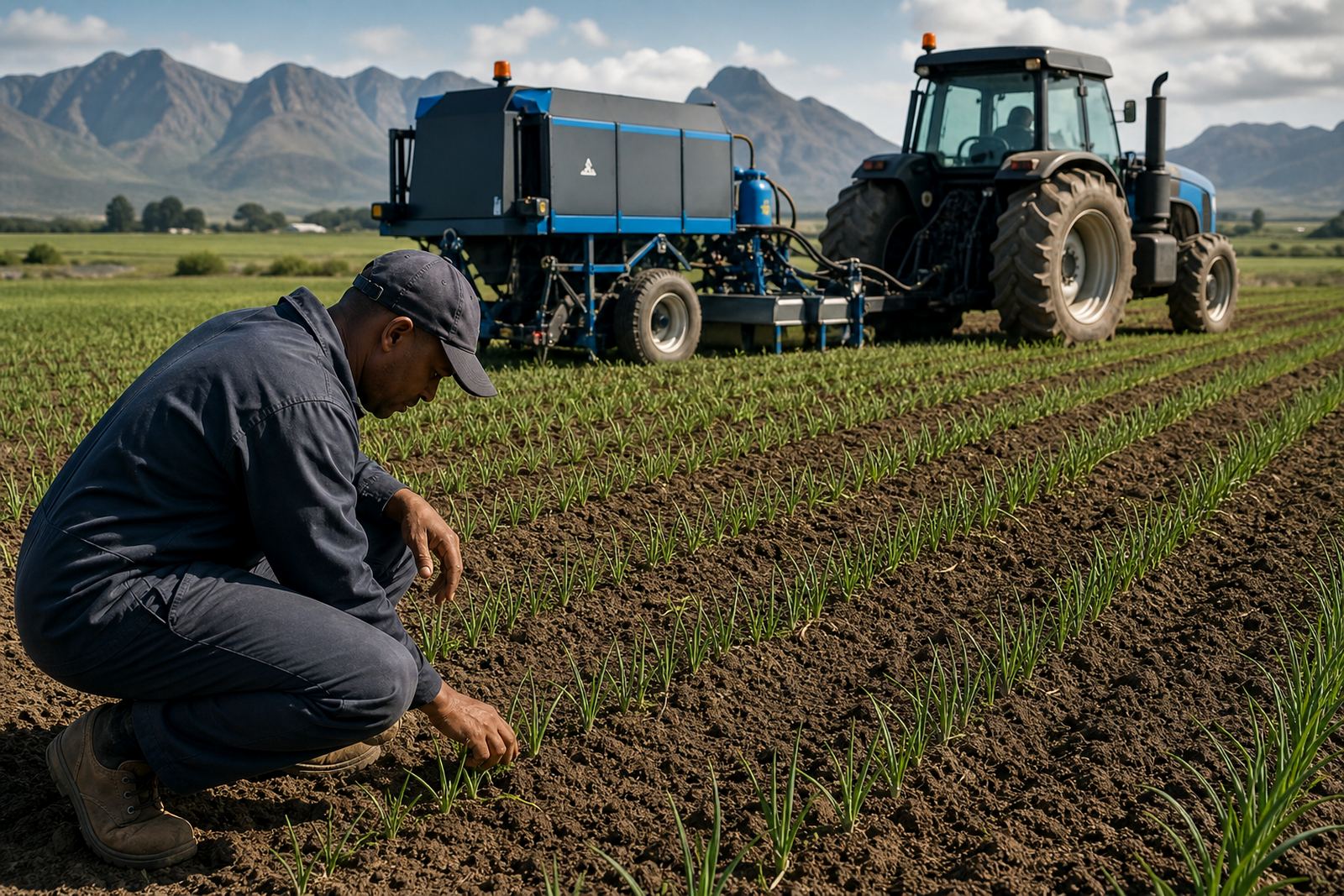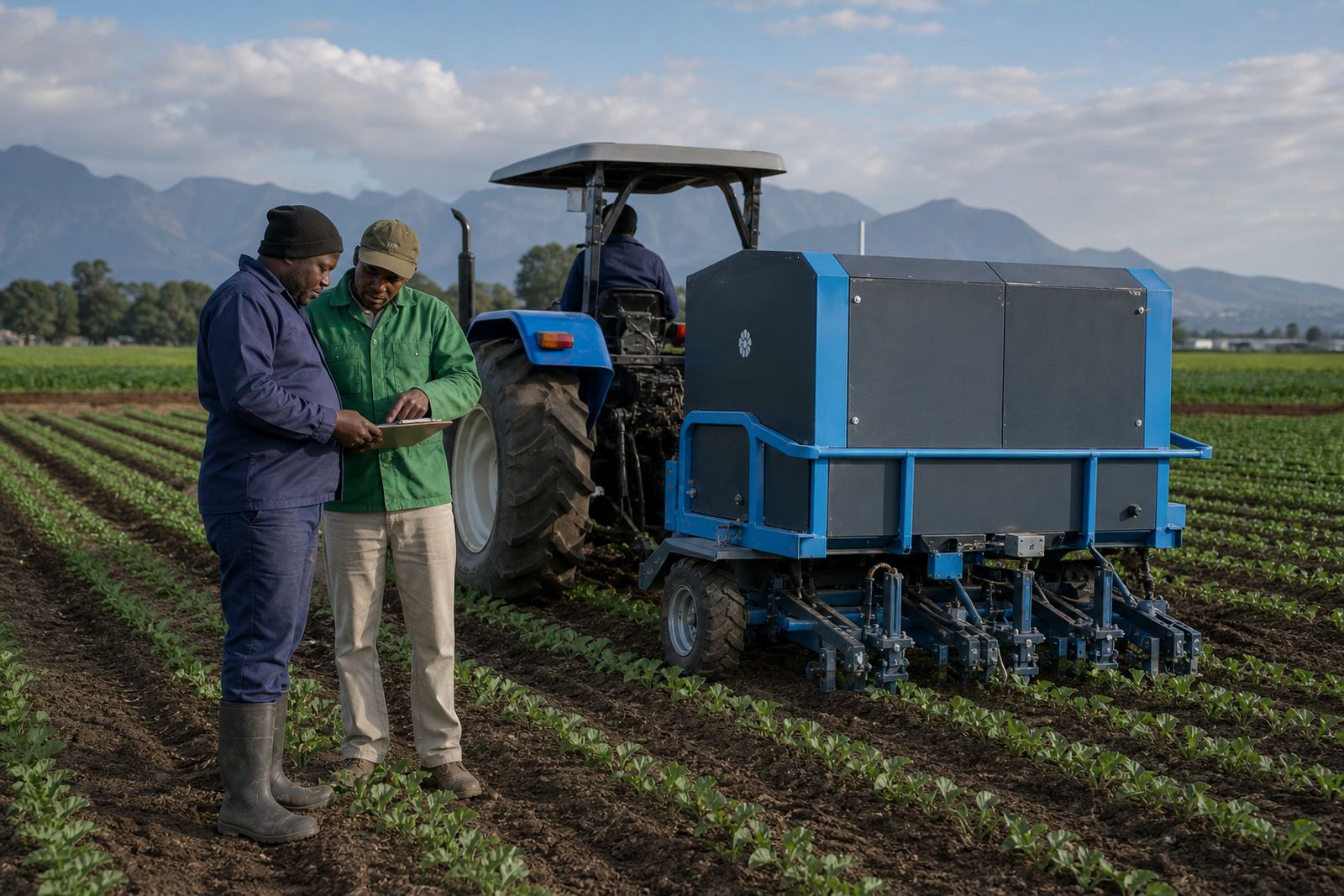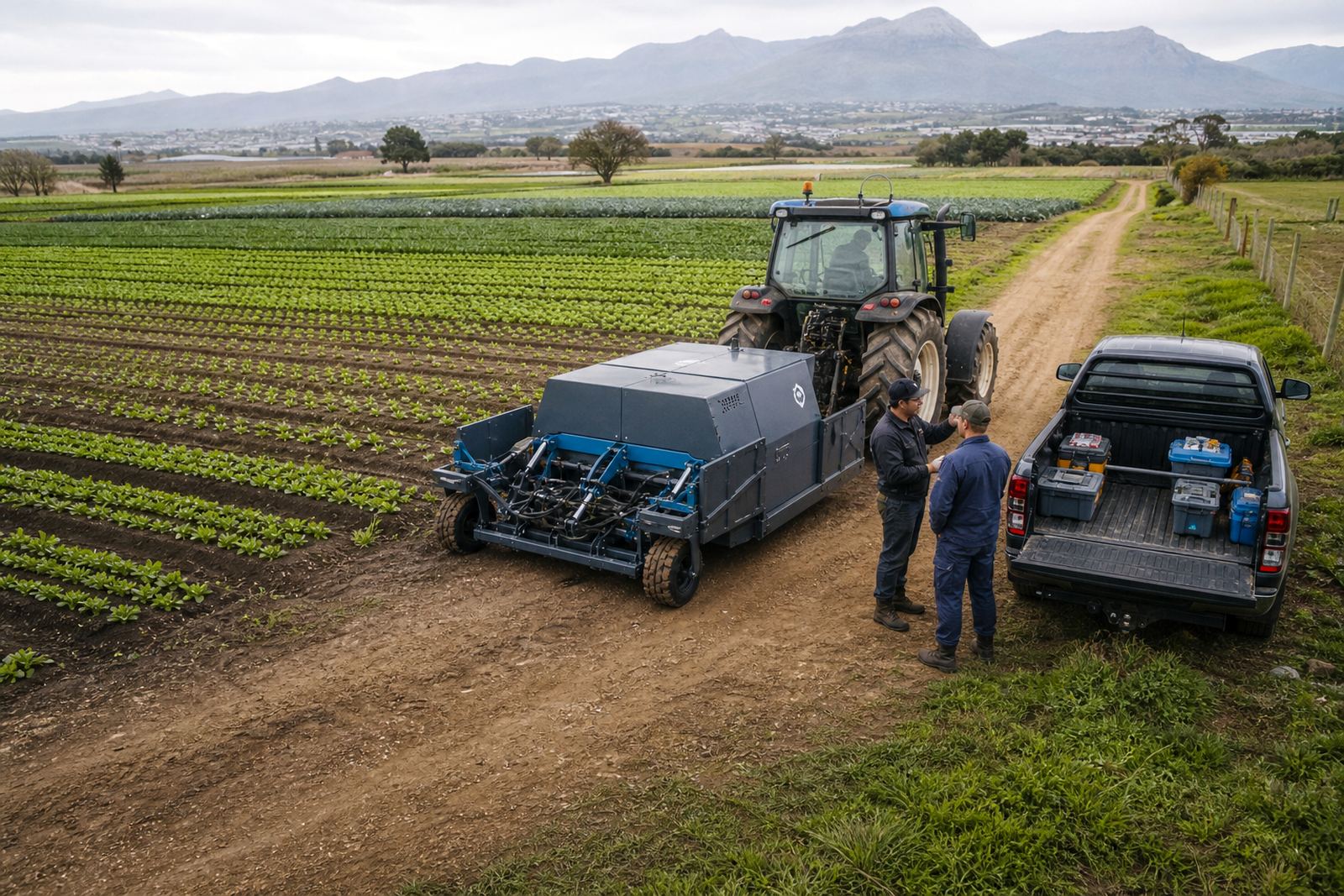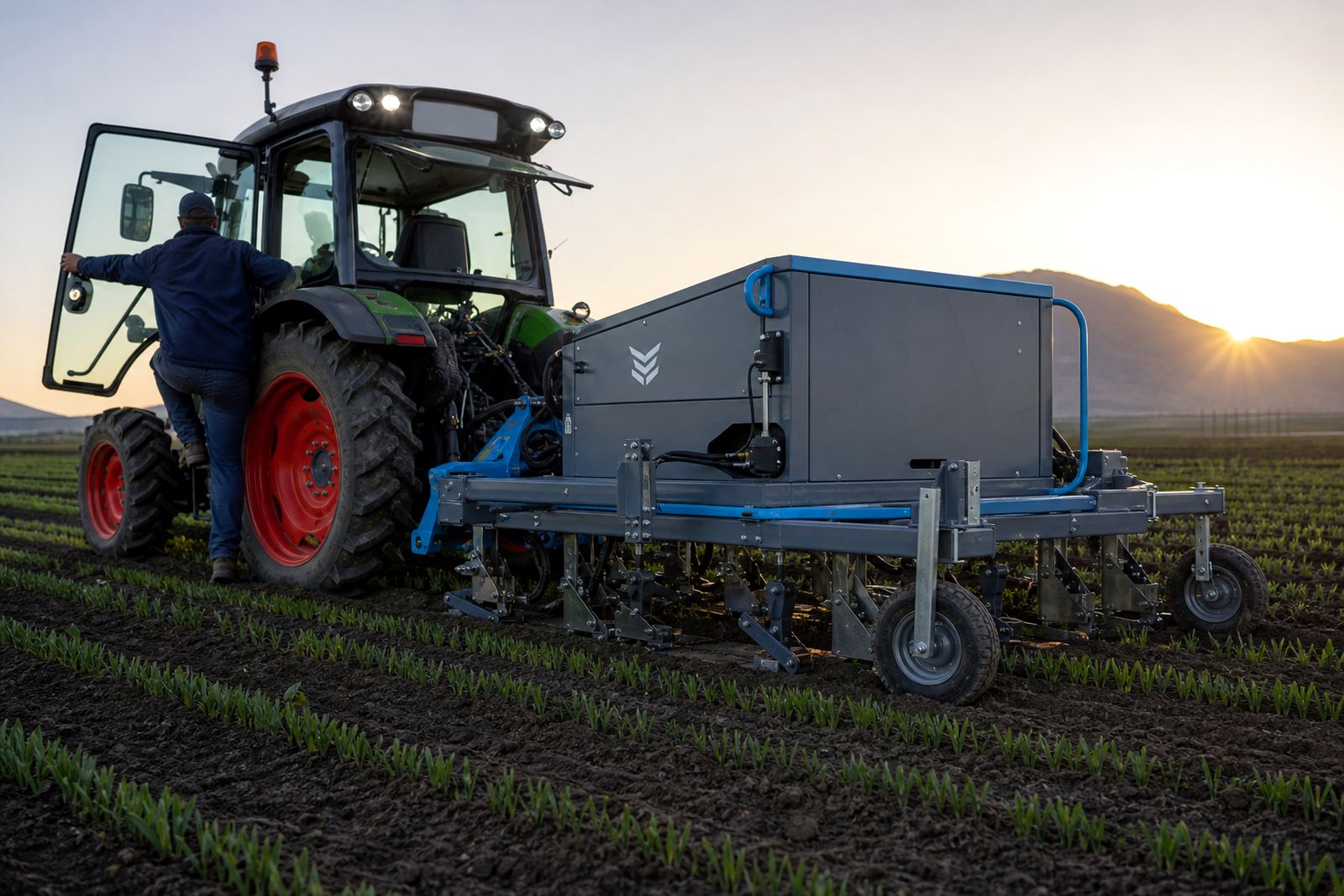
Operator on the tractor, not in the office
The operator arrives with the unit, works the machine in the row crop, and keeps the pass aligned to the planting pattern and bed condition. That matters when weeds are small, when the crop canopy is still open, and when the field has uneven germination from one section to the next.
Our operator supplied service is built for contract work on vegetable farms in Philippi and further afield, including Western Cape, Limpopo, Mpumalanga, KwaZulu-Natal and the Free State. The unit uses camera-guided weed detection, then directs laser energy at the weed growing point, while the crop stays untouched.
- Tractor-drawn laser weeding unit with trained operator
- Camera-guided weed detection across the row
- Lasers target the weed growing point, not the soil
- No herbicide spray and no soil disturbance from the pass
What the booking includes on site
A standard operator supplied booking covers arrival site checks, crop line review, machine setup for the block, and the first pass through the field. The team looks at row width, bed shape, weed stage, moisture on the surface and access for the tractor. If the crop is too young, too tall or the weed stage has moved too far on, the timing plan is adjusted before work starts.
The service can include one trial strip run where the grower sees how the unit reads the crop and weed pattern in that block. For larger farms, the schedule can be built as a multi farm programme, with travel arranged between blocks and repeat pass planning where the crop cycle needs it.
- Arrival site checks and block review
- Trial strip runs where needed
- Field scheduling for single blocks or multi farm work
- Repeat pass planning for the season
How the pass is timed in the crop
Laser weeding is most effective when weeds are still at a vulnerable stage and the crop is established enough for the camera system to separate one from the other. That timing changes with onion spacing, carrot emergence, lettuce canopy and brassica vigour, so the operator reads the field rather than following a fixed calendar slot.
Field speed depends on weed pressure, crop density and the amount of scanning the unit must do across the row. A heavier flush of weeds usually calls for a slower pass. Lighter pressure and cleaner lines allow quicker work, but the unit still has to track each plant accurately. That is why the operator stays involved throughout the block, not only at the start.
Pricing built around the block, not a flat guess
Pricing is prepared from the crop type, hectares to be covered, travel distance, weed pressure, number of passes needed and whether the work is a one off strip or part of a season booking. Travel coordination is folded into the quote where the farm sits outside Philippi, and the team will also price for multiple farms in the same district where that reduces movement.
Because every field behaves differently, the quote is tied to the actual block layout and crop timing plan. That keeps the booking grounded in the real work on the day, rather than a rough figure that ignores row spacing, access tracks or the weed stage in the block.
- Quoted per block, season programme or multi farm route
- Travel coordination can be built into the booking
- Pricing reflects crop stage and weed pressure
- Trial work and repeat passes are priced separately when needed
Aftercare after the first pass
Once the pass is done, post pass reporting is shared so the grower can see where the unit worked cleanly and where a follow up pass may be needed. That helps with later field decisions, especially where germination is staggered or rain has brought on a second flush. Grower consultation can also be used to set the next timing window.
If the crop is part of a wider programme, the operator supplied service can be linked to the next scheduled block without starting from scratch each time. That keeps the field notes practical and helps the team read changing weed pressure through the season.
Field specs that matter on real vegetable land
The unit is tractor-drawn and designed for row crops where precision matters more than brute force. It works without spraying herbicide and without disturbing the soil surface, which suits beds that have already been prepared for planting and should stay intact. The system uses scanning and targeted laser action rather than blanket treatment, so the operator has to keep line discipline and maintain good visibility in the row.
For farms in humid coastal areas or drier inland districts, the same service still depends on field condition, weed stage and crop maturity. Philippi blocks, Ceres vegetable ground, grabouw valley farms and larger inland programmes each need a different schedule, but the operating method stays the same: assess, set up, run the pass and log what was done.