How a multi-site programme is put together
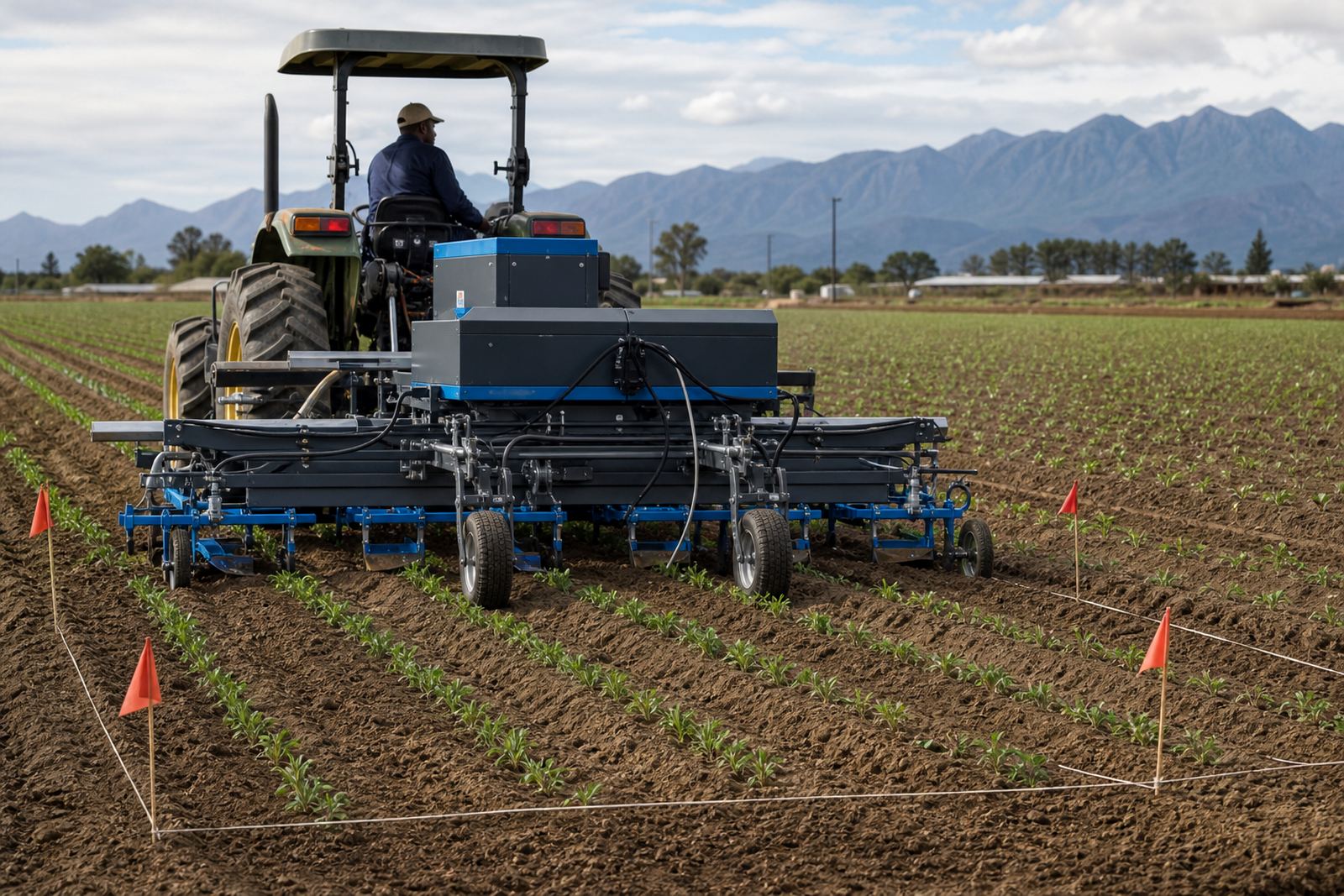
A multi farm programme starts with the crop list, block sizes and planting windows for each site. We look at row spacing, weed stage, crop height and the order in which the fields should be worked so the laser unit is sent where it matters most.
The service is built for row crops such as onions, carrots, lettuce and brassicas, where weeds need to be removed between and around plants without stirring the soil. Laser weeding uses camera-guided detection to find the weed growing point, then directs energy to the target without herbicide sprays or blade contact.
- Block-by-block sequencing for several farms
- Crop timing plans matched to weed stage
- Field access notes for each site
- Operator supplied with the unit
What the programme includes on each visit
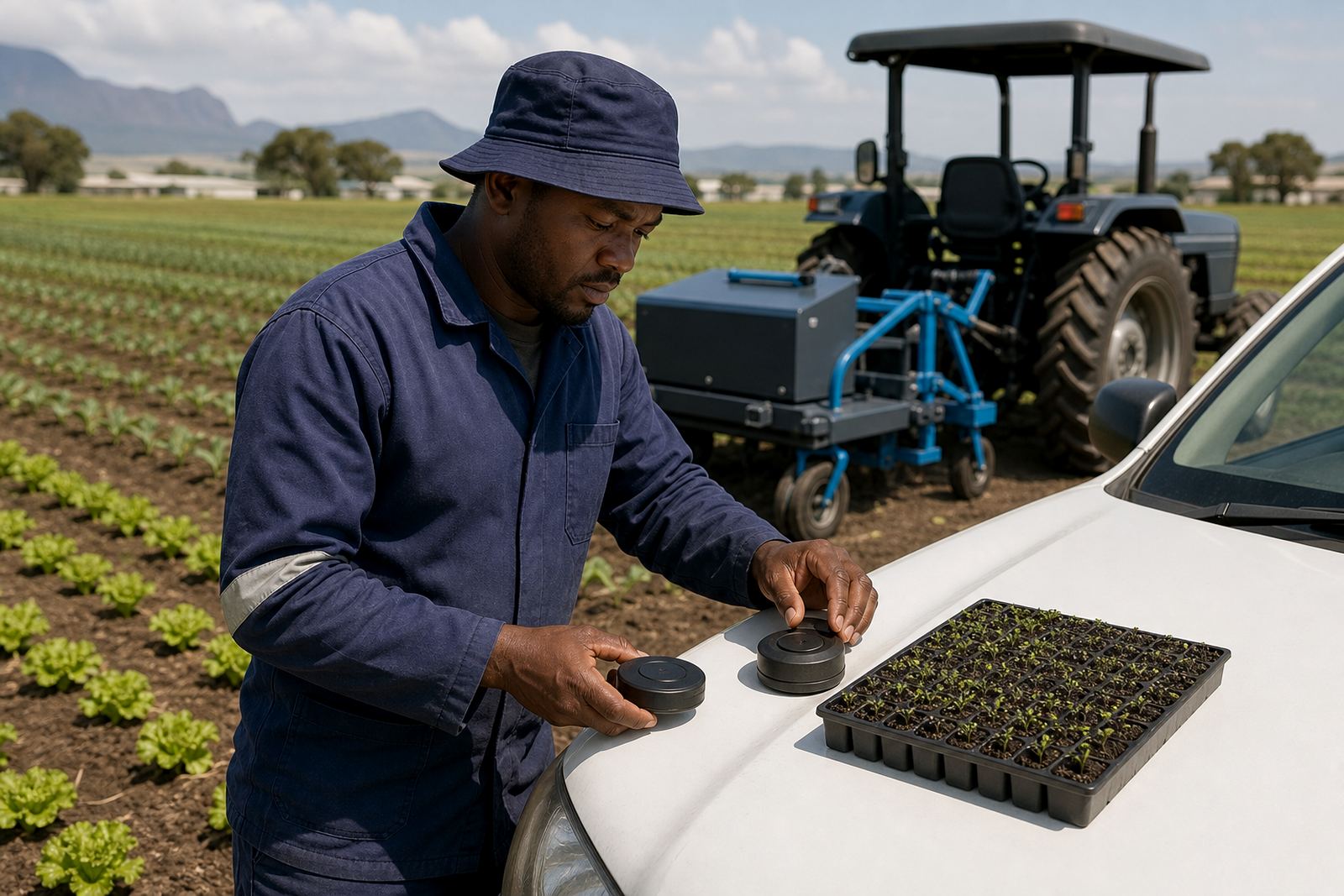
Each visit is arranged around the work that belongs on that site, not a fixed template. We can include arrival site checks, trial strip runs, field scheduling, repeat pass planning and post pass reporting, depending on the crop and the weed pressure seen in the field.
Tractor-drawn laser units work at a field speed that changes with crop density, weed pressure and the amount of checking needed by the operator. Heavier pressure can slow the pace a little, while cleaner blocks may move more steadily, but the aim is always careful placement of the laser on the weed point and a clean pass between crop rows.
- Arrival site checks before work starts
- Trial strip runs where timing needs a closer read
- Repeat pass planning for later crop stages
- Post pass reporting for farm records
Scheduling across farms, not just fields
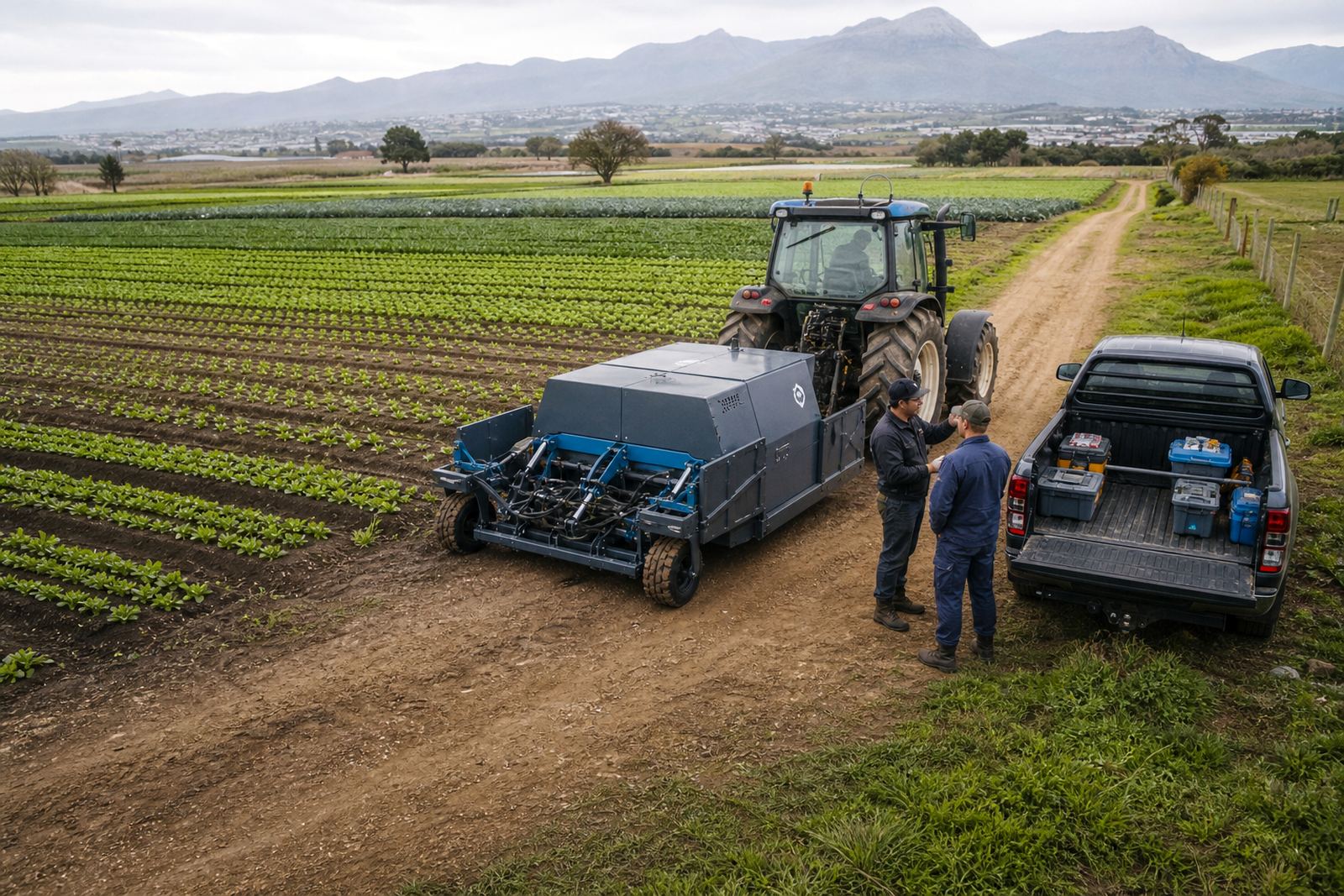
When several sites are involved, travel order matters as much as the treatment itself. Pieter Mokoena and the field scheduling team map the route so tractors, operators and travel time are set against crop age, weather windows and the sequence agreed with the grower.
That matters for growers in Philippi, Ceres, Grabouw, Tzaneen, Bela-Bela, Nelspruit, Howick and Bethlehem, where sites may sit many kilometres apart. A sensible route can reduce idle time and keep the programme moving from one block to the next without awkward gaps.
- Route planning across provinces
- Site order matched to crop readiness
- Travel coordination for operator and unit
- Season bookings for larger growers
Timing, weed stage and crop safety
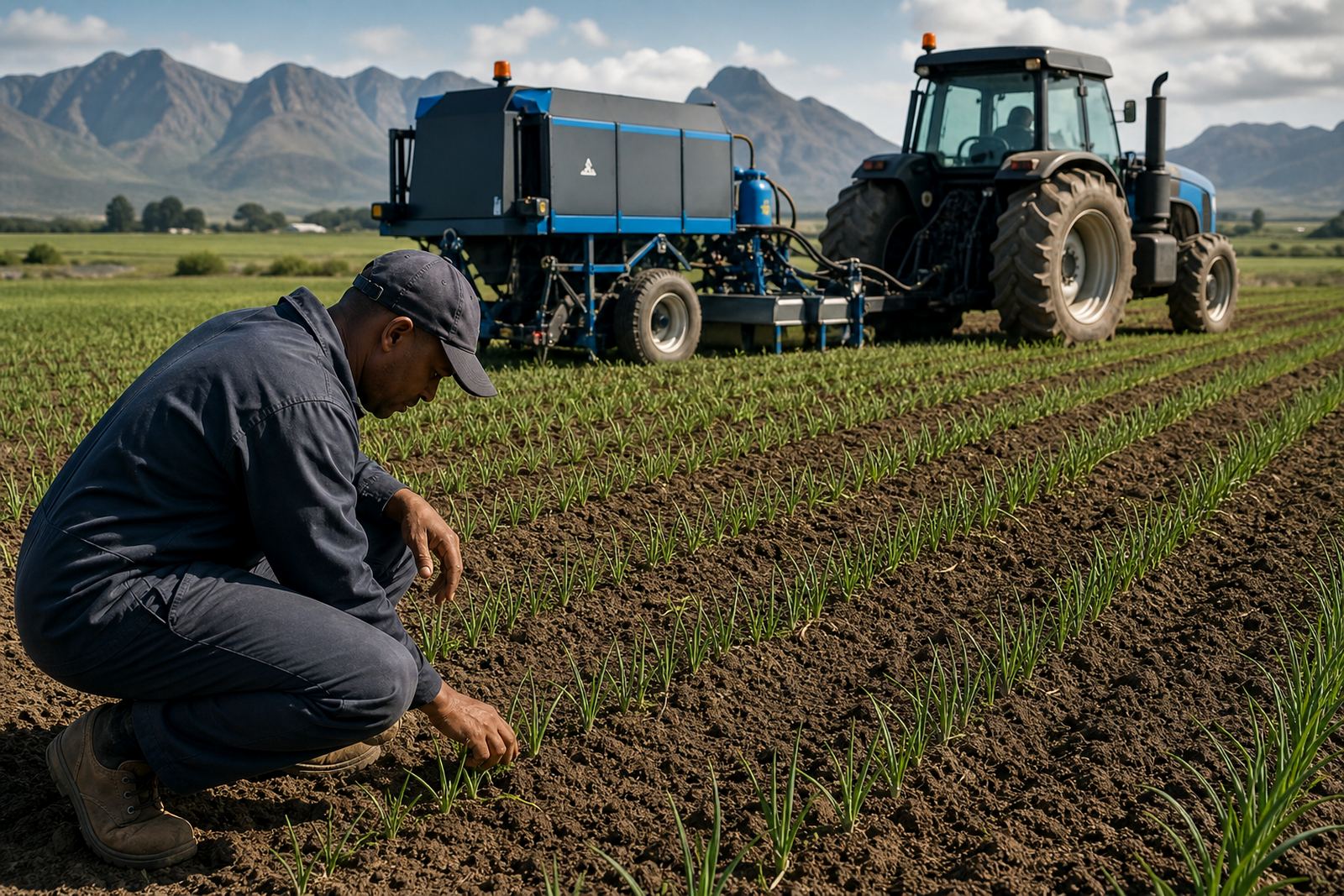
Laser weeding works best when weeds are at the right stage for treatment and the crop is established enough to handle field movement. Small weeds are easier to target and that is why timing is built into the programme from the start, rather than left for later when the field is already crowded.
The process is herbicide-free and does not disturb the soil, which is useful on vegetable land where a clean surface can still carry a fresh flush of weeds after rain or irrigation. The laser targets the weed growing point while the operator keeps the unit centred to protect the crop rows.
- Camera-guided weed detection
- Laser targeting at the growing point
- No soil disturbance during the pass
- Useful on seedling and young crop stages
Pricing that follows the route and the field
Pricing is shaped by the number of farms, the distance between them, the crop mix and the amount of time each block needs. A group with several nearby sites will usually be planned differently from one where fields sit in more than one province, because the travel and sequencing change the work pattern.
We do not force one rate across every block. The costing approach reflects the unit, the trained operator, the route and the crop stage, then the programme is set with the fields that should go first. For some growers that means a single seasonal booking, for others it becomes a rolling schedule as new blocks reach the right timing.
- Cost linked to travel and block count
- Seasonal or rolling programme options
- Clear scope for each site before work begins
- Multi farm pricing based on planned visits
Aftercare for growers with more than one block
After a pass, the grower gets reporting that notes what was treated, where follow-up pressure may show, and which blocks should be watched next. That helps the farm team decide whether the next visit should be a repeat pass, a later season booking or a change in field order.
Grower liaison is handled by Zanele Naidoo, with service coordination from Lerato Letsoalo and workshop support from Ruan Mkhabela. Mandla Adonis oversees the business side, while Johan Daniels leads the operator work in the field. Requests can go through our contact form on the contact page, and the details can be set against the farms that need to be included.
- Post pass notes for each block
- Repeat pass planning where weed pressure returns
- Coordination for several sites under one programme
- Grower consultation for season planning
Key facts
| Service type | Contract laser weeding for multiple vegetable farms |
|---|---|
| Primary crops | Onions, carrots, lettuce, brassicas and similar row crops |
| Method | Camera-guided laser treatment with no herbicide sprays |
| Equipment | Tractor-drawn laser weeding unit with trained operator |
| Coverage | Philippi and vegetable regions across South Africa |
| Programme options | Field scheduling, seasonal bookings and multi farm routing |