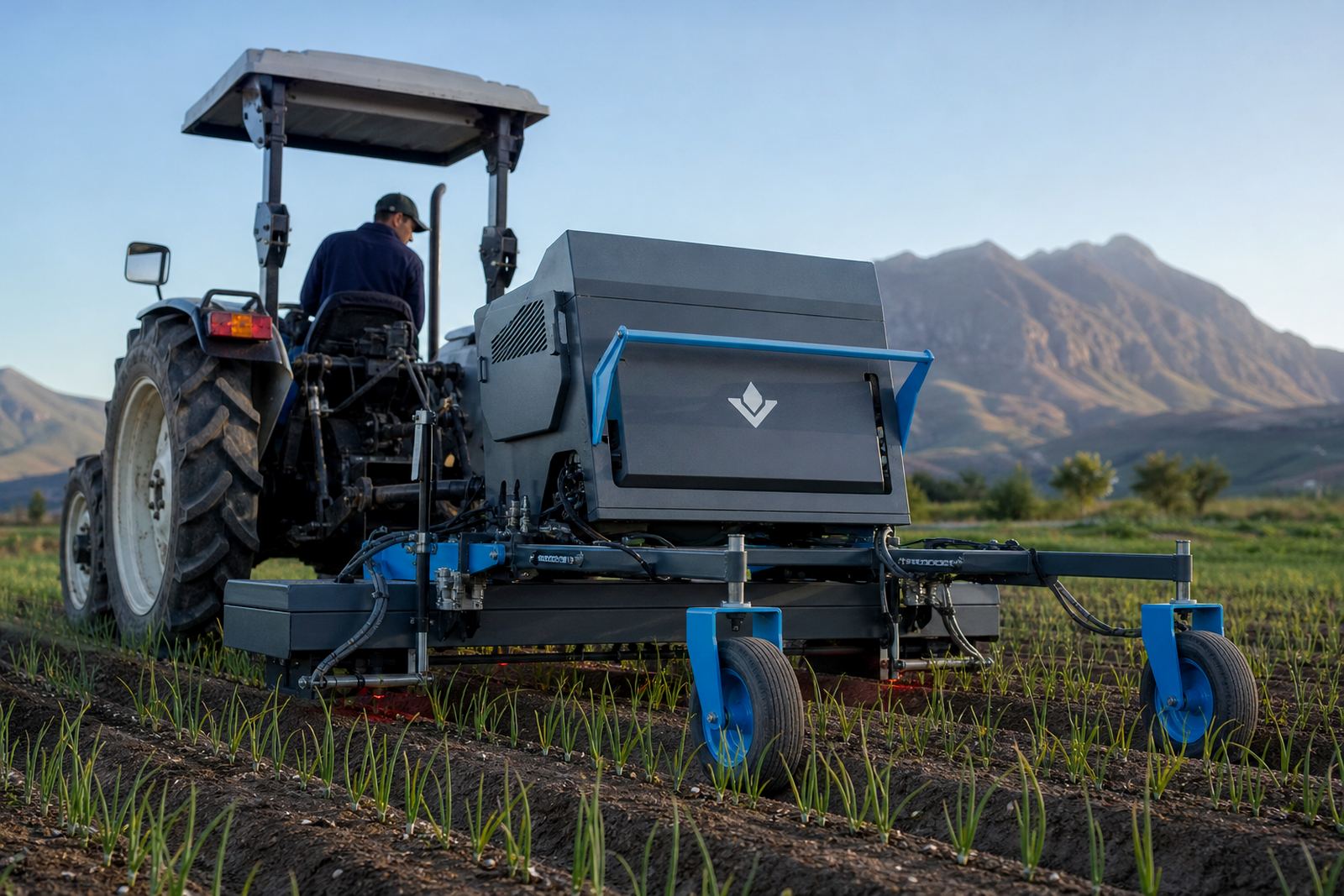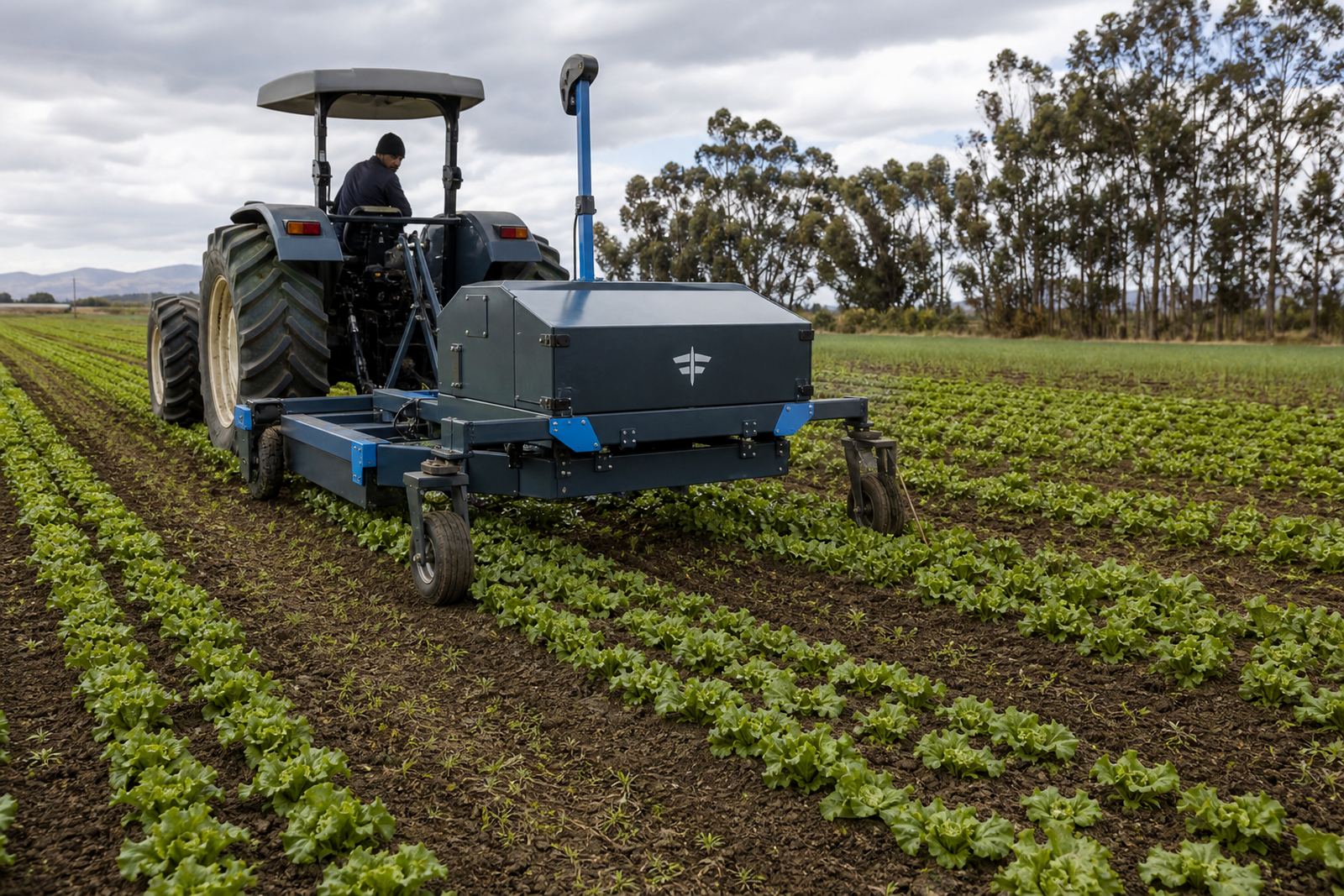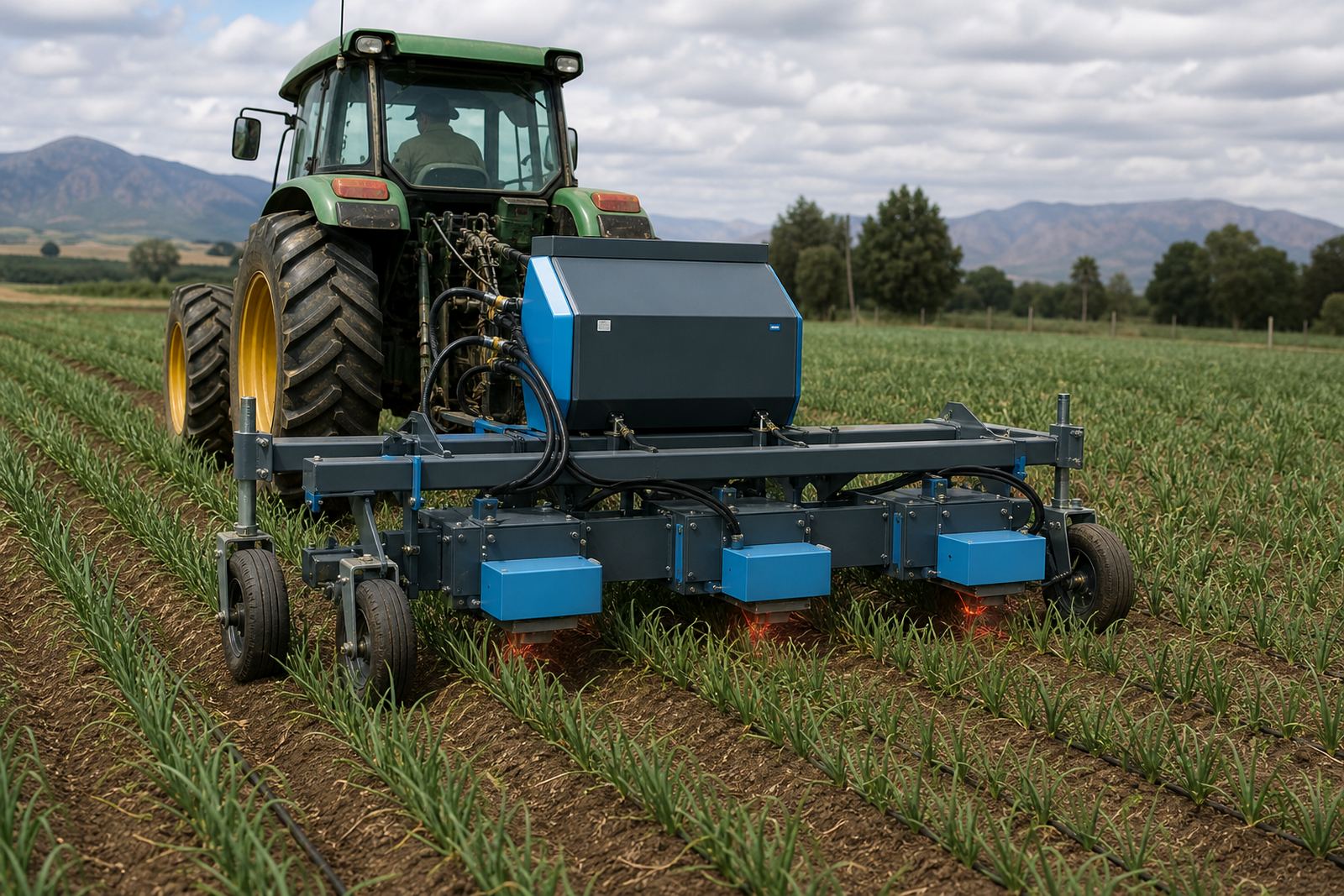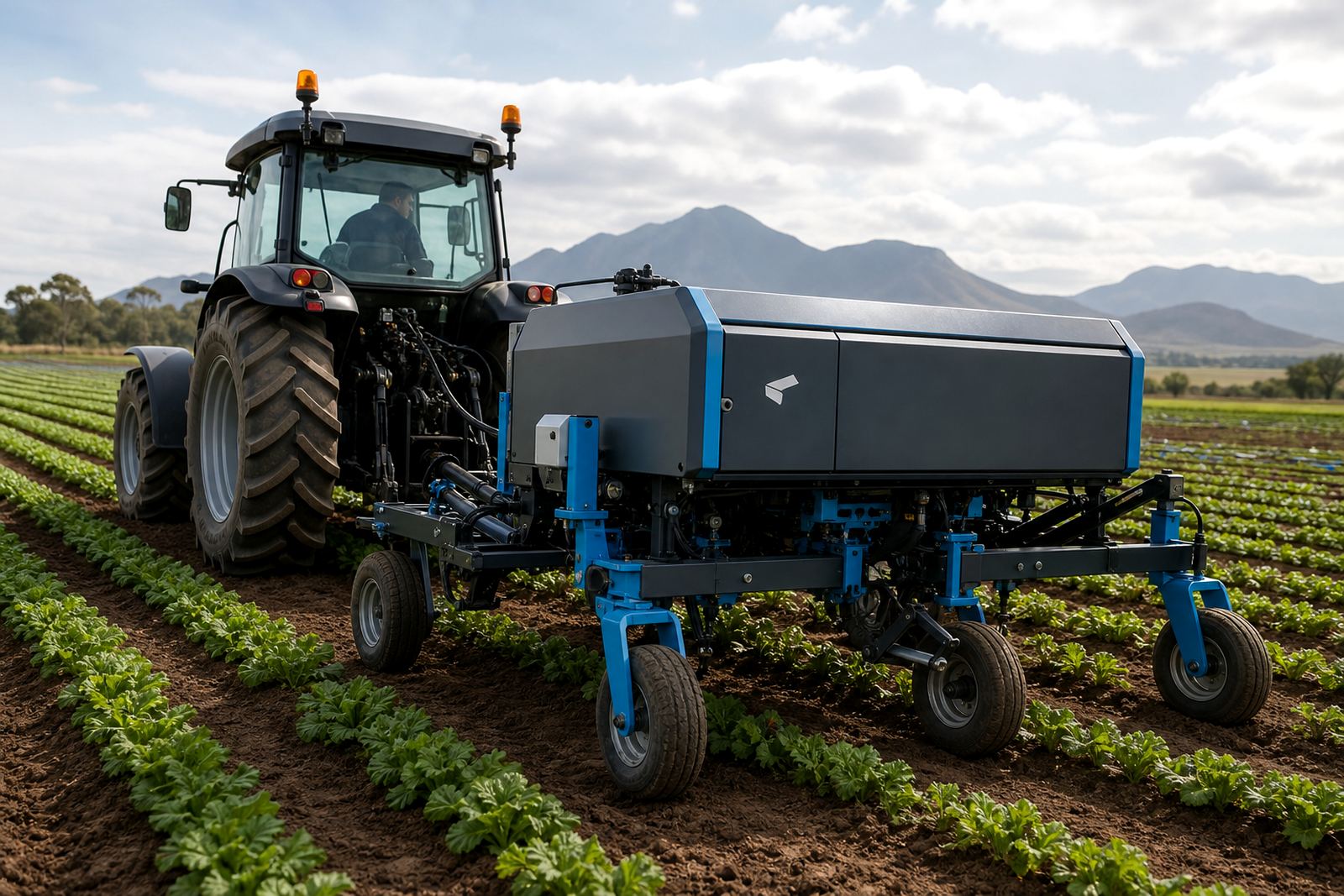
Reading the crop before the pass
Laser weeding works best when the crop is at a stage where the rows can be followed cleanly and the young plants are still easy to separate from the weeds. We look at spacing, canopy cover and how even the stand is across the block, then decide whether the field is ready or still needs more time.
A block that is too small in crop mass can leave too much open soil for fresh weed flushes. A block that is too dense can hide the row line and make camera-guided detection harder, so the field note matters before any booking is locked in.
The weed stage changes the job
Laser units are aimed at the weed growing point, so the stage of the weed makes a real difference. Very small weeds are easier to catch, while larger weeds can need a different pass plan or a second visit after new emergence.
- Seedling weeds are the first target in most row crops.
- Mixed flushes can call for a trial strip run before full field work.
- Older weeds may need repeat pass planning instead of one pass only.
- Wet soil after irrigation can affect field entry and timing.
Booking windows for row crops
For onions, carrots, lettuce and brassicas, the booking window is shaped by crop speed, weed pressure and the size of the area to be covered. Some growers need a single pass in a narrow window, while others book a sequence across several blocks and planting dates.
We use field scheduling to fit travel, operator supply and the order of blocks. That helps when a farm near Philippi, Ceres or Grabouw is running a tight crop cycle, or when one grower has land in more than one district.
What we check before field work starts
Before the unit arrives, we look at row width, field access, irrigation layout and the stage of both crop and weed growth. That keeps the visit practical and avoids wasted movement across the block.
- Row spacing and headland access
- Crop uniformity across the block
- Weed size and flush pattern
- Soil condition after rain or irrigation
- Any tight turns, wet patches or low spots
How timing changes the field speed
Field speed depends on weed pressure, row pattern and how much scanning the operator has to do through the crop. A lighter weed load can allow steadier progress, while heavier pressure may slow the run so the laser can target weeds more carefully.
We do not treat every block as the same. One strip may be suitable for a quick pass and another may need a slower line, with repeat pass planning built around the next flush rather than forcing one timing across the whole farm.
When a trial strip run makes sense
A trial strip run helps when the crop is borderline for timing, or when the grower wants to see how the field behaves before the rest of the block is covered. It is also useful where the weed stand changes from one end of the farm to the other.
- Uneven crop emergence
- Mixed weed sizes in the same block
- New planting dates across separate fields
- First-time laser weed control on the farm
The strip gives a practical read on timing, access and row visibility. It also helps shape the next pass if the field needs another round later in the season.
Send the field details for timing guidance
Our contact form is the best place to send crop type, planting date, row spacing, location and the stage of the weeds you are seeing. That gives our team enough detail to line up the right operator, the right unit and the right field window.
The LaserWeeder Hire team works from Philippi, Cape Town and supports growers across the Western Cape, Limpopo, Mpumalanga, KwaZulu-Natal and the Free State. For farms in Tzaneen, Bela-Bela, Nelspruit, Howick or Bethlehem, the same timing checks apply before travel is set in motion.
MD Mandla Adonis leads the business, with Anele Khoza on operations, Pieter Mokoena on field scheduling, Zanele Naidoo on grower liaison, Johan Daniels as lead operator, Lerato Letsoalo in service coordination and Ruan Mkhabela in the workshop.