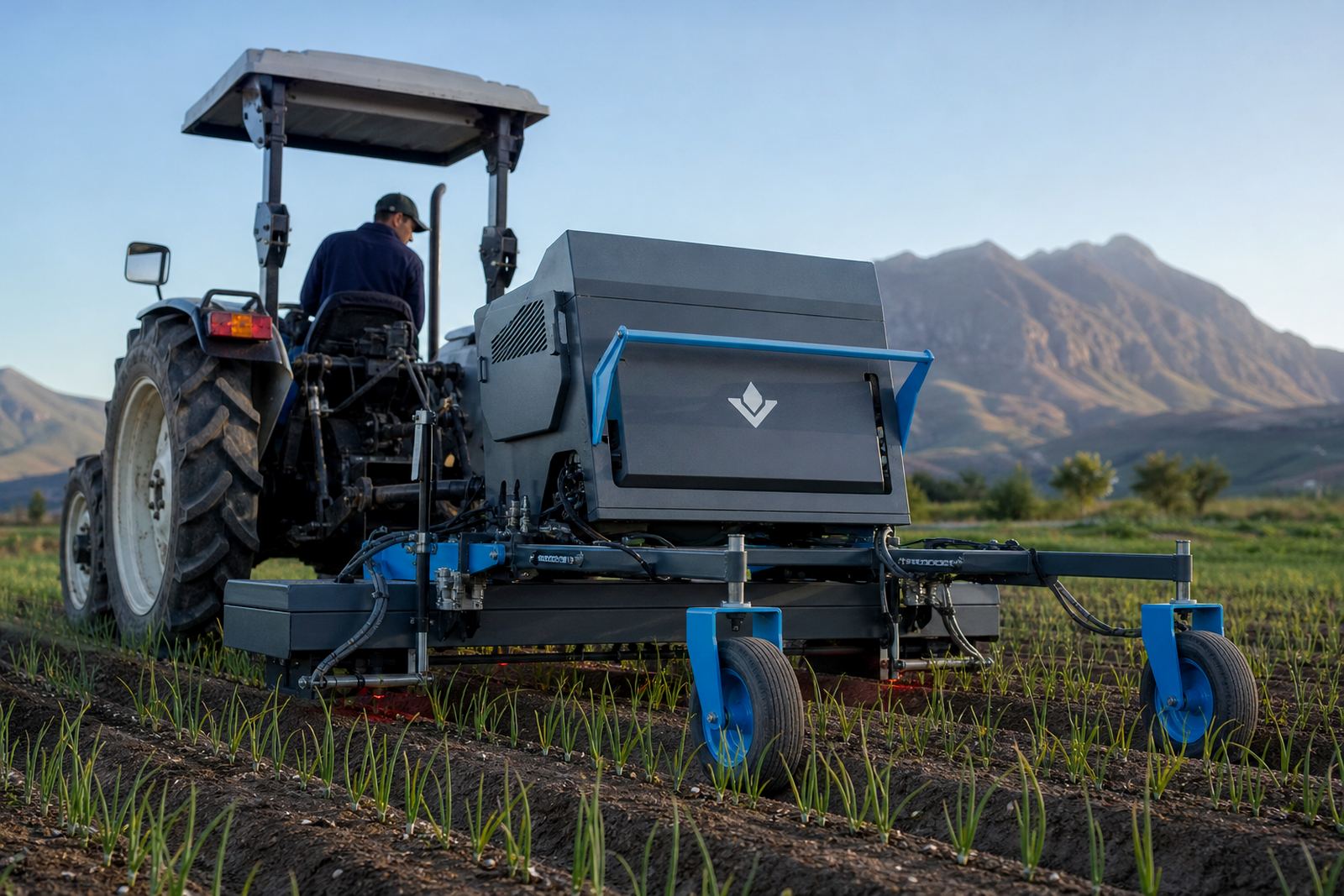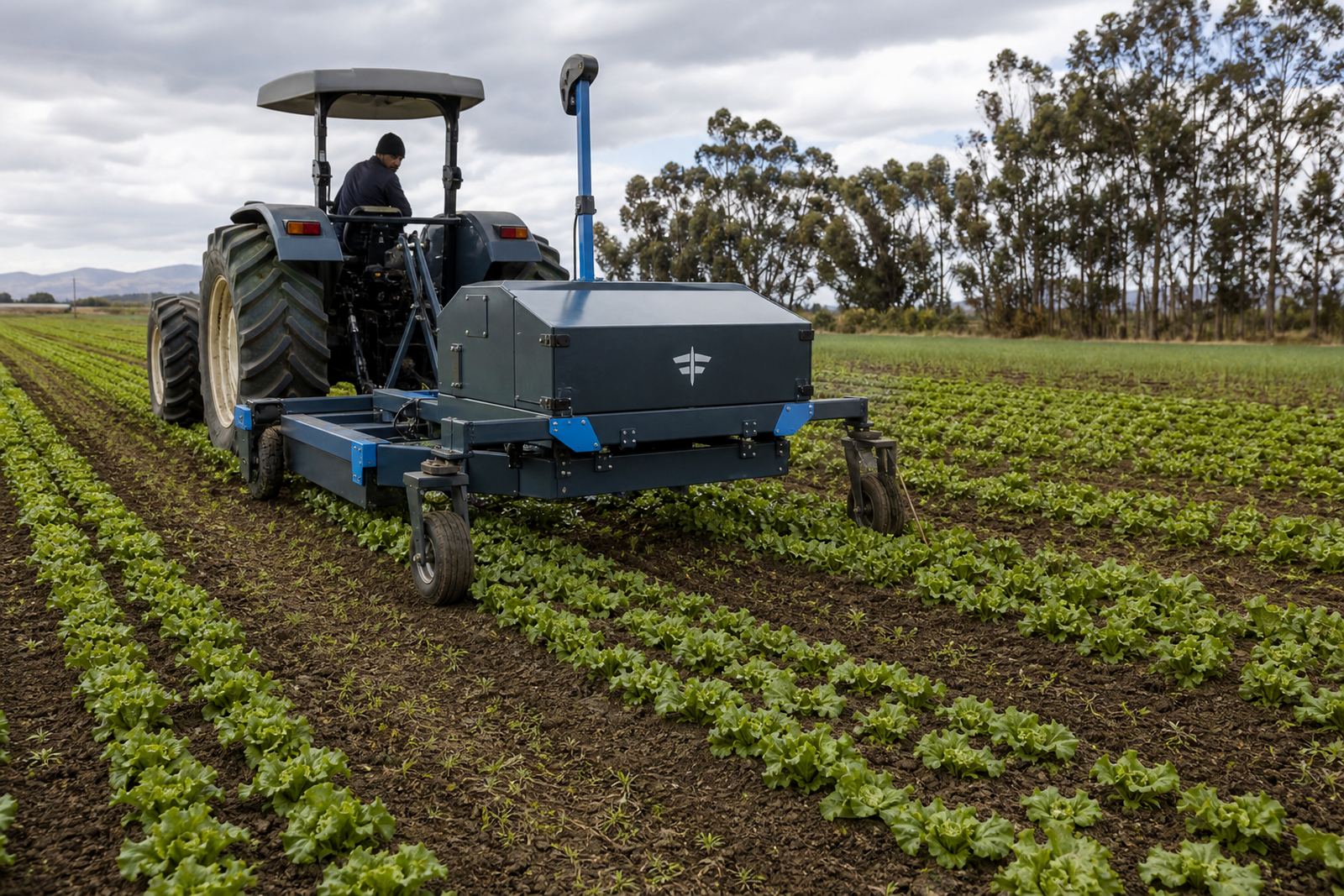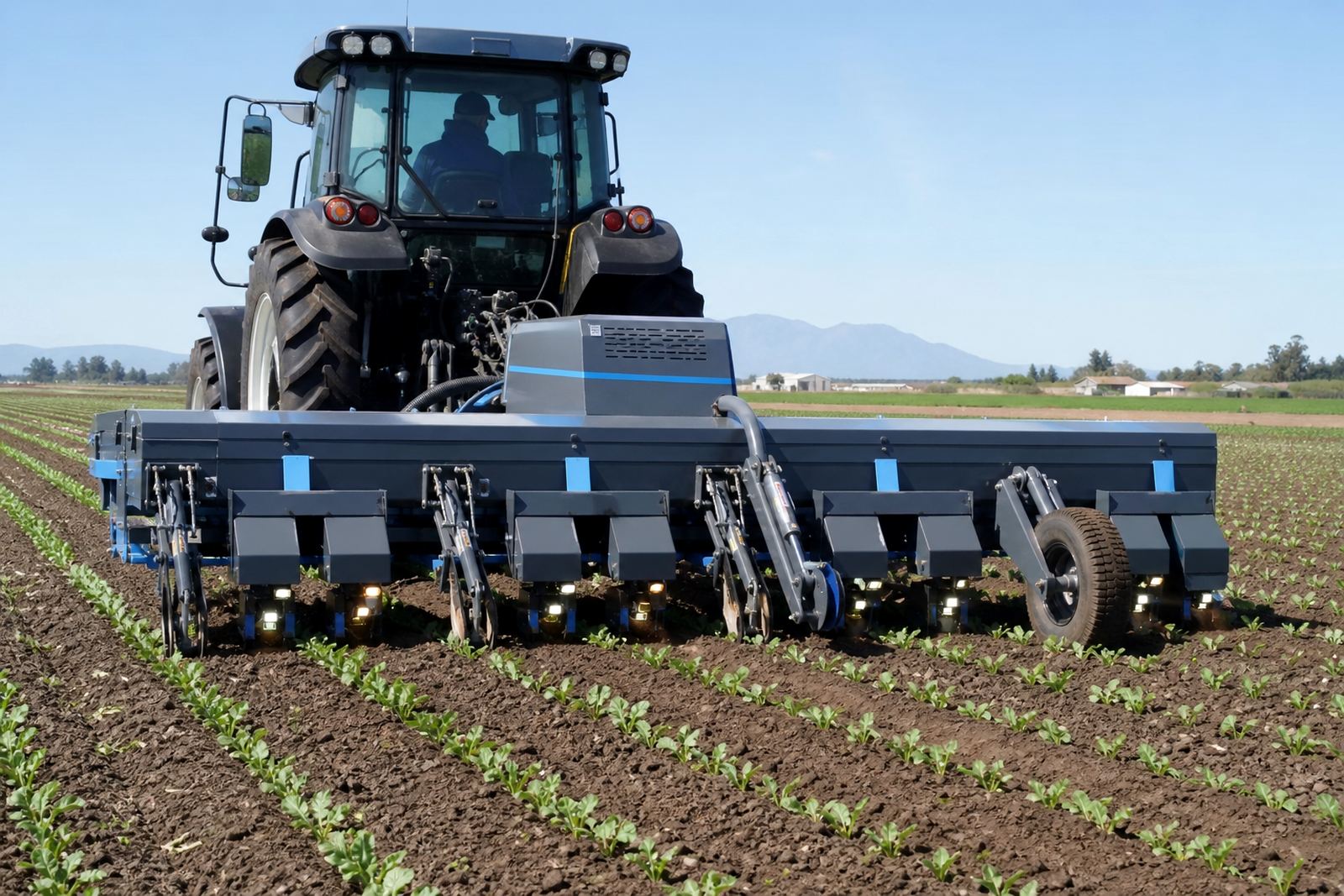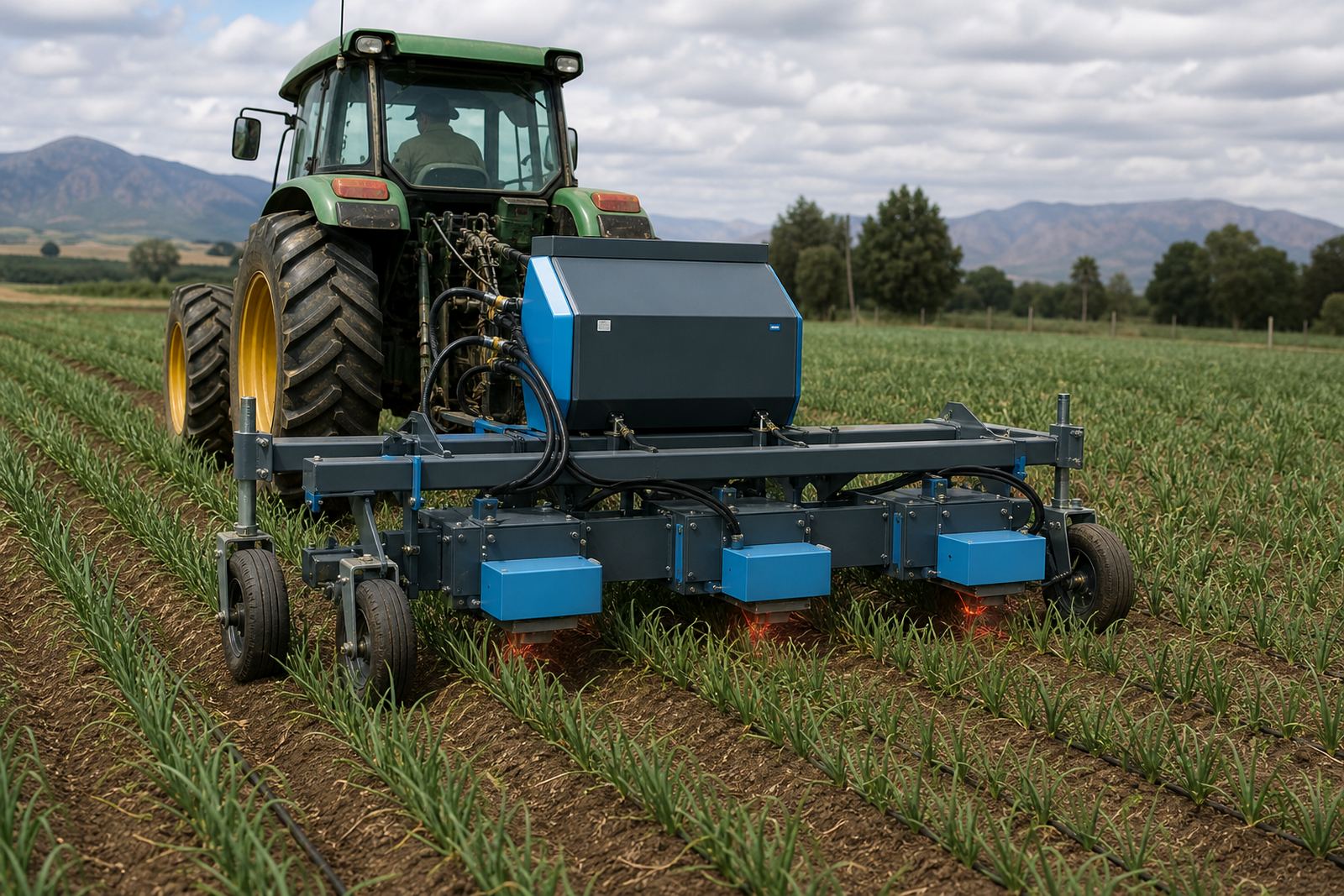
Philippi base, then the route starts
Our base in Philippi gives the team a practical starting point for Western Cape work and longer farm programmes further afield. The travel plan is set around crop stage, block size and the order in which fields need attention, not around a fixed circuit that ignores what is happening on the ground.
For nearby farms, that may mean a short run into the Cape Flats, the Overberg edge or the Boland. For inland work, the movement plan may include road travel, overnight stays and a field schedule that keeps the tractor-drawn unit and operator lined up with the right beds at the right time.
Regions we cover for vegetable growers
We support growers across the main vegetable areas where row crops and bed systems suit laser weeding. The regions we work into include the Western Cape, Limpopo, Mpumalanga, KwaZulu-Natal and the Free State.
- Western Cape, including Philippi, Ceres and Grabouw
- Limpopo, including Tzaneen and Bela-Bela
- Mpumalanga, including Nelspruit
- KwaZulu-Natal, including Howick
- Free State, including Bethlehem
These are working regions, not a fixed map. A farm with onions one month may need a different pass plan to a lettuce block or brassica planting the next, so the route is shaped around crop needs and field access.
How a farm slot is arranged
The process starts with a look at the crop type, the row spacing and the weed pressure in the block. Laser weeding works best when the weeds are at a stage where the camera-guided system can identify them clearly and the lasers can target the growing points without disturbing the soil.
- Field assessments for crop type, row layout and weed stage
- Crop timing plans that fit planting dates and follow-up passes
- Season bookings for farms that need repeat visits through the cycle
- Multi farm programmes when several blocks need to be covered in sequence
Where a block is still too tight, too wet or too uneven for a safe pass, the schedule is adjusted. That keeps the unit in fields where the crop rows are workable and the operator can move at a sensible field speed for the weed load.
Travel, arrival checks and the first pass
Once the move is set, the team plans the route, the arrival time and the order of the blocks. Arrival site checks help confirm field access, turning space, waterlogged sections, gate widths and the condition of the headlands before the unit starts work.
That first visit is also where trial strip runs can be used. A short strip shows how the tractor-drawn laser unit is reading the crop, where the weeds sit in the row and whether a repeat pass should be planned for later in the season. On coastal farms, humidity and wind can shape the day; inland, dust and field firmness may matter more.
What the operator sees in different crops
Laser weeding is suited to row crops such as onions, carrots, lettuce and brassicas, where the system can move along the beds and target weeds between and around crop plants. The operator watches how the crop is spaced, how the weeds are emerging and whether the block needs a slower or faster pass.
- Young weeds are easier to target than older, tougher growth
- Uniform crop rows help the camera system read the bed clearly
- Heavy weed pressure can reduce field speed
- Loose soil is not part of the method, because there is no cultivation
That is why timing matters. A farm in early growth may need a different plan from one entering a later canopy stage, and the field notes are used to decide whether another round should be booked.
After the unit leaves the field
Post pass reporting gives the grower a record of what was covered, what was left for a later pass and where weeds were still at a stage that needs attention. That report supports repeat pass planning, especially on larger vegetable areas with staggered plantings.
Grower consultation is part of the support work, because travel alone does not solve a weed problem. The block has to fit the method, the timing has to suit the crop and the route has to make sense for the season. Where several farms sit in one area, field scheduling can group visits to save empty kilometres and keep the crew focused on the work that matters.
How to set up a regional programme
For growers working across more than one region, the simplest path is to map the farms, the crop dates and the likely weed peaks before the season gets busy. That helps line up operator supply, travel coordination and repeat visits without forcing the same plan onto every block.
- List each farm and its crop type
- Note the planting window and likely weed stage
- Mark access details and any site rules
- Use our contact form to begin the booking conversation
From Philippi to Bethlehem, the aim is the same: keep the laser unit where the rows are ready, keep the operator briefed and keep the schedule tied to the crop rather than the road map alone.