What to photograph before you send anything
Good photos save a lot of back and forth. We need to see the crop itself, the weeds between plants, and the way the rows sit across the block. A wide shot helps with spacing and bed layout, while close shots show leaf stage, weed size and how close the weeds are to the crop line.
Use natural light where possible and keep the lens steady. If the field is wet, dusty or uneven, include that too because it affects tractor movement and how the operator plans the pass.
- One wide photo showing several rows
- One close photo of weeds beside crop plants
- One photo of the headlands or turning space
- One photo that shows row spacing and bed shape
The details that matter most in the first review
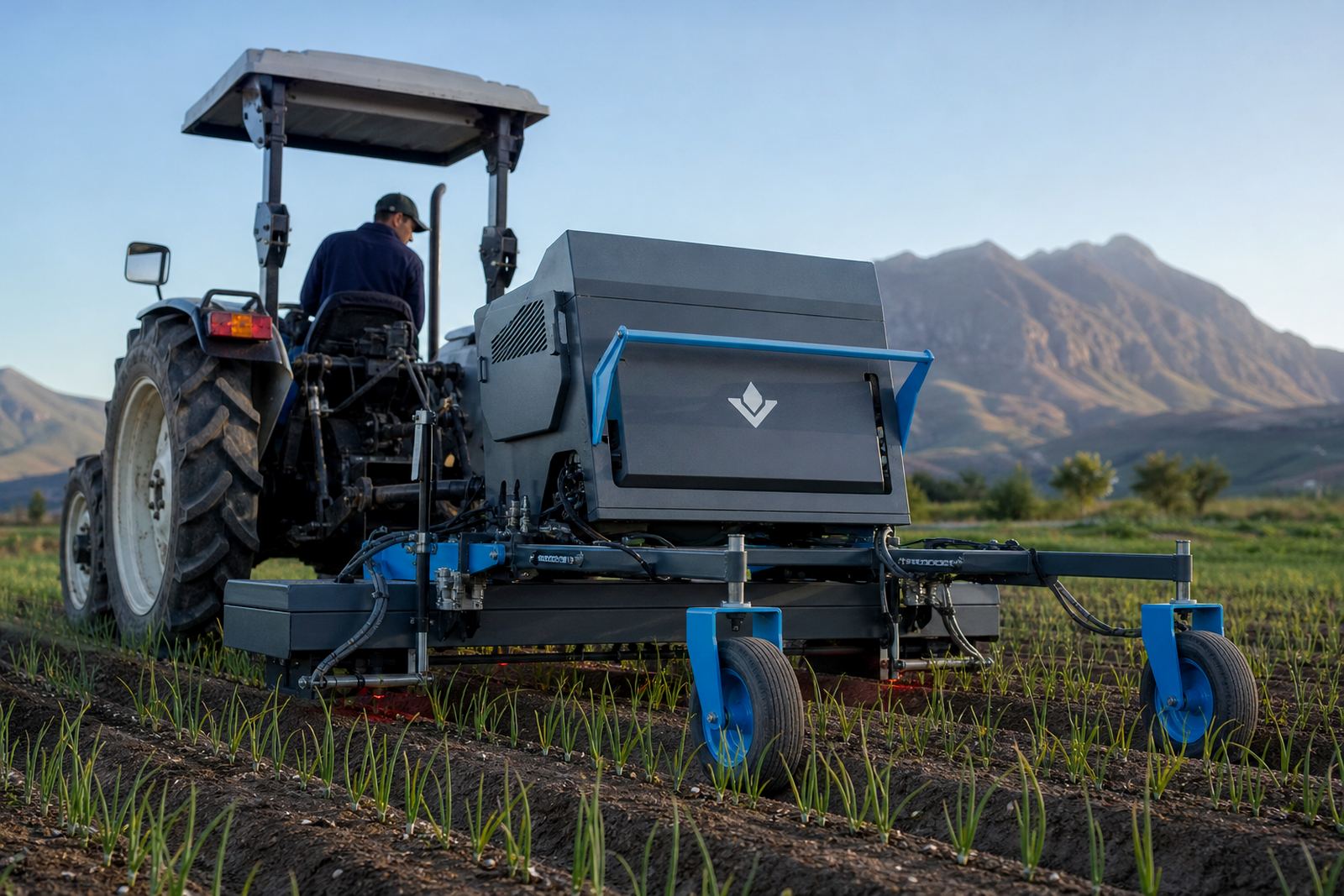
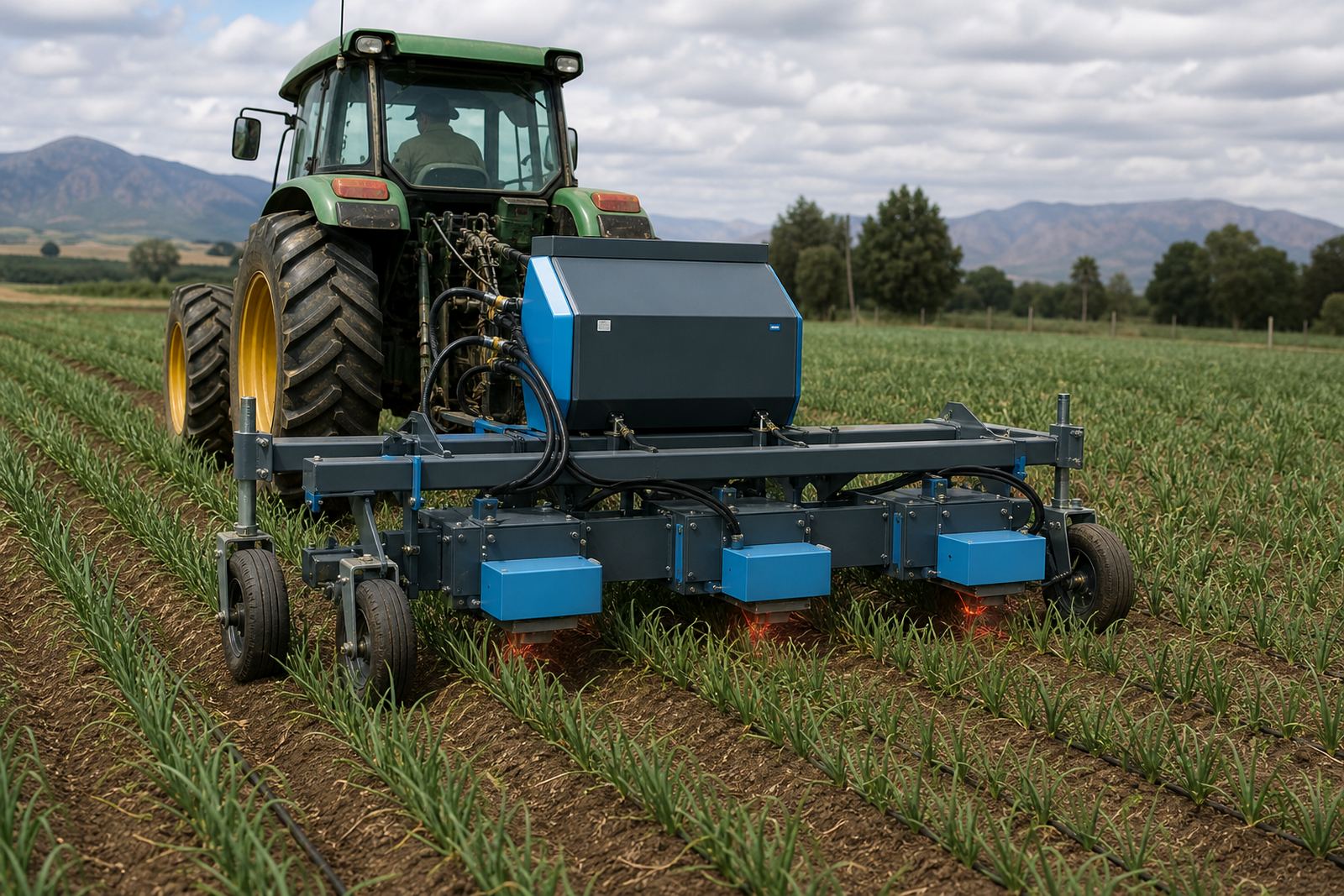
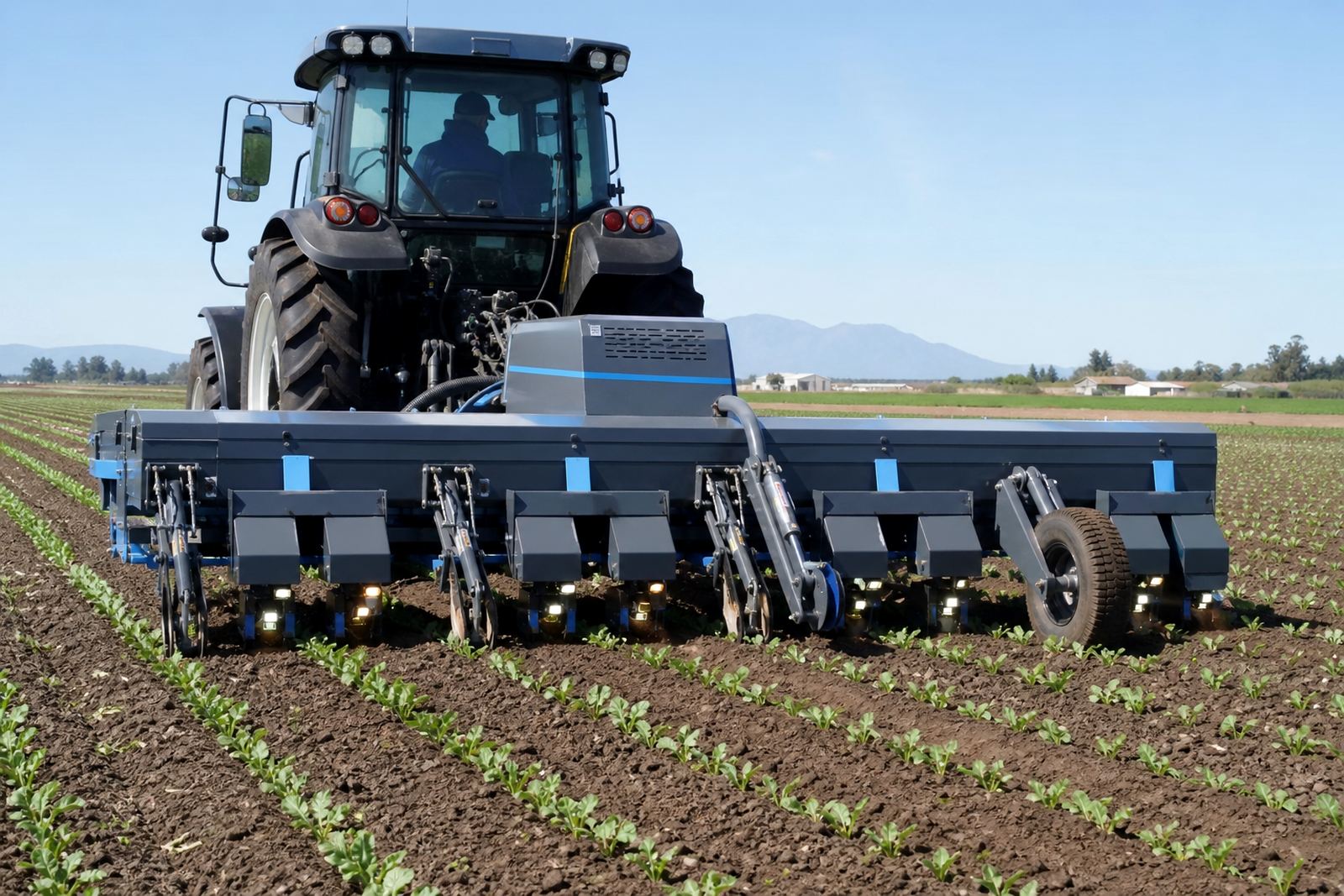
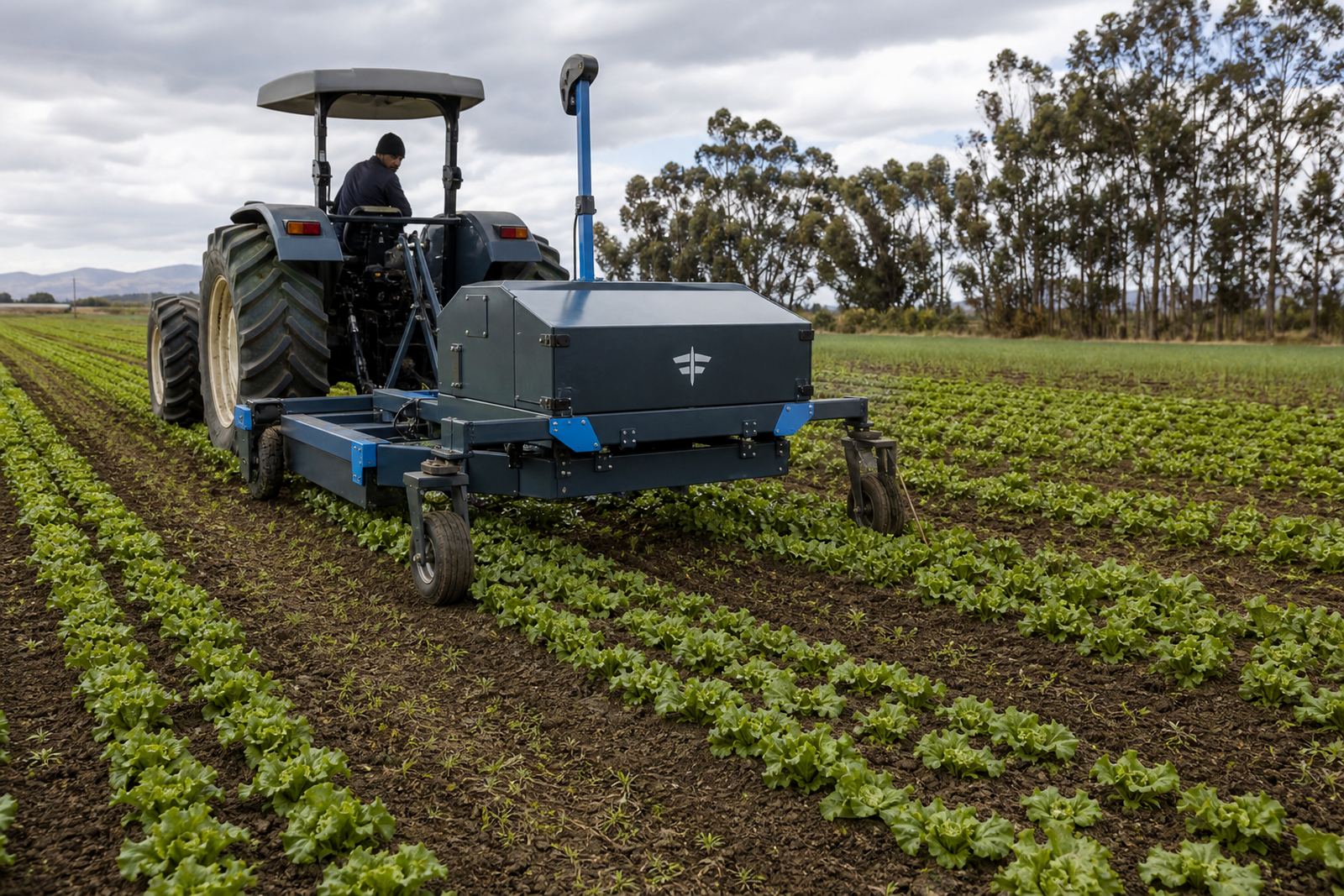
Laser weeding works best when the crop is in a row crop pattern and the weeds are still at an early stage. Onions, carrots, lettuce and brassicas are the kind of crops we look at often, but each block still needs its own check. We look for plant uniformity, weed species, weed height and whether the block has a clean travel line for a tractor-drawn unit.
Timing matters because the laser targets the weed growing point, not large mature growth. If weeds have already thickened or started to shade the crop, the field may need a different pass plan or more than one visit.
- Crop type and planting date
- Row spacing and bed width
- Weed size and density
- Any areas with uneven emergence
How to label the photos for quicker sorting
Simple labels help us file the images against the correct block. If you are sending several fields, name each set by farm, block and crop. Keep the order clear: a wide view first, then close views, then any trouble spots. That makes it easier for our team to match the images to the right operator plan.
If your block has mixed stages, mention that in the note. A field with strong patches and thin patches can still be useful for laser weeding, but the operator needs to know where the pressure sits and where the rows are easiest to run.
- Farm name and block name
- Crop name and variety if known
- Date the photos were taken
- Any sections with heavy weed pressure
What we look for after the photos arrive
We use the images to decide whether the block is worth a field assessment, a trial strip run, or a fuller season booking. The first review is practical. We check whether the crop can be followed safely by camera-guided equipment, whether the weeds are in the right stage for laser targeting, and whether the field layout suits tractor work without soil disturbance.
We also look at travel distance, multi farm planning and whether the block should be fitted into an existing route for the Western Cape, Limpopo, Mpumalanga, KwaZulu-Natal or the Free State. That helps us line up operator time, transport and field scheduling without guesswork.
Photos that help us read the field honestly
Not every picture adds much value. A blurred image of leaves from far away is hard to use, and a photo taken into bright sun can hide the weeds completely. Clear, level shots are better. If possible, kneel or crouch at row height so the camera sees the crop line the way the laser unit would.
We are looking for signs that the block is suited to herbicide-free weed control with no soil disturbance, not a polished field portrait. The more honest the image, the better the first reading.
- Take at least one image at row height
- Avoid heavy glare or deep shade
- Include the worst weed patch, not only the neat sections
- Show the crop at the same angle in several spots
After you send the set
Once the photos are in, we match them with the crop stage, weed stage and travel plan. If the block looks suitable, the next step may be a grower consultation, an arrival site check or a trial strip run. If the timing is not right, we note what should change before the next pass so the field can be assessed again under better conditions.
Our team in Philippi, Cape Town works with growers across South Africa and coordinates operator supplied work, repeat pass planning and post pass reporting. Mandla Adonis leads the business, with Anele Khoza on operations, Pieter Mokoena on field scheduling, Zanele Naidoo on grower liaison, Johan Daniels as lead operator, Lerato Letsoalo on service coordination and Ruan Mkhabela in the workshop.