Row crops that are usually first on the list
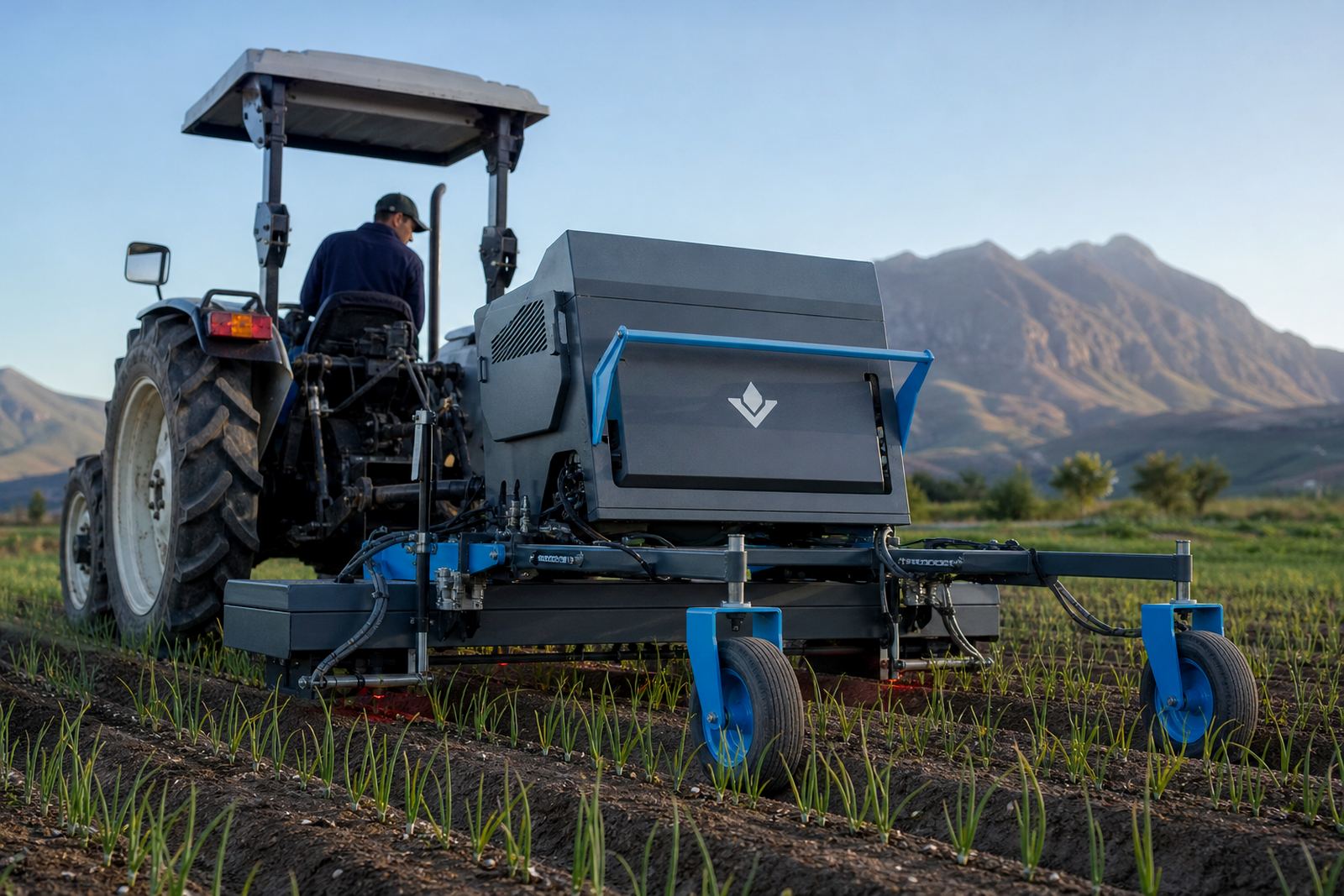
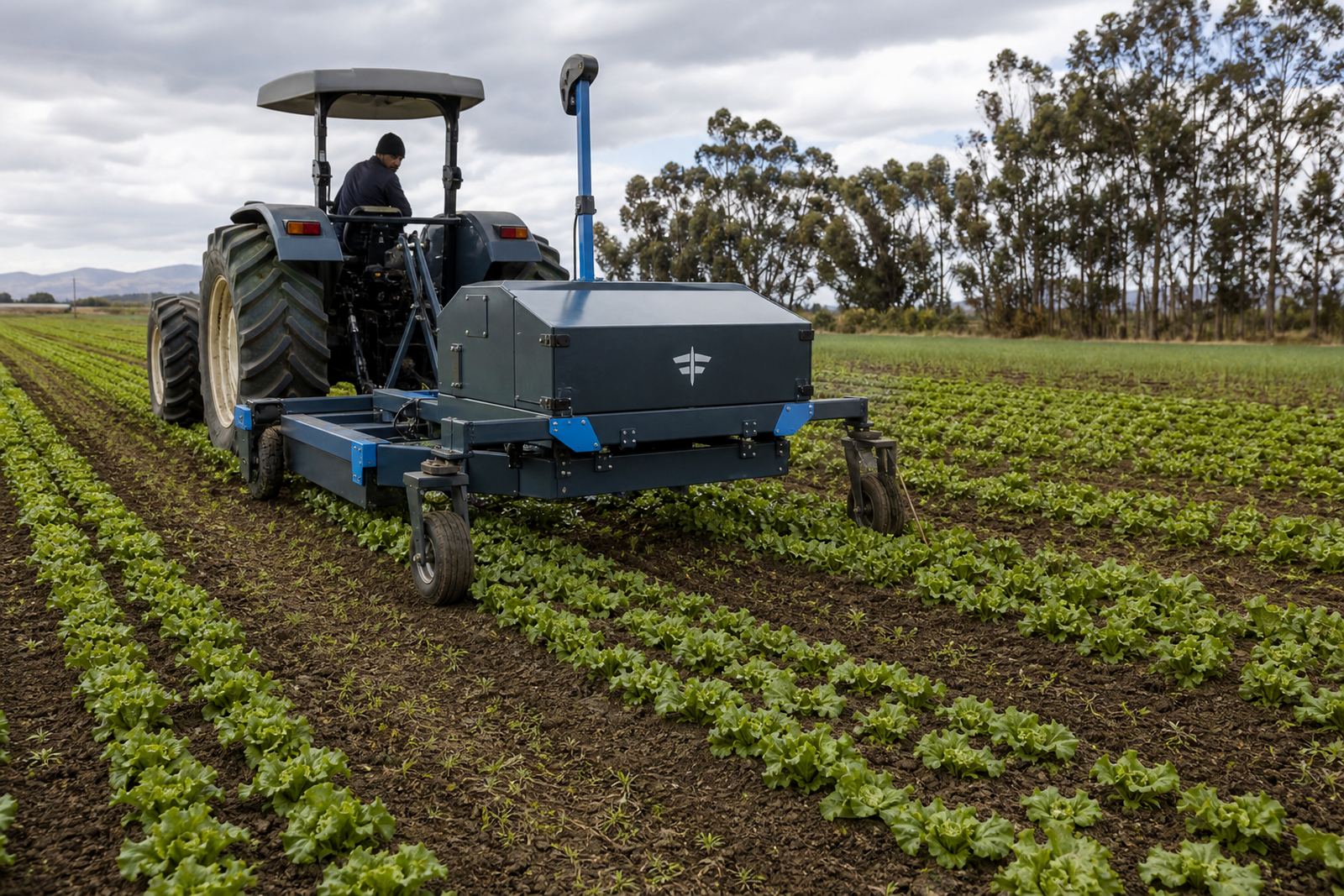
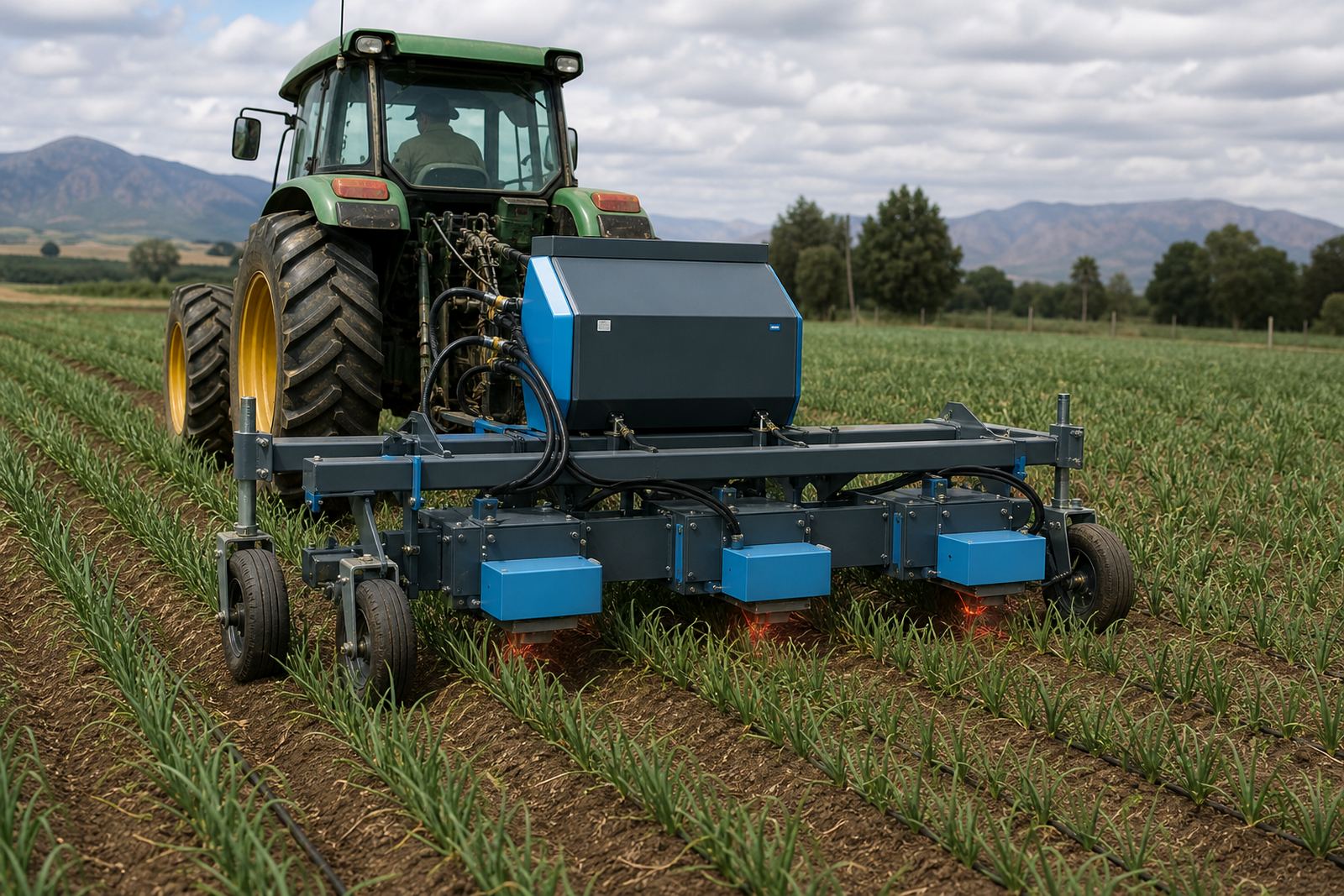
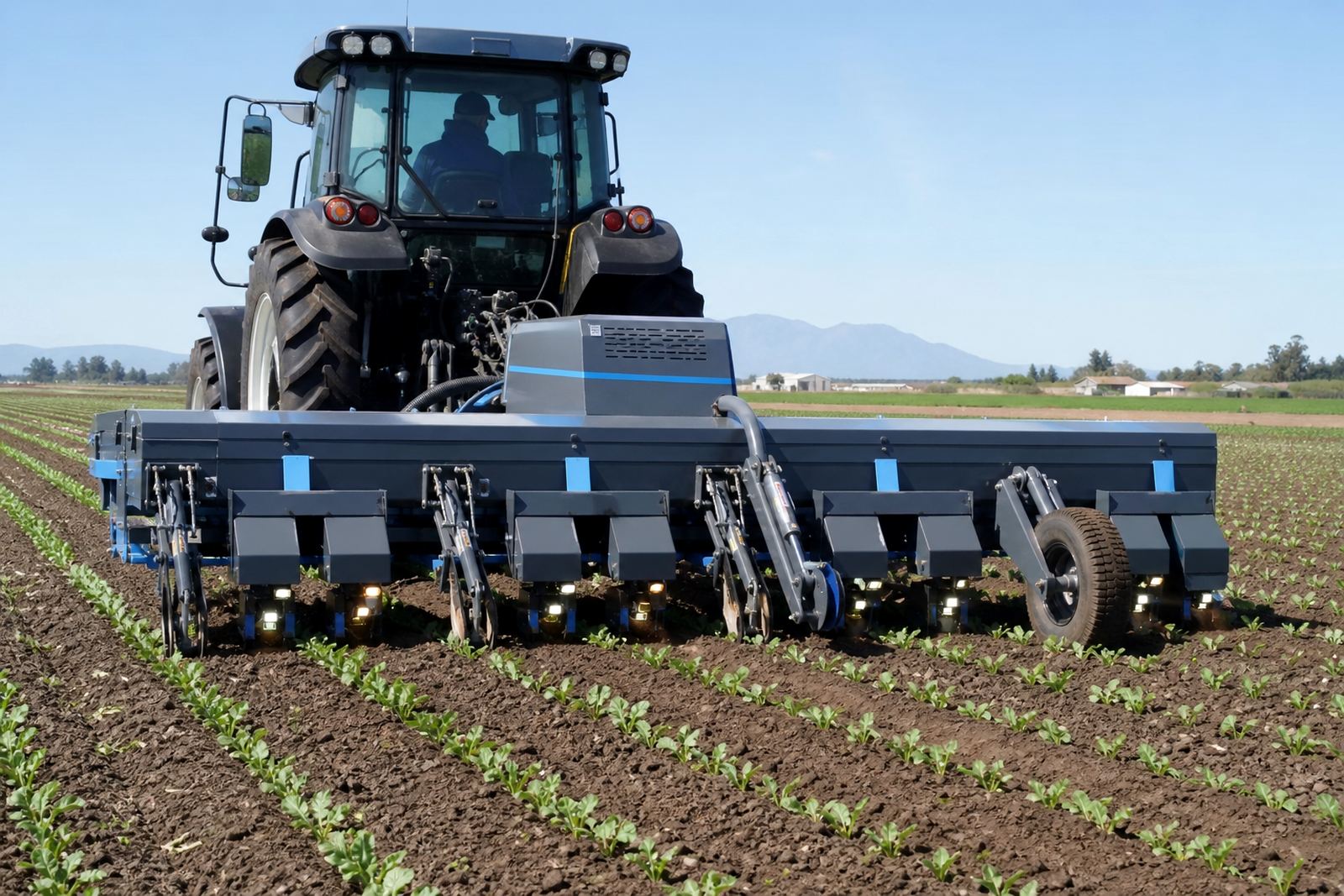
Laser weeding is most often considered for vegetable blocks with visible row structure and enough space between plants for camera guided detection. Onions, carrots, lettuce and brassicas are commonly discussed because the crop line can be read by the equipment and the laser can target weeds between plants and close to the row.
Some fields are not yet ready for laser weeding. Crop stage, bed shape, weed flush and transplant quality all matter. A young crop with poor row definition or a block with heavy missed germination can be less suitable than a clean, even stand with good spacing.
- Onion blocks with straight, well marked rows
- Carrot beds with uniform emergence
- Lettuce in set spacing with clear inter-row areas
- Brassicas such as cabbage, broccoli and cauliflower on neat beds
How crop spacing changes the fit
Spacing is one of the first things we look at during a field assessment. Wider, regular row spacing gives the system more room to separate crop from weed growth. Tight beds, uneven planting lines and plants leaning across the row can narrow the working window.
The equipment works best where the crop is already established enough for the cameras to recognise it, but not so far along that weeds have shaded the row or rooted deep into the planting line. Small weeds at an early stage are usually the easiest target. Larger weeds may still be treated, though field speed can slow when pressure is heavy.
- Even emergence improves line reading
- Consistent bed width helps the operator hold the pass
- Early weed flushes are easier to target than mature weeds
- Dense canopy can limit access around the crop stem
Fields that suit contract laser weeding in practice
Contract laser weeding is usually most practical on fields where the grower wants herbicide-free weed control and minimal soil disturbance. Because the unit is tractor drawn, the block must allow safe movement, sensible turning space and a workable route in and out of the field. Sandy coastal ground, heavier inland soils and irrigated blocks can all be suitable when the surface is prepared well.
In places like Philippi, Ceres, Grabouw, Tzaneen, Bela-Bela, Nelspruit, Howick and Bethlehem, crop choice changes with the season, but the same basic checks apply. The crop row must be visible, the field surface should be level enough for steady travel, and the weed mix should be known before scheduling starts.
- Good access for a tractor and tow unit
- Clear headlands for turning and setup
- Row crops with defined planting geometry
- Fields where moisture and soil condition support steady travel
Crop type and timing carry equal weight
Two fields can carry the same crop and still need different treatment. A lettuce block just after emergence is not treated the same way as a later crop with large weeds sitting close to the stem. The stage of the weed is often just as important as the crop itself. Small weeds are easier to detect and target before they spread across the bed.
Good timing also depends on repeat passes. Some growers use an early pass to knock back the first flush, then plan a later visit if pressure builds again. That approach works best where the crop can tolerate the schedule and the field can be driven safely without damaging plants or ridges.
- Young weeds are easier to hit cleanly
- Repeat passes can suit high pressure blocks
- Missed timing can reduce the benefit of the pass
- Weather, irrigation and soil condition affect field access
When a crop is less likely to suit the method
Some crops and field situations are harder to work with. Irregular stands, very dense canopy, severe weed overgrowth or badly spaced planting can make camera recognition less reliable. Very young transplants without clear row definition can also be tricky, especially if the crop is still settling after planting.
A field assessment helps sort out whether the block is suitable, whether a trial strip run makes sense, or whether a crop timing plan should be adjusted before the unit is booked. For growers handling several farms at once, travel coordination and field scheduling also help keep the programme practical across different districts.
- Uneven rows can confuse detection
- Heavy weed cover can hide crop lines
- Very small or damaged plants may need extra caution
- Blocks with poor access can be difficult to service efficiently
How we assess suitability before a pass
Suitability starts with the crop, then moves to the row spacing, weed stage and field layout. We look at whether the block is an onion, carrot, lettuce or brassica crop, how clean the rows are, and whether the farm wants one pass, a trial strip run or a wider multi farm programme.
Our team can also build repeat pass planning around the season, with arrival site checks, crop timing plans, post pass reporting and grower consultation where needed. For farms across the Western Cape, Limpopo, Mpumalanga, KwaZulu-Natal and the Free State, that makes it easier to match the field to the right machine day and the right operator.
- Field assessments for row clarity and weed stage
- Trial strip runs on blocks that need proof of fit
- Operator supplied service for scheduled work
- Post pass reporting for follow-up planning