Howick fields and the crops we plan around
Howick farms often work with mixed vegetable blocks, cooler upland conditions and the kind of seasonal planting windows that call for careful timing. Our service suits row crops where weeds sit between plants and around stems, especially onions, carrots, lettuce and brassicas. The method is built for crop stages where the rows are visible and the weeds are at a vulnerable growth stage, because that is where laser targeting can do its work without pulling soil or dragging machinery through the bed.
We visit farms in and around Howick for field assessments, then look at row spacing, canopy cover, irrigation layout and weed size before a schedule is set. A laser weeding pass is not about blanketing a field, it is about working to the crop and the weed stage on that block, with the machine moving at a field speed that changes with weed pressure and planting density.
What the unit does in the row
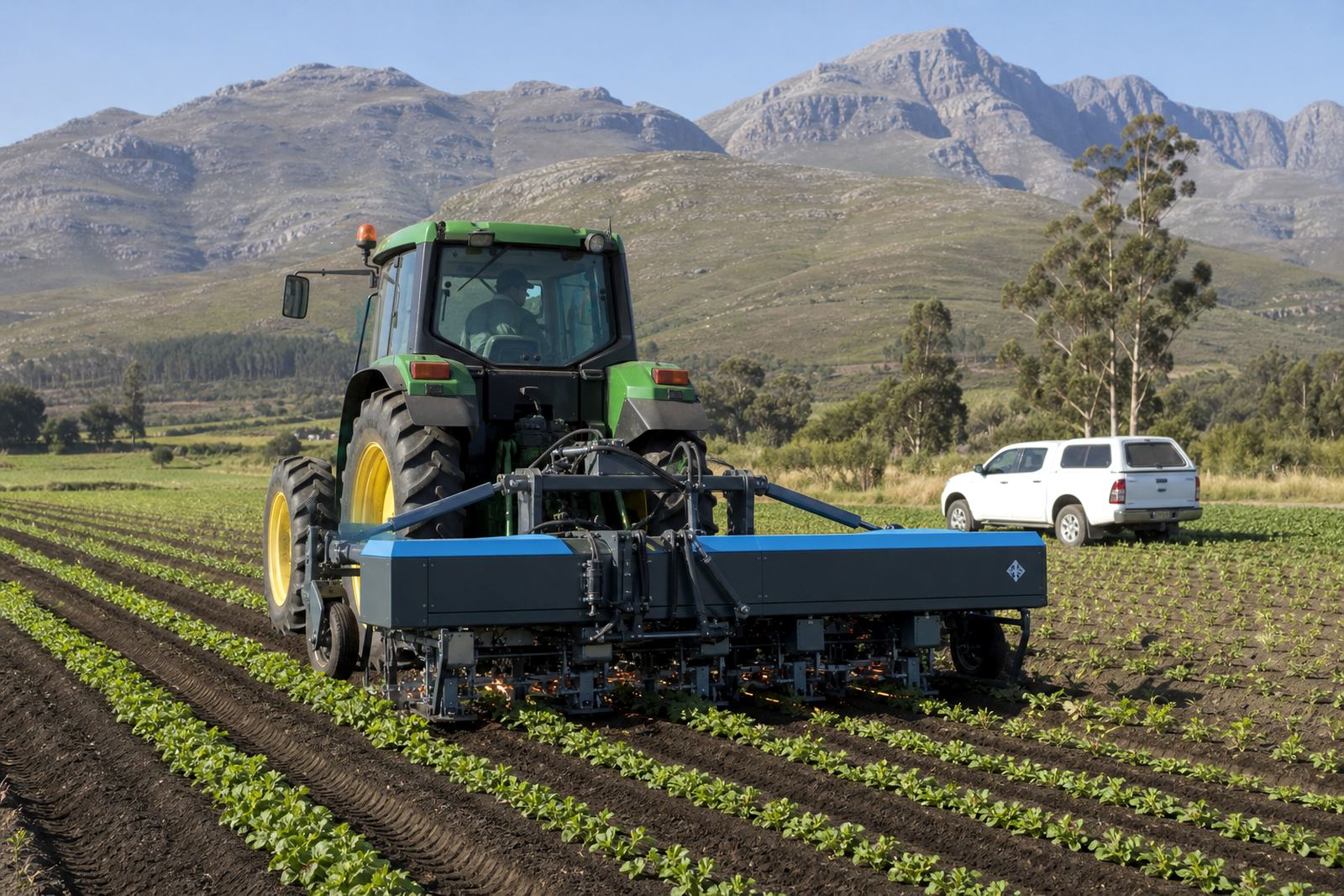
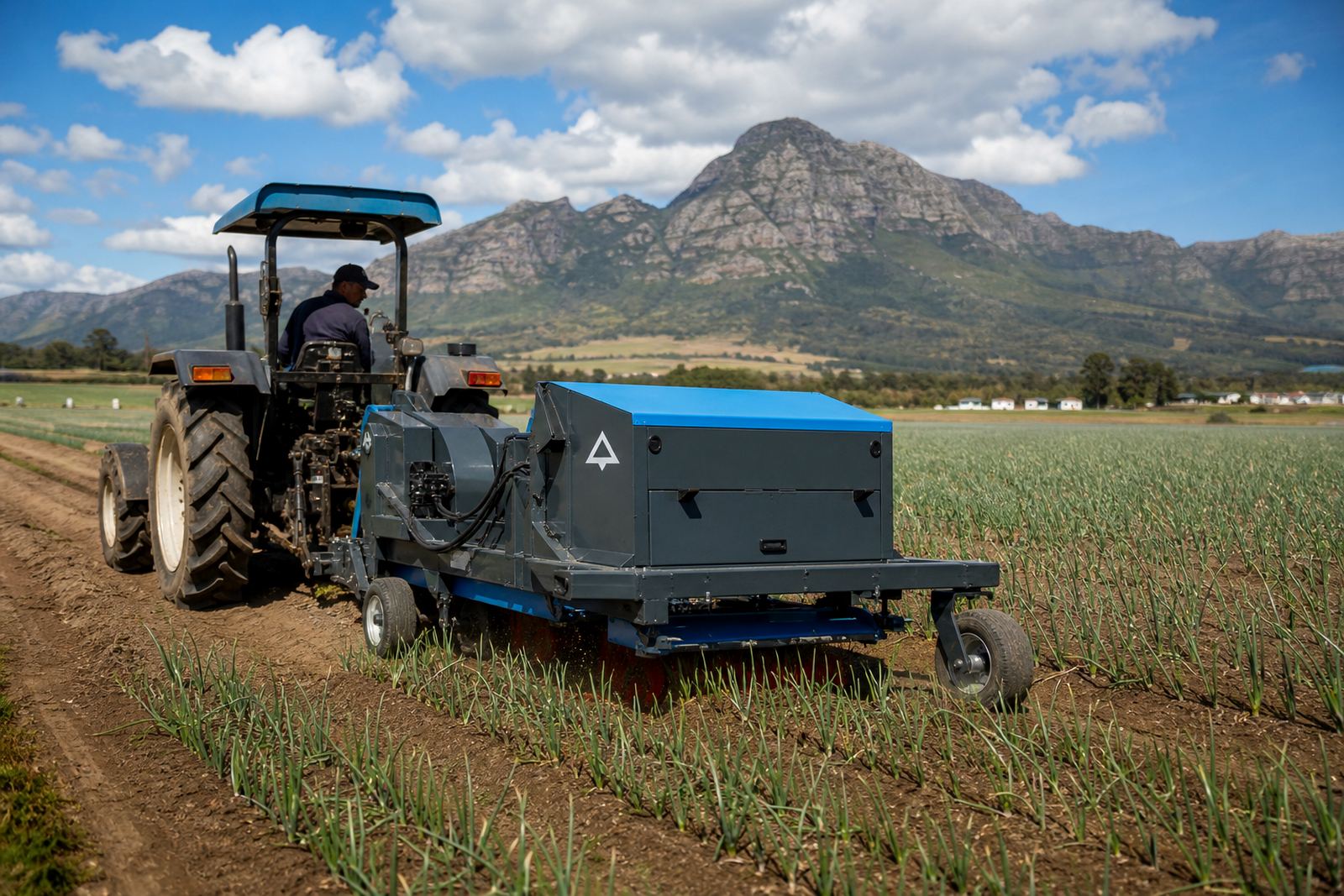
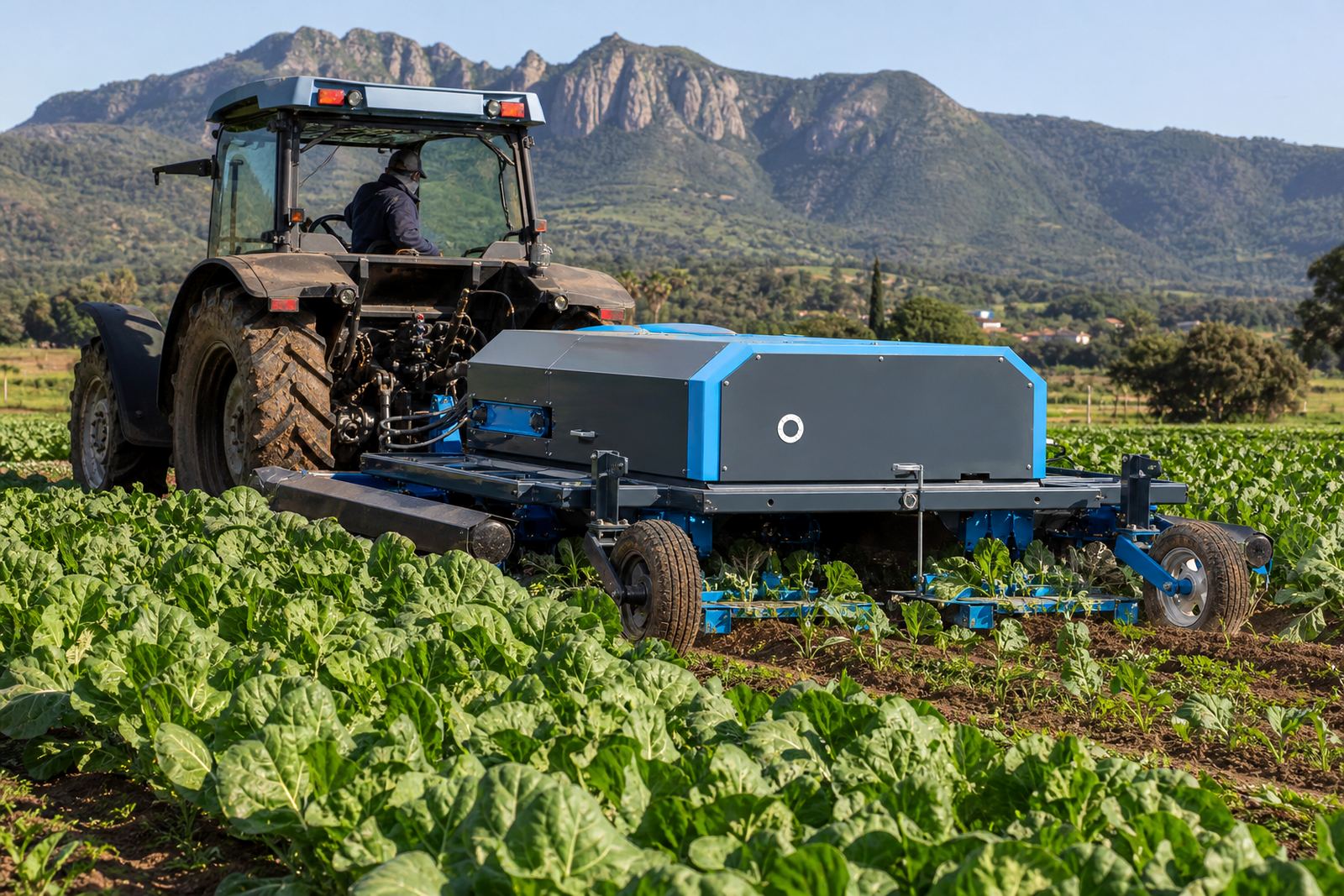
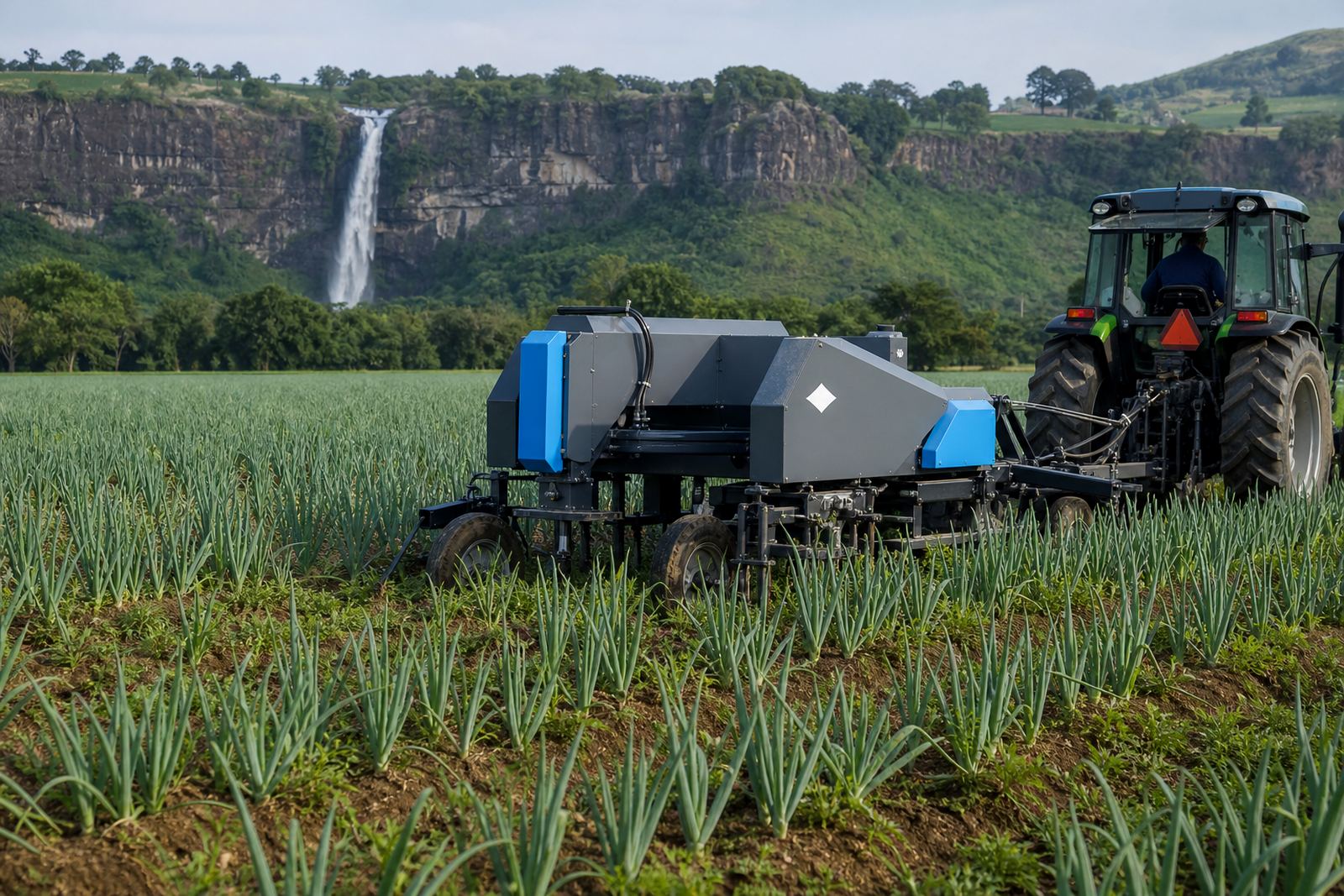
The tractor-drawn unit uses camera-guided detection to identify weeds in the row and between the plants. Once a weed is recognised, the laser is directed at the growing point so the weed is damaged in place. That gives growers a herbicide-free option with no soil disturbance, which matters on beds that must stay neat for follow-up work and where erosion or crusting would be a problem.
On Howick farms the operator watches the crop stand, the ground condition and the weed mix throughout the pass. If the canopy is already closing in or the weed flush is too advanced, a trial strip run or repeat pass planning may be the better route. The work is practical, not flashy, and it depends on the field being ready for the method.
- Camera-guided weed detection in the crop row
- Laser targeting aimed at weed growing points
- No herbicide spray application during the pass
- No cultivation marks or soil throw from the unit
- Best used where rows are clearly defined
Scheduling from Philippi to Howick
We run the Howick area as part of a wider field schedule from our Philippi base in Cape Town. That means the work has to be planned properly around travel, block readiness and the sequence of farms on the route. For growers with more than one site, multi farm programmes can be arranged so that blocks are handled in a set order instead of in a rush between unrelated visits.
Field scheduling also matters when a crop is being planted in phases. Some growers want one block checked first, then the rest of the land lined up for follow-up work. Our team covers arrival site checks, travel coordination and post pass reporting so the grower knows what was completed on the day and what should be watched before the next pass.
- Season bookings for planned windows
- Multi farm programmes across several blocks
- Arrival site checks before work starts
- Post pass reporting after the field visit
- Repeat pass planning where a second run is sensible
Local conditions that matter on KwaZulu-Natal farms
Howick conditions can change from one block to the next, especially where soils hold moisture after rain and weeds move quickly once the weather opens up. That means the field assessment is never a box-ticking exercise. We look at whether the crop is at the right stage, whether the weeds are still small enough for laser control, and whether the ground is dry enough for the tractor-drawn unit to work without trouble.
Some farms deal with uneven emergence, some with flushes after irrigation, and others with the pressure of getting labour and machinery lined up on time. In those cases a crop timing plan helps to set the order of work, and the grower consultation covers what can be treated now and what should wait for a better window. The point is to match the method to the crop stage rather than forcing the crop to fit the machine.
What our Howick service covers on site
For Howick growers, the service is usually built around a clean sequence: assess the block, plan the pass, send the operator and machine, then record what happened after the run. We do not treat it like a one size job because different crops and weed loads need different pacing. On lighter weed pressure, the unit can move faster. Where the pressure is heavier or the rows are tighter, the pace drops and the operator works more carefully.
Our team for these visits includes operator supplied work and support around the job. That can involve scheduling, workshop preparation, and liaison with the grower so the block is ready when the unit arrives. The aim is to keep the work tidy and useful for the next stage of the crop, not to chase numbers that ignore what the field actually looks like.
- Field assessments for suitable vegetable blocks
- Crop timing plans based on weed stage
- Operator supplied contract visits
- Travel coordination from the Cape Town base
- Grower consultation for follow-up planning
Getting a Howick block into the calendar
Howick enquiries go through our contact page form, and the useful details are the block location, crop type, planting date, row spacing and the weed stage you are seeing now. If there are several farms in the area, it helps to list them together so the route can be worked out with the rest of the schedule. That makes it easier to set up the right machine, the right operator and the right sequence of visits.
We keep the service geared to vegetable farms that can benefit from laser weeding in planned seasonal windows. When the block is ready and the crop suits the method, the job can be lined up with the rest of the route through the Western Cape, Limpopo, Mpumalanga, KwaZulu-Natal and the Free State. For Howick, the focus stays on field fit, timing and practical delivery, not on guesswork.